
To reduce noise at home, start by sealing gaps around your doors with weatherstripping or door sweeps to block sound leaks. Upgrading to solid core doors and adding thick insulation within walls can absorb more sound and create a quieter space. Simple additions like acoustic panels or soundproof curtains also help contain noise. These straightforward fixes make a noticeable difference, and exploring more tips can help you create an even more peaceful environment.
Key Takeaways
- Upgrade wall insulation or add soundproof panels to absorb and block noise transmission effectively.
- Install high-quality door seals and consider solid core doors to prevent sound leaks.
- Focus on sealing gaps around windows and electrical outlets for immediate noise reduction.
- Use soundproofing materials like acoustic foam or vinyl in problem areas for targeted noise control.
- Simple upgrades like sealing doors and enhancing wall insulation can significantly improve home quietness.
Noise at home can disrupt your daily life and affect your well-being, especially when it’s persistent or loud. It can make it difficult to concentrate, relax, or get a good night’s sleep. Luckily, you don’t need to invest in expensive soundproofing projects to make a noticeable difference. Simple changes can markedly reduce unwanted noise, and one of the most effective starting points is improving your home’s insulation and seals.
Improving home insulation and seals significantly reduces disruptive noise and creates a more peaceful living space.
First, consider your wall insulation. Many homes lack sufficient insulation, allowing sound waves to travel freely between rooms or from outside. Upgrading or adding wall insulation helps absorb sound energy, creating a quieter environment. You don’t have to undertake massive renovations; even adding soundproof panels or dense insulation materials in key areas can cut down noise transmission. Focus on shared walls with noisy neighbors or rooms where peace is essential, like bedrooms or home offices. Proper insulation acts as a buffer, preventing sound from bouncing around and reaching your ears.
Next, pay attention to your doors. Doors are notorious weak points for sound leaks. Installing high-quality door seals can instantly make a difference. These seals fit snugly around the door frame, blocking gaps where sound can seep through. You’d be surprised how much noise sneaks in through even tiny spaces around your door, especially if it’s hollow or worn out. Door seals are inexpensive and easy to install, making them an accessible solution. When combined with solid core doors, these seals can markedly enhance your room’s soundproofing. It’s a simple move that provides a noticeable reduction in noise from hallways, outside traffic, or noisy appliances.
Don’t overlook windows either, but focusing on wall insulation and door seals can give you the most immediate impact. These aren’t just about reducing noise from outside but also about containing sound within your rooms. When you improve your wall insulation and install effective door seals, you create a more peaceful environment where you can focus, relax, and sleep better. Additionally, exploring soundproofing materials such as acoustic foam or mass-loaded vinyl can further enhance your efforts. These steps are straightforward, cost-effective, and yield quick results, making them perfect first moves in your soundproofing efforts. Remember, tackling noise doesn’t mean you need a complete overhaul—small, targeted updates can make your home a quieter, more comfortable space.
Frequently Asked Questions
How Much Does Professional Soundproofing Typically Cost?
Professional soundproofing usually costs between $1,000 and $10,000, depending on the project’s size and complexity. You’ll want to get detailed cost estimates from specialists, as prices vary based on materials and labor. When you opt for professional installation, you guarantee the job’s done right, which can save you money and time in the long run. Keep in mind that higher-end solutions tend to be more effective but come at a higher price.
Can Furniture Placement Improve Room Soundproofing?
Yes, furniture arrangement can improve room soundproofing by enhancing room acoustics. You should position large, soft furniture like sofas and armchairs strategically to absorb sound waves, reducing noise transmission. Placing bookshelves or fabric-covered pieces against shared walls also helps dampen sound. By thoughtfully arranging your furniture, you create a more sound-friendly environment, making your space quieter and more comfortable without extensive modifications.
Are There Temporary Soundproofing Solutions for Renters?
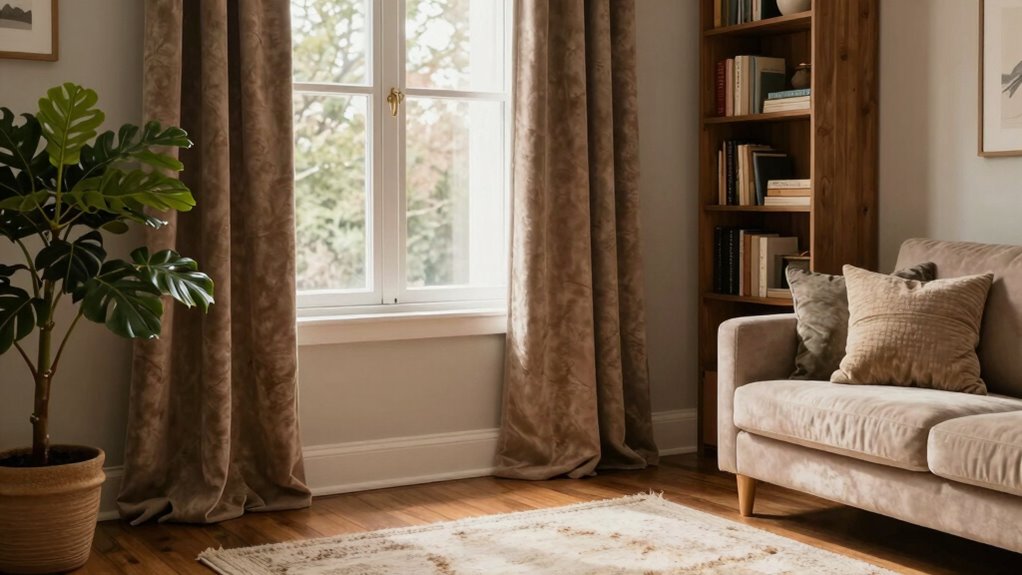
Yes, as a renter, you can try temporary barriers like heavy curtains, door draft stoppers, and furniture placement to reduce noise. These solutions are easy to install and remove, addressing common renter challenges without permanent changes. You might also consider installing soundproofing panels or using white noise machines. These quick fixes help create a quieter environment, making your space more comfortable without risking your security deposit.
How Effective Are DIY Soundproofing Methods?
DIY soundproofing methods can be quite effective if you know what you’re doing, but don’t fall for soundproofing myths that overpromise results. Your effectiveness depends on proper application and selecting the right materials, like heavy curtains or acoustic panels. While DIY solutions won’t eliminate all noise, they do markedly reduce it, making your space quieter. Just remember, patience and realistic expectations are key to successful soundproofing.
What Are Eco-Friendly Soundproofing Options?
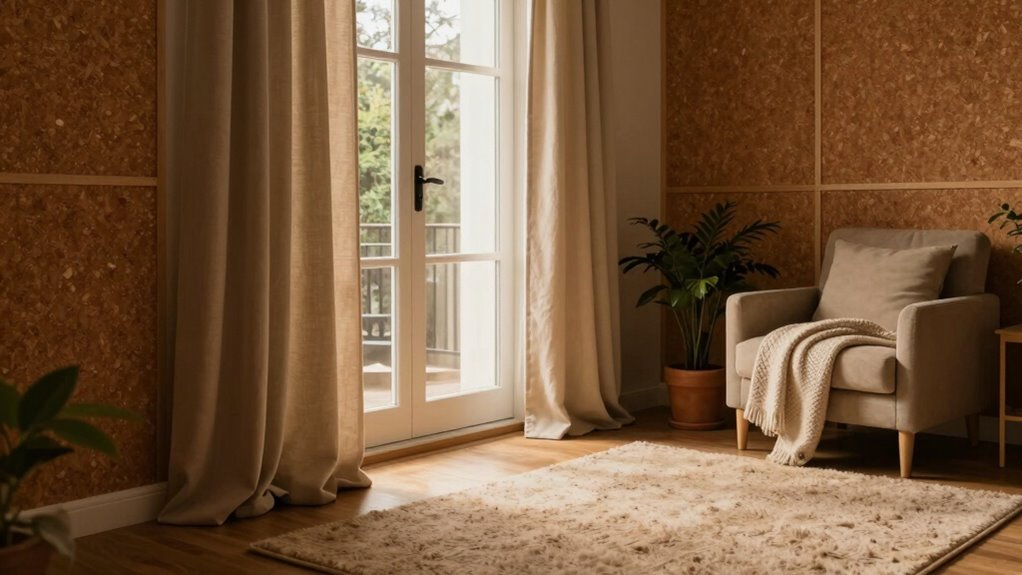
You can choose eco-friendly soundproofing options like green insulation made from recyclable materials, which reduces environmental impact while dampening noise. Recycled denim or cellulose insulation is effective and sustainable. Additionally, using cork panels, which are natural and recyclable, helps absorb sound without harming the planet. These eco-friendly options are safe, renewable, and can considerably improve your home’s acoustics without compromising your commitment to sustainability.
Conclusion
By applying simple soundproofing strategies, you can markedly silence your space and soothe your surroundings. Don’t delay or dismiss these discreet, doable moves—dampening noise is easier than you think. With a bit of boldness and basic barriers, you’ll banish bothersome background sounds and bring balance back to your home. Remember, small steps create a quieter, calmer, more comfortable haven, proving that even minor measures make major noise reduction possible.