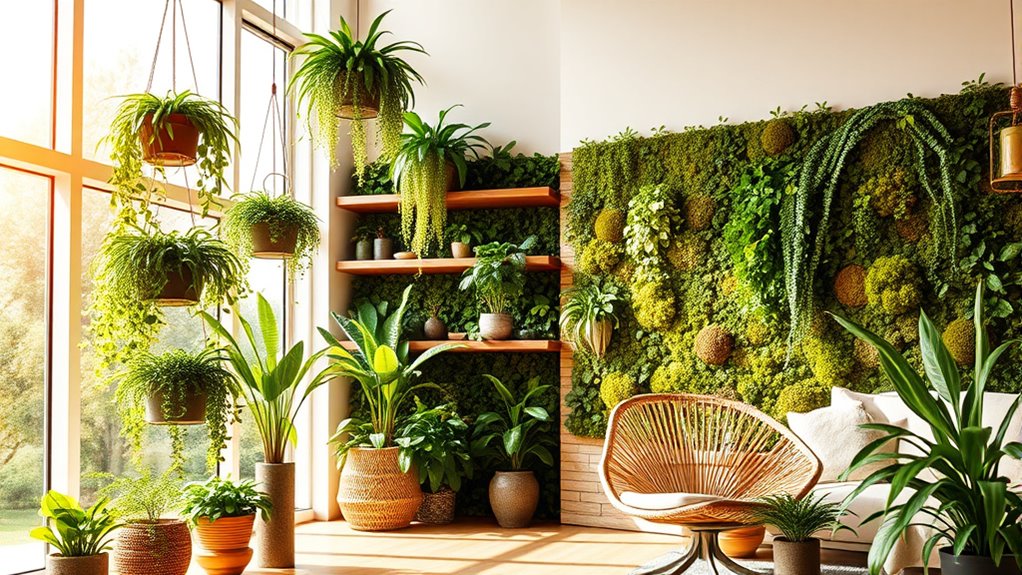

In 2025, biophilic design is all about bringing nature indoors to improve your spaces’ health, productivity, and sustainability. You’ll see more indoor gardens, water features, and natural light, along with sustainable materials like reclaimed wood and bamboo. These elements boost mental well-being and create a calming, inspiring environment. As this trend grows, you’ll discover innovative ways to reconnect with nature indoors—keep exploring to find out how to incorporate these ideas into your spaces.
Key Takeaways
- Indoor gardens, water features, and natural light are expanding as central elements in biophilic design for 2025.
- Use of sustainable materials like reclaimed wood and bamboo is increasing to promote eco-friendly interiors.
- Furniture mimics organic shapes and biomorphic forms, enhancing natural aesthetics and comfort.
- Advanced air purification tech and natural ventilation improve indoor air quality and health.
- Social media trends and hashtags boost awareness and adoption of biophilic features in residential and commercial spaces.
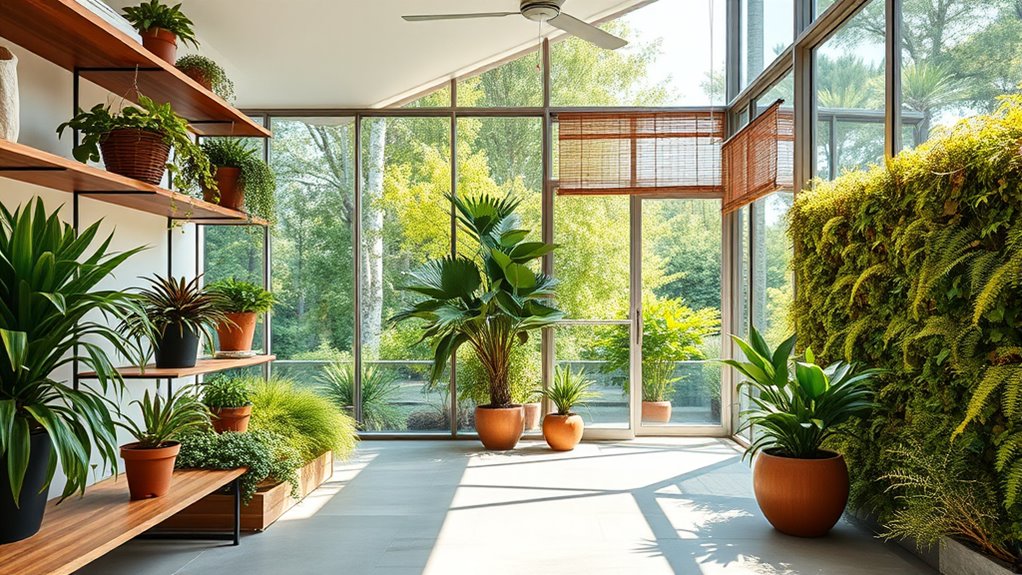
Have you noticed how more spaces are embracing nature-inspired elements? This trend, known as biophilic design, is transforming how we experience indoor environments. It’s not just a passing fad; the global market for biophilic design is projected to reach $3.14 billion by 2028, growing at a compound annual rate of over 10%. This surge reflects a rising demand for spaces that foster well-being, productivity, and sustainability. More property owners and developers recognize that incorporating natural elements increases property value and attractiveness. In workplaces, 75% of tenants are willing to pay a premium for biophilic features, showing how essential nature’s presence has become in commercial real estate. Hospitals also benefit, with patient recovery times reduced by 8% in environments featuring biophilic elements, emphasizing health advantages.
More spaces are embracing biophilic design, boosting property value, tenant satisfaction, and health benefits worldwide.
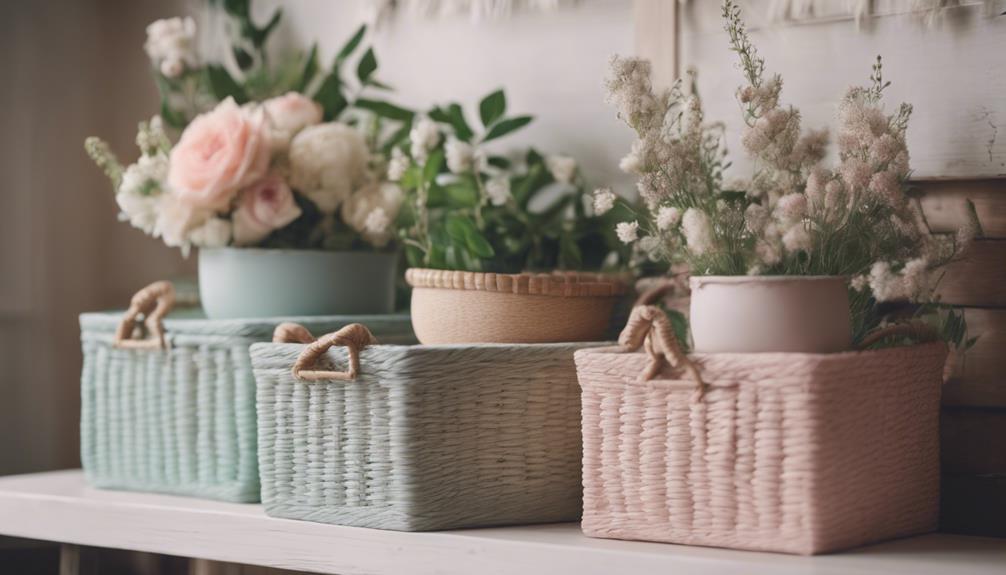
At its core, biophilic design emphasizes direct and indirect interactions with nature. You’ll find plants, water features, and natural light integrated into interiors, creating a seamless connection to the outdoors. Indirectly, natural materials like wood, stone, bamboo, and woven textiles are used to bring a touch of nature indoors. Organic shapes and patterns inspired by natural forms further enhance this aesthetic, making spaces feel more inviting and calming. Natural ventilation and views of greenery are prioritized to improve air quality and promote a sense of openness. Living walls, vertical gardens, and indoor herb gardens serve as focal points, adding visual interest and functional benefits. Research shows that biophilic design can also enhance cognitive function and creativity in workspaces. Additionally, incorporating air purification technology can further improve indoor air quality, supporting the health benefits associated with biophilic environments.
The health and well-being benefits are compelling. Over 80% of people surveyed believe biophilic design improves their mental health and overall well-being. These environments help reduce stress, boost concentration, and increase productivity—especially in offices. Employees working in spaces with natural elements tend to have lower absenteeism rates, highlighting how biophilic design supports psychological health. It also fulfills basic environmental needs, encouraging a sense of safety and comfort. As a result, more organizations are investing in these designs to create healthier, more inspiring workspaces.
In 2025, the trend is expanding beyond simple houseplants to full indoor gardens and calming water features. Natural light is maximized to reduce stress and support sustainability, while sustainable materials like reclaimed wood, bamboo, and terracotta are increasingly common. Furniture mimicking nature’s curves—biomorphic and organic shapes—is gaining popularity for its aesthetic appeal and comfort. Social media reflects this enthusiasm, with hashtags like #BiophilicDesign and #IndoorGarden amassing millions of posts. Consumers demand healthier, more eco-friendly indoor spaces, prompting companies to innovate. Overall, biophilic design is not just about making spaces beautiful; it’s about creating environments that nurture health, support sustainability, and reconnect us with nature—right where we live and work.

Ergonomic Office Chair with Adjustable Lumbar Support, 3D Arms and Headrest, High Back Wide Desk Computer Chair with Wheels, for Home & Office, Black
Large & Non-Deformable Cushion: Made from 4.33" thick, high-density shaped sponge, this wide comfy cushion resists sagging and...
As an affiliate, we earn on qualifying purchases.
Frequently Asked Questions
How Does Biophilic Design Improve Mental Health?
You might notice that natural elements like plants, water, and sunlight help you feel calmer and less anxious. These features lower stress hormones, improve mood, and boost your focus. When you’re in environments with greenery or natural views, you tend to think more clearly and recover faster from stress. Regular exposure to nature indoors strengthens your emotional resilience, supports mental health, and promotes overall well-being.
What Are Eco-Friendly Materials for Indoor Plants?
Eco-friendly materials for indoor plants include biodegradable bamboo fiber pots, rice husk planters, and mycelium-based containers, all offering eco-conscious choices. Recycled and upcycled options like plastic, wood, metal, and glass reduce waste and resource use. Natural fibers such as coconut coir, jute, seagrass, and hemp provide sustainable, stylish solutions. Water-smart materials like coconut coir, rice husk, and self-watering planters help conserve water and promote greener practices indoors.
Can Biophilic Design Reduce Energy Costs?
You might wonder if biophilic design can cut energy costs, and the answer is yes. By incorporating green roofs, living walls, and natural shading, you reduce heating and cooling needs markedly. Larger windows and natural ventilation boost daylight and airflow, lowering electricity use. Smart green systems monitor and optimize energy use, helping you save money while creating healthier indoor environments. Overall, biophilic design offers sustainable, cost-effective benefits that enhance efficiency.
How to Incorporate Biophilic Elements in Small Spaces?
Think of your small space as a canvas for nature’s brushstrokes. To incorporate biophilic elements, choose multifunctional furniture like bookshelves with built-in planters or foldable tables with moss gardens. Use vertical gardens or window sills as mini-gardens to save space. Add natural textures through rugs, cushions, and organic lighting. Incorporate scents, water features, and greenery to create an immersive, calming environment that connects you to nature without cluttering your small home.
What Are the Best Indoor Plants for Low Light?
You’re looking for the best indoor plants for low light? Pothos is an excellent choice; it adapts easily, trails beautifully, and thrives in dim spaces. ZZ plants are nearly indestructible, needing minimal water and tolerating darkness. Snake plants are durable, require little care, and improve air quality. Prayer plants add vibrant color and fold at night, perfect for shaded spots. These low-light favorites make your space lively and green effortlessly.

NOBLEWELL Ergonomic Office Chair with Padded Lumbar Support, 2D Headrest, Adjustable Armrests, Upgraded Contoured Seat Cushion, 130° Rocking Tilt, Computer Gaming Chair for Home Office
Padded Lumbar Support: Designed to fit the natural curve of your spine, this ergonomic office chair features an...
As an affiliate, we earn on qualifying purchases.
Conclusion
By 2025, embracing biophilic design can transform your space into a natural sanctuary. Research shows that workplaces with natural elements see a 15% boost in productivity and a 12% decrease in stress levels. Incorporating plants, natural light, and organic materials not only enhances aesthetics but also benefits your well-being. So, why not bring a bit of the outdoors inside? It’s a simple change that can make a big difference in your daily life.
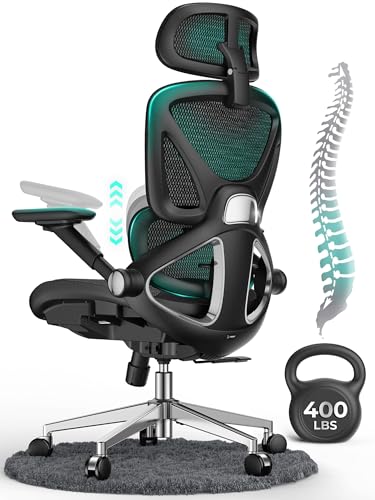
CAPOT Ergonomic Mesh Office Chair, Adjustable Lumbar High Back Desk Chair 400lbs, 4D Flip-up Arms, 3-Level Tilt Backrest, 3D Headrest, PU Wheels, Swivel Rolling Computer Seating for Long Desk Work
【STURDY, SNUG WORK CHAIR】Made for long sits over 8 hours of desk work. Micro-adjust lumbar support, flip-up arms,...
As an affiliate, we earn on qualifying purchases.

TRALT Office Chair Ergonomic Desk Chair, 330 LBS Home Mesh Office Desk Chairs with Wheels, Comfortable Gaming Chair, High Back Office Chair for Long Hours (Black)
Lumbar Support Ergonomic Design: Contours to the natural curve of the lumbar spine. The split lumbar support provides...
As an affiliate, we earn on qualifying purchases.