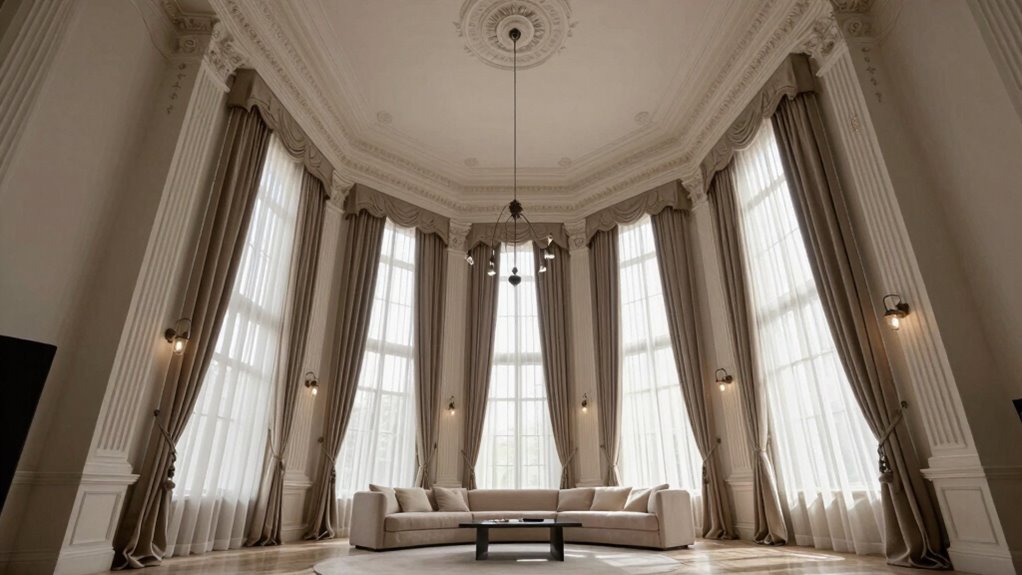

Your ceiling height impacts your decor choices more than you realize because it shapes everything from lighting to furniture scale. High ceilings make space feel open and allow for statement fixtures, tall artwork, and larger furniture. Lower ceilings call for streamlined furniture, lighter colors, and subtle lighting to avoid cramped spaces. Recognizing how ceiling height influences these decisions helps create a balanced, harmonious room—continue exploring to learn how to maximize your space’s potential.

Get everyday essentials delivered free with Prime
- Fast, free delivery on millions of items
- Prime Video, Amazon Music and more included
- Member-only deals all year
Key Takeaways
- Ceiling height influences furniture size and scale to maintain proper room proportions and avoid visual imbalance.
- It determines lighting fixture choice, with high ceilings supporting grand, statement pieces and low ceilings requiring discreet lighting.
- Decor styles, colors, and patterns are selected to emphasize or minimize vertical space based on ceiling height.
- Visual tricks and design strategies are used to enhance perceived height or space, tailored to ceiling dimensions.
- Overall harmony and comfort depend on proportioning decor elements to complement the room’s ceiling height.
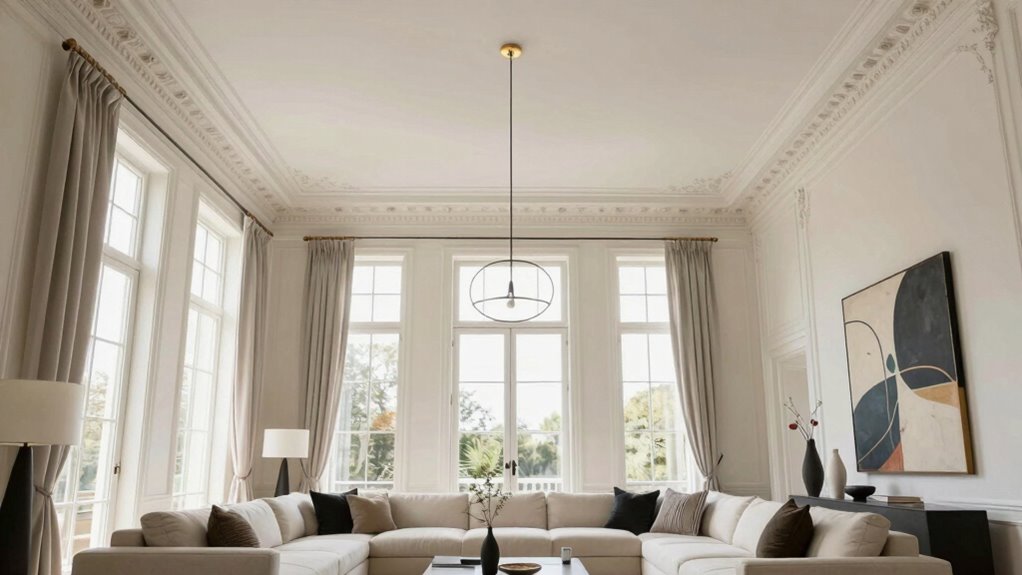
Have you ever wondered how ceiling height influences your decorating choices? It’s more significant than most people realize, shaping everything from lighting choices to furniture scale. When you step into a room with soaring ceilings, you instinctively notice how the space feels open and expansive. That feeling pushes you to select lighting fixtures that complement the height—perhaps grand chandeliers or tall, statement pendant lights that hang prominently, filling the vertical space without overwhelming it. Conversely, in rooms with lower ceilings, you tend to favor flush mounts or smaller, more discreet fixtures that don’t make the ceiling feel even closer. Your lighting choices are directly influenced by the ceiling height because the goal is to balance the room, ensuring it feels comfortable and proportionate.
Ceiling height guides your lighting choices, balancing visual weight and proportion for a harmonious space.
Similarly, furniture scale is affected by ceiling height because the size of your pieces can either enhance or diminish the room’s sense of proportion. In spaces with high ceilings, you might choose larger, more substantial furniture to create balance. Oversized sofas and tall bookshelves fill the vertical space, making the room feel grounded rather than empty or cavernous. On the other hand, in rooms with lower ceilings, smaller furniture tends to work better. You avoid bulky pieces that can make the room feel cramped. Instead, you opt for sleek, streamlined furniture that doesn’t crowd the space or make the ceiling seem even lower. Your decisions about furniture scale are driven by the ceiling height because you want your decor to harmonize with the room’s proportions, avoiding a sense of imbalance.
Ceiling height also guides your overall decorating style and color choices. Taller ceilings often call for taller, more dramatic artwork and vertical stripes, which emphasize the room’s height and add visual interest. In rooms with lower ceilings, you usually choose lighter colors and horizontal patterns to create the illusion of more space and height. Incorporating visual tricks can further enhance the perception of height or space, depending on the room’s design. These subtle adjustments in your decorating approach are all influenced by the ceiling height, demonstrating how spatial proportions are a key factor in designing a space that feels just right. Recognizing this helps you craft rooms that are not only visually appealing but also perfectly proportioned, making the space feel welcoming and thoughtfully designed.
large statement chandelier for high ceilings
As an affiliate, we earn on qualifying purchases.
As an affiliate, we earn on qualifying purchases.
Frequently Asked Questions
How Does Ceiling Height Influence Furniture Choices?
Ceiling height influences your furniture choices because taller ceilings often require larger, more proportionate pieces to balance the space. You might opt for taller bookshelves or statement sofas to match the ceiling proportions, while lower ceilings call for more compact, streamlined furniture to avoid overwhelming the room. Wall proportions also matter, as furniture should complement both the height and width, creating a harmonious, balanced look that suits the room’s overall dimensions.
Can Changing Ceiling Height Alter Room Acoustics Significantly?
Changing ceiling height can dramatically alter room acoustics, making it feel like sound travels through a canyon. Taller ceilings reduce sound reflection, creating a more spacious, airy feel with clearer acoustics. Conversely, lower ceilings increase sound reflection, amplifying echoes and noise. You’ll notice these differences in ceiling acoustics, as adjusting height influences how sound waves bounce and disperse, shaping your room’s overall auditory ambiance.
What Color Schemes Work Best for Different Ceiling Heights?
For lower ceilings, opt for light, neutral color schemes to make the space feel more open, and consider adding decorative moldings to create visual interest without overwhelming the room. For higher ceilings, darker or richer colors work well, complemented by textured ceilings or unique ceiling textures to add warmth. Incorporate decorative moldings to define space and add sophistication, ensuring your decor enhances the ceiling height and overall ambiance.
Are There Specific Lighting Options for High or Low Ceilings?
For high ceilings, you should choose statement lighting like chandeliers or pendant lights to enhance the dining ambiance and highlight art displays. Low ceilings benefit from recessed or flush-mount fixtures that prevent a cramped feel while offering ample lighting. Both options help you create an inviting space, whether you want to emphasize artwork or foster a cozy atmosphere. Proper lighting choices adapt your decor to ceiling height, making every detail stand out.
How Does Ceiling Height Impact Energy Efficiency in a Room?
Sure, towering ceilings make you feel like royalty, but they also invite energy inefficiency. You’ll need more thermal insulation to keep heat in during winter and out during summer. Plus, air circulation becomes a challenge, forcing your HVAC system to work overtime. So, if you’re aiming for energy efficiency, consider lowering those ceilings or investing in smarter insulation and ventilation solutions—your wallet will thank you.
Conclusion
So, as you select your space’s style, remember that ceiling height profoundly shapes your décor decisions. It’s not just about size; it’s about sculpting a space that speaks to your style and spirit. By balancing boldness and subtlety, you can create a sleek, stunning sanctuary. Let your ceilings inspire your choices, turning your house into a harmonious haven. Height influences happiness — harness it, and your décor will truly delight.
Columbus Day / Indigenous Peoples' Day Picks
long weekend sales
As an affiliate, we earn on qualifying purchases.