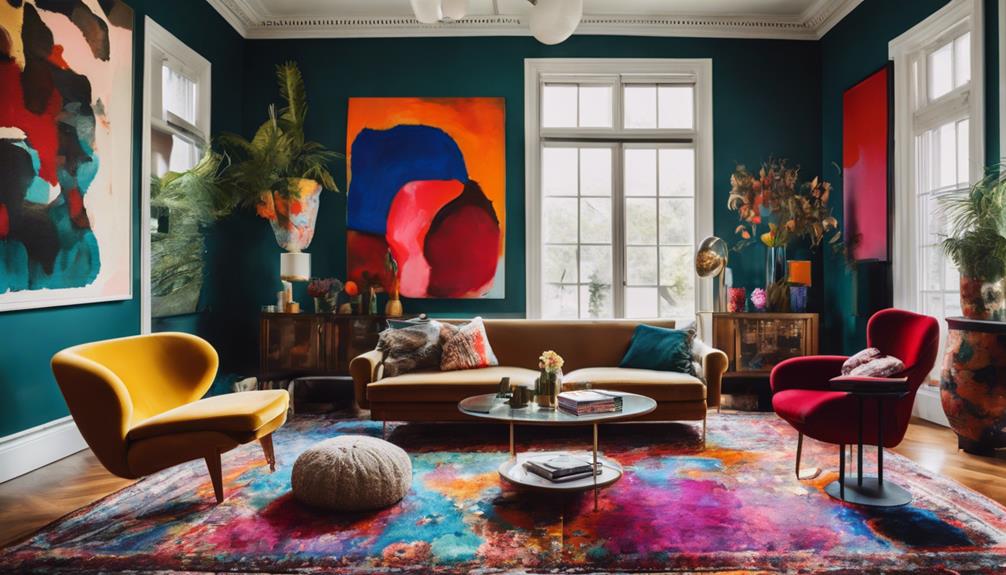
To use decorative lighting as architecture, focus on highlighting key features like walls, columns, or outdoor structures with uplights and wall sconces. Combine different layers such as ambient, task, and accent lighting to create depth and mood. Incorporate string lights or fairy lights to add warmth and coziness, while path lights guide safely through outdoor spaces. When you integrate these lighting techniques thoughtfully, your space becomes a dynamic blend of art and function. Keep exploring to discover more design ideas.

Get everyday essentials delivered free with Prime
- Fast, free delivery on millions of items
- Prime Video, Amazon Music and more included
- Member-only deals all year
Key Takeaways
- Use lighting to highlight architectural features like arches, columns, and textured walls for visual emphasis.
- Incorporate layered lighting (ambient, task, accent) to create depth and enhance architectural details.
- Select fixtures that complement the overall design style to seamlessly integrate lighting as an architectural element.
- Strategically position lighting to sculpt and define outdoor and indoor spaces, emphasizing structure and form.
- Utilize decorative lighting to set the mood, create focal points, and transform spaces into artistic environments.
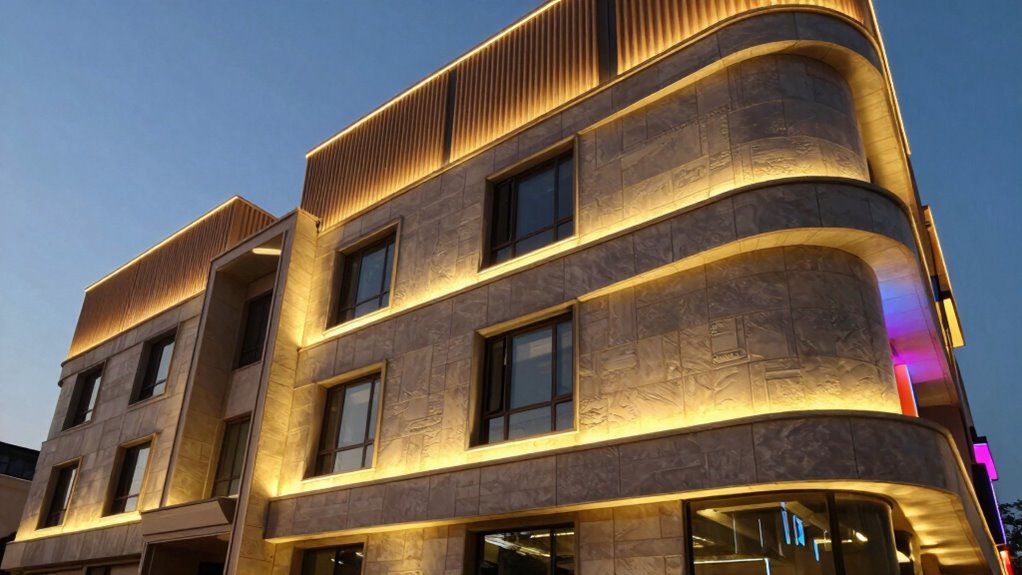
Have you ever noticed how lighting transforms a space into something extraordinary? It’s not just about illumination; it’s about shaping the way you experience a setting. Decorative lighting as architecture isn’t merely functional—it’s an art form that can elevate your environment, blending landscape enhancement with interior ambiance seamlessly. When you thoughtfully integrate lighting into your design, you create a dynamic interplay between light and space that draws attention to architectural features and sets the mood for any occasion.
In outdoor spaces, decorative lighting becomes a powerful tool for landscape enhancement. By highlighting trees, pathways, water features, or sculptures, you draw the eye and create a layered visual narrative. Use uplights to accentuate the height and texture of trees or architectural elements, casting dramatic shadows that add depth and intrigue. String lights or fairy lights can soften a garden’s atmosphere, making it inviting and cozy, perfect for evening gatherings. Strategically placed path lights guide visitors through your landscape, ensuring safety without disrupting the aesthetic flow. The goal is to craft a cohesive visual story, where each lighting element complements the overall design, transforming a simple yard into a mesmerizing outdoor oasis. Understanding decorative lighting as architecture helps in creating spaces that are both functional and visually captivating. Incorporating lighting design principles further enhances how these elements work together to shape the environment.
Inside, decorative lighting shapes the interior ambiance, turning ordinary rooms into extraordinary spaces. Think about how wall sconces, pendant lights, or cove lighting can highlight key architectural features like arches, columns, or textured walls. These fixtures don’t just illuminate—they add character, depth, and warmth. When you layer lighting sources—ambient, task, and accent—you create a versatile environment that adapts to different moods and activities. For instance, dimming the lights during a dinner party fosters intimacy, while bright, focused lighting in a home office boosts productivity. You want your lighting choices to complement your interior architecture, emphasizing unique design elements and creating a harmonious balance between form and function.
Popular right now

Ninja Foodi Air Fryer 10 Qt DualZone 6-in-1 Black DZ302

Dyson V8 Cordless Vacuum

Breville Bambino Espresso Machine, Brushed Stainless Steel
As an affiliate, we earn on qualifying purchases.
Frequently Asked Questions
What Are the Latest Trends in Decorative Lighting Design?
You’re seeing bold color schemes and innovative fixture materials leading the latest decorative lighting trends. Think vibrant hues combined with metallic or glass fixtures that add visual interest and personality. You’re also embracing layered lighting with smart controls, allowing you to customize ambiance easily. These trends help you create dynamic, inviting spaces that highlight architecture’s beauty while reflecting your style, blending functionality with eye-catching design elements effortlessly.
How Do I Choose the Right Lighting for Different Architectural Styles?
You should match your lighting choices to your architectural style by considering color schemes and fixture styles. For modern designs, opt for sleek fixtures with neutral tones and minimalist aesthetics, while traditional styles benefit from ornate fixtures and warm hues. Use lighting to highlight architectural details, ensuring the fixture styles complement the overall look. This approach creates harmony, emphasizing the unique character of each architectural style and enhancing your space’s ambiance.
What Are Energy-Efficient Decorative Lighting Options?
You can opt for energy-efficient decorative lighting options like LED strips and solar lanterns. LED strips are versatile, providing vibrant illumination with low energy consumption, perfect for highlighting architectural features. Solar lanterns harness sunlight, offering sustainable, ambiance-enhancing lighting without wiring. Both choices reduce your energy use while adding style, making them ideal for eco-friendly decorative lighting that complements your architecture beautifully.
How Can I Ensure Safety With Decorative Lighting Installations?
You can guarantee safety by following strict safety protocols and adhering to electrical standards, like in a recent hotel renovation where proper grounding and circuit protection prevented electrical hazards. Always hire licensed electricians to install decorative lighting, conduct thorough inspections, and use certified fixtures. Regular maintenance and avoiding overloading circuits also minimize risks. By prioritizing these steps, you protect yourself and your property from potential electrical dangers.
What Maintenance Is Required for Decorative Architectural Lighting?
You need to follow regular maintenance schedules to keep decorative architectural lighting in top shape. Check lighting controls to verify they’re functioning properly and replace any burnt-out bulbs promptly. Clean fixtures to prevent dust and dirt buildup, which can dull the effect. Schedule inspections periodically to identify potential issues early. Proper maintenance keeps your lighting looking vibrant and functioning safely, enhancing your building’s aesthetic appeal and durability over time.
Conclusion
So, don’t shy away from using decorative lighting to shape your space’s architecture. It’s easy to think it’s complicated or expensive, but with a little creativity, you can transform any area into a stunning visual statement. Remember, lighting isn’t just for visibility—it’s a powerful tool to highlight your style and mood. So go ahead, experiment and have fun; your perfect architectural glow is just a switch away!