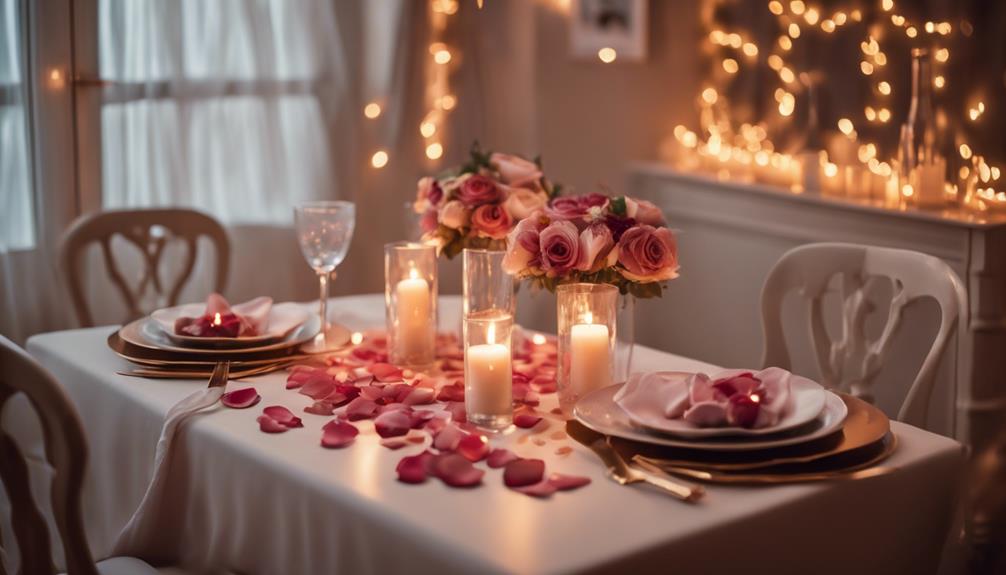

To design around a focal point without overdoing it, focus on strategic color contrast, placement, and visual hierarchy. Use bold colors sparingly so the focal element stands out naturally without competing with other parts. Position it using the rule of thirds or ample negative space, giving it room to breathe. Balance other elements to guide the eye smoothly towards the center. Keep refinement simple and intentional—if you stay mindful, your design will remain cohesive and impactful. More tips await if you keep exploring.

Get everyday essentials delivered free with Prime
- Fast, free delivery on millions of items
- Prime Video, Amazon Music and more included
- Member-only deals all year
Key Takeaways
- Use subtle color contrast to highlight the focal point without overwhelming the surrounding elements.
- Position the focal point strategically using the rule of thirds or central placement with ample negative space.
- Limit additional visual elements near the focal point to maintain clarity and avoid clutter.
- Ensure visual hierarchy directs attention naturally without competing elements.
- Continuously refine spacing, color, and placement to maintain balance and harmony.

Have you ever wondered how to make a design instantly catch the eye? The secret lies in understanding how to highlight a focal point without overwhelming the entire composition. A well-placed focal point guides your viewer’s gaze naturally, so you want it to stand out without feeling forced or chaotic. To achieve this, you need to master the art of balancing visual elements through color contrast and spatial balance. These tools help create a focal point that draws attention while maintaining harmony across your design.
Color contrast plays a vital role here. When you want your focal point to pop, choose colors that sharply differ from the surrounding elements. For example, if your background is muted or neutral, a bold, vibrant hue on the focal element will immediately attract attention. But be careful not to go overboard—using too many contrasting colors can create visual noise rather than clarity. Instead, limit your palette and ensure the contrast enhances the focal point without competing with other parts of the design. This controlled use of color contrast makes your focal point stand out effectively, grabbing attention without overwhelming the viewer.
Use bold, contrasting colors sparingly to make your focal point pop without creating visual noise.
Spatial balance is equally important in guiding the eye towards your focal point. You want to position it in a way that feels natural and comfortable, often by applying principles like the rule of thirds or central placement, depending on your overall layout. Avoid cluttering the space around your focal point; instead, give it room to breathe. Empty space, or negative space, acts as a visual buffer that directs focus inward. It’s like giving your focal point a spotlight, ensuring it’s the star of the show without competing with other elements. When you maintain spatial balance, your design feels cohesive and intentional, preventing the risk of overdoing it with too many competing features. Additionally, understanding how visual hierarchy influences focus can help you guide the viewer’s eye more effectively. Recognizing how the visual flow moves through your design can also optimize where to place your focal point for maximum impact. Being aware of visual weight can further help you distribute elements in a way that naturally leads the viewer’s eye toward the focal point. Moreover, paying attention to visual clarity ensures that your focal point remains distinct and easily recognizable amidst the other elements.
As you craft your design, keep checking in on how everything relates to your focal point. Adjust colors, placement, and spacing until your eye naturally lands on the intended element first. Remember, the goal isn’t to make the focal point the only thing in your design but to guarantee it’s the most compelling. Use color contrast wisely to make it pop and spatial balance to keep the composition harmonious. Done right, your focal point will command attention effortlessly, making your entire design more impactful without feeling crowded or chaotic.
As an affiliate, we earn on qualifying purchases.
Frequently Asked Questions
How Do I Choose the Right Focal Point for My Space?
You choose the right focal point by considering the Focal point hierarchy, ensuring it naturally draws attention without overpowering the space. Look for elements with visual weight, like a fireplace or artwork, that create a clear center of interest. Maintain visual balance by complementing your focal point with supporting decor and colors, so it stands out but still harmonizes with the overall room design.
Can Multiple Focal Points Work in One Room?
They say “too many cooks spoil the broth,” and the same applies to multiple focal points. While multiple focal points can work, you need to maintain focal point balance to avoid visual chaos. Create a clear visual hierarchy, ensuring each focal point complements the others without competing for attention. Use contrast, scale, and placement to guide the eye smoothly through the space, maintaining harmony and visual interest.
What Are Common Mistakes When Designing Around a Focal Point?
A common mistake is neglecting balance and harmony, making the focal point dominate too much or blend in too little. You might also disrupt the visual hierarchy by overloading the space with competing elements, which confuses the eye. To prevent this, guarantee your design enhances the focal point without overwhelming it, maintaining a cohesive flow. Keep proportions, colors, and textures in harmony, so the focal point stands out naturally and elegantly.
How Do Colors Influence the Focal Point’s Impact?
Colors can make or break your focal point’s impact, and they do so more powerfully than you might imagine. You use color psychology to select hues that draw attention without overwhelming, ensuring hue harmony guides the eye naturally. Bright, bold colors grab focus instantly, while muted shades support the main feature subtly. By understanding how colors influence perception, you create a balanced, compelling focal point that captivates without overpowering your entire design.
How Can Lighting Enhance a Focal Point Without Overpowering It?
You can enhance a focal point with lighting by using a subtle ambient glow that highlights the area softly, creating warmth without distraction. Add accent lighting strategically to draw attention, like a spotlight or a gentle wall washer, but avoid overpowering the scene. This balance guarantees your focal point stands out naturally, maintaining its impact while the surrounding space remains inviting and harmonious.
Conclusion
So, next time you’re designing a space, ask yourself: are you highlighting your focal point without overshadowing it? Remember, balance is key—accentuate, but don’t overpower. When done right, your focal point becomes a guiding star, drawing the eye effortlessly. Can you imagine walking into a room where everything gently supports that one standout feature, making it impossible to ignore? With thoughtful design, your space will naturally invite admiration without feeling cluttered or overdone.
Fall Picks
fall essentials
As an affiliate, we earn on qualifying purchases.