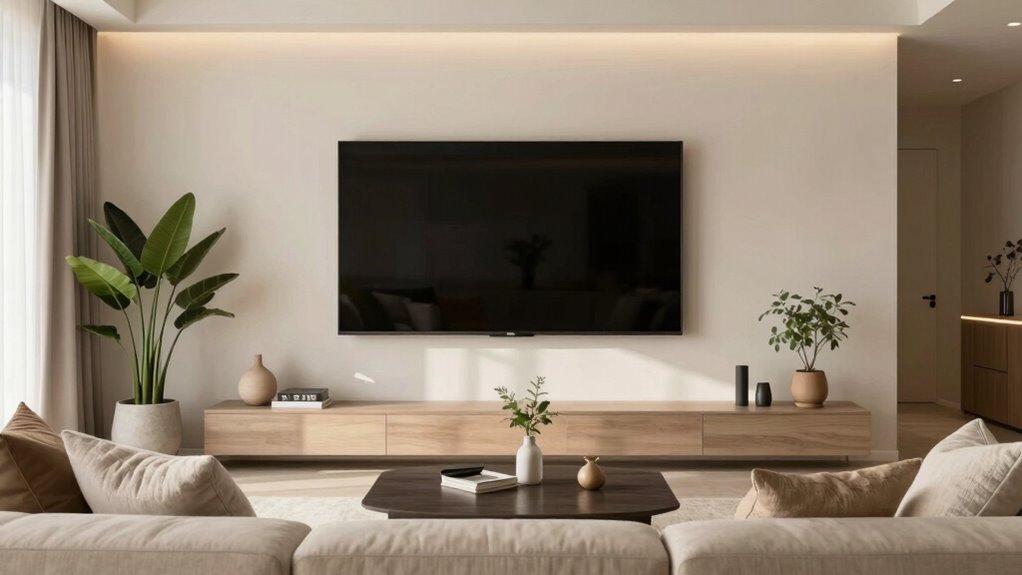

To design around screens without letting them dominate, start by positioning them at eye level for comfort and avoiding hard-to-reach spots. Use size, color, and spacing to create a visual hierarchy that guides attention naturally. Integrate screens into the environment with proper lighting and negative space to prevent clutter. Balance functionality with aesthetics by combining ergonomic placement with harmonious design elements. Keep exploring to find more tips on creating a balanced, inviting space that highlights screens without overpowering it.

Get everyday essentials delivered free with Prime
- Fast, free delivery on millions of items
- Prime Video, Amazon Music and more included
- Member-only deals all year
Key Takeaways
- Position screens at eye level and use ergonomic placement to reduce dominance and promote comfort.
- Establish a clear visual hierarchy with size, color, and contrast to balance screen prominence with other elements.
- Incorporate negative space and appropriate lighting to minimize glare and prevent screens from overwhelming the environment.
- Integrate ecological and environmental considerations to create a harmonious and sustainable design balance.
- Combine functional placement with aesthetic balance to ensure screens serve their purpose without overpowering the overall space.
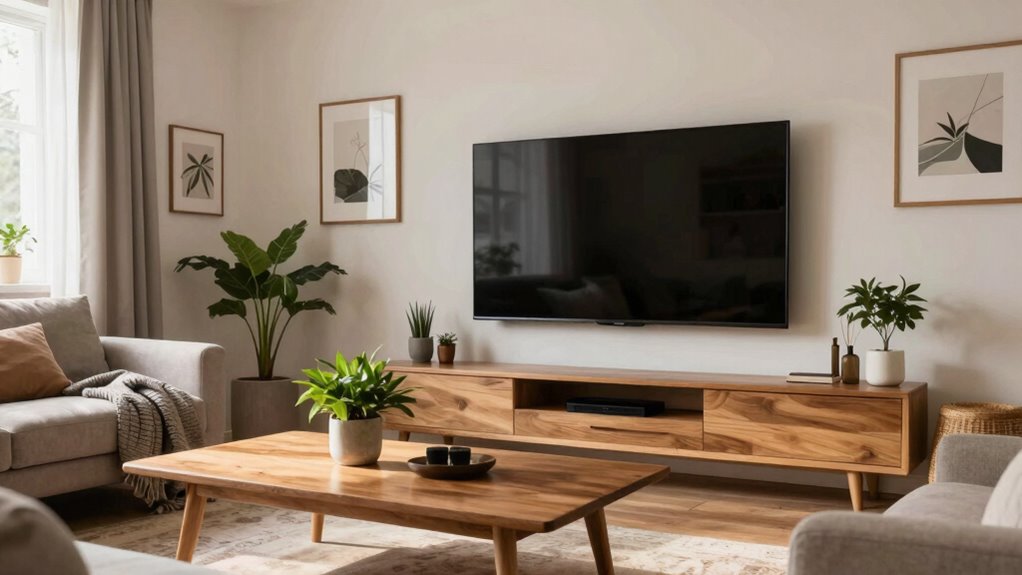
In today’s digital landscape, designing around screens isn’t just a trend—it’s a necessity. As screens become central to our daily lives, it’s easy for them to dominate a space, overpowering other elements and creating visual clutter. The key to successful design lies in balancing screen presence with other components, guiding the viewer’s focus without overwhelming them. To achieve this, you need to pay close attention to ergonomic placement. Position screens thoughtfully, considering how users will interact with them. Avoid placing screens in awkward or hard-to-reach spots that strain the neck, eyes, or posture. Instead, aim for a setup where screens are at eye level, reducing strain and encouraging natural, comfortable engagement. This not only benefits physical health but also influences how viewers perceive and prioritize screen content within the overall design.
Alongside ergonomic placement, establishing a strong visual hierarchy is essential. Visual hierarchy directs attention through strategic use of size, color, contrast, and spacing. When screens are integrated into a design, they shouldn’t overshadow other elements but instead work in harmony with them. Use size and contrast to give screens prominence only when necessary, and keep other elements less visually aggressive but still clear and accessible. This creates a natural flow, guiding viewers from the most important information to supporting details without forcing their gaze. When designing around screens, remember that not everything needs to compete for attention. Instead, craft a hierarchy where screens complement the overall aesthetic and purpose, subtly drawing focus without dominating the entire space. Incorporating visual hierarchy principles is crucial for achieving this balance. Paying attention to interior design best practices can further enhance this harmony by ensuring that all elements work synergistically. Additionally, understanding ergonomic considerations helps create a more user-friendly environment that promotes health and comfort.
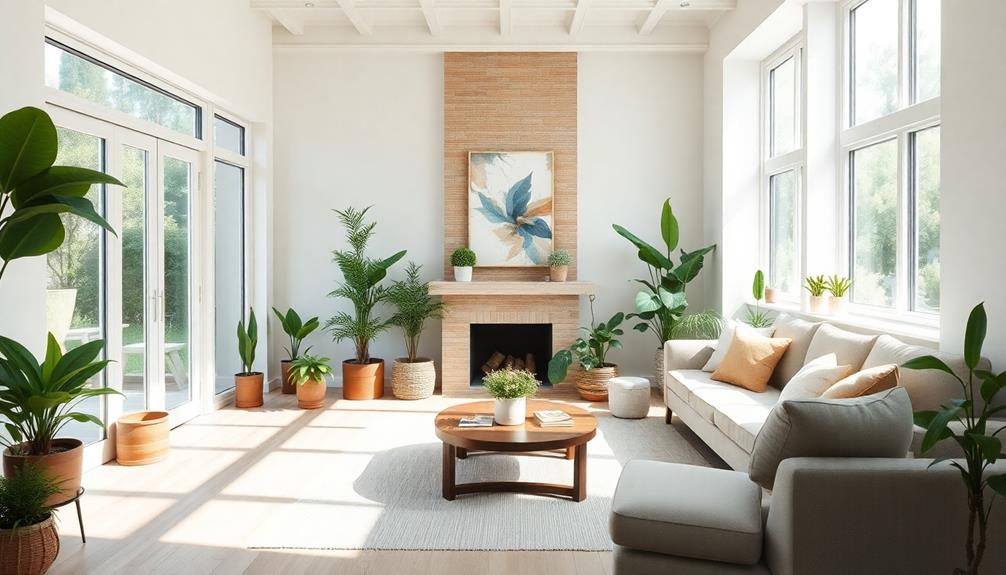
Moreover, consider how the screens fit into the larger environment. Think about the lighting, background, and surrounding elements. Proper lighting can reduce glare, making screens easier to view and less likely to distract from other design features. Use negative space around screens to give them breathing room, preventing them from feeling cluttered or intrusive. This spatial balance allows other design elements—like text, images, or physical objects—to coexist peacefully with screens, creating a cohesive and comfortable user experience. Incorporating biodiversity considerations into interior design can also promote a more sustainable and calming environment, aligning visual harmony with ecological awareness. Recognizing the importance of environmental factors in interior design emphasizes creating spaces that are both functional and ecologically mindful.
Ultimately, designing around screens without letting them dominate requires a strategic approach that combines ergonomic placement with a well-thought-out visual hierarchy. When you prioritize user comfort and visual clarity, you create a space where screens serve their purpose without overpowering the overall design. This balance ensures your environment remains inviting, functional, and visually appealing, no matter how dominant screens become in our everyday lives.
As an affiliate, we earn on qualifying purchases.
Frequently Asked Questions
How Can Natural Light Reduce Screen Dominance?
Natural light reduces screen dominance by balancing ambient lighting in your space. You should strategically place windows to maximize daylight without causing glare on screens. Proper window placement allows natural light to fill the room, making screens less prominent and more integrated into the environment. This creates a comfortable, well-lit space where screens blend subtly, preventing them from becoming overpowering while enhancing overall ambiance and reducing eye strain.
What Materials Minimize Screen Reflection and Glare?
Like a true knight in shining armor, matte coatings and antique finishes battle glare and reflection. You should choose materials with matte finishes for walls and furniture, as they absorb rather than reflect light. Avoid glossy surfaces, which act like mirrors, amplifying screen reflections. Incorporate textured or matte paint, and opt for fabrics with antique finishes to minimize distracting reflections, helping screens blend seamlessly into your space without dominating it.
How Do Color Choices Influence Screen Visibility?
Color choices profoundly impact screen visibility by leveraging color psychology and hue contrast. You should select high-contrast hues to make screens stand out, ensuring readability and reducing eye strain. Warm colors like reds or oranges can draw attention, while cooler shades such as blues and greens offer calmer backgrounds. By thoughtfully combining these elements, you create a balanced environment where screens are visible without overwhelming the overall design.
What Furniture Arrangements Improve Screen Integration?
You’re probably dreaming of a clutter-free space, right? Wall-mounted solutions and modular furniture make that dream come true. Arrange your furniture to frame the screen, not compete with it—use sleek, low-profile pieces that slide into the background. Opt for flexible setups that can be easily adjusted, ensuring your screen remains integrated yet unobtrusive. This way, technology becomes a seamless part of your design, not the star of the show.
How Can Textures Balance Screen Prominence?
To balance screen prominence, you should incorporate wall textures and tactile surfaces that draw attention away from the screen. Use textured wall finishes, fabric-covered panels, or textured paint to create visual interest nearby. These surfaces add depth and variety, making the space feel more balanced and inviting. By contrasting smooth screen surfaces with rich textures, you maintain focus without letting the screen overpower the room’s overall design.
Conclusion
Remember, screens are like stars in your design sky—they can guide or overpower. By thoughtfully balancing their presence with natural elements, textures, and thoughtful placement, you create a space where screens complement rather than conquer. Don’t let them steal the scene; instead, let your design be a canvas that’s vibrant with life beyond the glow. Ultimately, it’s about crafting a harmonious environment where screens shine, but don’t blind.
Columbus Day / Indigenous Peoples' Day Picks
long weekend sales
As an affiliate, we earn on qualifying purchases.