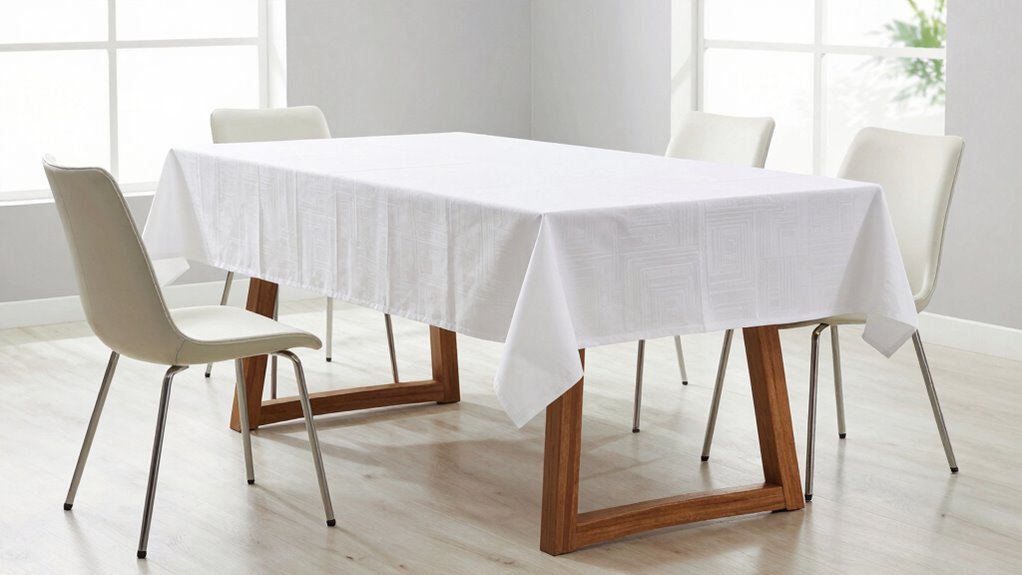

To save your knees and enjoy comfortable seating, allow 24 to 30 inches of clearance around your dining table. This space lets chairs and benches slide in easily without cramping your legs or elbows. Measure the room carefully to keep enough room for movement and access. Getting the right sizing means balancing table dimensions with space for comfort. To discover more tips on perfect table sizing and layout, keep exploring the essentials for a functional, cozy dining space.

Get everyday essentials delivered free with Prime
- Fast, free delivery on millions of items
- Prime Video, Amazon Music and more included
- Member-only deals all year
Key Takeaways
- Maintain 24-30 inches of clearance around the table for comfortable movement and knee space.
- Ensure table height aligns with bench seating, typically 28-30 inches, to prevent knees from hitting the underside.
- Adjust table size based on the number of seats and available room to avoid cramped or oversized setups.
- Consider the thickness of benches and cushions, which may require lowering or raising table height slightly.
- Leave extra space for chairs and benches to slide in and out easily, preventing knees from hitting table edges.
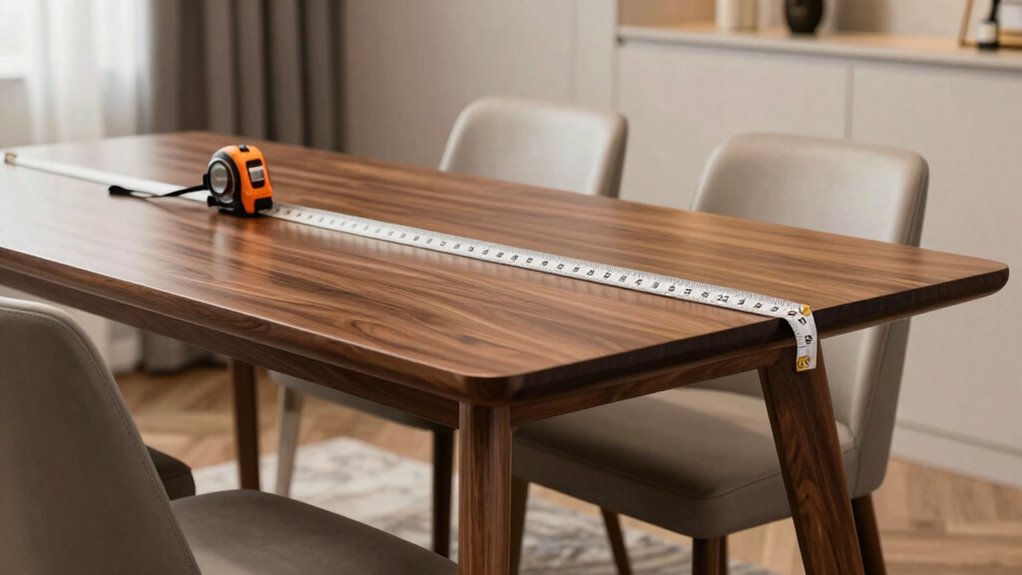
Choosing the right dining table size is vital to creating a comfortable and functional dining space. When planning your setup, you need to consider not just the table’s dimensions but also how it interacts with the seating and the room itself. If you’re opting for bench seating, it’s especially important to select a table that complements the length and width of the bench. A long, narrow bench pairs well with a rectangular table, but make sure there’s enough clearance on all sides so everyone can sit comfortably without feeling cramped or stretching awkwardly. If your bench is particularly plush or thick, you might need to adjust the table height to guarantee comfortable seating and easy access.
Table height adjustment becomes essential when you want a versatile setup or when your bench seating has an unconventional height. Standard dining tables are usually about 28 to 30 inches tall, but if your bench is lower or higher than average, you’ll need to either find a table that can be adjusted or customize your existing table. Adjustable-height tables allow you to tailor the surface to match the seat height, which prevents your knees from banging into the underside of the table and keeps everyone comfortable. This flexibility is especially useful if you have children, elderly family members, or guests with specific needs, as it guarantees everyone can sit at a height that feels natural.
Beyond comfort, proper table height and size help you maximize space efficiency. You want enough room around the table for people to move freely and for chairs or benches to be tucked in without blocking walkways. As a general rule, aim for about 24 to 30 inches of clearance between the edge of the table and the surrounding walls or furniture. For bench seating, this clearance allows guests to slide in and out easily without knocking knees or scraping elbows. When considering table size, think about the number of people you want to seat regularly and add a few extra inches for comfort. A table that’s too small will feel cramped, while a too-large table can dominate the room and be impractical for everyday use.
As an affiliate, we earn on qualifying purchases.
Frequently Asked Questions
How Do I Measure My Space for a New Dining Table?
To measure your space for a new dining table, start by evaluating your room’s dimensions with a tape measure. Include enough space for comfortable movement, ideally 36-48 inches around the table for clearance. Consider your aesthetic balance by choosing a table size that complements your room without overpowering it. Use paper templates or tape on the floor to visualize different sizes before making your final decision.
What’s the Ideal Clearance for Legroom and Seating Comfort?
You should aim for at least 12 inches of ergonomic spacing between the table edge and your chair for comfortable legroom. For seating comfort and aesthetic proportions, allow around 24 to 30 inches of space per person. This clearance guarantees you can move freely without feeling cramped and maintains a balanced look. Prioritizing these measurements helps you create a dining setup that’s both functional and visually pleasing.
How Do Table Size and Chair Height Affect Overall Comfort?
Imagine elevating your dining experience with the perfect harmony of table size and chair height. When selecting table shape options, verify the size complements your space, allowing comfortable movement. Proper chair height, especially with bar stool ergonomics in mind, enhances overall comfort and posture. A well-chosen combination prevents strain, making every meal enjoyable. By balancing these elements, you create an inviting, functional dining area that caters to your comfort and style.
Can a Larger Table Make a Room Feel Crowded?
Yes, a larger table can make a room feel crowded if it disrupts the space perception and visual balance. When the table dominates the area, it can overwhelm the space, leaving little room for movement and making the room seem smaller. To avoid this, choose a table that fits comfortably within your room’s dimensions and maintains proportionality, ensuring the space remains open and inviting rather than cramped.
What Are Common Mistakes in Dining Table Sizing?
Imagine choosing a suit without checking your measurements—you’d end up uncomfortable and out of place. Similarly, common mistakes in dining table sizing include ignoring your decor style, which impacts the table’s look, and neglecting material selection, which affects durability and feel. Failing to take into account clearance space leads to cramped movement. Always measure your space carefully, match your decor style, and pick materials suited for daily use to avoid these pitfalls.
Conclusion
Remember, choosing the right dining table size isn’t just about space—it’s about comfort. Did you know that people often misjudge clearance, leading to unnecessary strain? By ensuring at least 12 inches between your knees and the table, you’ll prevent discomfort and enjoy every meal. Small adjustments can make a big difference, so take the time to measure carefully. Your knees will thank you, and mealtime will become truly enjoyable again.
Evergreen bestsellers Picks
bestsellers
As an affiliate, we earn on qualifying purchases.