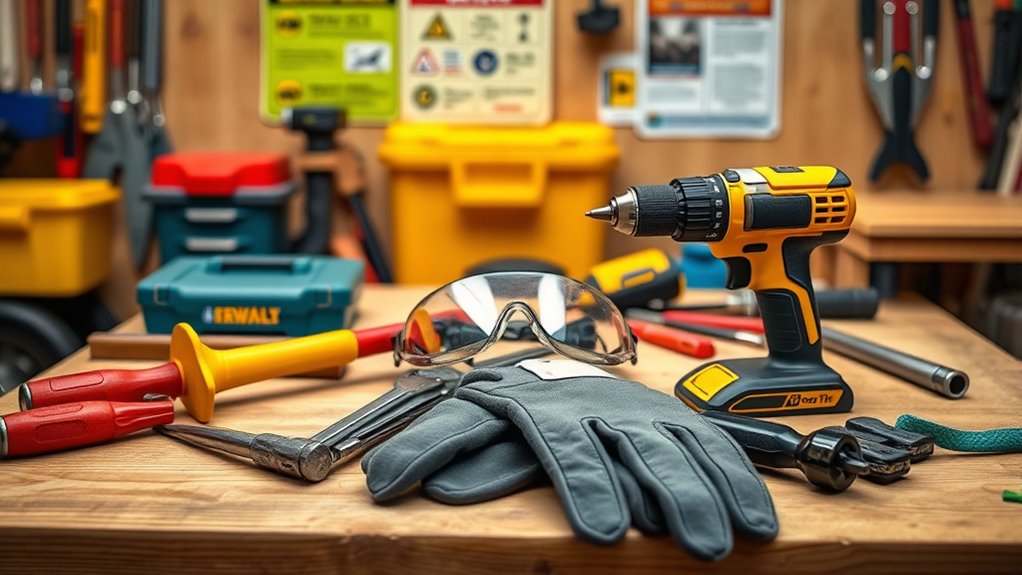

When starting with DIY projects, it’s essential to have basic tools like screwdrivers, hammers, saws, and drills. Always prioritize safety by wearing PPE such as safety glasses, hearing protection, gloves, and dust masks when needed. Handle tools properly, follow their safety instructions, and keep your workspace organized to prevent accidents. Regular maintenance and quick inspections help avoid malfunctions. Staying informed about safety practices guarantees you work confidently and securely—continue exploring to discover more tips for safe and successful projects.
Key Takeaways
- Use appropriate PPE such as safety glasses, gloves, and hearing protection for all tasks.
- Regularly inspect and maintain tools to ensure safety and proper functioning.
- Read and follow safety instructions and manuals before operating any power tools.
- Keep your workspace organized and free of clutter to prevent accidents.
- Disconnect power tools before adjustments or blade changes to avoid unexpected activation.
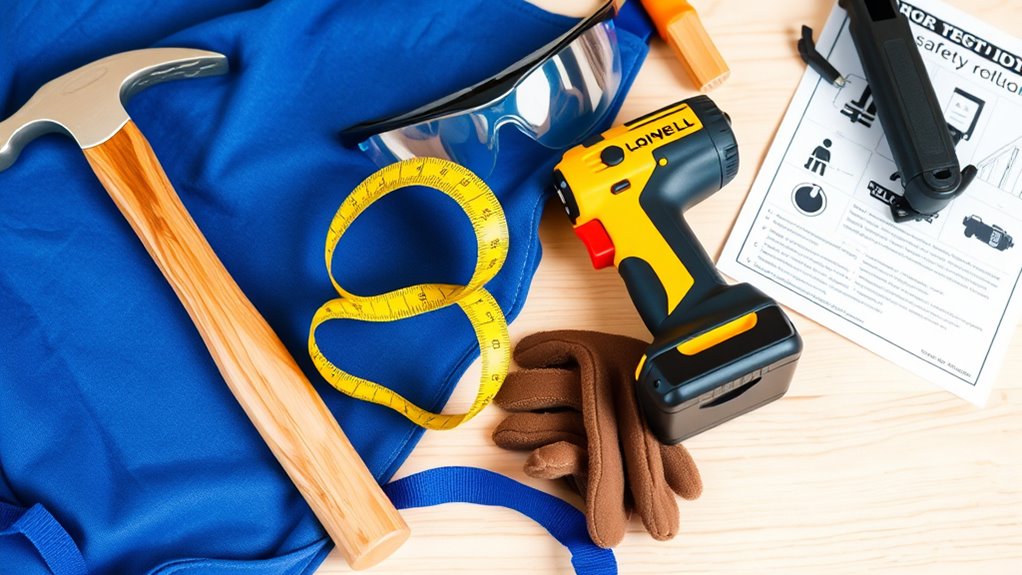
Whether you’re new to DIY projects or looking to refresh your skills, understanding the right tools and safety practices is vital. Starting with the basics, you need to know how to properly handle your tools, especially power tools, which are powerful but can be hazardous if not used correctly. Power tool maintenance isn’t just about keeping your equipment in good shape; it’s about ensuring your safety and prolonging the lifespan of your tools. Regularly inspect your tools for damaged cords, loose parts, or worn-out blades. Keep blades sharp and replace any worn components to prevent accidents caused by mishandling or tool failure. When you take the time for proper power tool maintenance, you reduce the risk of kickbacks, overheating, or unexpected malfunctions, all of which can cause injury.
Equally important is your personal protective equipment (PPE). PPE acts as your first line of defense against flying debris, sparks, and accidental contact with moving parts. Always wear safety glasses or goggles to protect your eyes from dust and fragments, and don’t skip hearing protection when operating loud power tools like saws or drills. Gloves can protect your hands from splinters, sharp edges, and minor cuts, but be cautious—some gloves can get caught in rotating parts, so choose the right type for each task. A dust mask or respirator is essential when working with materials that generate fine particles or fumes, helping you breathe safely, especially in enclosed spaces. Wearing the proper PPE isn’t just about complying with safety rules; it’s about actively preventing injuries before they happen.
Before you start any project, familiarize yourself with the specific safety instructions for each tool. Read the manuals, understand how to operate them properly, and never bypass safety features like guards or switches. Keep your workspace clean and organized, removing clutter that could trip you or cause accidental contact with tools. When handling power tools, always disconnect them from power sources before changing blades or making adjustments. This simple step can prevent accidental startups that lead to injury.
In addition to safe handling, staying alert and aware of your surroundings is fundamental. Never work when you’re tired or distracted, and always focus on what you’re doing. If you’re ever unsure about how to operate a tool or handle a safety concern, seek guidance—whether from instructional videos, manuals, or experienced DIYers. Taking these precautions with power tool maintenance and PPE makes a significant difference, helping you create a safe environment where you can build confidently and enjoy your projects without unnecessary risks. Proper tool safety practices are essential for a secure and successful DIY experience.

TEEHO TE001 Keyless Entry Door Lock with Keypad - Smart Deadbolt Lock for Front Door with 2 Keys - Auto Lock - Easy Installation - Satin Nickel
Passcode Entry: This keypad lock offers 20 access codes for family use and a temporary code for single-use...
As an affiliate, we earn on qualifying purchases.
Frequently Asked Questions
What Are the Essential Safety Gear Items for Beginners?
When beginning DIY projects, you need crucial safety gear like protective eyewear to shield your eyes from debris and gloves to protect your hands from cuts and chemicals. Always wear safety gloves when handling sharp tools or hazardous materials. Protective eyewear is essential to prevent eye injuries. These items guarantee you stay safe while working, helping you avoid accidents and injuries. Prioritize your safety by always wearing proper gear before starting any project.
How Do I Choose the Right DIY Tools for My Project?
When choosing the right DIY tools, focus on your project planning first. Identify the specific tasks you’ll perform and select tools suited for those jobs, like a saw for cutting or a drill for screwing. Prioritize tool selection based on quality and versatility, and avoid unnecessary gadgets. This approach guarantees you have the right equipment to complete your project efficiently and safely, making your DIY experience more enjoyable and successful.
Are There Specific Safety Tips for Using Power Tools?
Don’t let safety fall by the wayside when using power tools. Always follow a safety checklist before starting, including checking for proper guards and securing your workpiece. Keep emergency procedures in mind—know where your first aid kit is and how to shut off power quickly. Wear appropriate safety gear, like goggles and ear protection, and stay alert. Playing it safe keeps your project on track and prevents accidents.
How Can I Maintain and Store My DIY Tools Properly?
To keep your DIY tools in top shape, regularly perform tool maintenance by cleaning, lubricating, and inspecting for damage. Use proper storage solutions like toolboxes, wall racks, or storage bins to organize and protect your tools from dust and moisture. Always store power tools in a dry, secure place, and keep hand tools in designated areas. Proper maintenance and storage guarantee your tools last longer and stay safe to use.
What Should I Do if I Get Injured While Working?
Coincidences happen, like injuring yourself during a project. First, stop working and assess your injury. If it’s minor, use your first aid basics—clean, bandage, and monitor. For serious injuries, call emergency contacts immediately and seek professional medical help. Keep a well-stocked first aid kit nearby and stay calm. Your quick response can prevent complications, so always be prepared and know who to call in emergencies.

TEEHO TE001 Keyless Entry Door Lock with Keypad - Smart Deadbolt Lock for Front Door with 2 Keys - Auto Lock - Easy Installation - Matte Black
Passcode Entry: This keypad lock offers 20 access codes for family use and a temporary code for single-use...
As an affiliate, we earn on qualifying purchases.
Conclusion
So there you have it—your crash course in DIY tools and safety. Remember, your toolbox isn’t a toy chest, and safety gear isn’t just fashion statements. If you treat your tools like gentle giants, you’ll avoid the “oops” moments that turn a project into a catastrophe. Stay sharp, stay safe, and keep your DIY adventures more “nailed it” than “nailed me.” Now go on, conquer that project—just maybe don’t forget your goggles!
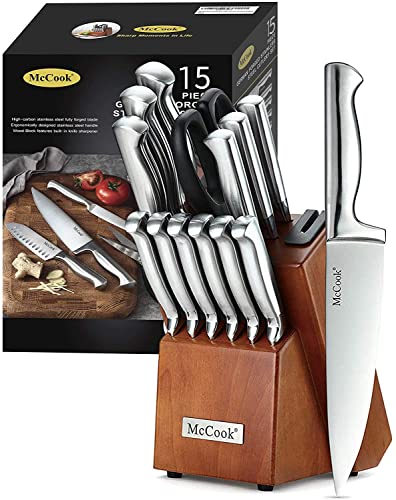
McCook® Knife Sets, German Stainless Steel Kitchen Knife Block Sets with Built-in Sharpener
【Exclusive Built-in Sharpener】Kitchen knife set with sharpener is amazing. The self-sharpening block keeps the knives razor sharp effectively....
As an affiliate, we earn on qualifying purchases.

Knife Set, Astercook 15 Pieces Knife Sets for Kitchen with Block, Dishwasher Safe Kitchen Knife Set with Built in Sharpener Block, German Stainless Steel Knife Block Set, Valentine's Gift
【15 Pieces Multipurpose Knife Set】 15 pieces knife set includes: 8" Chef knife, 8" Slicing knife, 7" Santoku...
As an affiliate, we earn on qualifying purchases.