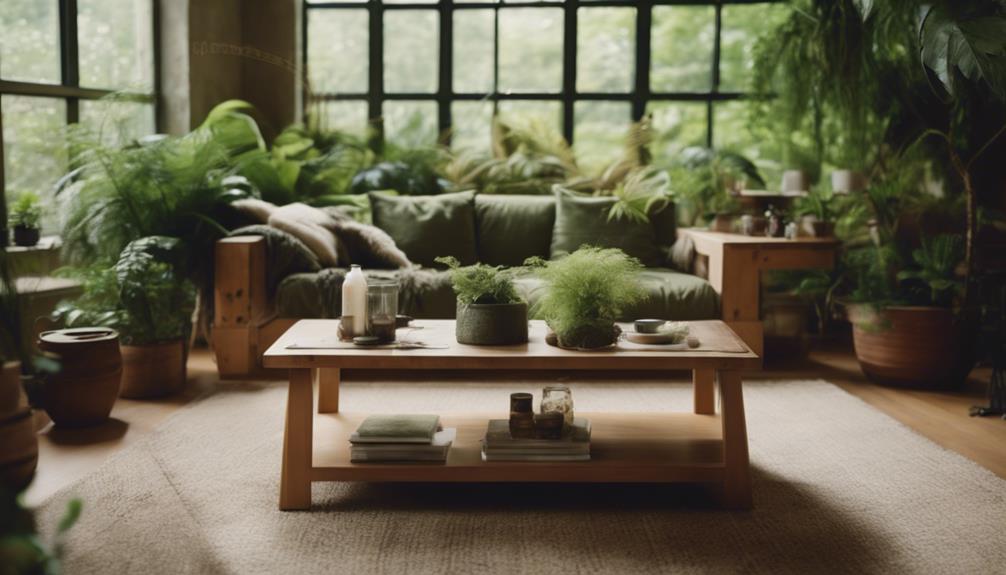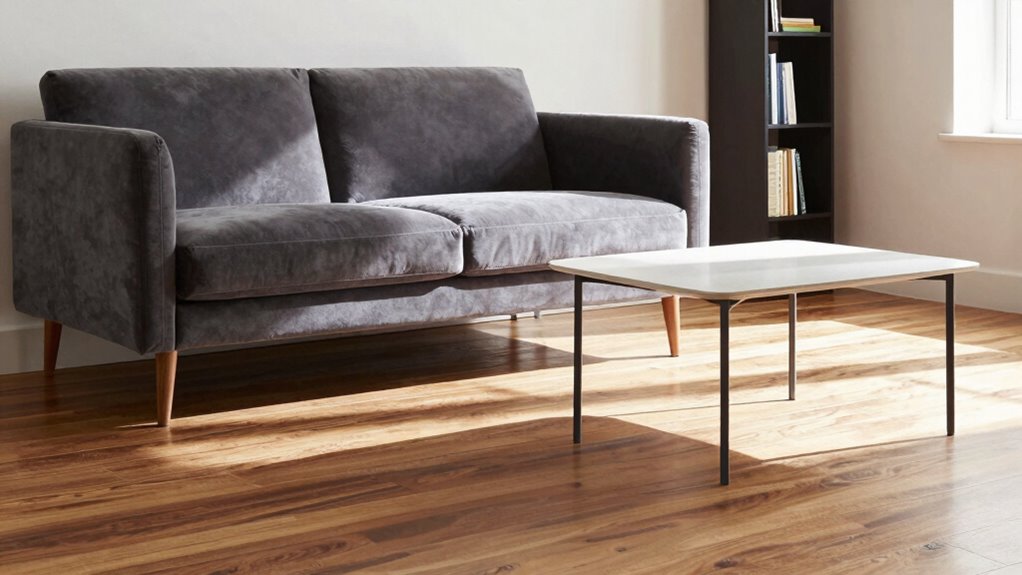

Furniture legs change how heavy a room feels because they affect visual weight, scale, and overall atmosphere. Slim, minimalist legs make your space look lighter and more open, while chunky or ornate legs add weight and presence. The height and shape also influence how spacious or grounded the room feels. Colors and textures further shape this perception, helping you create the mood you want. Keep exploring to see how you can use these details to influence your space’s vibe.

Get everyday essentials delivered free with Prime
- Fast, free delivery on millions of items
- Prime Video, Amazon Music and more included
- Member-only deals all year
Key Takeaways
- Dark or ornate legs add visual weight, making the room feel more grounded and heavier.
- Light-colored or minimalist legs create an airy, spacious atmosphere by reducing visual mass.
- Taller legs elevate furniture, enhancing openness and making the room appear less cramped.
- Thick or chunky legs add perceived solidity, increasing the sense of weight and presence.
- Finishes and textures on legs influence perceived furniture weight, affecting overall room heaviness.
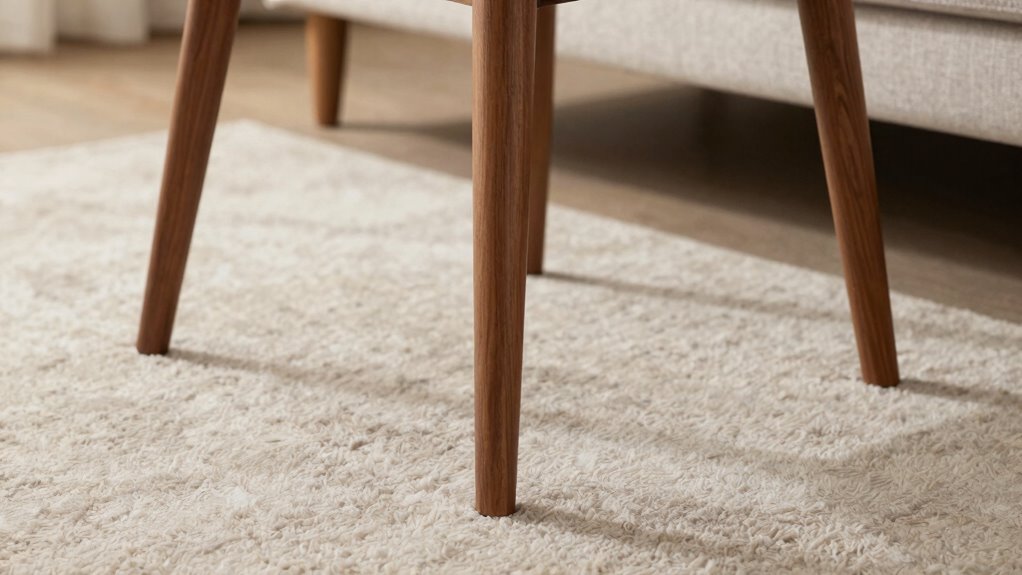
Furniture legs might seem like a small detail, but they play a significant role in shaping the overall feel of a room. When you consider how furniture sits within a space, the height, style, and finish of the legs can dramatically influence the room’s atmosphere. For example, sleek, minimalist legs create an open, airy vibe, making the room feel lighter and less cluttered. Conversely, chunky or ornate legs add weight and presence, making the space feel more grounded and substantial. The way furniture legs are finished and their shape contribute to how you perceive the room’s scale and mood.
Color coordination is a key factor that influences how heavy or light a room feels through furniture legs. If your legs are painted or stained in bold, dark hues, they tend to anchor the furniture, giving the space a heavier, more solid feel. Light-colored or neutral tones on the legs, however, tend to blend with the floor or walls, creating a seamless look that makes the room seem more open and less confined. When the colors of your furniture legs complement or contrast with the overall palette, you subtly guide the eye and determine whether the space feels airy or dense. For instance, black or dark espresso legs can add depth, making the room feel more enclosed, while light woods or painted finishes can lift the furniture, giving an expansive effect. Additionally, understanding how material textures influence visual weight can help you craft the desired atmosphere more effectively. Incorporating texture contrast can further enhance the visual balance and mood of your space. Recognizing the impact of visual weight in furniture design allows for more intentional and harmonious interior styling.
adjustable furniture legs for sofas
As an affiliate, we earn on qualifying purchases.
As an affiliate, we earn on qualifying purchases.
Frequently Asked Questions
Do Taller Furniture Legs Make a Room Feel More Spacious?
Taller furniture legs can make a room feel more spacious by improving space perception and reducing visual weight. When furniture is elevated, it creates an illusion of openness, making the room appear larger. The increased height draws the eye upward, emphasizing vertical space and lightness. This simple change can considerably impact how heavy or crowded a room feels, helping you achieve a more airy, open atmosphere effortlessly.
How Do Different Materials of Furniture Legs Affect Room Ambiance?
You notice how sleek metal legs add a modern, cool vibe, while warm wooden legs create inviting comfort. The material impacts the room’s ambiance by balancing durability and style—metal offers strength but can feel cold, while wood feels natural and cozy. Your choice of leg attachment methods also influences the room’s feel; secure joins create stability, letting your space breathe effortlessly, whether it’s a contemporary or rustic look.
Can Changing Furniture Leg Height Improve Room Acoustics?
Yes, changing furniture leg height can improve room acoustics by enhancing sound absorption and foot stability. Raising or lowering legs alters how sound waves bounce and reflect within the space, reducing echo and noise. Plus, better foot stability minimizes vibrations, creating a calmer environment. Experiment with different heights to find the ideal balance between sound absorption and stability, making your room more comfortable and acoustically pleasing.
Do Decorative Furniture Legs Influence Perceived Room Comfort?
You might think decorative furniture legs don’t matter, but they surprisingly influence perceived room comfort. Ironically, their color psychology and design can enhance visual balance, making a space feel more inviting or chaotic. Bright, bold legs draw attention and energize a room, while sleek, neutral ones promote calm. So, yes, choosing the right decorative legs can subtly shape your comfort level, transforming the room’s atmosphere with just a simple style switch.
Are There Trends in Furniture Leg Styles That Impact Room Perception?
Yes, trends in furniture leg styles considerably impact room perception. Vintage charm legs, like ornate or tapered designs, add warmth and character, making a space feel cozy and inviting. In contrast, modern minimalism with sleek, straight legs creates an open, airy vibe, making rooms seem larger and more streamlined. Your choice influences how heavy or light a room feels, guiding the atmosphere you want to convey through your decor.
Conclusion
So, next time you’re rearranging your space, remember that changing furniture legs isn’t just about style—it can transform how heavy or light your room feels. A simple tweak can make your entire space feel as if it’s floating on air or weighed down by an unseen force. Think of your furniture as the skeleton of your room; even the tiniest change can make your entire space feel like it’s bursting with energy or sinking into the ground.
Halloween Picks
halloween
As an affiliate, we earn on qualifying purchases.