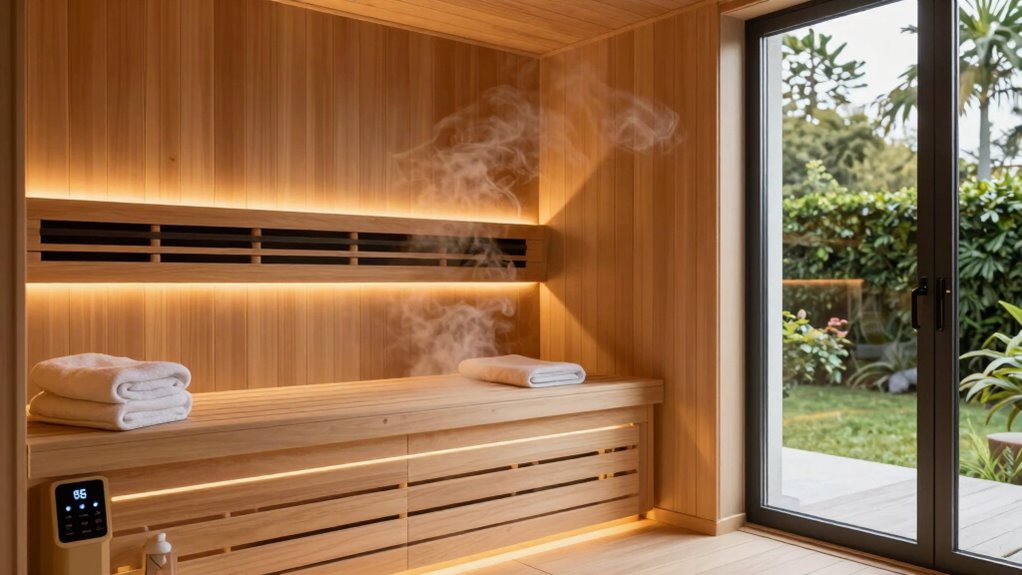

Adding an infrared sauna at home means you’ll need to choose a private, ventilated space like a spare room or basement, making sure there’s enough room for safe entry, exit, and maintenance. You’ll also want to adjust your routine by setting personalized session lengths and ensuring electrical support from a professional. Creating a comfortable, eco-friendly environment can enhance your experience. If you want to discover more tips on optimizing your space and routine, keep exploring.

Get everyday essentials delivered free with Prime
- Fast, free delivery on millions of items
- Prime Video, Amazon Music and more included
- Member-only deals all year
Key Takeaways
- Incorporate regular sauna sessions to improve circulation, detoxify, and reduce stress as part of your wellness routine.
- Choose a private, well-ventilated space like a spare room or basement for safe and comfortable installation.
- Ensure sufficient space for easy entry, exit, and maintenance, with appropriate flooring and environmental adjustments.
- Install a dedicated electrical outlet and follow safety protocols to support the sauna’s operation.
- Opt for eco-friendly, energy-efficient models to promote sustainability and reduce environmental impact.
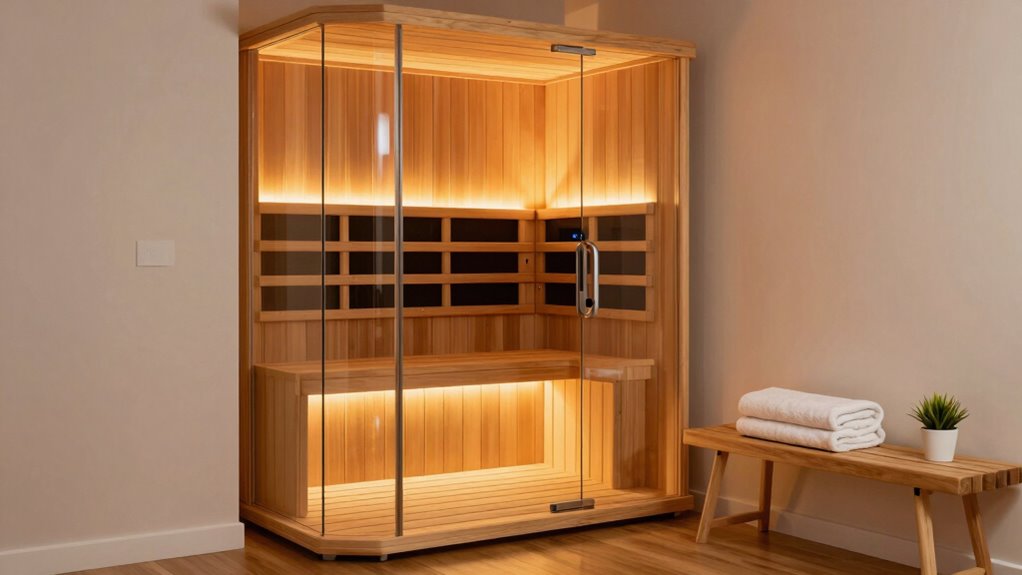
Infrared saunas at home have become increasingly popular, offering a convenient way to enjoy the health benefits of heat therapy without leaving your house. These personal units provide a relaxing, at-your-fingertips wellness option that fits seamlessly into your daily routine. As you consider adding one to your space, it’s vital to understand how it might change your routines and what space adjustments are necessary.
One of the main reasons people invest in an infrared sauna is for its health benefits. Regular sessions can help improve circulation, promote detoxification, reduce stress, and boost overall well-being. Since you’re in control of your schedule, you can tailor sauna use to suit your needs, whether it’s a quick 15-minute session or a longer retreat to unwind after a busy day. The convenience encourages consistency, which maximizes these health benefits over time.
Regular infrared sauna sessions support better circulation, detoxification, stress relief, and overall wellness, fitting easily into your routine.
When it comes to installation tips, you’ll want to think about where to place your sauna. Choose a location that’s easily accessible, private, and well-ventilated. Many opt for a spare room, basement, or even a dedicated corner in their home gym. Make sure the space can accommodate the size of your unit comfortably, with enough clearance around it for safe entry, exit, and maintenance. Proper ventilation is vital; while infrared saunas emit less heat than traditional steam options, good airflow helps prevent moisture buildup and maintains air quality. Additionally, consider energy efficiency to reduce ongoing operating costs and support sustainable living practices. Incorporating sustainable living practices when selecting your sauna can also contribute to a more environmentally friendly home wellness routine. Choosing models with eco-friendly features can also help support biodiversity and conservation efforts by reducing your ecological footprint. To further enhance your setup, it’s beneficial to research material sustainability when selecting your sauna, ensuring it aligns with eco-conscious values.
You’ll also need to think about the electrical requirements. Most infrared saunas require a dedicated outlet, often 120V or 240V, depending on the model. It’s wise to consult a professional electrician to confirm your home’s wiring can support the unit safely. Additionally, consider flooring—placing your sauna on a stable, non-slip surface is essential for safety. Many users install theirs on tiles, hardwood, or dedicated mats designed for sauna use.
Another installation tip involves planning for accessories and comfort. You might want to add features like built-in sound systems, adjustable lighting, or ergonomic seating, which can enhance your experience. Planning ahead guarantees your space is both functional and inviting, making it easier to incorporate regular sessions into your routine. Understanding the importance of biodiversity and conservation can also inspire you to choose eco-friendly and energy-efficient sauna models that align with sustainable living practices.
As an affiliate, we earn on qualifying purchases.
Frequently Asked Questions
How Much Does a Typical Infrared Sauna Cost for Home Installation?
A typical infrared sauna costs between $1,500 and $4,000 for home installation. You should consider the cost comparison of different models, features, and sizes. The installation process varies, but generally, you’ll need a suitable space, electrical setup, and possibly professional help. Budgeting for additional accessories or upgrades is smart. Overall, investing in an infrared sauna offers long-term wellness benefits, making the initial expense worthwhile.
What Are the Safety Considerations for Home Infrared Sauna Use?
You should prioritize safety by monitoring your health regularly and paying attention to temperature regulation. Check your body’s signals during sessions, and avoid overheating or staying in the sauna too long. Keep hydration levels high, and consult a healthcare professional if you have underlying health conditions. Always follow manufacturer guidelines for safe use, and guarantee proper ventilation to prevent any safety risks associated with infrared sauna use at home.
Can I Install an Infrared Sauna Outdoors or Only Inside?
You can install an infrared sauna outdoors, but make certain it has outdoor durability features like weather-resistant materials and proper insulation. Outdoor setups let you enjoy the benefits in fresh air, but be mindful of protection from elements and security. If you prefer indoor aesthetics, choose a model that complements your interior decor and fits seamlessly into your space. Proper installation and maintenance are key for both environments to guarantee longevity and safety.
How Much Space Is Needed to Accommodate an Infrared Sauna?
Imagine you’re in a sci-fi movie—your infrared sauna needs about the size of a small closet, typically 3×4 feet or larger for comfort. You’ll want to take into account design considerations, like easy access and placement, plus ventilation needs to prevent overheating and ensure airflow. Make certain your space can handle the weight and electrical requirements, and plan for enough room around it for easy entry and maintenance.
Are There Any Specific Electrical Requirements for Home Infrared Saunas?
You’ll need to make certain your electrical wiring can handle your infrared sauna’s power capacity. Most saunas require a dedicated circuit with a specific voltage and amperage, often 120V or 240V, depending on the model. Check the manufacturer’s specifications to match your home’s electrical system. It’s a good idea to consult an electrician to evaluate your wiring and install a dedicated outlet, guaranteeing safe and efficient operation of your infrared sauna.
Conclusion
Bringing an infrared sauna into your home gently weaves wellness into your daily life, transforming routine moments into soothing rituals. With a little thoughtful planning, your space can become a sanctuary of comfort and relaxation. Embrace these changes as a subtle shift toward self-care, where warmth and calm become your new companions. Over time, this cozy addition can quietly enhance your well-being, making each day a touch more peaceful and rejuvenating.
Fall Picks
fall essentials
As an affiliate, we earn on qualifying purchases.