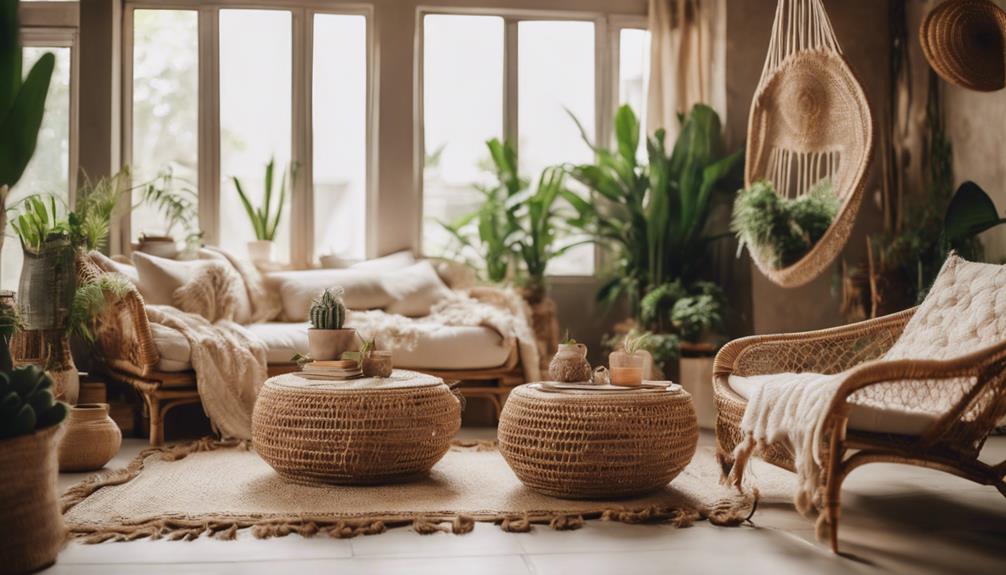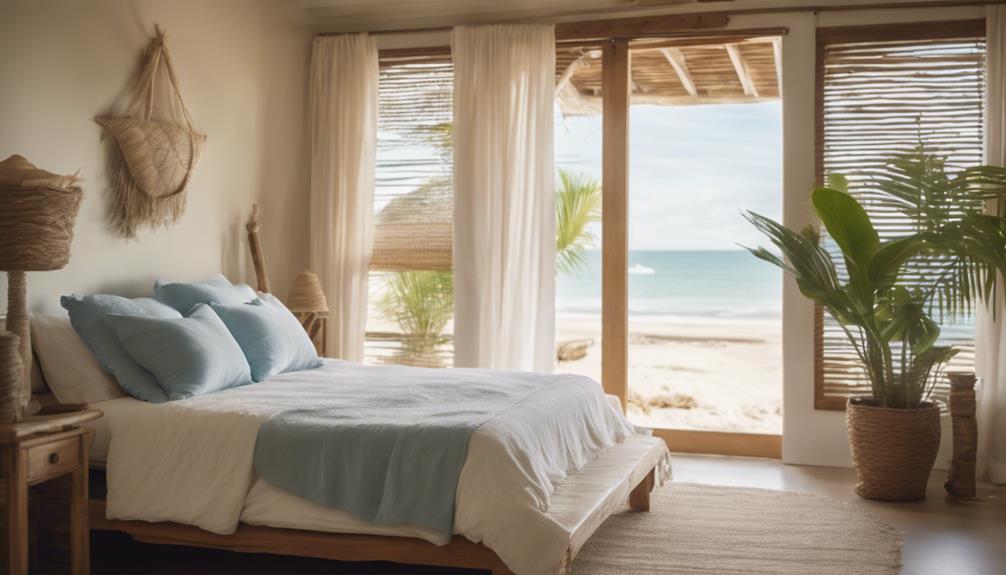
Japandi style blends Japanese minimalism with Scandinavian warmth, creating a space that’s both tranquil and inviting. You’ll find simple, functional furniture alongside soft textures like wool and linen, in neutral tones that promote calm. The design emphasizes decluttering, natural materials, and balanced harmony, with carefully chosen accessories that add personality without chaos. Subtle lighting and warm touches deepen the cozy atmosphere. If you continue exploring, you’ll discover how to effortlessly achieve this stylish, serene look in your home.
Key Takeaways
- Combines Japanese minimalism’s clean lines with Scandinavian warm textures for a balanced, calming environment.
- Uses natural materials like wood, linen, and wool to add warmth and tactile comfort.
- Emphasizes decluttering, functional furniture, and subtle decor for a serene, uncluttered space.
- Incorporates warm neutral tones with minimal accent colors to create a cozy yet modern aesthetic.
- Maximizes natural light and employs warm-toned artificial lighting to enhance a tranquil, inviting atmosphere.
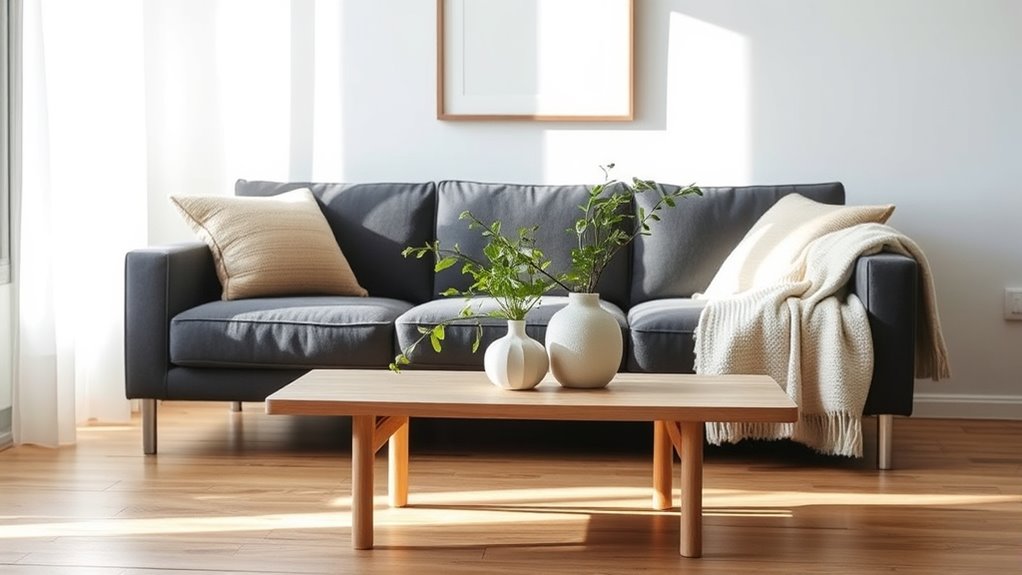
Japandi style seamlessly blends the minimalist elegance of Japanese design with the cozy warmth of Scandinavian decor. When you step into a Japandi-inspired space, you’ll notice how it balances simplicity with comfort, creating an environment that feels both tranquil and inviting. At its core, this style draws heavily on Scandinavian influences, emphasizing clean lines, functional furniture, and a light, airy color palette. The modern aesthetic it champions is all about decluttering your space and focusing on quality over quantity. You’re encouraged to choose pieces that are sleek yet comfortable, blending form and function effortlessly.
Japandi combines Japanese minimalism with Scandinavian warmth for a tranquil, cozy, and stylish space.
In Japandi interiors, the Scandinavian influences shine through in your choice of natural materials like wood, wool, and linen. These textures add warmth and softness to the space, counterbalancing the sharp, minimalist forms typical of Japanese design. You’ll find that furniture tends to be low-profile, with smooth, rounded edges that promote a sense of calm. The color schemes are often muted, favoring neutral shades like beige, soft gray, and warm taupe, which serve as the perfect backdrop for subtle accent colors. This approach keeps your space looking fresh and uncluttered, yet cozy enough to feel like a retreat from the hustle of everyday life.
The modern aesthetic in Japandi style emphasizes functionality and simplicity. You won’t see excessive ornamentation or unnecessary decoration cluttering the space. Instead, each piece serves a purpose and contributes to the overall harmony. You’re encouraged to incorporate minimal accessories, such as a single piece of art or a carefully curated plant, to add personality without overwhelming the senses. The focus remains on creating a balanced environment where negative space is just as important as the furniture and decor. This helps foster a sense of openness and calm, making your space feel more expansive and serene.
Lighting plays a vital role in achieving the Japandi look. You’ll want to maximize natural light with simple window treatments or none at all, allowing sunlight to fill the room. When it’s time to add artificial lighting, choose fixtures with clean lines and warm-toned bulbs to enhance the cozy atmosphere. The goal is to create a space that feels intentionally designed but effortless in its appearance. With careful attention to these details, you’ll craft a living area that embodies the perfect union of Japanese minimalism and Scandinavian warmth, all while maintaining a modern aesthetic that’s both stylish and livable. Incorporating rustic materials can further deepen the sense of warmth and authenticity in your space.

EUHOMY 60 Inch Electric Fireplace Wall Recessed and Wall Mounted with Adjustable Flame Color, Fireplace Heater with Remote Control, Linear Fireplace with Timer, Touch Screen, Log & Crystal, 750/1500W
Package Inclusions & 2-Year Technical Support: : The EUHOMY electric fireplace is equipped with 1* carbon log, 1*...
As an affiliate, we earn on qualifying purchases.
Frequently Asked Questions
What Are the Main Color Palettes Used in Japandi Design?
You’ll find that Japandi design mainly uses neutral color palettes inspired by Scandinavian aesthetics and Japanese influences. Think soft beiges, warm taupes, and cool grays, complemented by natural wood tones. You might also add subtle accents of black or deep green for contrast. These colors create a calm, inviting atmosphere, blending minimalism with warmth. By sticking to these palettes, you enhance both the simplicity and serenity that define Japandi style.
How Can I Incorporate Natural Materials Into Japandi Decor?
Think of your space as a forest, where every natural element adds life and warmth. To incorporate natural materials into your Japandi decor, choose pieces from sustainable sources like bamboo, reclaimed wood, or linen. Use texture layering through woven baskets, soft throws, and textured ceramics to create depth. This approach not only enhances the aesthetic but also celebrates nature’s beauty, making your home feel both cozy and eco-friendly.
Is Japandi Suitable for Small Living Spaces?
Yes, japandi works well in small living spaces. You can maximize space with small space solutions like sleek, multifunctional furniture that combines style and practicality. Opt for light, neutral colors to create an open feel, and keep clutter minimal to enhance the minimalist aesthetic. Incorporate natural materials and simple decor to add warmth without overwhelming the space. This approach helps you achieve a cozy, functional japandi look, even in tight quarters.
What Are Common Furniture Styles in Japandi Interiors?
You’ll find furniture in Japandi interiors that perfectly blends Scandinavian influences with traditional Japanese elements. Think sleek, simple lines, low-profile sofas, and functional wooden tables, all exuding effortless elegance. You might also see tatami mats or shoji screens adding a touch of Japanese tradition. These pieces create a calming, harmonious space, proving that minimalism doesn’t have to be boring — it’s practically a design revolution!
How Do I Balance Minimalism and Warmth Effectively?
To balance minimalism and warmth effectively, choose decorative accents like textured textiles, ceramics, or wooden elements that add coziness without clutter. Opt for warm lighting choices, such as soft, ambient lights or lamps with warm-toned bulbs, to create inviting atmospheres. Keep furniture simple and functional, but don’t shy away from adding personal touches through subtle decorative pieces, ensuring your space feels both serene and welcoming.

PuraFlame Western Electric Fireplace Insert with Fire Crackling Sound, Remote Control, 750/1500W, Black, 33 1/16 Inches Wide, 25 9/16 Inches High
Overall dimensions: 35 1/16" W x 26 31/32" H x 8 25/32" D. Firebox dimensions: 32 1/8" W...
As an affiliate, we earn on qualifying purchases.
Conclusion
Japandi style is like a perfect harmony between two melodies, blending minimalism with warmth to create a space that feels both calming and inviting. By choosing clean lines and natural textures, you craft a sanctuary that’s as soothing as a gentle breeze. Embrace this style, and your home becomes a tranquil oasis—where simplicity blossoms into comfort. With Japandi, you’re not just decorating; you’re composing a peaceful melody that resonates deep within your soul.

R.W.FLAME 50 Inch Recessed and Wall Mounted Smart Electric Fireplace, Alexa/WiFi Enabled, APP Control with Multiple Sound Modes, Remote Control with Timer, Adjustable Flame Colors and Speed
Dual-Control Smart Interaction and Clear Display: Features both touch-sensitive buttons and an LCD remote control. Remote operation via...
As an affiliate, we earn on qualifying purchases.

Westinghouse 60 Inch Electric Fireplace Heater, Compatible with Alexa & Google Home, Wall Mount or in-Wall Recessed Fireplace Insert, 24 Hour Timer, Color Changing Flames, 750W/1500W Indoor Heater
CUSTOMIZE APPEARANCE: Up to 144 total color combinations for flames and embers, 5 independent brightness levels, and 5...
As an affiliate, we earn on qualifying purchases.