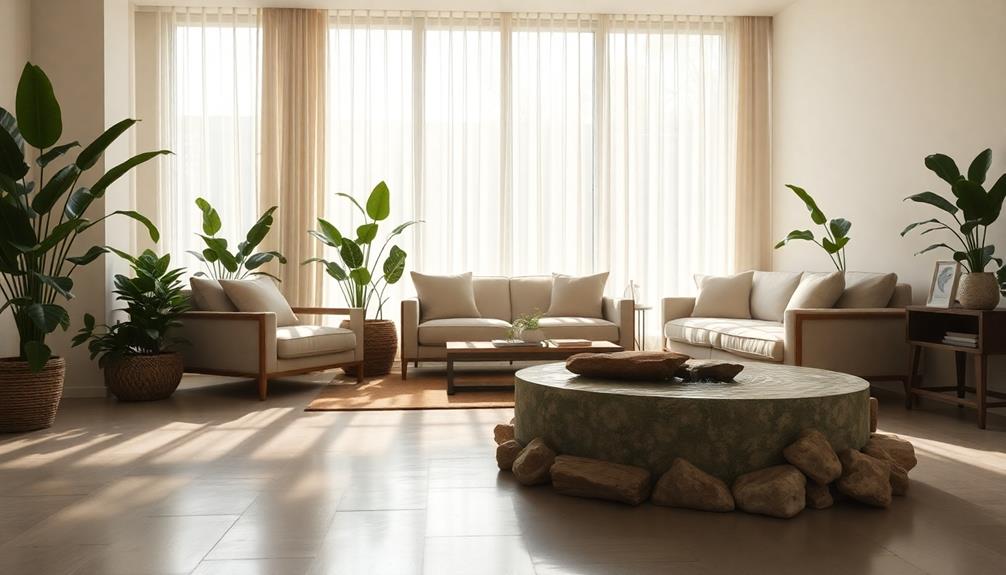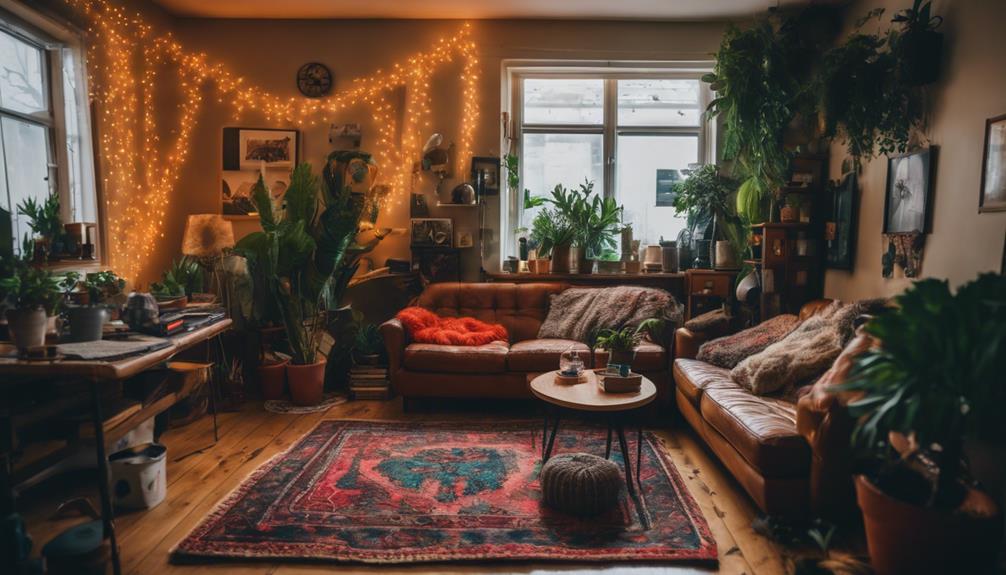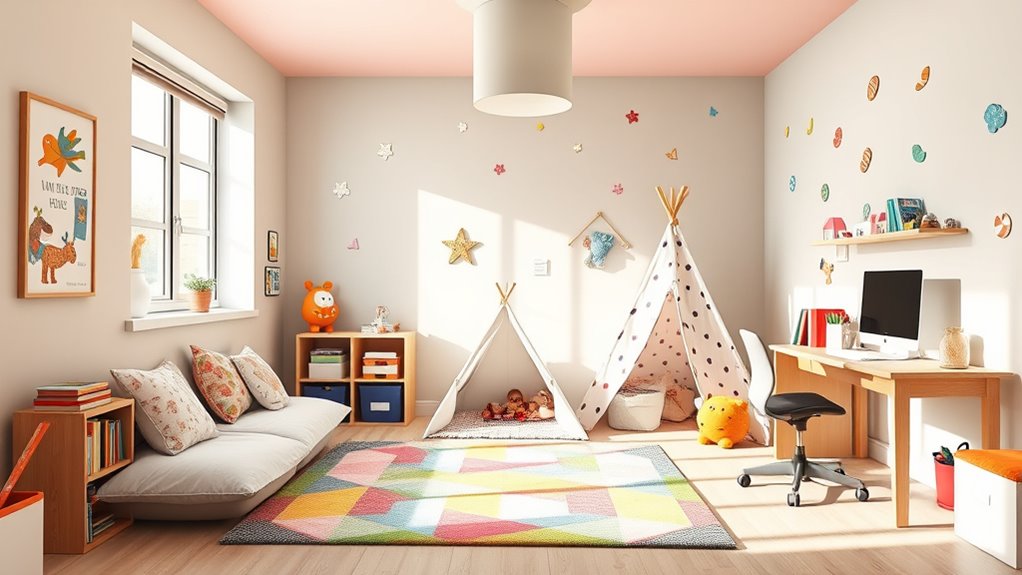

To create a growth-friendly kids’ room, focus on flexible furniture, open storage, and adaptable zones for play, rest, and study. Use versatile pieces that can evolve with your child’s needs, like beds that double as couches or adjustable shelves. Keep safety in mind with rounded edges and secured furniture. Incorporate bright, fun decor that reflects personality while ensuring functionality. For more ideas on designing a room that grows with your child, keep exploring some simple, effective tips.
Key Takeaways
- Incorporate adjustable furniture and modular storage to adapt to changing needs and sizes.
- Design flexible zones for activities like play, study, and relaxation that can be reconfigured easily.
- Use versatile pieces, such as beds that double as seating, to maximize space and functionality over time.
- Plan for ample, open space to accommodate growth and prevent overcrowding as belongings expand.
- Choose durable, timeless decor and finishes that can transition with your child’s evolving interests.
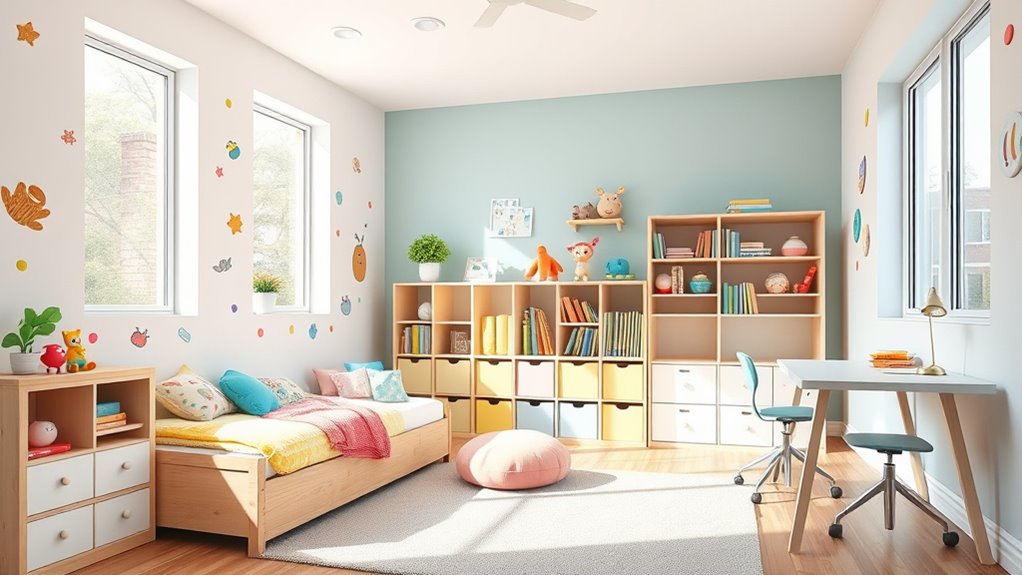
Designing a kids’ room is an exciting opportunity to create a space that sparks creativity, comfort, and personality. When planning a growth-friendly layout, start by focusing on playroom organization. A well-organized play area not only makes it easier for your child to find their favorite toys but also encourages independence and responsibility. Use open shelving, bins, and labeled storage to keep things tidy. Keep frequently used items within easy reach, and designate specific zones for different activities, like reading, arts and crafts, or active play. This helps your child develop good habits and keeps the room clutter-free, making it a more inviting space for everyone.
Safety should be a top priority as you design the room. Furniture safety is vital to prevent accidents and ensure your child’s well-being. Opt for furniture with rounded edges and stable bases to minimize risk. Avoid pieces that are too heavy or unstable, as they could tip over if pulled or climbed on. Anchor heavy furniture, like dressers and bookshelves, to the wall, and choose non-toxic paints and finishes to create a healthy environment. When arranging furniture, leave enough space for free movement and play, avoiding overcrowding that could cause tripping hazards. Take a moment to double-check that outlets are covered and cords are tucked away, reducing the chance of electrical accidents. Incorporating child-friendly safety features can further enhance the room’s security and peace of mind for parents.
As your child grows, their needs and interests will evolve, so flexibility in your layout is key. Incorporate versatile furniture, like a bed that doubles as a couch or a desk that can adapt to different activities. Use adjustable shelving or modular storage units that can be reconfigured as your child’s collection of books, toys, and belongings expands. Keep in mind that their preferences matter—design a room that reflects their personality and encourages them to spend time there. Bright colors, fun decor, and personalized touches will make the space truly theirs, while functional furniture ensures it remains practical and safe for years to come.

TP-Link Deco 7 BE25 Dual-Band BE5000 WiFi 7 Mesh Wi-Fi System | 4-Stream 5 Gbps, 240 Mhz | Covers up to 6,600 Sq.Ft | 2X 2.5G Ports Wired Backhaul | VPN,MLO, AI-Roaming, HomeShield, 3-Pack
𝐃𝐞𝐜𝐨 𝟕 𝐒𝐮𝐩𝐞𝐫𝐜𝐡𝐚𝐫𝐠𝐞𝐝 𝐰𝐢𝐭𝐡 𝟒-𝐒𝐭𝐫𝐞𝐚𝐦 𝐁𝐄𝟓𝟎𝟎𝟎 𝐃𝐮𝐚𝐥-𝐁𝐚𝐧𝐝 𝐖𝐢𝐅𝐢 𝟕 - Achieve full speeds of up to 4324 Mbps...
As an affiliate, we earn on qualifying purchases.
Frequently Asked Questions
How Can I Maximize Space in a Small Kids’ Room?
You can maximize space in a small kids’ room by choosing multifunctional furniture like beds with built-in storage or fold-out desks. Use creative storage solutions such as wall-mounted shelves, under-bed bins, and multi-purpose organizers to keep clutter at bay. Opt for vertical storage to free up floor space, and keep the room organized to make it feel larger. These strategies guarantee the room grows with your child while remaining functional and fun.
What Are Safe Materials for Kids’ Furniture?
Think of your child’s furniture as a fortress of safety. You want it built with non-toxic finishes that act as a protective shield, and hypoallergenic fabrics that serve as gentle armor against allergies. These materials guarantee a healthy environment, free from harmful chemicals. By choosing furniture made with safe, eco-friendly materials, you create a nurturing space where your child can grow, play, and dream confidently.
How Often Should Kids’ Room Décor Be Updated?
You should update your kids’ room décor every 6 to 12 months to keep up with their growth and changing interests. Incorporate seasonal themes to refresh the space without losing decoration longevity. This way, you can easily swap out accents or artwork, maintaining a fun environment that reflects their evolving personality. Regular updates help keep the room engaging and age-appropriate while ensuring safety and style remain balanced.
What Age-Specific Storage Solutions Work Best?
Of course, you’ll want age-specific storage solutions that grow with your child. For clothing organization, opt for adjustable closets and drawers that adapt as they grow. Toy storage should be easy to access and versatile—think open bins or modular shelves. Ironically, the more you try to contain their stuff, the more space they seem to need. So, choose clever, adaptable storage to keep up with their ever-changing needs.
How Can I Incorporate Educational Elements Into the Design?
You can incorporate educational elements into the design by adding interactive learning features and sensory engagement opportunities. Use wall decals or chalkboards for creative expression, and include textured rugs or wall panels to stimulate senses. Incorporate bookshelves at accessible heights and create zones for specific activities. These elements encourage exploration, support development, and make learning a fun, integral part of your child’s space.

TP-Link Deco X55 AX3000 WiFi 6 Mesh System - Covers up to 6500 Sq.Ft, Replaces Wireless Router and Extender, 3 Gigabit Ports per Unit, Supports Ethernet Backhaul, Deco X55(3-Pack)
Wi-Fi 6 Mesh Wi-Fi - Next-gen Wi-Fi 6 AX3000 whole home mesh system to eliminate weak Wi-Fi for...
As an affiliate, we earn on qualifying purchases.
Conclusion
So, after all your efforts to create a perfect, growth-friendly kids’ room, remember that their biggest growth spurts often happen outside your carefully planned layouts. While you’ve designed for the future, it’s amusing how quickly their needs outgrow even the best intentions. But hey, isn’t that the charm of parenting? Embrace the chaos, because in the end, the room might be adaptable, but their wild spirits surely aren’t.
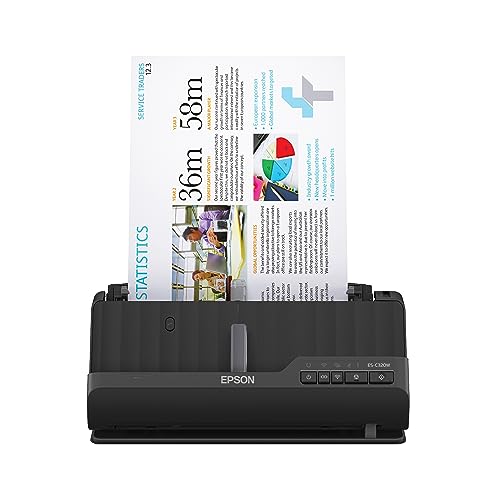
Epson Workforce ES-C320W - Wireless Compact Desktop Document Scanner - 2-Sided Scanning Auto Doc Feeder - Can Scan Paper and Cards - Black
ULTRA-COMPACT DESIGN – Save 60% of desk space in nearly any setting effortlessly with this compact scanner, perfect...
As an affiliate, we earn on qualifying purchases.

Epson Workforce ES-400 II Color Duplex Desktop Document Scanner for PC and Mac with Auto Doc Feeder (ADF), Image Adjustment Tools
FAST DOCUMENT SCANNING – Speed through stacks with the 50-sheet Auto Document Feeder, perfect for office scanning and...
As an affiliate, we earn on qualifying purchases.