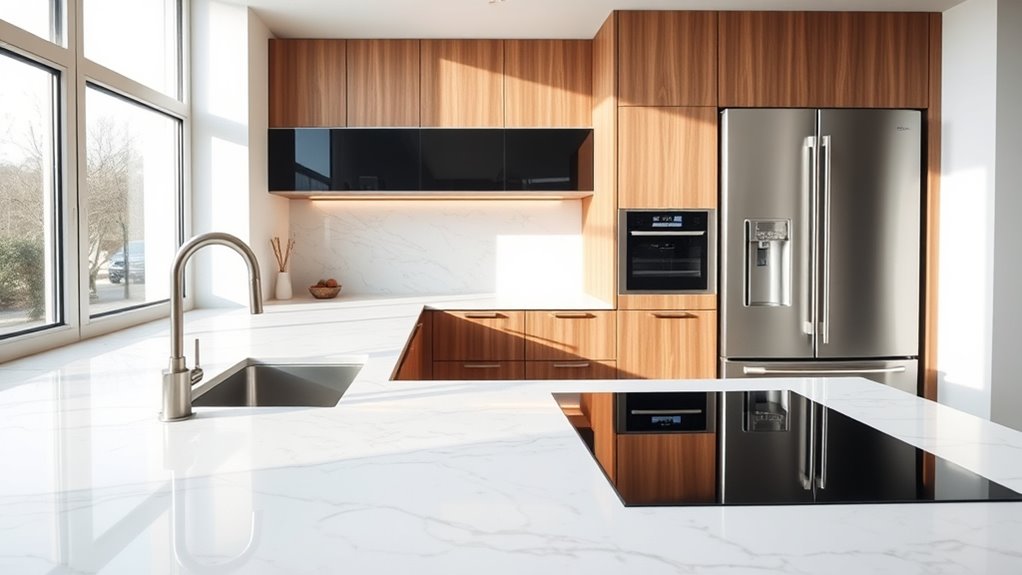

The kitchen triangle focuses on efficiently placing your sink, stove, and refrigerator to minimize movement and boost workflow. Modern work zones expand this idea by dividing the kitchen into functional areas like prep, cooking, and clean-up, all while maintaining the core principle of strategic appliance placement. This setup helps create a space that’s ergonomic, safe, and easy to use. Continue exploring to discover how to adapt these principles to your unique kitchen layout.
Key Takeaways
- The kitchen triangle links sink, stove, and refrigerator to optimize workflow and reduce movement.
- Modern work zones divide the kitchen into areas like prep, cooking, and cleaning for better efficiency.
- The traditional triangle remains relevant but can be adapted to include multiple work zones for larger or open-plan kitchens.
- Proper appliance placement within work zones minimizes fatigue and enhances ergonomic comfort.
- Balancing the triangle and work zones improves safety, functionality, and overall kitchen usability.
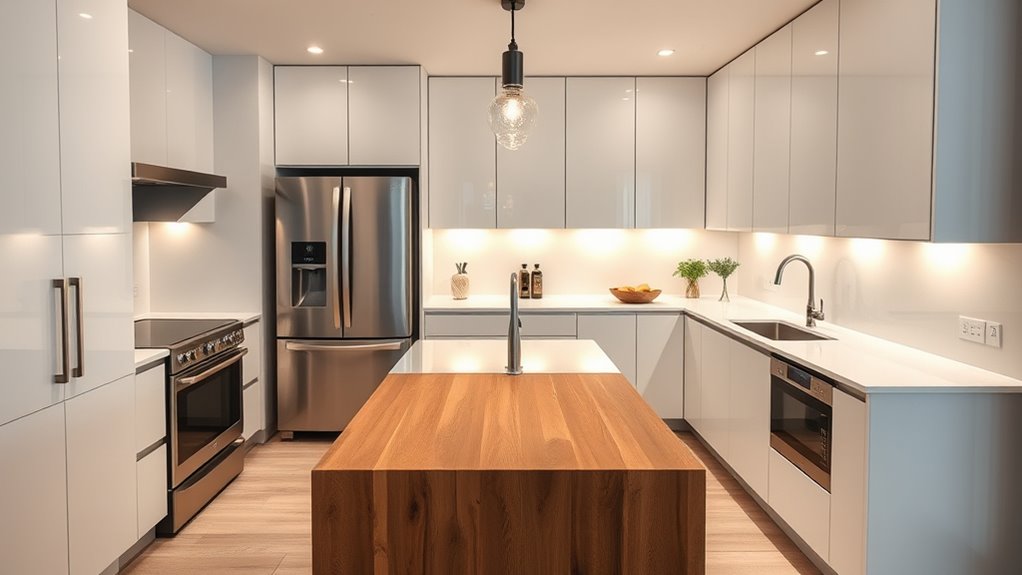
The kitchen triangle, a classic design principle, remains an essential concept in creating efficient work zones, even as modern kitchens evolve. It emphasizes the ideal placement of the three main work areas: the sink, stove, and refrigerator. Proper appliance placement within this triangle minimizes unnecessary movement, making your kitchen more functional and enjoyable to use. When you focus on the kitchen triangle, you ensure that these key appliances are positioned to facilitate smooth workflow, reducing fatigue and boosting efficiency. The goal is to keep the distance between these points manageable, typically between 4 and 9 feet, so you can move comfortably without feeling cramped or stretching too far.
In designing your kitchen, consider ergonomic principles alongside the triangle’s guidelines. Ergonomic design ensures that appliances and work surfaces are at heights and locations that reduce strain. For example, placing the refrigerator so you can access it easily without bending or reaching excessively, and positioning the stove at a comfortable height for cooking, helps prevent fatigue. When you align your appliances with ergonomic best practices, you create a space that feels natural and effortless to work in. This not only enhances comfort but also improves safety, as you’re less likely to overreach or lose balance while handling hot or heavy items. Additionally, incorporating natural lighting can boost visibility and create a more inviting atmosphere in your kitchen.
Modern kitchens often challenge traditional layouts, but integrating the kitchen triangle remains relevant. You can adapt it to fit your space, whether you’re working with a small galley kitchen or a spacious open-plan design. Focus on the placement of each major appliance to maintain logical flow. For instance, locating the refrigerator near the entry point of your prep area allows you to grab ingredients quickly, while positioning the stove close to the countertop workspace makes cooking more efficient. Remember, the key is to minimize the distance between these zones without sacrificing comfort or safety.
Frequently Asked Questions
How Do I Customize the Kitchen Triangle for Small Spaces?
To customize the kitchen triangle for small spaces, focus on creating compact layouts that maximize efficiency. Position the sink, stove, and fridge within close proximity while maintaining clear pathways. Use multi-functional spaces, like islands with storage or fold-out counters, to enhance functionality without cluttering. Prioritize accessibility and flow, ensuring each zone is easily reachable. This way, your small kitchen remains practical, organized, and perfect for everyday cooking.
What Are the Benefits of Open-Concept Work Zones?
Open-concept work zones keep you in the thick of things, making your space feel bigger and more inviting. With ergonomic design and smooth traffic flow, you won’t feel cramped or bump into each other. It promotes better interaction, so you can cook, entertain, and work without missing a beat. Plus, it’s easier to adapt your space over time, turning a small area into a versatile hub for daily life.
How Can I Improve Safety Within Modern Work Zones?
You can improve safety within modern work zones by prioritizing child safety and installing slip-resistant flooring. Keep sharp tools and hazardous materials out of children’s reach, and ensure all cords are tucked away to prevent tripping. Use slip-resistant flooring to reduce slips and falls, especially in high-traffic areas. Regularly check for hazards, maintain good lighting, and educate everyone about safety practices to establish a safer environment.
Are There Eco-Friendly Materials Suitable for Kitchen Work Zones?
Think of eco-friendly materials as the green heart of your kitchen. You can choose sustainable countertops like bamboo or recycled glass, which are durable and eco-conscious. For flooring, opt for eco-friendly options like cork or reclaimed wood, offering warmth and sustainability. These materials are like a gust of fresh air for your space, helping you reduce your environmental impact while creating a beautiful, functional kitchen work zone.
How Does Technology Integration Impact Kitchen Work Zone Design?
Technology integration transforms your kitchen work zone by making tasks more efficient. You’ll love smart appliances that connect seamlessly, allowing you to control cooking, cleaning, and storage with ease. Voice control lets you manage devices hands-free, saving time and reducing clutter. This modern approach streamlines your workflow, enhances convenience, and creates a more functional space tailored to your needs, making your kitchen smarter and more enjoyable to work in every day.
Conclusion
By understanding the kitchen triangle and modern work zones, you create a more efficient space that works for you. Remember, “A stitch in time saves nine,” meaning taking the time to plan now prevents bigger issues later. When you design thoughtfully, your kitchen becomes not just functional but a true joy to use. Embrace these concepts, and you’ll enjoy your space more every day, making cooking and cleaning smoother and more enjoyable.