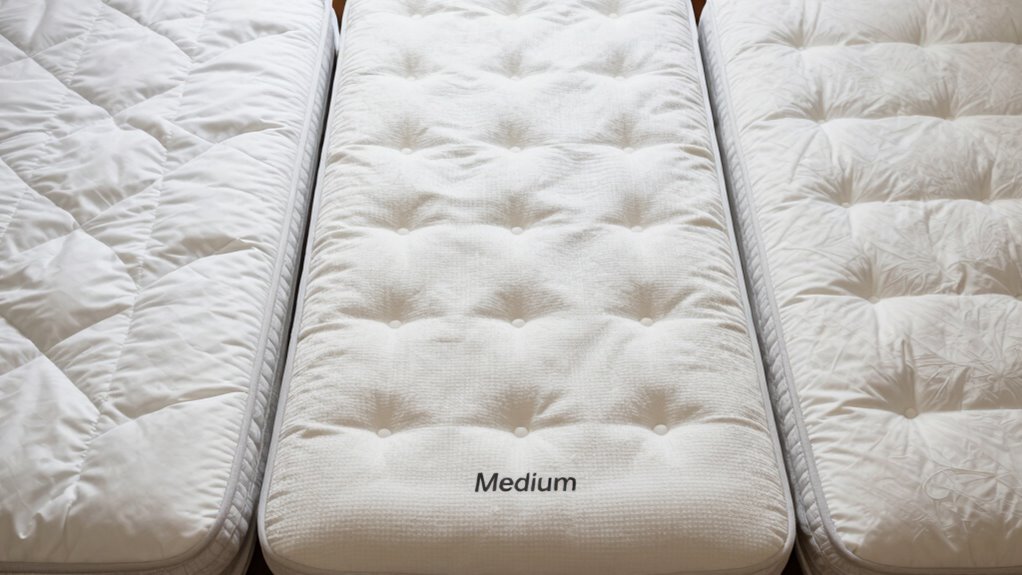

“Medium” mattress labels can be misleading because they lack standardized definitions, so they don’t reliably tell you how firm or soft a mattress will feel. The actual comfort depends on materials like foam density or coil type, not just the label. For better results, focus on detailed specifications to match your preferred feel—whether plush or firm. Keep exploring to discover how understanding these details can help you find the perfect sleep surface.
Key Takeaways
- “Medium” labels lack standardized firmness definitions and vary across brands and models.
- Comfort depends on materials, construction, and foam density, not just the label “medium.”
- Memory foam’s firmness is influenced by density and thickness, not the label, affecting support and feel.
- Coil type (e.g., Bonnell, pocket) significantly impacts firmness, regardless of labeled softness.
- To find the right mattress, review detailed specifications rather than relying solely on vague labels like “medium.”
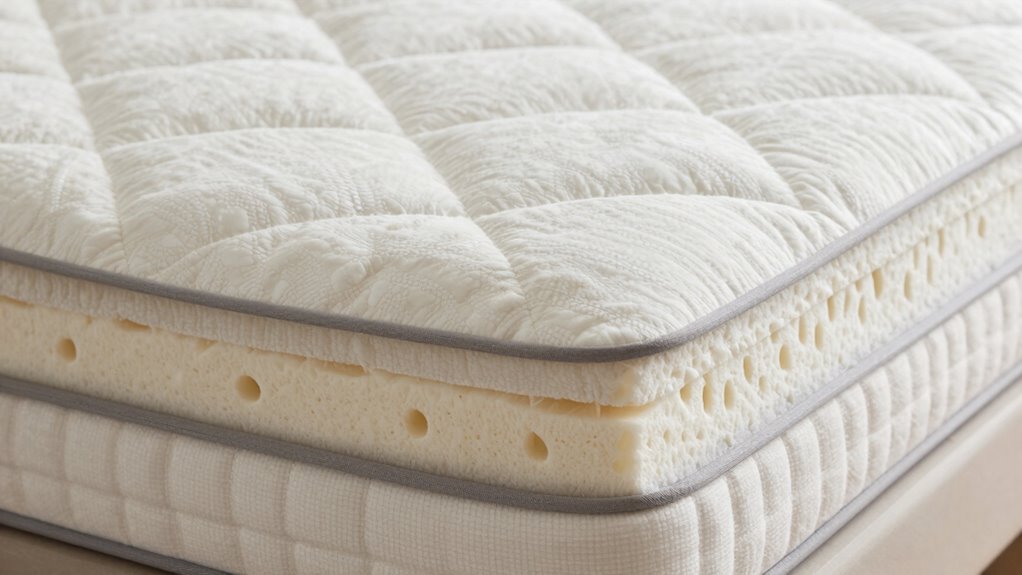
Ever wonder how to choose the right mattress firmness for a good night’s sleep? It’s a common question, but the answer isn’t as straightforward as it seems. Many mattresses are labeled as “medium,” which might sound like a safe bet, but that term actually means very little when it comes to comfort and support. The key is understanding what “medium” actually entails and how different mattress components, like memory foam and coil types, influence firmness and feel.
Memory foam mattresses are popular because they contour closely to your body, providing personalized support. However, the firmness of a memory foam mattress can vary widely depending on the foam’s density and thickness. Some memory foam beds are quite soft, offering a plush, sinking sensation, while others are firmer, providing more resistance and support. When shopping, don’t rely solely on labels like “medium” or “firm.” Instead, check the foam’s density and how it responds under pressure. A higher-density memory foam typically provides more support and durability, but it might feel firmer. Conversely, lower-density foams tend to be softer and more plush.
Memory foam support depends on density and thickness, not just labels like medium or firm.
Coil types also play a big role in how a mattress feels. Traditional innerspring mattresses use different coil types, such as Bonnell coils, pocket coils, or continuous coils, each offering distinct support characteristics. Bonnell coils tend to be more bouncy and might feel firmer, while pocket coils are individually wrapped, offering better motion isolation and a softer, more contouring feel. Continuous coils provide a consistent level of support across the mattress. When combined with memory foam layers, the coil type influences the overall firmness and comfort level. For example, a mattress with pocket coils and a soft memory foam top might feel plush and contouring, whereas one with Bonnell coils and a dense memory foam layer might feel firmer.
The bottom line is that “medium” doesn’t mean the same thing for everyone or every mattress. Instead of relying on generic labels, you should consider the specific materials and construction. Think about your preferred feel—do you want a plush, sinking sensation or more support and bounce? By understanding the differences between memory foam densities and coil types, you can better gauge how a mattress will perform and choose one that truly fits your sleep needs. Remember, trying out mattresses in person or reading detailed specifications can save you from the disappointment of choosing the wrong firmness based on vague labels. Additionally, knowing how different coil types and foam densities affect firmness can help refine your search for the perfect mattress.
Frequently Asked Questions
How Does Mattress Firmness Impact Sleep Quality?
Mattress firmness directly impacts your sleep quality by influencing your comfort level and sleep cycle. A mattress that’s too firm or too soft can cause discomfort, leading to interrupted sleep and less restful nights. When your mattress offers proper support, it helps maintain your natural sleep cycle, allowing you to fall asleep faster and stay asleep longer. Choosing the right firmness guarantees you wake up refreshed and ready for the day.
Are There Health Risks Associated With Choosing the Wrong Firmness?
An ounce of prevention is worth a pound of cure. Choosing the wrong mattress firmness can pose health risks, like increased pressure points and poor spinal alignment. These issues may lead to chronic pain or discomfort over time. You want a mattress that supports your body’s natural curves, alleviating pressure and maintaining proper alignment. Don’t ignore your body’s signals—selecting the right firmness helps keep you healthier and more comfortable every night.
Can Mattress Firmness Preferences Change Over Time?
Yes, your mattress firmness preferences can change over time. As you age or experience different health conditions, you might find yourself adjusting comfort needs, leading to a firmness evolution. You may prefer a softer feel initially, but later seek more support. Regularly reassessing your comfort helps guarantee your mattress continues to provide proper support, making it easier to adapt your sleeping environment to your evolving preferences.
How Do Different Sleep Positions Influence Firmness Selection?
Your sleep position dramatically influences your ideal firmness choice. If you sleep on your back, you need a mattress that promotes the best spinal alignment without sinking too much. Side sleepers benefit from a softer surface to cushion shoulders and hips, while stomach sleepers require firmer support to prevent sagging. Choosing the right firmness based on your sleep posture ensures better spinal health and restful nights. Don’t settle for less—your sleep depends on it!
What Additional Features Should I Consider Besides Firmness?
Besides firmness, you should consider pillow support and motion transfer. A good pillow guarantees your neck stays aligned, enhancing comfort. Look for a mattress that minimizes motion transfer if you share your bed, preventing disturbances when your partner moves. These features improve sleep quality, making your mattress more tailored to your needs. Prioritizing these aspects helps you find a more supportive and restful mattress beyond just firmness options.
Conclusion
So, next time you see “medium” on a mattress, don’t assume it’s your perfect match. It’s like trying to pick a star in the night sky—unless you know exactly what you’re looking for, it’s almost impossible. Remember, firmness labels can be as vague as a shadow in the dark. Do your research, test different options, and find what truly feels right. Your dream mattress isn’t hiding in plain sight; it’s waiting for you to discover it.