
When measuring furniture before buying, start by noting its length, width, and height, including any protruding features like armrests or legs. Also, measure doorways and hallways to verify the pieces can fit through. Leave enough clearance—at least 18-24 inches—around furniture for easy movement. Keep detailed notes and compare measurements with your space to avoid mishaps. If you want to get every detail right, there’s more to think about that can help you make smarter choices.
Key Takeaways
- Measure furniture dimensions including length, width, and height, noting any protruding features.
- Record space measurements, accounting for clearance around doors, walkways, and existing furniture.
- Check doorway and passage sizes to ensure furniture can be moved into the space easily.
- Use a level tape measure for accurate, straight measurements of both furniture and room dimensions.
- Compare furniture measurements with space dimensions to confirm proper fit before purchasing.

Measuring furniture accurately is essential to guarantee it fits perfectly in your space. When you’re shopping for new pieces, understanding the dimensions helps you avoid the frustration of oversized or undersized furniture cluttering your rooms. Precise measurements ensure your furniture complements your space, making it look polished and functional. This is especially important if you’re seeking space saving solutions, as well-designed furniture placement can maximize every inch of your room and create a more open, inviting environment.
Accurate furniture measurements ensure a perfect fit and a polished, functional space.
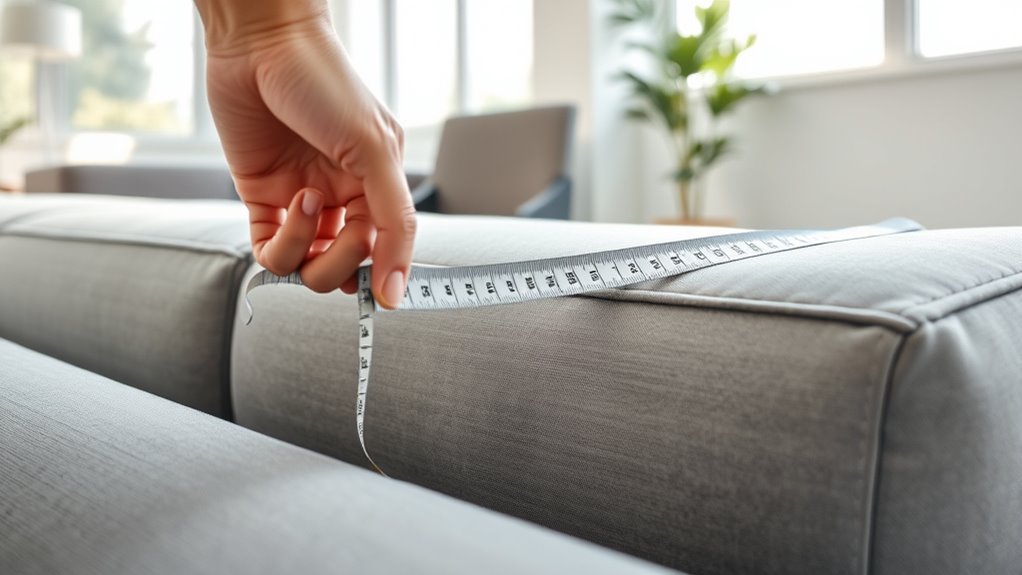
Start by measuring the area where you plan to place the furniture. Use a tape measure to determine the length, width, and height of the space, including any clearance needed for doors, windows, or walkways. Remember to account for space around furniture for comfortable movement. For example, leaving at least 18 to 24 inches of clearance around seating allows for easy access and prevents the room from feeling cramped. When measuring, keep your tape measure level and straight for accuracy, and jot down the measurements so you don’t forget them.
Next, measure the furniture pieces you’re interested in buying. Take note of their length, width, and height, paying attention to any protruding features like armrests, legs, or decorative elements. If you’re considering multi-functional furniture, such as a sofa bed or storage ottoman, check the dimensions in both its primary and secondary configurations. Comparing these measurements with your space ensures the piece will fit comfortably and won’t disrupt your furniture placement plans.
It’s also wise to regard the scale of your existing furniture. Larger pieces should be proportionate to the room size, while smaller items can be used to fill in gaps or create cozy zones. Proper measurement helps you visualize how different pieces will work together, making your room look cohesive and well-organized. If space is limited, look for furniture designed with space-saving solutions in mind—such as fold-away beds, nesting tables, or modular units—that can be easily integrated into your layout.
Finally, don’t forget to measure doorways, hallways, and staircases that the furniture will need to pass through. This step prevents surprises during delivery and allows you to plan your furniture placement more effectively. Knowing the exact measurements of your pathways can save you the hassle of returning or exchanging large items that won’t fit through tight spaces. Additionally, understanding the dimensions of your space-saving furniture can help you maximize functionality without sacrificing comfort. By taking all these measurements carefully, you can make smarter decisions, ensuring your furniture fits perfectly and your room remains functional and visually appealing.

Amazon Basics Self-Locking Tape Measure with Belt Clip, 16-Feet (5-Meters), Inch/Metric Scale, MID Accuracy, Black, Yellow
Tape measure with MID accuracy and both inch and metric scales; measures up to 16 feet (5 meters)
As an affiliate, we earn on qualifying purchases.
As an affiliate, we earn on qualifying purchases.
Frequently Asked Questions
What Tools Are Best for Measuring Furniture Accurately?
You should use measurement tools like a tape measure or a ruler for accurate results. These tools allow you to perform precise measuring techniques, ensuring your furniture fits perfectly in your space. A laser distance measurer is also helpful for larger pieces or hard-to-reach spots. Always double-check your measurements to avoid mistakes. Using the right measurement tools and techniques makes buying furniture easier and guarantees a better fit.
How Do I Measure Irregularly Shaped Furniture?
Ever wondered how to tackle measuring irregularly shaped furniture? You should use flexible measuring tapes or a piece of string to trace its contours, then measure the string with a ruler. This helps you overcome furniture dimension challenges and get precise measurements. Don’t forget to record each dimension carefully. By adapting your approach, you make certain your furniture fits perfectly, even with those tricky, uneven shapes.
Should I Measure Furniture With or Without Existing Cushions?
You should measure furniture with the cushions in place to get an accurate overall size, including cushion thickness. Measure from the back to the front, accounting for the cushions’ height to guarantee proper fit. Keep in mind, cushions add to the furniture depth, so if you’re planning for space, consider this extra thickness. This way, you’ll know exactly how the piece will fit in your space with cushions included.
How Do I Account for Clearance Space Around Furniture?
To guarantee your space feels balanced, account for clearance space around your furniture during space planning. Leave at least 18-24 inches for walkways and access, depending on the room’s use. This vital design consideration prevents clutter and allows comfortable movement. Remember, every inch counts—measure carefully and visualize your layout, so your furniture fits perfectly without hindering flow or function. Small details make a big difference in your design.
What Are Common Mistakes to Avoid When Measuring Furniture?
When measuring furniture, avoid common mistakes like not measuring the height and depth accurately. Always use a reliable tape measure, measure from the floor to the top for height, and from front to back for depth. Don’t forget to double-check your measurements for precision. Rushing can lead to errors, so take your time and record each measurement carefully. These steps help make certain your furniture fits perfectly in your space.

Saker Contour Gauge Tool for Woodworking & DIY, Profile Gauge with Lock,Father's Day Gift for Him Men, Accurate Shape Duplicator for Flooring, Tile, Trim & Home Improvement Projects
🎁 Saker Contour Gauge Perfect Gift for Him,Men,Women,Husband, Wife,Her,Anyone Who Loves DIY or Woodworking Projects🎁
As an affiliate, we earn on qualifying purchases.
As an affiliate, we earn on qualifying purchases.
Conclusion
Now that you know how to measure furniture correctly, you’ll avoid costly mistakes and find pieces that fit perfectly. Did you know that 60% of people return furniture because it didn’t match their space? By taking accurate measurements beforehand, you can save time, money, and frustration. So, grab your tape measure and get started—your ideal furniture fit is just a few measurements away! Happy shopping!

Mr. Pen- House Plan, Interior Design and Furniture Templates, Drafting Tools and Ruler Shapes for Architecture – Set of 3
3 Pc Architect Drawing And Interior Design Template Set (Scale: 1/4 Inch = 1 Ft): House Plan Template,…
As an affiliate, we earn on qualifying purchases.
As an affiliate, we earn on qualifying purchases.

VEVOR Furniture Dolly, 551 lbs Load Capacity, Furniture Moving Dollies with 4 TPR Silent Wheels, Rectangle Multifunctional Flat Dolly for Piano Furniture Couch Washing Machine Fridge, 2 Pack, Black
Heavy-Duty Capacity: Made with high-quality materials, this flat dolly can carry up to 551 lbs. Whether it's plants,…
As an affiliate, we earn on qualifying purchases.
As an affiliate, we earn on qualifying purchases.