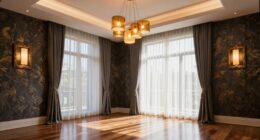
In an open-concept home, you can effectively create zones by using rugs and lighting strategically. Place rugs under dining or seating areas to visually anchor spaces, and choose contrasting colors or textures to define each zone. Incorporate layered lighting—pendant lights, floor lamps, and sconces—to highlight specific areas and add warmth. Privacy screens or acoustic panels can further separate spaces when needed. Keep exploring to discover more tips on balancing openness with comfort.
Key Takeaways
- Use rugs to visually define different zones, such as dining and living areas, within an open layout.
- Incorporate layered lighting, like pendant lights and floor lamps, to highlight and differentiate functional spaces.
- Position rugs strategically under furniture to anchor zones and enhance spatial flow.
- Combine lighting and accessories to create contrast and guide movement between areas.
- Add privacy screens and acoustic panels to establish quieter, more intimate zones within the open plan.

Open-concept homes have become increasingly popular because they create a sense of spaciousness and foster social interaction. But without proper zoning, these open layouts can feel overwhelming or lack intimacy. To define different areas, you can use strategic elements like rugs, lighting, and accessories. Rugs are a simple yet effective way to visually separate spaces, creating cozy zones within the larger room. Placing a rug under your dining table or in your seating area signals a distinct space, making your home feel organized without losing the open feel. Similarly, lighting plays a vital role. Using layered lighting—like pendant lights over the kitchen island, floor lamps in the living area, or sconces along the walls—helps define each zone and sets the mood for different activities. Incorporating color contrast through rugs and accessories can further enhance visual separation and add personality to each area.
If privacy becomes an issue, especially in shared spaces or open bedrooms, privacy screens are a versatile solution. These screens can be decorative or functional, acting as visual barriers that give you a sense of separation without building permanent walls. You can position privacy screens near workspaces, beds, or even around entertainment areas to create a more intimate atmosphere. Acoustic panels are another smart addition, especially if noise tends to travel across your open layout. Installing acoustic panels on walls or ceilings can absorb sound, reducing echoes and muffling noise from activities like cooking, watching TV, or conversations. This not only makes the environment more comfortable but also helps you carve out quieter zones within your open floor plan.
Lighting and rugs also help in zoning by highlighting specific areas and guiding movement through your space. For example, a well-placed pendant light over your kitchen counter can draw attention to that zone, while a large, textured rug can anchor your living room seating. Combining these visual cues with sound-absorbing acoustic panels and privacy screens allows you to tailor your open-concept design to your lifestyle. You can create spaces that feel connected yet private, lively but intimate. This approach guarantees your home remains spacious and inviting, while also offering the functionality and privacy you need. By thoughtfully integrating these elements, you’ll master the art of zoning in your open-concept home, making it both beautiful and practical.
Frequently Asked Questions
How Can I Make Open-Concept Spaces Feel More Private?
You can make your open-concept space feel more private by using privacy screens to create visual barriers, subtly defining different areas. Rearrange your furniture to establish distinct zones, such as placing a sofa or bookshelf to block off certain sections. Adding rugs can also visually separate spaces, while strategic lighting directs focus and enhances privacy. These simple tweaks help you enjoy an open feel without sacrificing personal privacy.
What Are the Best Lighting Options for Zoning Open Areas?
You should prioritize layered lighting to effectively zone open areas. Use ambient lighting, like ceiling fixtures or wall sconces, to create a comfortable overall glow. Add task lighting, such as pendant lights or table lamps, in specific zones to highlight functional spaces. Don’t worry about perfect balance—mixing these options helps define areas, making your open-concept home feel more private and visually organized without sacrificing openness or style.
How Do Rugs Influence the Acoustics in Open-Plan Rooms?
Rugs substantially influence acoustics in open-plan rooms by enhancing sound absorption, which reduces echo and noise. They create a sense of spatial division, subtly separating different areas without physical barriers. When you choose rugs with thick fibers or textured surfaces, you improve sound absorption, making the space more comfortable and intimate. This helps you define zones visually and acoustically, creating a balanced, inviting environment.
Can Zoning With Rugs and Lighting Improve Home Organization?
Yes, zoning with rugs and lighting can improve your home organization. Use decorative borders to define spaces clearly, making it easier to keep each area tidy. Choose rugs with coordinated colors that complement your decor, creating visual boundaries without clutter. Lighting accents can highlight specific zones, guiding you to organize each section efficiently. This approach helps you create a harmonious, well-structured environment that feels spacious and inviting.
What Are Common Mistakes to Avoid When Zoning Open-Concept Homes?
When zoning your open-concept home, avoid poor furniture placement that disrupts flow and blocks pathways. Don’t overlook color coordination; mismatched hues can make zones feel disconnected. Also, steer clear of overly large rugs or lighting that’s too harsh, as they can clutter or overwhelm spaces. Instead, use strategic furniture placement, harmonious colors, and well-placed lighting to create distinct, inviting zones without sacrificing openness.
Conclusion
By thoughtfully using rugs and lighting, you transform your open-concept space from chaos to comfort. These elements act as invisible boundaries, guiding your eye and creating cozy zones amidst the flow. Remember, they’re the silent storytellers of your home, whispering, “This is your haven.” So, embrace the power of simple touches—they’re your secret weapon to crafting a harmonious, inviting environment where everyone feels right at home.