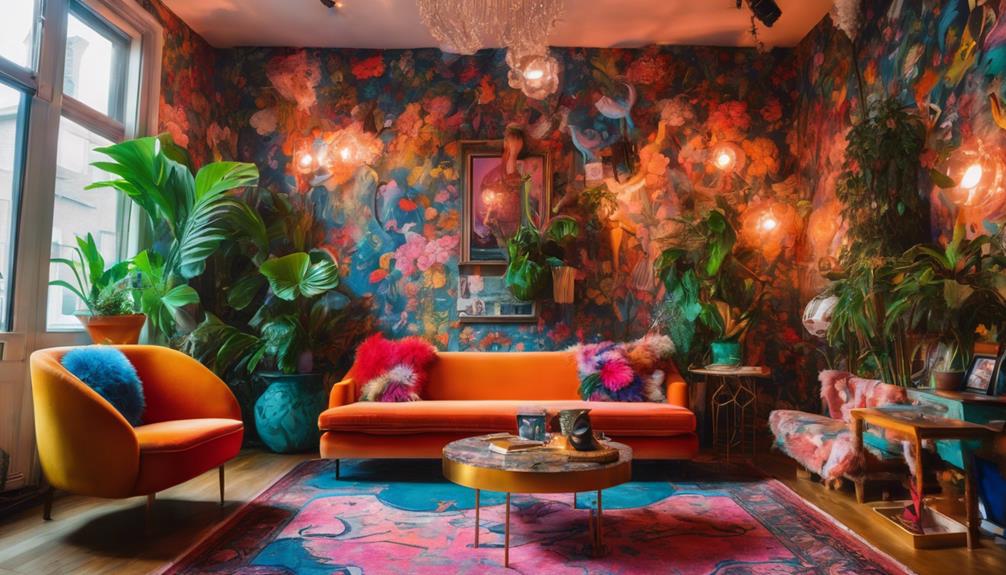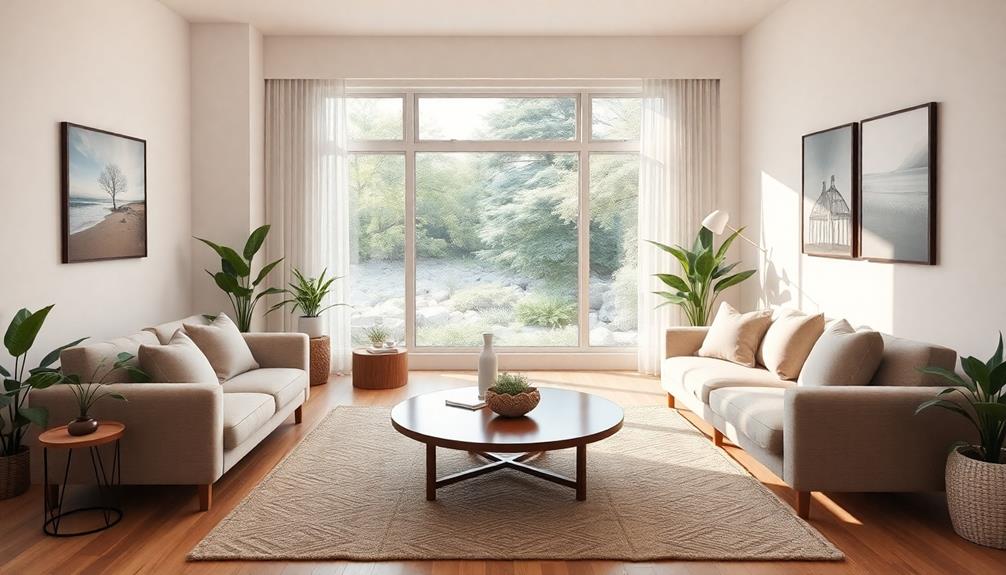
To style open shelving without clutter, focus on selecting a few meaningful accessories like vases or artwork that reflect your personality. Arrange items with plenty of space around each piece to create balance and visual flow. Keep taller objects in the back and smaller ones in front for depth. Regularly reassess your setup, switch in fresh pieces, and maintain harmony through consistent colors and styles. Stick with these tips to keep your shelves looking curated and stylish; you’ll discover more ideas as you explore further.
Key Takeaways
- Incorporate a few statement accessories and group similar items for visual harmony.
- Leave space around each item to prevent overcrowding and create a balanced look.
- Arrange taller objects at the back and smaller ones in front for depth and dimension.
- Vary heights and sizes of accessories for interest while maintaining a cohesive style.
- Regularly refresh and reassess items, removing clutter and adding new pieces to keep the shelf tidy.

Open shelving has become a popular choice for modern homes, offering both functionality and style. When you choose open shelves, you open up your space visually while giving yourself the opportunity to showcase decorative accessories that reflect your personality. But to keep your shelves looking polished rather than cluttered, you need to pay attention to how you style them. The key lies in selecting the right decorative accessories and maintaining ideal spacing between items. This balance ensures your shelves serve as a beautiful display without overwhelming the room.
Start by choosing decorative accessories that complement your overall decor. Think about incorporating a mix of objects like vases, framed photos, and small sculptures. These items add personality and interest, but don’t overdo it. When you add too many accessories, your shelves can look busy and chaotic. Instead, pick a few statement pieces that stand out and arrange them with purpose. Group similar items together for visual harmony, and vary the heights and sizes to create a dynamic display. This approach prevents your shelves from looking cluttered and helps each piece shine.
Choose key decorative pieces like vases or photos, arrange with purpose, and vary heights for a harmonious display.
Perfect spacing is essential in achieving a tidy, stylish look. You don’t want your accessories to be crammed together or to have too much empty space between them. Aim for a balanced arrangement where each item has enough room to breathe, yet still feels connected to the others. As a general rule, leave a few inches of space around each accessory to prevent overcrowding. Use this spacing to create visual flow, guiding the eye smoothly across the shelf. You might also incorporate empty space intentionally, which acts as a visual pause and highlights your decorative accessories more effectively. Incorporating dog breed inspired accessories or themes can add a personalized touch that reflects your interests or family pets.
Layering is another technique that works well on open shelves. Place taller items at the back and smaller ones in front. This adds depth and dimension to your display. You can also lean framed artwork or photos against the wall for a more relaxed vibe, while keeping smaller objects in front. Remember, the goal is to create a cohesive look, so keep the color palette harmonious and avoid mixing too many different styles or colors unless you want an eclectic feel.
Finally, regularly reassess and refresh your shelves. As you acquire new decorative accessories or want to change your room’s mood, adjusting the spacing and the items displayed can make a big difference. With thoughtful selection and careful arrangement, open shelving becomes a beautiful, clutter-free showcase of your personality and style. By focusing on decorative accessories and perfect spacing, you’ll keep your shelves both functional and visually appealing.

COMFEE’ Countertop Dishwasher, Energy Star Portable Dishwasher, 6 Place Settings & 8 Washing Programs, Speed, Baby-Care, ECO& Glass, Dish Washer for Dorm, RV& Apartment, Black
6 Place Setting- A perfect size (H17.2″×W21.6″×D19.7″) for 2-3 people, COMFEE’ compact dishwasher is suitable for dorms, RVs,...
As an affiliate, we earn on qualifying purchases.
Frequently Asked Questions
How Do I Choose the Right Items to Display?
To choose the right items to display, focus on decorative accessories that reflect your style and add visual interest. Pick a few meaningful pieces and consider color coordination to create harmony. Mix different heights and textures for depth, but avoid overcrowding. Keep it simple and balanced, highlighting each item’s beauty. Regularly update your display to keep it fresh, ensuring your open shelving remains stylish without feeling cluttered.
What Are the Best Materials for Open Shelving?
You should choose materials like wood, metal, or glass for your open shelving, as they offer great material durability and aesthetic versatility. Wood adds warmth and texture, while metal provides a sleek, modern look. Glass creates an airy feel and showcases your items beautifully. Consider your space’s style and how much weight the shelves need to support to pick the best material for your needs.
How Often Should I Update My Shelf Decor?
You should update your shelf decor seasonally or whenever your personal collections change. Regular updates keep your space fresh and reflect your evolving style. Aim for every few months, but don’t feel pressured—trust your instincts. Swap out items to showcase new finds or seasonal accents, and keep clutter to a minimum. This approach maintains a balanced, stylish look while allowing your personality to shine through your curated displays.
Can Open Shelving Work in Small Kitchens?
Imagine your small kitchen as a charming jewelry box—open shelving can work beautifully here. You can combine decorative accessories with functional storage, creating a balanced display that saves space and adds personality. Keep it tidy, like a well-curated gallery, by choosing a few key pieces. This way, your shelves become practical yet stylish, making your cozy kitchen feel more spacious and inviting without feeling cluttered.
How Do I Prevent Dust Accumulation on Open Shelves?
To prevent dust accumulation on open shelves, you should establish regular cleaning routines. Dust the shelves weekly with a microfiber cloth to catch particles effectively. Consider using dust-proof storage jars or containers for items, which helps keep dust at bay. Additionally, avoid placing shelves near vents or windows that bring in dust. Consistent cleaning and smart organization are key to maintaining a tidy, dust-free open shelving space.
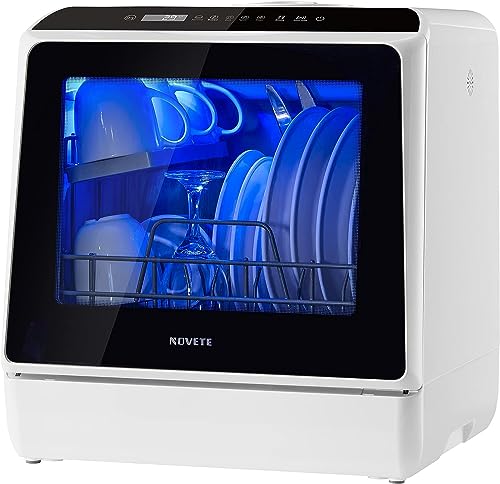
NOVETE Portable Countertop Dishwashers, Compact Dishwashers with 5L Built-in Water Tank & Inlet Hose, 5 Washing Programs, Baby Care, Air-Dry Function and LED Light for Small Apartments
【SMALL SIZE, LARGE CAPACITY】This portable dishwasher only measures 16.9 x 16.8 x 18.1 inches, but holds 4 full...
As an affiliate, we earn on qualifying purchases.
Conclusion
Think of open shelving like a well-tended garden—you can showcase your favorite blooms without letting weeds take over. When you style thoughtfully, your shelves become a curated display, inviting guests to explore your personality. I once visited a friend’s kitchen where every item told a story, making the space feel warm and lived-in. With a little effort, you can turn clutter into charm, creating open shelves that breathe life into your home without overwhelming it.

EUHOMY Countertop Dishwasher Portable with 6 Programs, 5L Built-in Water Tank for Apartments & RV, 167℉ High-Temp, No Hookup Needed, Mini Dishwasher with Baby Care, Air Dry/Quick/ECO/Fruit/Normal Mode
𝐍𝐨 𝐈𝐧𝐬𝐭𝐚𝐥𝐥𝐚𝐭𝐢𝐨𝐧 — 𝐓𝐚𝐧𝐤 𝐨𝐫 𝐅𝐚𝐮𝐜𝐞𝐭, 𝐑𝐞𝐚𝐝𝐲 𝐅𝐚𝐬𝐭: No permanent setup required. Use the built-in 5L (1.32 gal)...
As an affiliate, we earn on qualifying purchases.

COMFEE’ Portable Mini Dishwasher, Energy Star, Countertop, 6 Place Settings, with 8 Washing Programs, Speed, Baby-Care, ECO& Glass, Dish Washer for Dorm, RV& Apartment, White
【6 Place Setting】- A perfect size (H17.2″×W20.6″×D21.6″) for 2-3 people, COMFEE’ compact dishwasher is suitable for dorms, RVs,...
As an affiliate, we earn on qualifying purchases.