
If you’re exploring portable AC types, you’ll find single-hose units are budget-friendly and easy to set up, but they might be a bit noisier and less energy-efficient. Dual-hose models cost more upfront but offer better cooling, quieter operation, and lower energy use, though they’re bulkier and more complex to install. Understanding these differences helps you choose the right fit for your space and needs—stick around, and you’ll discover even more helpful details.

Get everyday essentials delivered free with Prime
- Fast, free delivery on millions of items
- Prime Video, Amazon Music and more included
- Member-only deals all year
Key Takeaways
- Single-hose units are affordable and easy to install but less energy-efficient and noisier.
- Dual-hose units provide better cooling, quieter operation, and improved energy efficiency but are bulkier and costlier.
- Proper venting and airflow management are crucial for optimal performance of any portable AC.
- Dual-hose models reduce workload and energy consumption, saving money over time.
- Consider space, budget, and noise preferences when choosing between single and dual-hose portable ACs.
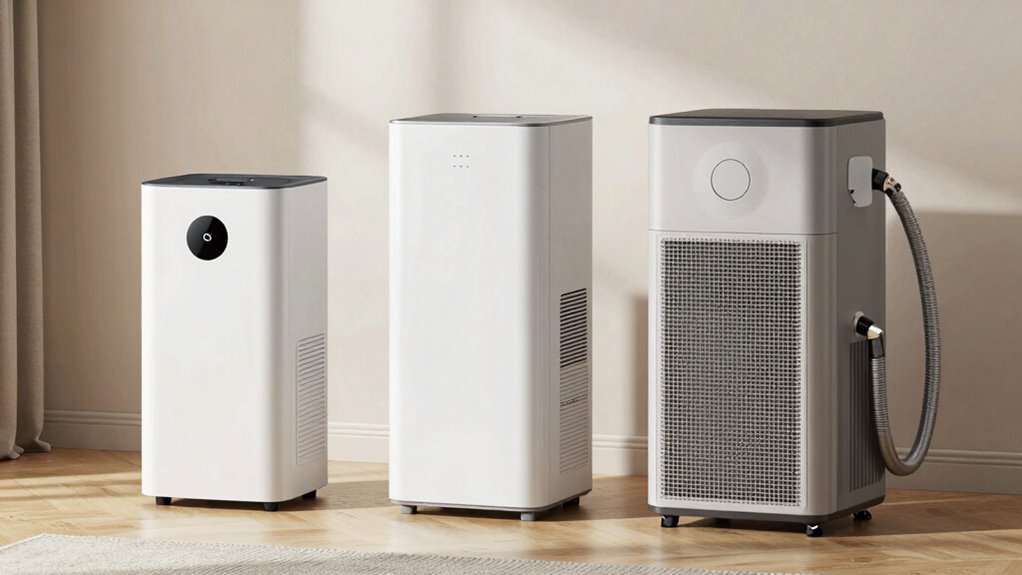
Are you wondering which portable AC type is best suited for your needs? With so many options available, it’s easy to feel overwhelmed. To make an informed choice, you need to understand the different types and their features. One key aspect to consider is energy efficiency, because the more efficient the unit, the less you’ll spend on electricity over time. Noise levels are also vital, especially if you plan to use the AC in your bedroom or a workspace where quiet is essential.
First, there are portable air conditioners with a single-hose design. These units are popular because they tend to be more affordable and easier to install. However, they’re often less energy-efficient compared to dual-hose models. The single-hose units work by pulling air from the room, cooling it, then venting the warm air outside through a hose connected to a window. While they do a decent job, they can struggle in larger spaces or very hot environments, leading to higher energy consumption. Noise levels vary depending on the model, but generally, single-hose units are slightly louder because their fans work harder to cool the room efficiently. If you’re sensitive to noise or want to save on energy bills, look for units with quieter fans and high Energy Star ratings.
Single-hose portable ACs are affordable and easy to install but less energy-efficient and louder than dual-hose models.
On the other hand, dual-hose portable ACs are designed for better energy efficiency. They use one hose to pull in outside air and another to vent hot air outside, creating a more balanced and effective cooling process. This setup reduces the workload on the unit, making it operate more efficiently and often quieter. They’re ideal if you’re cooling larger rooms or want to keep energy costs down. The trade-off is that dual-hose models tend to be more expensive and slightly bulkier, but their improved performance often justifies the cost. Additionally, understanding the air circulation process helps in selecting the right model for your space. It’s also worth noting that air exchange plays a significant role in the overall cooling efficiency of portable units. Moreover, understanding how the airflow system works can help optimize your unit’s performance and energy consumption. For example, proper venting and placement can significantly impact cooling effectiveness and energy use.
portable air conditioner single hose
As an affiliate, we earn on qualifying purchases.
As an affiliate, we earn on qualifying purchases.
Frequently Asked Questions
How Energy-Efficient Are Portable AC Units Compared to Window Units?
Portable AC units are generally less energy-efficient than window units, leading to higher energy costs over time. You might notice that portable units use more electricity for the same cooling capacity, affecting your cost comparison. Additionally, portable units tend to have higher noise levels, which can be distracting. If energy efficiency and quiet operation are priorities, window units often perform better, saving you money and providing a more peaceful environment.
Can Portable ACS Cool Multiple Rooms Simultaneously?
You can’t typically cool multiple rooms simultaneously with a single portable AC because most are designed for room zoning, targeting one area at a time. For example, a portable unit in your living room won’t effectively cool your bedroom next door. To cool multiple rooms, consider multiple portable units or a central system. Portable units excel at zone-specific cooling but aren’t ideal for covering large or multiple spaces at once.
What Is the Typical Lifespan of a Portable Air Conditioner?
A portable air conditioner’s typical lifespan is about 5 to 10 years, depending on usage and maintenance. To prolong its life, follow regular maintenance tips like cleaning filters and checking for blockages. Be mindful of noise levels—some models are quieter than others, which can impact your comfort over time. Proper care ensures your unit runs efficiently and lasts longer, providing cool relief when you need it most.
Are Portable ACS Suitable for Humid Climates?
Yes, portable ACs can be suitable for humid climates, especially if they feature humidity control functions. They help reduce excess moisture, making your space more comfortable. However, be mindful of noise levels, as some units can be loud, which might be disruptive in a humid environment. Selecting a model with good humidity control and quieter operation guarantees you stay comfortable without added disturbance.
Do Portable ACS Require Professional Installation?
Think of your portable AC as a friendly but independent neighbor—easy to move in but needing some guidance. You usually don’t need professional installation; just follow simple setup instructions. However, consider installation requirements, like proper ventilation, to keep noise levels low and efficiency high. While most units are plug-and-play, ensuring correct setup helps prevent annoying noise and maximizes cooling, making your space cool and quiet without extra hassle.
Conclusion
Think of choosing a portable AC like picking the perfect tool for a job; each type has its own rhythm and purpose. Whether you need a quick cool-down or a flexible cooling solution, understanding the differences helps you dance to the beat of your needs. When you know your options, you can glide smoothly through the decision, turning what once seemed confusing into a breeze—making your space comfortably cool, no matter the weather outside.
Halloween Picks
halloween
As an affiliate, we earn on qualifying purchases.