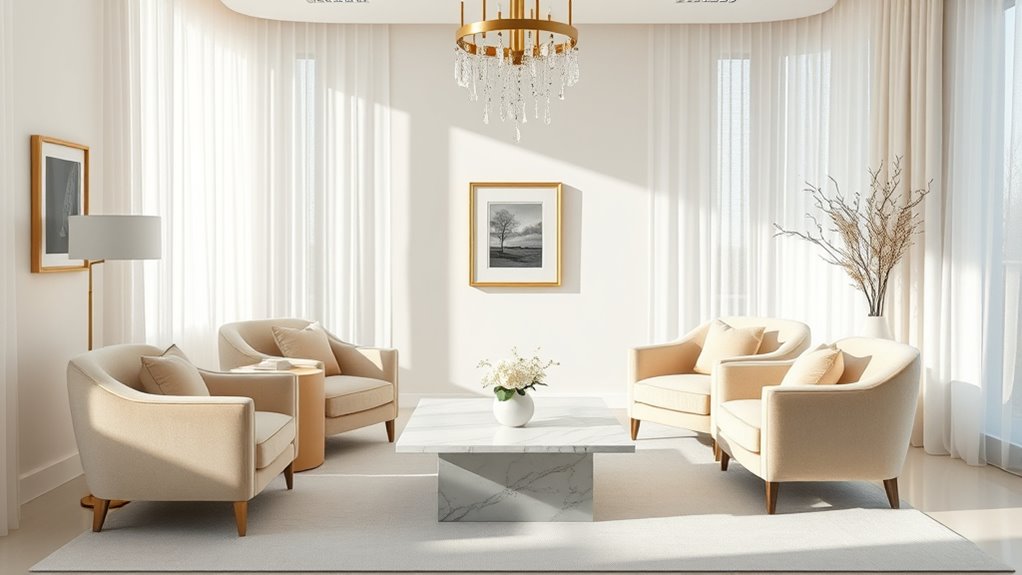

Quiet luxury for 2025 centers on subtle sophistication, blending natural materials like linen, oak, and leather with refined textures. You’ll notice a focus on understated elegance, calm ambiances, and functional design that emphasizes utility over ostentation. Art and decor take a supporting role, highlighting emotional resonance and personal stories. The trend encourages timeless, layered spaces that foster relaxation and reflection. Keep exploring, and you’ll discover how this refined approach can elevate your surroundings effortlessly.
Key Takeaways
- Quiet luxury emphasizes understated elegance through textured natural materials and subtle design details, avoiding bright colors and ostentation.
- The trend prioritizes craftsmanship, meaningful provenance, and curated, timeless pieces over fleeting trends.
- Spaces feature layered tactile textures, concealed storage, and functional furniture to promote calm and clutter-free environments.
- Art and decor serve as understated backdrops, fostering emotional resonance and a harmonious, contemplative atmosphere.
- Overall, quiet luxury creates sophisticated, serene spaces that balance comfort, personal storytelling, and refined restraint.
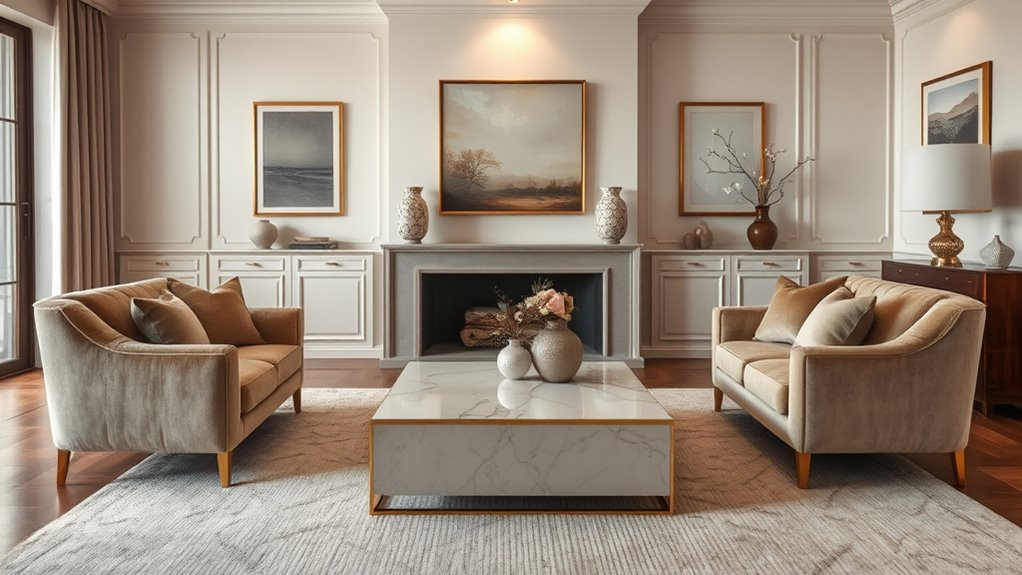
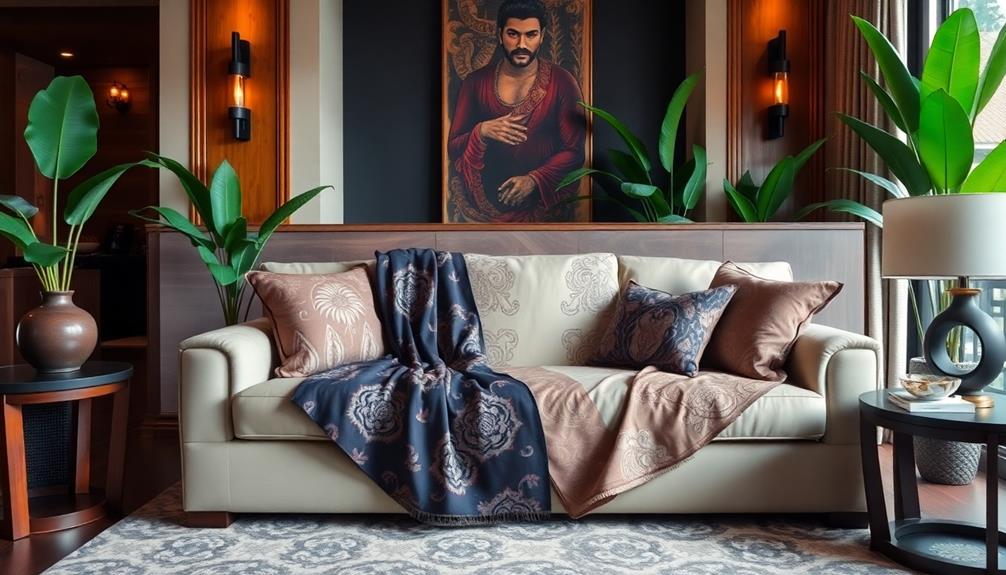
Quiet luxury embodies a refined approach to interior design that emphasizes subtlety, craftsmanship, and a sense of calm. Instead of bold ornamentation, the focus shifts to texture as the central element, inviting you to experience richness through tactile layers. Natural materials like linen, hand-rubbed oak, stone, leather, raffia, and antique brass are thoughtfully combined to create depth and dimension. These textures interplay subtly, allowing the eye to explore without the distraction of bright colors or visual clutter. The result is a space that feels both visually reserved and richly tactile, encouraging a quiet, contemplative atmosphere. Sculptural lighting and natural accessories further exemplify this textured restraint, highlighting craftsmanship while maintaining a seamless, understated elegance.
Quiet luxury reveals beauty through subtle textures and handcrafted materials, fostering calm, refined, and contemplative interiors.
Art in quiet luxury plays a supporting role, favoring abstract forms, organic shapes, and subtle compositions over overt narratives or detailed realism. You’ll notice that wall art acts less as a statement and more as a backdrop, allowing your personal stories and experiences to emerge naturally. This approach uses art to enhance the ambiance without overwhelming the senses, promoting emotional resonance and timelessness. The goal is to create a space that feels emotionally intelligent and effortlessly sophisticated, where every piece contributes to a harmonious whole.
Furniture and design choices prioritize functionality and your daily routines, emphasizing comfort and ease of movement. Multi-functional furniture and concealed storage are essential, helping to keep clutter at bay while supporting practical living. Kitchen layouts are designed with flow in mind, ensuring that routine tasks are intuitive and effortless. Decorative elements lean toward the minimal, with an emphasis on utility over ostentation. Every piece serves a purpose, reinforcing the idea that beauty and function can coexist without excess. Design preferences are increasingly leaning toward subtlety, emphasizing that less is more when it comes to creating a balanced environment.
In quiet luxury, careful curation replaces accumulation. You’re encouraged to select objects with provenance or meaningful stories behind their origins, fostering a sense of connection and authenticity. Rooms evolve gradually, resisting fleeting trends and emphasizing quality over quantity. Interiors are carefully edited to evoke a sense of refined restraint, where each object contributes to a cohesive narrative. The color palette complements this philosophy, favoring rich but subdued hues that support intimacy and sophistication. Handcrafted details and subtle global influences add depth without overpowering the overall calm.
This approach stands in contrast to loud maximalist trends, favoring understated elegance over opulence. Quiet luxury is about layered textures, thoughtful materials, and a restrained palette that invites relaxation and reflection. It aligns perfectly with contemporary desires for comfort, well-being, and a holistic sense of home. Spaces designed with quiet luxury foster an environment where serenity, sophistication, and personal expression coexist harmoniously.
Frequently Asked Questions
How Can I Incorporate Quiet Luxury Into Small Spaces?
You can incorporate quiet luxury into small spaces by choosing neutral colors like beige and soft gray, adding plush textures such as velvet cushions, and using layered lighting to create a cozy atmosphere. Select timeless, high-quality furniture with clean lines that maximize functionality without clutter. Keep decorative elements minimal—curated art, ceramics, and greenery—while maintaining open layouts, natural materials, and subtle architectural details to foster calmness and understated elegance.
What Are the Key Materials Used in Quiet Luxury Decor?
You focus on natural stone, wood, textiles, and metals to create a quiet luxury space. You choose honed stones like marble and travertine for understated elegance, solid wood and genuine leather for timeless warmth, handwoven textiles and brushed linens for tactile softness, and unlacquered brass or matte metals for subtle accents. You blend these materials thoughtfully, balancing textures and finishes to craft a serene, sophisticated environment that speaks of refined restraint.
Is Quiet Luxury Suitable for Contemporary or Traditional Homes?
You might wonder if quiet luxury fits your home style. It works well in both contemporary and traditional spaces because it emphasizes understated elegance and high-quality materials. In modern homes, it creates airy, minimalist environments, while in traditional settings, it enhances timeless craftsmanship with subtle opulence. Its adaptability allows you to incorporate this trend seamlessly, ensuring your space remains elegant, refined, and harmonious regardless of your home’s architectural style.
How Does Sustainable Sourcing Relate to Quiet Luxury Trends?
You’ll find that sustainable sourcing enhances quiet luxury by emphasizing authenticity and responsibility. When you choose ethically sourced materials like reclaimed woods, recycled metals, and organic fabrics, you create interiors that are both elegant and environmentally conscious. Supporting local artisans and verified green suppliers guarantees transparency. This approach promotes durability, timelessness, and a circular economy, aligning your space with modern values while maintaining understated, high-end appeal.
What Budget Options Exist for Achieving Quiet Luxury Aesthetics?
You can achieve quiet luxury aesthetics on a budget by sourcing affordable natural textiles like linen or cotton blends, mixing thrifted or secondhand furniture with natural finishes, and incorporating budget-friendly leather alternatives or vintage pieces. Focus on curated, subtle wall decor using prints or textured wallpapers, and choose multi-functional, timeless furniture with hidden storage. Reclaimed wood, recycled glass accents, and neutral palettes with rich accents help create a layered, elegant look without overspending.
Conclusion
As you embrace quiet luxury, you’ll notice how less truly is more—almost 70% of high-end buyers now prefer subtle designs over flashy displays. This trend invites you to invest in timeless pieces that exude elegance without shouting for attention. By choosing understated decor, you create a serene, sophisticated space that speaks volumes through its simplicity. So, transform your home into a haven of refined taste, where every detail whispers luxury without saying a word.