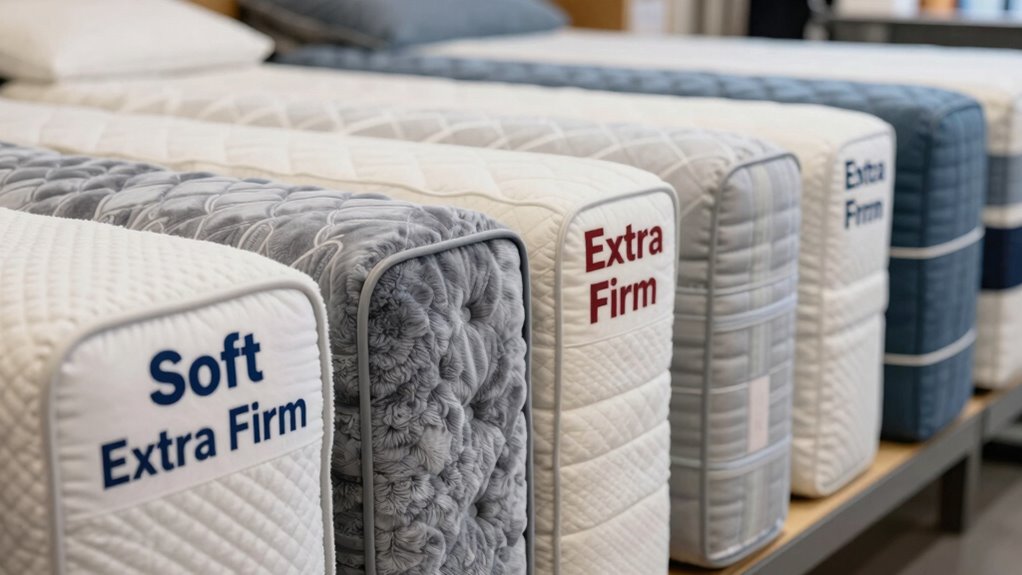

Mattress firmness labels can be confusing because they’re often inconsistent, subjective, and vary between brands. What feels firm to one person might seem soft to another, and labels like “firm” or “plush” aren’t standardized. Different materials, construction, and durability influence how a mattress feels over time, making it hard to know what you’ll actually get. To understand the real differences, it helps to explore how these labels are determined and what to look for.

Get everyday essentials delivered free with Prime
- Fast, free delivery on millions of items
- Prime Video, Amazon Music and more included
- Member-only deals all year
Key Takeaways
- Subjectivity of firmness means different people perceive the same label differently.
- Lack of industry standardization leads to inconsistent firmness ratings across brands.
- Material durability affects long-term firmness, causing discrepancies between labeled and actual feel.
- Mattress construction details are often hidden, influencing firmness beyond labels.
- Relying solely on labels can cause mismatched expectations and buyer dissatisfaction.

When shopping for a new mattress, understanding the firmness labels can make all the difference in finding your perfect sleep surface. These labels are meant to guide you, but they often end up confusing many buyers. One reason is that firmness is highly subjective; what feels firm to one person may feel soft to another. Manufacturers use different scales and descriptions, so a “firm” mattress from one brand might be a medium in another. This inconsistency makes it hard to compare options directly, leaving you guessing whether a mattress will meet your sleep comfort needs.
Another factor contributing to confusion is the lack of standardization across the industry. Some brands rely on subjective terms like “plush” or “semi-firm,” which don’t have precise measurements behind them. Others use numerical ratings, but these can vary significantly between makers. Without a universal standard, it’s difficult to interpret what these labels truly mean. As a result, you might buy a mattress based on its label, only to find that it doesn’t match your expectations once you try it out. This mismatch often comes down to differences in material durability, which affects how a mattress feels and performs over time.
Material durability plays a key role in sleep comfort and how a mattress responds to your body. A mattress with high-quality materials maintains its firmness and support longer, ensuring consistent sleep comfort. Conversely, lower-quality materials tend to soften or sag over time, altering the initial firmness label and leaving you less satisfied. Because manufacturers often focus on marketing labels rather than the longevity of materials, you might buy a mattress expecting a certain firmness, only to find it feels different after a few months. This discrepancy underscores how confusing firmness labels can be, especially when they don’t reflect the true durability of the materials used. Material durability is essential in understanding how a mattress will perform over the long term.
Furthermore, the construction of a mattress can influence its firmness without being immediately obvious from the label. Different layers, foam densities, and coil types all contribute to how a mattress feels and holds up over time. Without detailed information about these components, labels become even more misleading. You may think you’re getting a firm mattress, but the actual experience could be softer or firmer depending on the internal materials’ durability and how they age.
In the end, these inconsistencies and lack of standardization make it difficult for you to confidently select a mattress based solely on firmness labels. To truly find the right fit, it’s essential to consider how material durability impacts sleep comfort and to test mattresses whenever possible. Relying on labels alone can lead to disappointment, so digging deeper into a mattress’s construction and materials will help ensure you get a surface that supports restful, comfortable sleep for years to come.
As an affiliate, we earn on qualifying purchases.
Frequently Asked Questions
How Do Firmness Levels Vary Between Brands?
Firmness levels vary between brands because each manufacturer uses different standards and testing methods. Your personal preferences and sleep positions play a big role in choosing the right one. For example, side sleepers might prefer softer mattresses, while back or stomach sleepers often need firmer options. Always test mattresses in person or check detailed descriptions, as labels can be inconsistent. Trust your comfort needs over brand labels to find your perfect fit.
Are Firmness Labels Standardized Across the Industry?
You might think firmness labels are standardized, but they’re not, which impacts your sleep comfort and mattress longevity. Different brands often use varying scales and descriptions, so what’s labeled as “firm” in one might feel medium in another. This inconsistency can lead to confusion and poor sleep choices. Always test mattresses personally and ask for detailed firmness descriptions, rather than relying solely on labels, to guarantee you get the right fit for your needs.
Can Mattress Firmness Change Over Time?
Yes, mattress firmness can change over time. As you sleep, the materials in your mattress, like foam or springs, may soften or sag, especially if you have a specific sleep posture that puts pressure on certain areas. This change can also affect allergy susceptibility, as dust and allergens settle more easily in a worn mattress. Regularly checking and rotating your mattress helps maintain its firmness and support.
Do Firmness Labels Indicate Mattress Quality?
Ironically, firmness labels don’t really tell you about mattress quality. They focus on how soft or firm a mattress feels, which can mislead your expectations for sleep comfort or durability. A softer mattress might seem plush but could wear out faster, affecting long-term mattress durability. So, while firmness helps gauge comfort, it’s not a reliable indicator of overall quality—trust reviews and material specs instead.
How Should I Choose the Right Firmness for Me?
To choose the right firmness, consider your sleep posture and comfort preferences. If you sleep on your back or stomach, a firmer mattress provides support and maintains spinal alignment. Side sleepers often prefer softer options for pressure relief. Also, check mattress durability to guarantee it lasts through your sleep needs. Test different firmness levels in-store and read reviews to find a balance that offers both comfort and support tailored to your sleep style.
Conclusion
So, next time you face those confusing firmness labels, remember they’re like a map with missing landmarks, guiding you through a foggy night. Trust your instincts, test the mattress personally, and don’t be afraid to ask questions. Think of mattress firmness as a dance—what’s perfect for someone else might not be for you. By staying informed, you’ll find your perfect sleep partner, turning bedtime into a peaceful voyage rather than a confusing maze.
Fall Picks
fall essentials
As an affiliate, we earn on qualifying purchases.