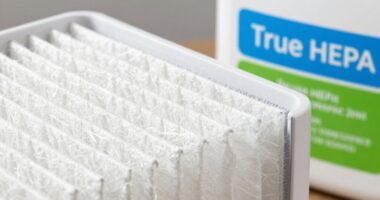
To effectively filter smoke, choose an air purifier with true HEPA filters and activated carbon filters. True HEPA captures 99.97% of tiny smoke particles, improving air quality and reducing irritants, while activated carbon adsorbs odors and gases. Combining both provides all-encompassing protection during wildfire season, trapping particles and removing smells. If you want to learn more about selecting the best filters and maintaining your purifier, keep exploring these key tips.
Key Takeaways
- True HEPA filters remove 99.97% of smoke particles as small as 0.3 microns.
- Activated carbon filters adsorb smoke odors, gases, and VOCs for comprehensive air cleaning.
- Combining HEPA and activated carbon filters offers optimal protection against particles and gaseous pollutants.
- Regularly replacing filters maintains the purifier’s effectiveness during smoke events.
- Choose models with both filter types for maximum indoor air quality during wildfire seasons.
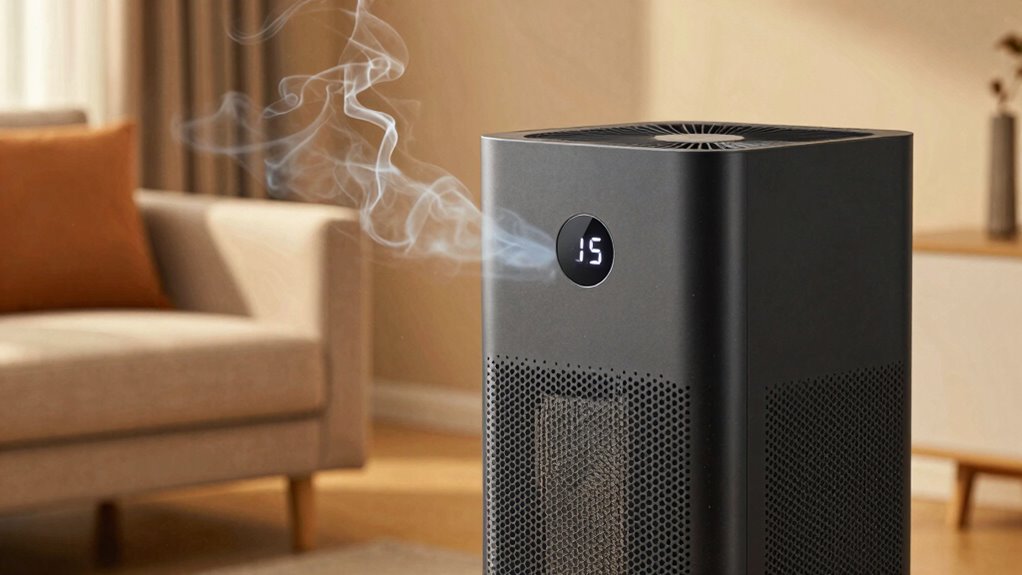
Have you ever struggled to breathe comfortably during a wildfire or a smoky event? If so, you know how quickly smoke can infiltrate your home, making the air feel heavy, acrid, and hard to breathe. That’s where a good air purifier can make a real difference, but not all filters are equally effective against smoke. To truly improve your indoor air quality during smoky conditions, you need to understand the types of filters that work best. Two of the most effective options are HEPA filters and activated carbon filters.
HEPA filters are designed to trap tiny particles, including smoke particles, dust, pollen, and other airborne pollutants. They work by forcing air through a dense fiber mat that captures particles as small as 0.3 microns with 99.97% efficiency. During a wildfire or smoky event, HEPA filters can substantially reduce the visible haze and improve your breathing comfort by removing the microscopic particles that can irritate your lungs and trigger allergies. When choosing an air purifier, look for a model with a true HEPA filter, not a HEPA-type or HEPA-like filter, as the latter may not meet the same standards for particle removal.
While HEPA filters are excellent at capturing particles, they don’t do much to remove the gases and odors associated with smoke. That’s where activated carbon filters come into play. These filters contain porous charcoal that adsorbs gases, chemical compounds, and unpleasant odors, including the smoky smell that lingers after a wildfire. Activated carbon is highly effective at trapping volatile organic compounds (VOCs) and other gaseous pollutants, which can cause headaches, dizziness, or respiratory irritation even when the visible smoke has cleared. Combining HEPA and activated carbon filters in a single purifier offers extensive protection—particles are filtered out by the HEPA component, while smells and gases are adsorbed by the activated carbon.
In addition, using advanced filtration technologies can further enhance the purifier’s ability to clean the air during heavy smoke events. When you’re shopping for an air purifier to combat wildfire smoke, prioritize models that include both HEPA and activated carbon filters. This combination ensures that you’re targeting not just the particles but also the gases and odors that make smoky air uncomfortable and potentially harmful. Keep in mind that filters need regular replacement to maintain their effectiveness, especially during heavy smoke events. By investing in a purifier with these dual filters and maintaining it properly, you can breathe easier, reduce respiratory irritation, and create a safer indoor environment during wildfire season.
Frequently Asked Questions
Do HEPA Filters Remove All Smoke Odors Effectively?
HEPA filters don’t remove all smoke odors effectively because their primary function is to trap particles, not eliminate odors. While they offer high HEPA efficiency for smoke particles, you’ll need an air purifier with activated carbon or other odor-eliminating filters for better odor removal. Combining a HEPA filter with an activated carbon filter provides the best chance to improve air quality and reduce smoke smells in your space.
How Often Should Filters Be Replaced for Optimal Smoke Removal?
You should replace your filters every 3 to 6 months for ideal smoke removal. Ironically, ignoring the filter lifespan and delaying replacements might seem like saving money, but it actually costs more in the long run. Sticking to a regular replacement schedule ensures your air purifier continues to effectively remove smoke odors and pollutants, keeping your space fresh and healthy. Don’t wait until you notice reduced performance—stay ahead with timely filter changes.
Can Air Purifiers Eliminate Secondhand Smoke Completely?
Air purifiers can’t eliminate secondhand smoke completely, but they markedly improve air quality. To maximize their effectiveness, you should monitor air quality regularly and perform proper air purifier maintenance, including replacing filters as needed. Using devices with HEPA and activated carbon filters helps reduce smoke particles and odors. While they don’t offer a perfect solution, consistent use and upkeep can create a healthier indoor environment, minimizing exposure to secondhand smoke.
Are There Specific Models Best for Wildfire Smoke?
Yes, you should look for air purifier models specifically designed for wildfire smoke. These models often feature HEPA filters combined with activated carbon filters to trap fine particles and harmful gases. Choose units with a high Clean Air Delivery Rate (CADR) for smoke, and guarantee they cover your room size. Some top-rated models include the Blueair Classic 605 and Coway Airmega 300S, both proven effective against wildfire smoke.
How Do Ionizer Filters Compare to HEPA for Smoke Filtration?
Think ionizer filters are the superheroes of smoke filtration? Think again. Their ionizer efficiency often falls short, leaving harmful particles lingering. Plus, they demand constant filter maintenance to stay effective. HEPA filters, on the other hand, trap 99.97% of particles, including smoke. If you want cleaner air and less hassle, stick with HEPA—it’s the real champion in battling wildfire smoke.
Conclusion
When choosing an air purifier for smoke, you’re not just picking a device—you’re lighting a beacon of hope in a clouded world. The right filter acts like a loyal guardian, relentlessly battling invisible enemies. With each breath, you’re clearing a path toward invigorating, pure air, turning your space into a sanctuary. Remember, your choice is the brushstroke that paints a healthier, brighter tomorrow—because cleaner air isn’t just a goal, it’s your gust of fresh life.