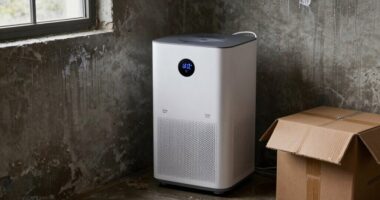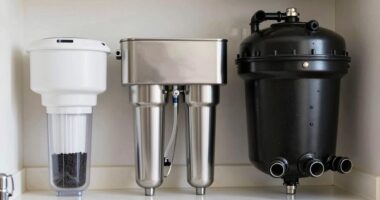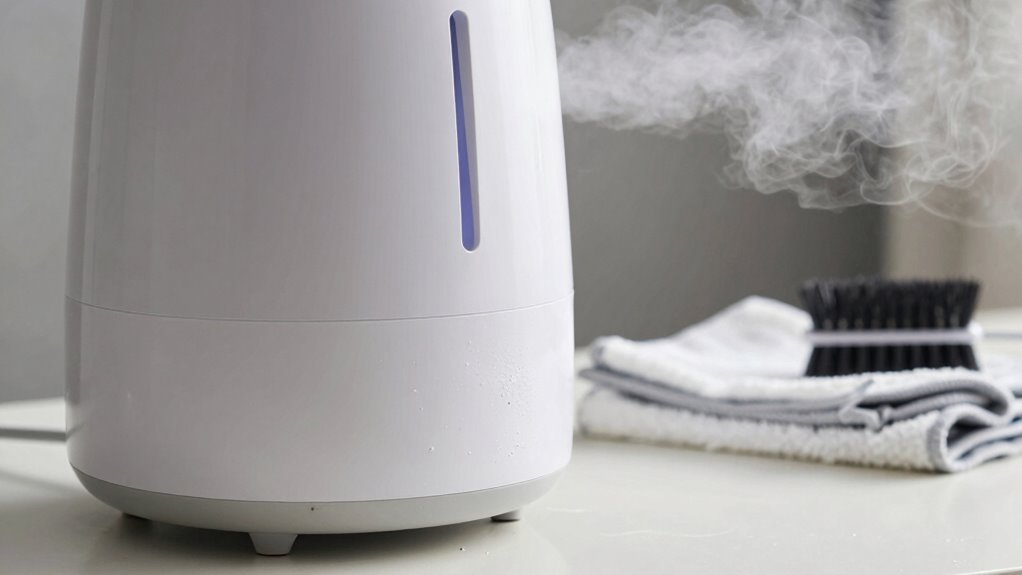

To prevent white dust in your humidifier, clean it regularly by rinsing the water tank weekly with vinegar or a gentle disinfectant. Check and replace filters as recommended, and use distilled or demineralized water whenever possible. Keep the ultrasonic or evaporative parts free of mineral deposits by scrubbing and avoiding harsh chemicals. Proper maintenance not only reduces white dust but also extends your device’s life and improves air quality—learn more about effective routines ahead.
Key Takeaways
- Use distilled or demineralized water to reduce mineral deposits that cause white dust.
- Clean the water tank weekly with vinegar or disinfectant to prevent mineral buildup.
- Regularly rinse and wipe the ultrasonic diaphragm to avoid mineral deposits and white dust formation.
- Replace or clean filters every 1 to 3 months, following manufacturer guidelines, to maintain optimal performance.
- Ensure all parts are thoroughly dried after cleaning to prevent mold and bacteria growth that can contribute to white dust.

Humidifiers can improve your home’s air quality and comfort, but if you don’t clean them regularly, they can become breeding grounds for mold, bacteria, and mineral buildup. This is especially true when dealing with different types of humidifiers, such as those with evaporative filters or ultrasonic mist features. Understanding how to properly maintain each type can help you prevent issues like “white dust,” which is caused by mineral deposits settling on surfaces.
If you have an evaporative filter humidifier, cleaning the filter is essential. These filters trap minerals and impurities from tap water, but over time, they can become clogged or develop mold. To prevent this, check the manufacturer’s instructions for cleaning or replacing the filter regularly—usually every 1 to 3 months. When cleaning, remove the filter and rinse it with water, avoiding harsh chemicals that could damage it. If the filter looks worn or heavily mineralized, replacing it is your best option. Additionally, clean the water tank weekly with a mixture of vinegar and water to dissolve mineral deposits and prevent mold growth. Keeping the tank dry when not in use also restricts bacterial growth. Regularly inspecting and maintaining the humidifier ensures optimal performance and helps prevent the formation of “white dust.”
Ultrasonic mist humidifiers work differently—they create a fine mist using high-frequency vibrations. These units don’t rely on filters but still require regular cleaning to prevent mineral buildup and bacterial growth. The ultrasonic vibrations can spread mineral particles into the air if you use hard water, leading to “white dust” settling on furniture. To combat this, use distilled or demineralized water whenever possible. Weekly cleaning involves emptying the water tank, scrubbing it with vinegar or a mild disinfectant, and rinsing thoroughly. Pay special attention to the ultrasonic diaphragm, ensuring it’s free of mineral deposits, which can impair mist production. If you notice a cloudy film or white dust on nearby surfaces, it’s a sign to clean the unit more frequently and switch to better water sources. Using water with fewer minerals reduces the likelihood of mineral deposits and prolongs the device’s lifespan.
Both types of humidifiers benefit from consistent maintenance routines. Regularly disinfect the water tank with vinegar or a gentle bleach solution to kill bacteria and mold spores. Always dry all parts thoroughly before reassembling and storing the device. This routine not only prevents “white dust” but also extends the lifespan of your humidifier and maintains ideal air quality. Remember, neglecting cleaning can lead to health issues and reduce the device’s efficiency. By staying vigilant and following proper cleaning practices—especially paying attention to evaporative filters and ultrasonic mist components—you can enjoy the benefits of humidified air without the unwanted side effects. Incorporating proper water quality considerations can significantly reduce mineral buildup and improve overall device performance.

8-Piece Small Cleaning Brush Set for Tight Spaces, Mini Crevice Brushes for Household Use, Ideal for Humidifiers, Cup and Toasters
This small cleaning brush set includes eight different brushes—crevice, bottle, gap, corner, edge, groove, detailing, track and hole…
As an affiliate, we earn on qualifying purchases.
As an affiliate, we earn on qualifying purchases.
Frequently Asked Questions
How Often Should I Replace the Humidifier Filter?
You should replace your humidifier filter every 1 to 3 months, depending on use and water quality. Regular humidifier maintenance includes following the filter replacement schedule to prevent buildup and white dust. Check your manufacturer’s instructions for specific guidance. Keep an eye on the filter’s condition, and if it looks dirty or clogged sooner, replace it promptly. Proper filter maintenance ensures effective operation and healthier air.
Can I Use Vinegar to Clean My Humidifier?
Yes, you can use vinegar cleaning for your humidifier as part of proper humidifier maintenance. Fill the reservoir with equal parts white vinegar and water, then let it sit for about 30 minutes. This helps break down mineral deposits that cause white dust. After soaking, scrub gently, rinse thoroughly, and dry. Regular vinegar cleaning keeps your humidifier functioning efficiently and prevents buildup.
What Type of Water Is Best for My Humidifier?
Did you know using distilled water reduces mineral deposits by up to 99%? For your humidifier, it’s best to use distilled water because it has minimal mineral content, which prevents white dust buildup. Tap water often contains minerals that can cause buildup and reduce efficiency. So, switch to distilled water for cleaner, healthier humidification and to keep your device running smoothly and quietly.
How Do I Prevent Mold Growth Inside the Unit?
To prevent mold growth inside your humidifier, you should regularly clean and disinfect it, ideally once a week. Use a mixture of vinegar and water to sanitize all parts, ensuring no mold spores remain. Keep the unit dry when not in use, and always use distilled or filtered water to promote humidifier safety. Proper mold prevention not only keeps your device functioning well but also protects your health.
Are There Natural Alternatives to Commercial Cleaning Agents?
Did you know that over 60% of people prefer natural cleaning methods? You can try DIY solutions like vinegar and baking soda, which are effective and eco-friendly. Essential oils, like tea tree or eucalyptus, also act as natural disinfectants and add a fresh scent. Simply mix these with water for a safe, chemical-free cleaning routine that prevents mold and white dust buildup, keeping your humidifier clean and healthy.

Amazon Grocery, Distilled Water, 1 Gallon
One gallon of Distilled Water
As an affiliate, we earn on qualifying purchases.
As an affiliate, we earn on qualifying purchases.
Conclusion
So, now that you know the importance of cleaning your humidifier regularly, the question is—are you ready to prevent that mysterious white dust? It’s a simple routine that makes all the difference, but one overlooked step could change everything. Will you take the extra few minutes to keep your air pure and your home healthy? The choice is yours—don’t let neglect sneak up on you when it’s so easy to stay one step ahead.

4 Pack Wf813 Eqwf813 Humidifier Filters Compatible with Equate Eqwf813 Eq-2119-Ul, Relion RCM-832 RCM-832N, ProCare PCCM-832N Cool Mist Humidifier Replacement Filter
【COMPATIBLE MODELS】Wf813 humudifier filter replacement for Equate Relion WF813, DH830 DH-830, DH832 DH-832, RCM832 RCM-832, RCM832N RCM-832N; for…
As an affiliate, we earn on qualifying purchases.
As an affiliate, we earn on qualifying purchases.
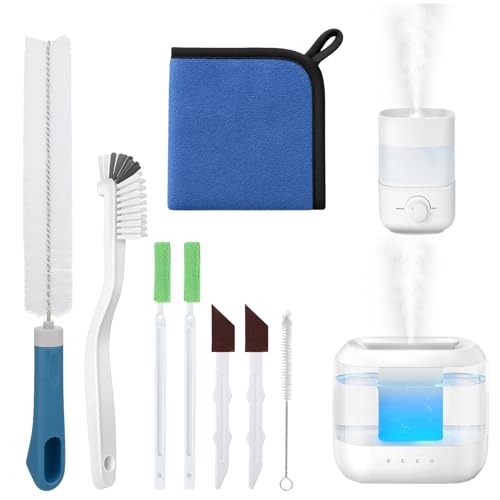
XANGNIER Humidifier Cleaner Brush Kits,8Pcs Humidifier Cleaning Brushes Tools Accessories
Humidifier Cleaning Solution:Still looking for a cleaning tool that can thoroughly clean your humidifier? Come and try our…
As an affiliate, we earn on qualifying purchases.
As an affiliate, we earn on qualifying purchases.