
To prevent odors in your kitchen, focus on hidden spots like air vents, cabinet corners, behind appliances, and cracks around countertops. Regularly clean fridge seals, drip trays, and range hood filters, and check for mold in plumbing areas. Don’t forget to clean tight corners, seams, and gaps, as they trap dust and bacteria that smell over time. Keeping these spots fresh is essential—continue with tips that help you master deep cleaning and long-term freshness.
Key Takeaways
- Regularly clean air vents, cabinet corners, and behind appliances to remove dust, grease, and food debris that trap odors.
- Maintain appliance seals, drip trays, and range hood filters through thorough, routine cleaning to prevent mold and sour smells.
- Use baking soda, vinegar, and moisture absorbers to neutralize odors and control humidity in hidden areas.
- Deep clean cracks, seams, and gaps around countertops, baseboards, and between cabinets to eliminate bacteria and grime buildup.
- Establish consistent cleaning routines to prevent long-term odor accumulation in concealed kitchen spots.

Bissell PowerClean FurGuard 280W Self-Standing Cordless Vacuum w/Self-Cleaning Brush Roll, Strong Suction, Removeable Battery, Wall Mount, Upholstery Tool & Bright Headlights
NO PET HAIR LEFT BEHIND. Find & capture pet hair everywhere with a powerful 280W motor and our...
As an affiliate, we earn on qualifying purchases.
Why Do Hidden Kitchen Spots Smell First?
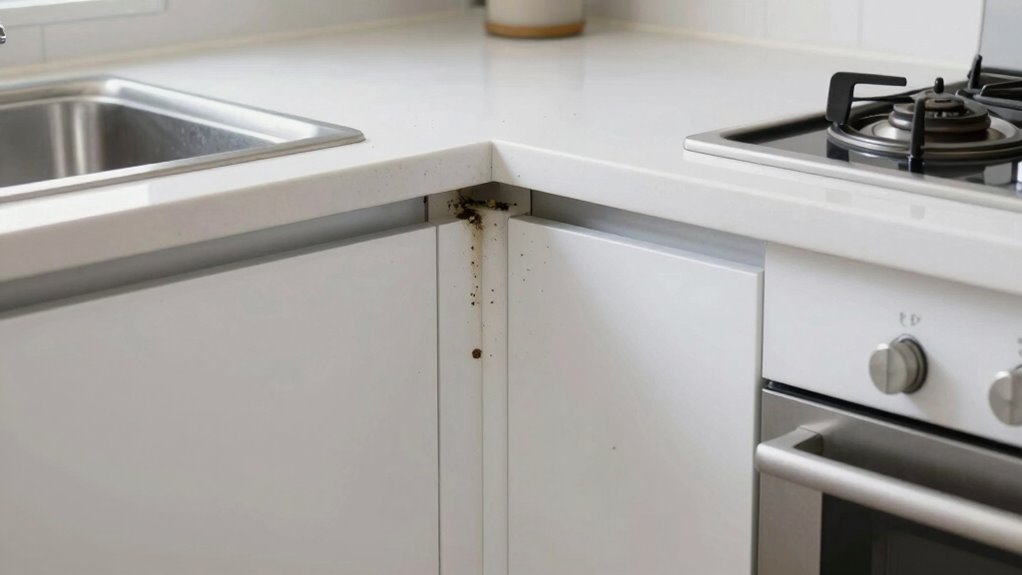
Have you ever noticed that certain hidden spots in your kitchen seem to smell first? That’s often due to poor air circulation in these areas, which traps odors rather than dispersing them. When air doesn’t move freely, smells from spills, food particles, or cleaning products get absorbed into crevices and surfaces. These spots act like reservoirs, holding onto odors longer than open spaces. Over time, the trapped smells intensify because they aren’t vented or aired out. Understanding this helps you see why deep cleaning those hidden corners is essential. Improving air circulation—by opening windows or using fans—can reduce odor absorption and promote better air quality. Regularly cleaning and airing out these hidden spots prevents odors from lingering and keeps your kitchen smelling fresh. Additionally, ventilation techniques can significantly enhance air movement, further reducing odors. Using air purifiers can also help eliminate airborne particles and reduce lingering odors, enhancing overall air quality in your kitchen. Incorporating proper ventilation strategies can make a noticeable difference in odor control and overall cleanliness.

Cordless Vacuum Cleaner, 600W 50KPA 70Mins Vacuum Cleaners for Home, Stick Vacuum with Charging Dock Station, Anti-tangle Wireless Vacumm, Rechargeable Cordless Vacuum for Pet Hair/Carpet/Hard Floor
【600W/50KPa Powerful Suction】Dsorupa cordless vacuum cleaner is equipped with the latest 550W brushless high-performance motor, which is able...
As an affiliate, we earn on qualifying purchases.
Common Places in the Kitchen That Trap Odors
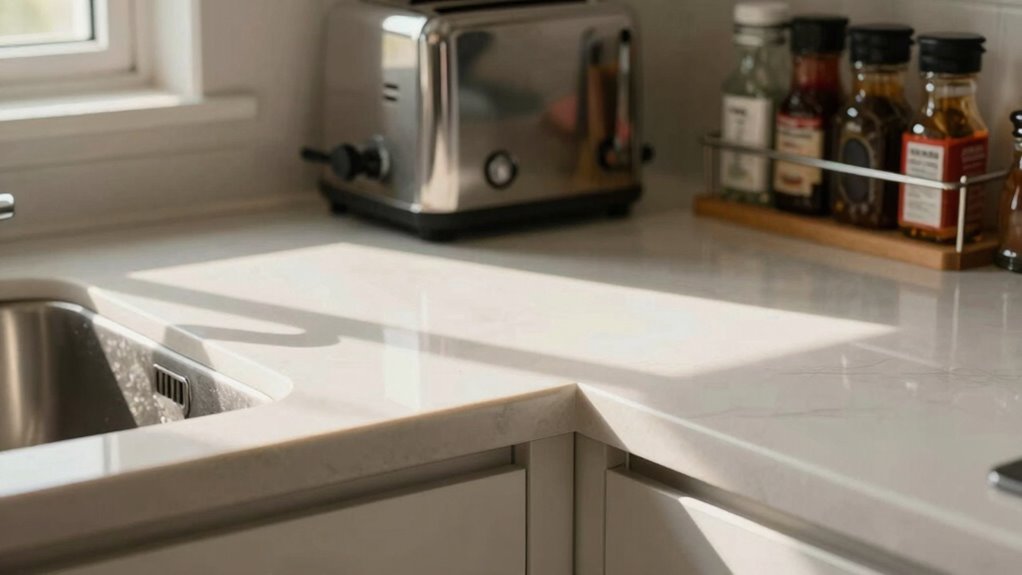
Certain spots in your kitchen are especially prone to trapping odors because they tend to be overlooked during regular cleaning. The air vent, for example, can gather dust, grease, and cooking smells if not cleaned regularly, causing lingering odors to spread through the space. Similarly, cabinet corners often collect crumbs, spills, and moisture, creating a perfect environment for mold and musty smells. These hidden areas can hold onto odors long after the surface looks clean. Regularly inspecting and cleaning your air vent helps remove trapped particles that cause smells. Additionally, free floating substances like dust and moisture can settle in hard-to-reach spots, exacerbating odor problems. Proper ventilation systems and routine filter changes can further reduce odor buildup. Ensuring proper airflow in your kitchen helps prevent the accumulation of stale air and odors. Using automated cleaning devices, such as robotic vacuums or air purifiers, can simplify maintaining a fresh environment. Don’t forget to focus on cabinet corners—use a brush or vacuum attachment to eliminate debris. Incorporating air circulation techniques such as using exhaust fans can significantly improve odor control. Addressing these often-neglected spots ensures your kitchen stays fresh and odor-free.

KARDV Cordless Vacuum Cleaner, 500W/40Kpa Vacuum Cleaners for Home, 60Mins Stick Vacuum with LED Display, Anti-Tangle & Wall Mount Charging, 8 in 1 Lightweight Vacuum for Hard Floors Carpet Pet Hair
【500W/40Kpa Powerful Suction】 The cordless vacuum cleaner is equipped with a powerful 450W motor, which provides a superb...
As an affiliate, we earn on qualifying purchases.
How Appliances Like Fridges and Ovens Can Hold Odors
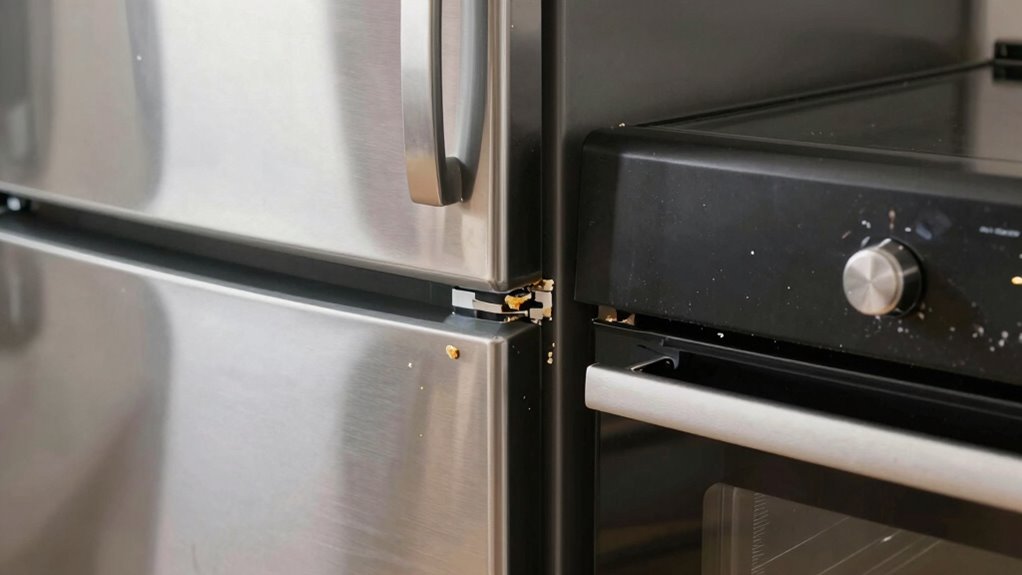
Your fridge and oven can trap odors from hidden food particles and moisture buildup. Over time, these residues can cause persistent smells that are hard to remove. Regular cleaning helps prevent odor accumulation and keeps your appliances fresh. Incorporating filter maintenance into your cleaning routine ensures you use the most effective methods to eliminate odors and maintain appliance hygiene. Additionally, paying attention to ventilation and airflow can significantly reduce odor buildup by allowing moisture and odors to escape more efficiently. Proper deep-sky imaging techniques emphasize the importance of adequate airflow and ventilation to prevent residue buildup in equipment, which can be applied to household appliances to help keep them odor-free.
Hidden Food Particles
Ever wonder why odors from your fridge or oven linger even after cleaning? The culprit is often hidden food particles that get trapped in corners or behind shelves. These debris can quickly become moldy or rotten, producing persistent smells. Additionally, poor air circulation inside appliances prevents odors from escaping effectively. To tackle this, focus on these areas:
- Check under shelves and drawers for food debris.
- Clean the seals and gaskets thoroughly.
- Remove and scrub oven racks and fridge shelves.
- Clear vents and air outlets to improve air circulation and prevent odor buildup. Proper ventilation and regular cleaning can significantly reduce odor accumulation and keep your appliances smelling fresh longer. Incorporating proper cleaning techniques can also help eliminate hidden particles that contribute to lingering smells, especially when combined with maintaining gasket integrity to prevent trapped moisture.
Moisture Buildup
Moisture buildup inside appliances like fridges and ovens often traps odors and makes cleaning more challenging. When humidity isn’t properly controlled, it creates a damp environment that promotes mold growth, which can smell sour and stubborn. To prevent this, regularly check for leaks and wipe down surfaces to reduce excess moisture. Leave fridge doors slightly open when not in use to promote airflow and decrease humidity levels. For ovens, clean spills promptly and keep vents clear to avoid trapped moisture. Using silica gel packs or moisture absorbers inside appliances can help maintain dryness. Controlling humidity not only minimizes mold growth but also keeps odors at bay, making your deep-clean efforts more effective and reducing unpleasant smells from hidden moisture pockets.

Bissell PowerClean FurFinder 200W Self-Standing Cordless Vacuum w/Tangle Free Brush Roll, Strong Suction, Removeable Battery, Wall Mount, Upholstery Tool & Bright Headlights
NO PET HAIR LEFT BEHIND. Find & capture pet hair everywhere with a powerful 200W motor and our...
As an affiliate, we earn on qualifying purchases.
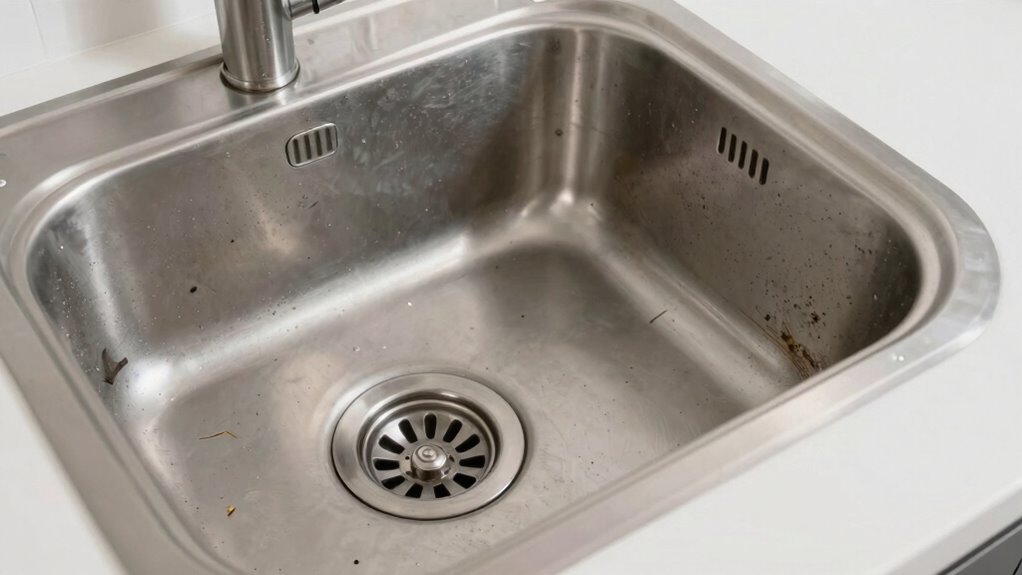
Hidden behind the sink and within the plumbing, mold, soap scum, and food debris often accumulate unnoticed, creating a breeding ground for unpleasant odors. These hidden buildup sources can cause persistent sink odors if not addressed. Regular plumbing maintenance is essential to prevent foul smells from lingering. Here are four key steps to keep your sink and plumbing fresh: 1. Clear out any debris from the sink drain trap. 2. Pour a mixture of baking soda and vinegar down the drain to break down buildup. 3. Run hot water for a few minutes to flush the pipes. 4. Check for leaks or drips that could harbor mold and worsen odors. Additionally, understanding architectural solutions can help ensure your plumbing setup is optimized for odor prevention and easy maintenance. Incorporating proper ventilation can also significantly reduce indoor humidity levels, preventing mold growth and odor buildup. Regular inspections and preventive maintenance are crucial in maintaining a fresh and odor-free kitchen environment. Furthermore, being aware of vetted wave and wind strategies can help improve airflow and reduce moisture accumulation around plumbing areas. Moreover, adopting a holistic approach to plumbing care can prolong the effectiveness of your cleaning efforts and prevent future odor issues.
Cracks and Gaps in Your Kitchen That Hide Dirt and Odors
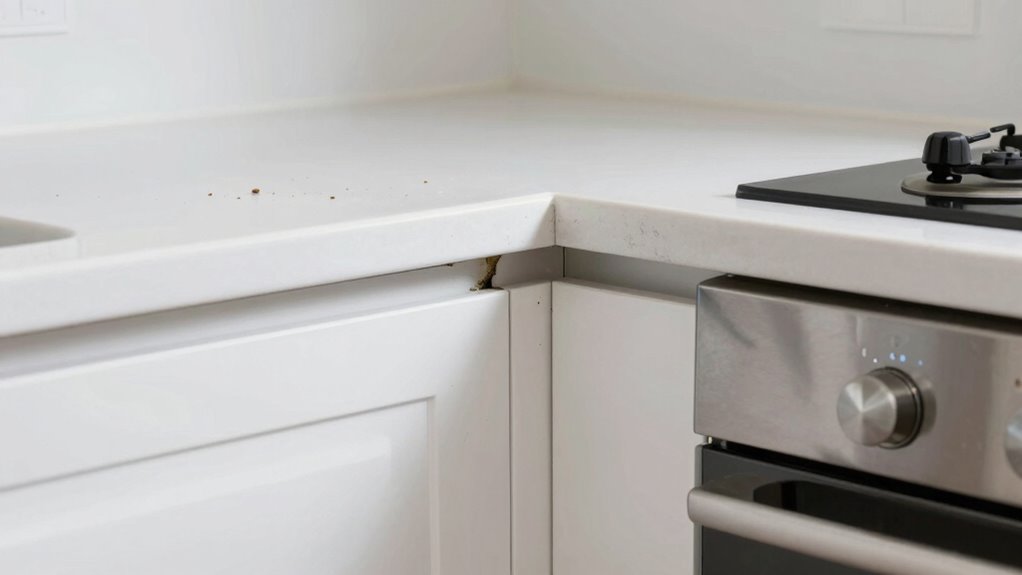
Cracks and gaps in your kitchen can hide dirt and odors you might not notice at first glance. These small spaces collect debris and moisture, making cleanup more difficult. Tackling these spots is essential for a truly deep clean and a fresher kitchen. Incorporating easy-to-clean designs in your renovation can help prevent buildup in these hard-to-reach areas. Additionally, choosing materials like vintage farmhouse sinks with smooth surfaces can make cleaning easier and reduce trap points for grime.
Hidden Gaps and Cracks
Even the tiniest gaps and cracks in your kitchen can trap dirt, crumbs, and lingering odors that are tough to remove with regular cleaning. These hidden gaps often go unnoticed but can harbor bacteria and cause unpleasant smells. To tackle this, focus on crack cleaning and sealing these small openings.
Here are four key spots to target:
- Around countertop edges and backsplash corners
- Behind appliances like the refrigerator and dishwasher
- Gaps between cabinets and walls
- Seams along baseboards and floorboards
Use a small brush or compressed air to thoroughly clean these hidden gaps. Sealing cracks with caulk or weatherstripping prevents dirt buildup and keeps odors from seeping out, making your kitchen fresher and cleaner.
Dirt Accumulation Spots
Have you ever noticed how dirt and odors seem to linger in the tiniest spaces in your kitchen? Cracks and gaps around appliances, cabinets, or behind counters can trap dust, grease, and food particles, making it hard for air circulation to carry away unpleasant smells. These hidden spots tend to accumulate grime quickly if cleaning isn’t frequent enough. To prevent odors from taking hold, you should regularly inspect and clean these areas, especially in high-traffic zones. Increasing cleaning frequency in these tight spaces helps break down buildup and improves air circulation, reducing the chances of musty smells. Don’t forget, even small cracks can harbor dirt, so staying vigilant and maintaining a consistent cleaning routine keeps your kitchen fresh and odor-free.
How to Clean Refrigerator Seals and Drip Trays to Prevent Smells
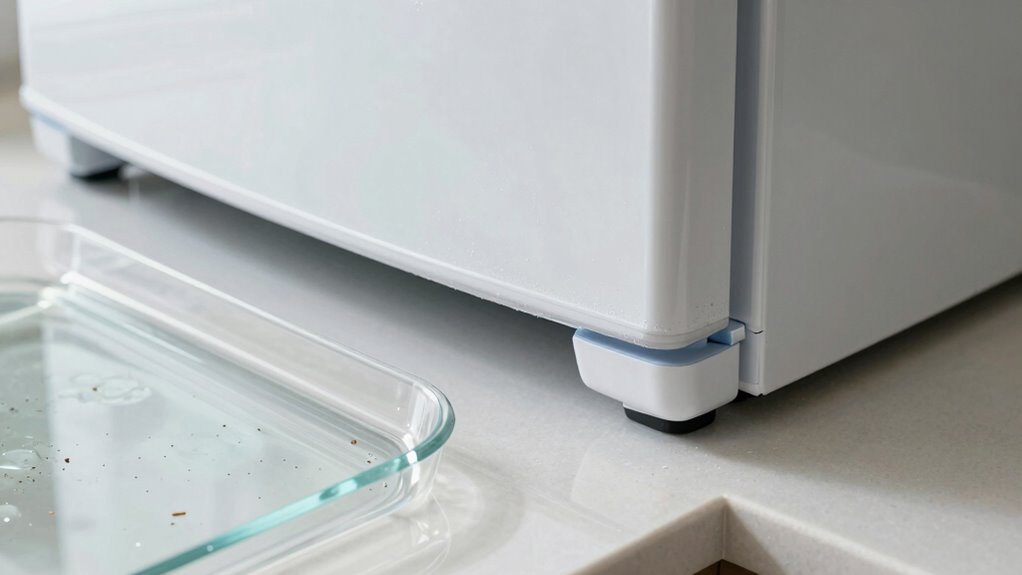
To keep your refrigerator smelling fresh, it’s essential to regularly clean the seals and drip trays. These areas trap moisture, crumbs, and bacteria, leading to odors. Start by removing the refrigerator seals and gently wiping them with a mixture of warm water and mild detergent. Next, clean the drip trays—pull them out, scrub with a brush or sponge, and rinse thoroughly. For stubborn spots, use a vinegar solution to cut through grime and bacteria. Remember to dry both the seals and drip trays completely before replacing them. Here are four simple steps:
- Remove and inspect refrigerator seals and drip trays.
- Wipe seals with a damp cloth and mild detergent.
- Scrub drip trays with a brush and vinegar solution.
- Dry thoroughly before reinstalling to prevent mold and odors.
Ventilation and Range Hood Filters You Might Forget to Clean
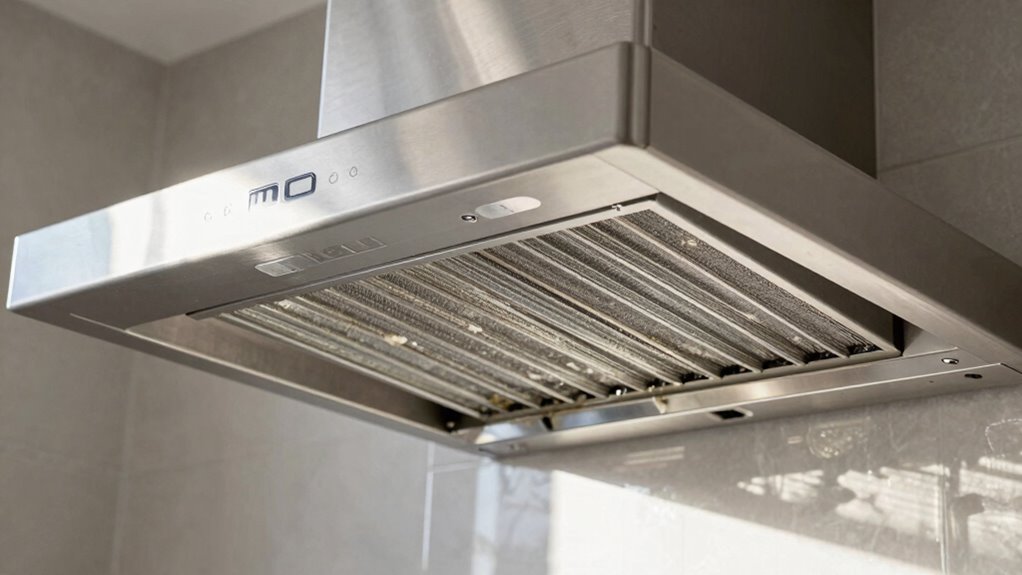
After cleaning your refrigerator seals and drip trays, it’s easy to overlook the ventilation and range hood filters. These filters, including the grease filter and air vent, trap grease, dust, and odors from cooking. Over time, grease buildup can reduce airflow and cause unpleasant smells or smoke when you cook. To keep your kitchen fresh and ensure proper ventilation, regularly remove and clean the grease filter according to the manufacturer’s instructions. Many filters can be soaked in warm, soapy water or run through the dishwasher. Don’t forget to check the air vent for dust or debris that could hinder airflow. Maintaining these hidden spots not only improves air quality but also prolongs the lifespan of your range hood.
Simple Steps to Deep-Clean Hidden Kitchen Spots Effectively
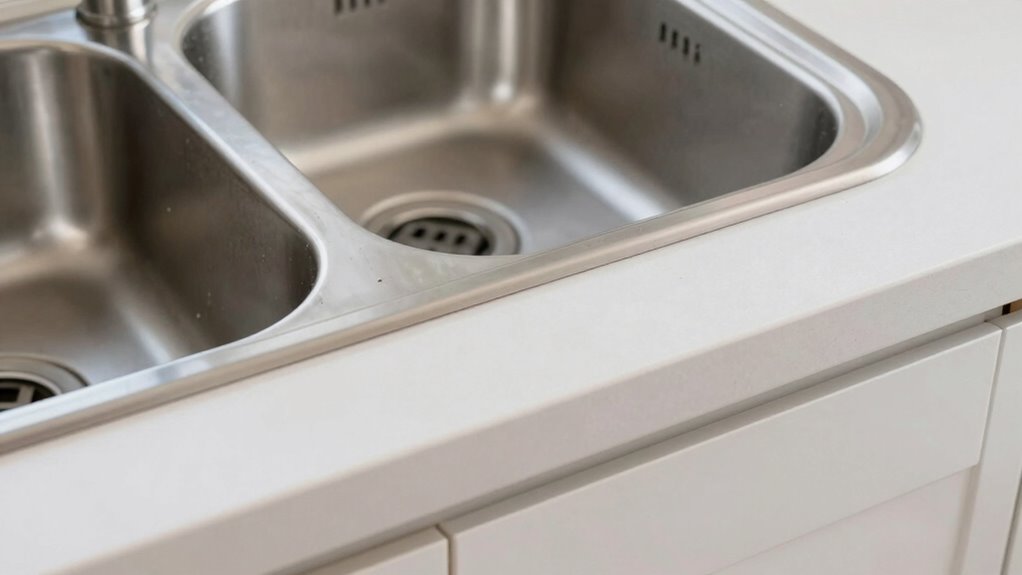
Deep-cleaning hidden kitchen spots might seem tricky, but with simple steps, you can tackle them effectively. First, gather your cleaning tool essentials, including microfiber cloths, brushes, and disinfectants. Next, focus on areas like beneath appliances and inside drawers, using brushes to loosen grime. For air freshening techniques, sprinkle baking soda in hidden corners and let it sit before vacuuming. Remember, regular wiping with a damp cloth keeps buildup at bay. Also, use a small brush or toothbrush to reach tight spaces around hinges and vents. These straightforward steps ensure your kitchen stays fresh, odor-free, and thoroughly cleaned. Staying consistent with this routine prevents odors and keeps even the hidden spots spotless.
Tips to Keep Your Kitchen Fresh and Odor-Free Long-Term
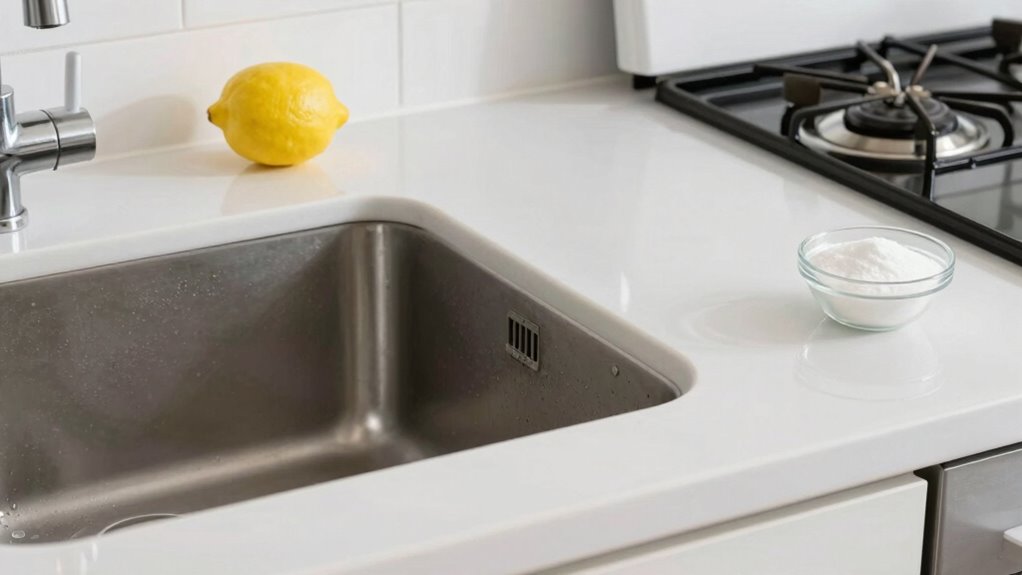
Keeping your kitchen fresh and odor-free long-term requires consistent habits that prevent buildup and eliminate smells before they become a problem. Establishing a regular cleaning schedule is key. Stick to daily tidying, weekly wipe-downs, and monthly deep cleans. Proper kitchen organization helps reduce clutter, making cleaning easier and preventing hidden odor sources. Use the following table as a guide:
| Task | Frequency | Tips |
|---|---|---|
| Wipe surfaces | Daily | Use natural cleaners like vinegar |
| Empty trash | Weekly | Use sealed bins and baking soda |
| Check for mold | Monthly | Focus on hidden spots and corners |
Implementing these habits ensures your kitchen stays fresh, odor-free, and inviting.
Frequently Asked Questions
How Often Should I Deep-Clean Hidden Kitchen Spots?
You should deep-clean hidden kitchen spots at least once every three to six months. Regularly, focus on countertop maintenance and appliance upkeep to prevent buildup and odors. Pay special attention to areas behind appliances, inside drawers, and under the sink, where grime can hide and cause smells. Staying consistent helps keep your kitchen fresh and guarantees that hidden spots don’t become breeding grounds for bacteria or unpleasant odors.
Can Natural Remedies Effectively Eliminate Kitchen Odors?
Yes, natural remedies can effectively eliminate kitchen odors. You can use baking soda, which absorbs smells, or vinegar, which neutralizes them. Lemon juice also works well for freshening up surfaces and drains. Regularly using these natural odor elimination methods helps keep your kitchen smelling clean without harsh chemicals. Just sprinkle baking soda, wipe with vinegar, or polish with lemon, and you’ll notice a fresher, odor-free environment.
Are There Specific Products Recommended for Cleaning Hidden Areas?
Think of cleaning hidden spots like uncovering a secret garden—you need the right tools. You should use eco-friendly solutions or commercial cleaning products specifically designed for hard-to-reach areas. These products effectively target grime and odors without harsh chemicals. Look for sprays or brushes suited for corners, behind appliances, and inside cabinets. Regularly rotating these products keeps your kitchen fresh and guarantees you’re caring for the environment at the same time.
How Do I Detect Hidden Mold Causing Bad Smells?
To detect hidden mold causing bad smells, you should look for signs like a persistent musty odor, discoloration, or water stains in hidden areas like behind appliances or under sinks. Use a mold detection kit for accurate results, or consider professional inspection if you suspect extensive mold. Identifying odor sources early helps prevent health issues and guarantees thorough cleaning of hidden mold that might otherwise go unnoticed.
What Are Signs My Kitchen Needs a Professional Deep-Cleaning?
When your kitchen’s charm fades into stubborn odors or grime, it’s time for a professional deep-clean. Signs include persistent smells despite regular cleaning, mold growth, or sticky residue on appliances. Also, notice if pantry pests keep returning or if kitchen appliance maintenance becomes more difficult. A deep-clean targets hidden spots, ensuring your kitchen stays fresh, hygienic, and pest-free—because sometimes, only a professional’s touch can restore its true sparkle.
Conclusion
Think of your kitchen like a garden; if you ignore the hidden weeds and overlooked corners, odors will take over. When you regularly deep-clean those sneaky spots—like seals, gaps, and vents—you prevent unpleasant smells from sprouting. Just like tending a garden keeps it fresh and vibrant, your effort keeps your kitchen smelling clean and inviting. Stay vigilant, and your kitchen will remain a fresh, welcoming space for all your culinary adventures.