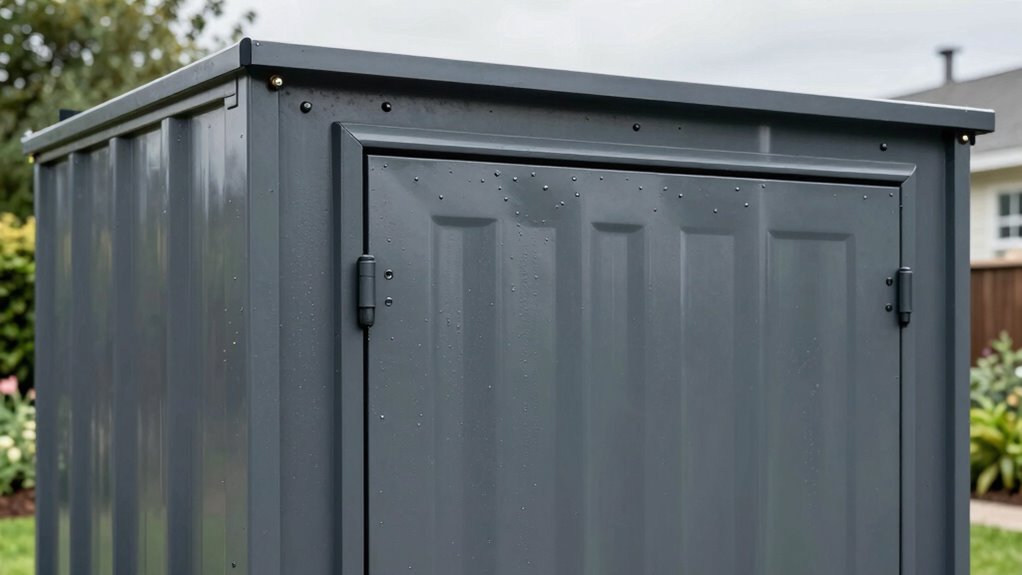

The most important weather-seal detail for outdoor storage is choosing materials that resist water, dirt, and sun damage, like treated wood, rust-resistant metals, or durable plastics. Proper ventilation is equally vital because it prevents moisture buildup, which can cause mold, mildew, or rust. Combining weatherproof materials with strategic airflow helps protect your gear long-term. To discover the best tips for creating a storage space that stays dry and durable, continue exploring these essential details.
Key Takeaways
- Proper sealing around doors and vents prevents water intrusion and maintains the integrity of weatherproof storage units.
- Installing high-quality weatherstripping ensures a tight seal, protecting stored items from moisture and dirt.
- Effective seal design allows for ventilation without compromising waterproofing, balancing airflow and protection.
- Regular maintenance of seals prevents deterioration, ensuring long-term weather resistance.
- Combining durable, weatherproof materials with well-sealed entry points maximizes outdoor storage durability.
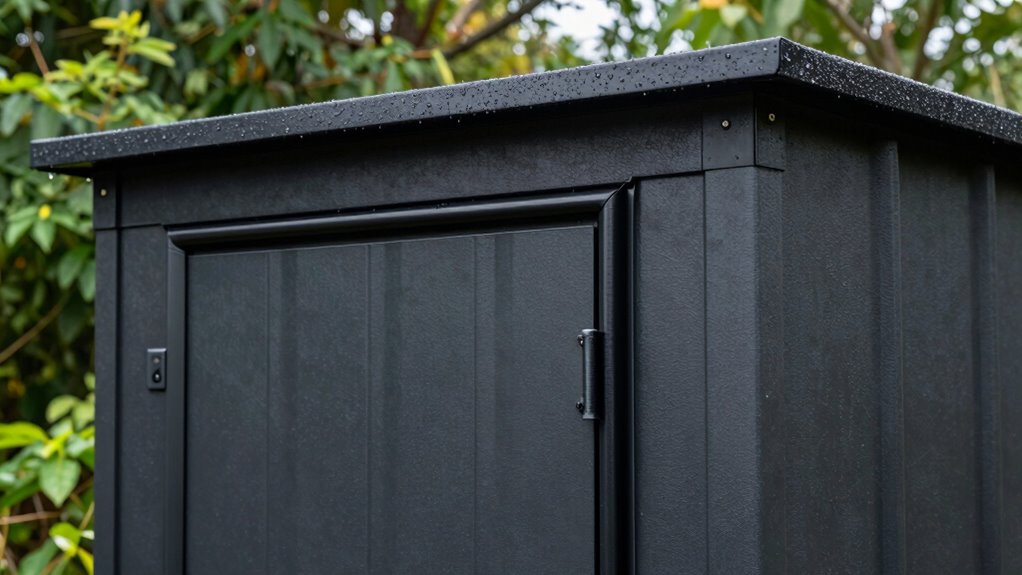
Ever wonder how to keep your outdoor gear safe and organized? The key lies in choosing the right storage solutions that can withstand the elements while keeping your equipment in top shape. Weatherproof materials are essential because they prevent water, dirt, and other environmental factors from damaging your belongings. Think about storage sheds made from durable plastics, treated wood, or metal designed to resist rust and corrosion. These materials don’t just look good; they provide a solid barrier against rain, snow, and sun exposure. When selecting your outdoor storage, prioritize those built from weatherproof materials to guarantee your gear stays dry and protected over the long haul.
Choose weatherproof storage to protect your outdoor gear from water, dirt, and environmental damage.
But weatherproofing isn’t just about the materials; proper ventilation solutions play an imperative role too. Without enough airflow, moisture can get trapped inside your storage unit, creating a perfect environment for mold, mildew, and rust to develop. Installing vents or small windows allows air to circulate freely, reducing humidity levels inside and keeping your gear dry. Ventilation solutions also help prevent unpleasant odors from building up, especially if you store items like gardening tools, outdoor cushions, or sports equipment. You should look for storage options that incorporate adjustable vents or passive airflow designs—these keep moisture out without compromising the overall weatherproof integrity of your shed or container.
Furthermore, good ventilation can extend the lifespan of your stored items. For example, if you’re storing fabric cushions or soft gear, proper airflow prevents dampness that leads to rot or mold. For metal tools and equipment, it reduces the risk of rust forming due to trapped moisture. Incorporating weatherproof technology into your storage design ensures durability and resilience against the elements. When you’re setting up your outdoor storage, consider how you will access ventilation solutions—placement of vents, size, and whether they’re adjustable—so you can customize airflow based on the seasons or specific storage needs.
Combining weatherproof materials with effective ventilation solutions creates a storage environment that’s both resilient and breathable. This balance ensures your outdoor gear remains in prime condition, ready for use whenever you need it. It also minimizes maintenance, saving you time and money in the long run. With the right choice of weatherproof materials and smart ventilation, you can confidently store your equipment outside without worrying about damage or deterioration. Ultimately, understanding and implementing these weather-seal details will help you get the most out of your outdoor storage, keeping your gear safe, dry, and organized no matter the weather.
Frequently Asked Questions
How Often Should Weather Seals Be Inspected and Maintained?
You should inspect your weather seals at least twice a year, ideally during spring and fall, to catch any signs of wear or damage early. Regular maintenance tips include cleaning the seals with mild soap and water, checking for cracks or gaps, and applying silicone spray to keep them flexible. Consistent inspection and maintenance guarantee your outdoor storage stays protected from the elements and prolongs the seal’s lifespan.
What Materials Are Best for Weather-Seal Durability?
Ever wondered which materials keep your weather seals lasting longer? You should choose rubber or silicone seals, as they offer superior material durability and seal longevity. These materials resist cracking, UV damage, and extreme temperatures better than foam or vinyl. By selecting high-quality rubber or silicone, you guarantee your outdoor storage remains protected and weather-tight for years, saving you time and money on frequent replacements.
Can Weather-Seals Be Replaced Without Professional Help?
Yes, you can do a DIY replacement of weather seals if you follow proper sealing techniques. Start by removing the old seal carefully and cleaning the area thoroughly. Measure and cut the new seal precisely, then apply it firmly in place. Using the right tools and adhesives guarantees a good seal. With patience, you can save money and improve your outdoor storage’s weather resistance without professional help.
How Do Temperature Fluctuations Affect Weather-Seal Performance?
Temperature fluctuations cause thermal expansion and contraction, which can impact your weather-seal’s effectiveness. As temperatures rise and fall, the seal may expand or contract, leading to potential seal cracking or gaps. Over time, these movements weaken the seal, making it less reliable at keeping out water and drafts. Regular inspections and timely replacements help maintain peak performance and prevent damage caused by these temperature-related effects.
Are There Eco-Friendly Weather-Seal Options Available?
Yes, eco-friendly weather-seal options are available. You can choose seals made from sustainable materials like plant-based rubber or biodegradable options that break down naturally over time. These environmentally conscious choices diminish your impact on the planet while maintaining weather resistance. By selecting sustainable materials, you guarantee your outdoor storage stays protected, and you contribute to a greener future. Look for products labeled as biodegradable or made from eco-friendly sources.
Conclusion
When it comes to outdoor storage, sealing your weatherproof detail isn’t just important—it’s the superheroes of protection. Neglect this vital step, and your belongings risk turning into soggy, rotting disasters faster than you can say “water damage.” By paying close attention to the weather-seal, you’re fundamentally armor-plating your storage against nature’s relentless assault. Don’t leave it to chance—seal it tight and keep your outdoor treasures safe from the storm’s fury!