
To remove odors effectively, start by identifying their sources—check for pet areas, mold, or hidden damp spots. Clean surfaces thoroughly, focusing on carpets, upholstery, and curtains with appropriate disinfectants. Use air purifiers and ventilation like fans or open windows to circulate fresh air. Place odor absorbers like baking soda or charcoal in problem zones. If you continue exploring, you’ll discover more tips to keep your home smelling fresh and clean.
Key Takeaways
- Identify and eliminate the odor source, such as mold, pet stains, or damp areas, before cleaning.
- Deep clean affected surfaces with appropriate cleaners and use enzymatic neutralizers for organic smells.
- Improve ventilation through opening windows, using exhaust fans, and maintaining HVAC filters to promote fresh air flow.
- Use air purifiers with activated carbon filters to absorb lingering odors in the air.
- Regularly maintain cleanliness and reduce clutter to prevent odor buildup and ensure ongoing freshness.
Why Do Home Odors Linger: and How Can You Fix Them?

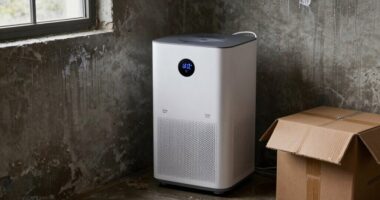
Odors tend to linger in a home because they get trapped in porous surfaces like carpets, upholstery, and curtains, making them hard to eliminate. To combat this, use air purifiers with activated carbon filters, which can absorb and neutralize many odors. Ventilation strategies are also key; opening windows and doors allows fresh air to flow in, pushing out stale, odor-filled air. Running exhaust fans or using ceiling fans helps circulate air and speed up the process. Regularly cleaning or replacing filters in your HVAC system can prevent odor buildup. Combining these approaches ensures odors don’t just temporarily fade but are effectively removed from your environment. This proactive strategy keeps your home smelling fresh and inviting.
How to Identify Common Odor Sources in Your Home

Knowing where odors originate is the first step toward eliminating them effectively. Start by inspecting common sources like pet odors, which often come from litter boxes, bedding, or carpets. Regularly check your pets’ favorite spots and clean them thoroughly. Mold detection is also essential; look for hidden damp areas such as bathrooms, basements, or behind appliances. Mold often causes a musty smell that’s easy to overlook. Pay attention to areas with poor ventilation, water stains, or visible mold growth. Proper air circulation is crucial for reducing persistent smells and preventing mold growth. Improving ventilation systems can help maintain fresh indoor air and reduce odor buildup. Additionally, using proper filtration techniques can protect your indoor environment from airborne pollutants that contribute to odors. Enhancing air quality through these methods can make a significant difference. Regular maintenance of HVAC systems ensures that air filters remain effective in capturing odor-causing particles. Identifying these common trouble spots allows you to focus your cleaning efforts where they’ll make the biggest difference.
Easy Tests to Detect Hidden Smells You Might Miss
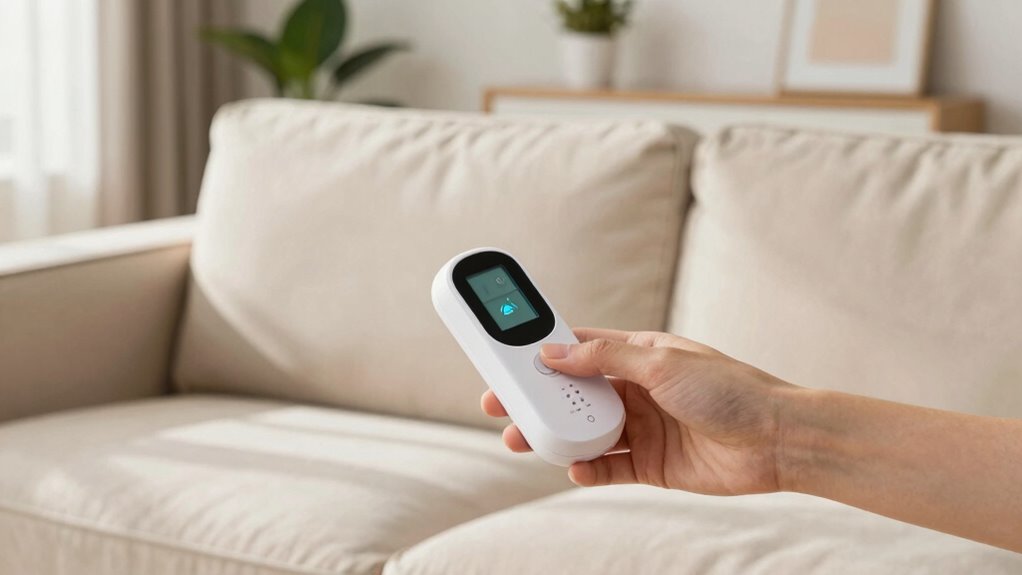
Ever wonder if there are hidden smells lurking in your home that you can’t detect with your nose alone? To improve odor detection, try simple smell testing methods. First, take a clean cotton ball or swab and hold it near potential problem areas like carpets, behind furniture, or inside vents. Smell the cotton to see if it picks up any lingering odors. You can also use your hands to gently waft air from suspicious spots toward your nose, helping identify hidden smells. Another trick is to temporarily close off rooms and then re-enter to see if you notice any new or stronger odors. These easy tests help reveal hidden smells that might be missed during regular odor detection, guiding you toward the source that needs attention before odor removal. Additionally, understanding how airflow and ventilation can influence odor dispersion can help you better locate and eliminate stubborn smells. Recognizing the source of odors is crucial for effective removal and long-term freshness. Utilizing proper ventilation techniques can also accelerate the process of odor elimination and prevent future buildup. Paying attention to air circulation patterns can further improve your ability to identify and address odor issues effectively. Being aware of how airflow dynamics affect odor movement can help you strategically target problem areas for more efficient odor control.
Effective Cleaning and Treatments for Persistent Odors

When dealing with persistent odors, thorough cleaning is essential to eliminate the source and prevent them from returning. Start by deep cleaning affected surfaces with appropriate cleaners, paying special attention to carpets, upholstery, and curtains. Use odor neutralizers, such as enzymatic sprays, to break down organic compounds causing smells. Incorporate air purification devices, like HEPA filters or air scrubbers, to remove airborne particles and odors. Visualize this process:
| Surface Cleaning | Air Treatment |
|---|---|
| Vacuuming carpets | Running air purifiers |
| Washing fabrics | Using odor neutralizers |
| Scrubbing hard surfaces | Freshening with air purifiers |
| Removing trash | Ventilating rooms |
| Disinfecting thoroughly | Maintaining air quality |
Additionally, regularly maintaining ventilation systems can help prevent the buildup of odors over time, especially when paired with high-quality air purifiers that target specific odor-causing particles. Proper air circulation is also crucial for air quality management and can further enhance odor elimination efforts. Incorporating proper ventilation, such as exhaust fans or air exchange systems, ensures that fresh air continually replaces stale, odor-laden air.
Tips to Prevent Odors and Keep Your Home Fresh
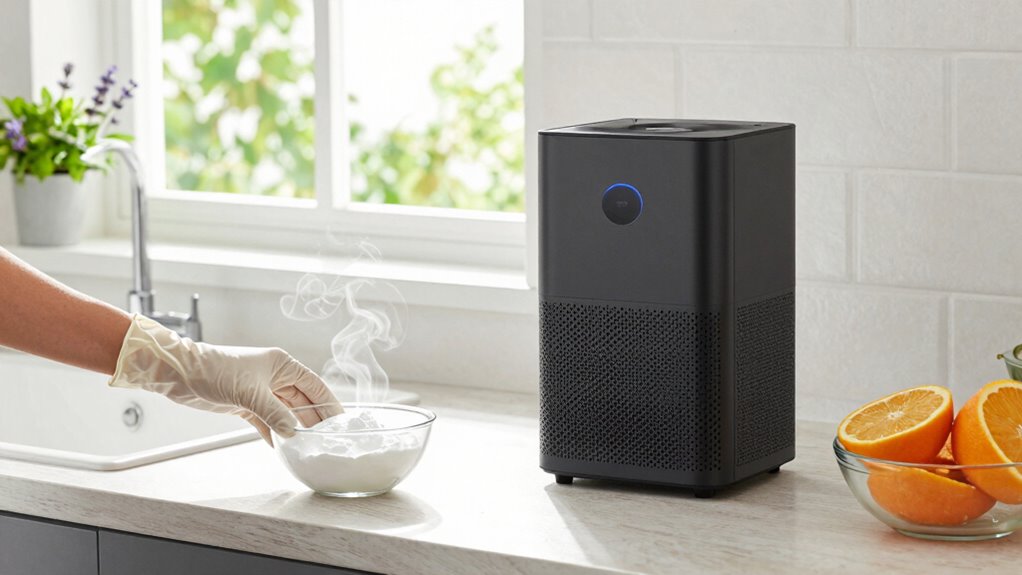
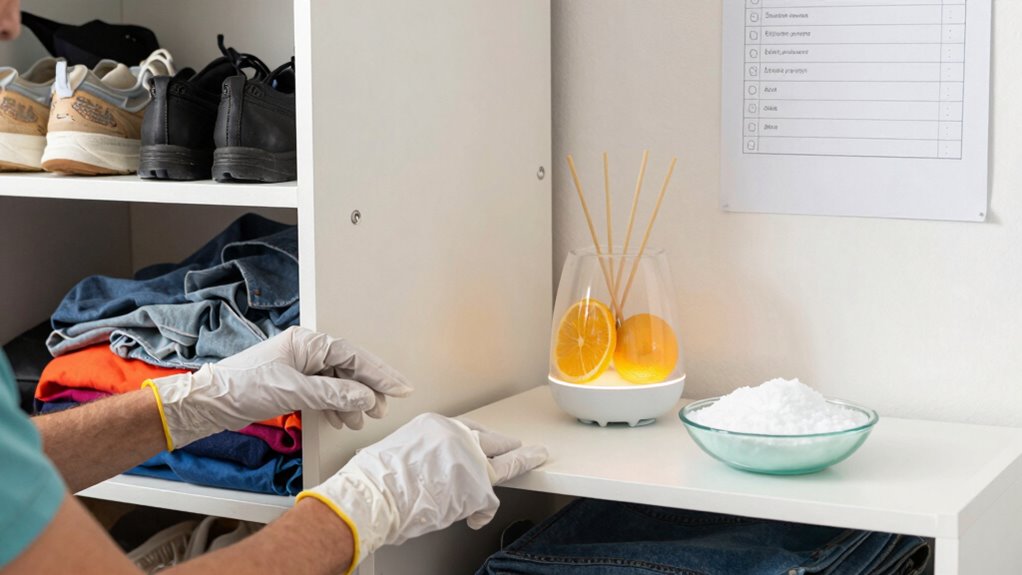
After thoroughly cleaning and neutralizing odors, maintaining a fresh-smelling home requires proactive habits. Regular air freshening can help keep your space inviting, but choose natural options like essential oils or open windows for better results. To prevent odors, focus on odor absorption by placing bowls of baking soda or activated charcoal in problem areas; these materials naturally trap smells. Consistently ventilate rooms to reduce humidity and stale air, which can harbor odors. Keep trash cans clean and covered, and wash linens and pet bedding frequently. Avoid clutter, as it traps dust and odors. Additionally, understanding the importance of air quality can help you recognize and eliminate sources of misinformation that might contribute to lingering odors in shared spaces or misinformed cleaning practices. Using AI tools to identify effective cleaning products can streamline your routine and ensure you choose the most suitable options. By integrating these habits into your routine, you’ll create an environment that stays fresh and odor-free without constant deep cleaning.
Frequently Asked Questions
Can Air Purifiers Completely Eliminate Persistent Household Odors?
Air purifiers can’t completely eliminate persistent household odors due to their limitations in odor molecule removal. While they help reduce many airborne smells, strong or ingrained odors might linger because purifiers mainly target particles and some gases. To truly get rid of stubborn odors, you need to identify and address the source directly. Combining an air purifier with source control creates a more effective approach to freshening up your home.
How Long Does It Typically Take to Remove Deep-Seated Odors?
Removing deep-seated odors usually takes several days to a week, depending on odor absorption levels and ventilation timing. You should open windows and use fans consistently to promote fresh air circulation, which accelerates odor elimination. For stubborn smells, consider cleaning affected surfaces and using odor-neutralizing products. Patience is key—regular ventilation helps break down odor molecules, gradually restoring your home’s fresh scent.
Are Natural Remedies as Effective as Commercial Odor Neutralizers?
Think of natural remedies as gentle rain, softly washing away odors, while commercial neutralizers are like a storm, quickly clearing the air. Natural remedies can be effective, especially for mild smells, but commercial neutralizers often work faster on stubborn odors. Your choice depends on the intensity of the smell and your preference for gentle or stronger solutions. Both can help restore freshness, just like rain or a storm clearing the sky.
Do Pet Odors Require Different Removal Methods Than Other Sources?
Pet odors often need pet-specific cleaning methods because they can be more stubborn. You should use odor absorption materials like baking soda or activated charcoal, and clean thoroughly with enzymatic cleaners designed for pet messes. Regular cleaning might not be enough, so focus on deep cleaning pet-specific areas, like carpets and upholstery, to effectively remove lingering odors. These tailored approaches help make certain your home smells fresh and pet-safe.
How Often Should I Recheck for Hidden Odors After Cleaning?
Ever wonder how often you should recheck for hidden odors? You should perform regular inspections, ideally every few weeks, especially after cleaning or renovations. Stick to an odor monitoring schedule to catch lingering smells early. Don’t forget, some odors can hide in unseen spots, so stay vigilant. Consistent rechecking helps you maintain a fresh, odor-free home and guarantees no source of smell slips past your notice.
Conclusion
By identifying the source, testing for hidden smells, cleaning thoroughly, and preventing odors, you take control of your home’s freshness. Address the problem at its root, tackle it with care, and maintain your space with consistency. When you do, you create a home that smells inviting, feels comfortable, and stays welcoming. Keep these steps in mind, stay proactive, and enjoy a home that’s fresh, clean, and odor-free every day.