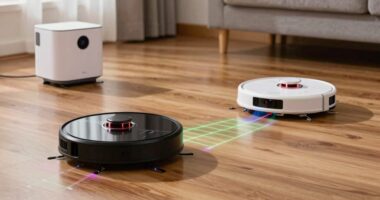
Self-emptying robot vacuums make it easier to manage debris by automatically dumping dirt into a larger station, reducing manual emptying. They handle pet hair, dust, and debris well but don’t eliminate the need for regular maintenance like filter changes or cleaning the brushes and sensors. Proper station placement and upkeep keep your device performing efficiently. To learn more about what these systems can and can’t do, keep exploring the details below.
Key Takeaways
- Self-emptying vacuums reduce manual dustbin emptying but still require filter changes and routine maintenance.
- They rely on designated charging stations to automatically dispose of collected debris into a larger bin.
- Self-emptying systems do not eliminate the need for regular cleaning of the vacuum’s brushes, sensors, and filters.
- Proper placement and maintenance of the station are essential for optimal performance and reliability.
- These systems improve convenience but do not fully replace comprehensive cleaning routines or address all maintenance tasks.

Robot vacuums with self-emptying features have revolutionized home cleaning by reducing the frequency of manual emptying and maintenance. Instead of constantly lifting the dustbin, you simply empty the base station periodically, saving you time and effort. This convenience is appealing, especially if you have a busy schedule or allergies that demand frequent cleaning. However, understanding what these systems truly do—and don’t—helps you manage expectations and maintain your device properly.
The self-emptying process relies heavily on well-designed charging stations. These stations serve more than just charging your robot; they act as central hubs for dust disposal. When the vacuum finishes its cleaning cycle, it automatically returns to the station, where a mechanism empties its contents into a larger bin within the base. This setup minimizes your direct involvement but requires you to keep the station in a clean, accessible spot. Regular maintenance routines for the charging station are essential to ensure smooth operation. You should routinely check and clean the station’s dustbin and filters, especially if you notice the vacuum struggling to dock properly or if the station’s bin fills up faster than expected. Neglecting these routines can lead to clogs or malfunctions that diminish the self-emptying feature’s effectiveness.
While the convenience is undeniable, self-emptying vacuums don’t eliminate all maintenance. You still need to empty the station’s dustbin periodically, and the vacuum itself benefits from regular cleaning of brushes and sensors. The dustbin within the robot is often larger than traditional models, but it isn’t infinite. Over time, dust and debris can build up, and filters need replacement to maintain suction power and air quality. Keep an eye on the device’s indicator lights or app notifications for alerts about full bins or filter replacements. Proper color accuracy in the vacuum’s sensors and cameras can also assist in effective navigation and cleaning.
Self-emptying vacuums still need regular filter changes and dustbin emptying for optimal performance.
It’s also worth noting that self-emptying vacuums excel at handling pet hair, dust, and debris in high-traffic areas, but they’re not a substitute for thorough cleaning routines. Regularly vacuuming or sweeping your home helps reduce the load on your robot, prolongs its lifespan, and keeps maintenance manageable. You’ll find that keeping the charging station clean and performing routine checks on the device’s components ensures the self-emptying feature functions reliably over time.
In essence, self-emptying robot vacuums substantially cut down on manual emptying, but they still require routine maintenance routines and attentive care. Properly managing your charging stations and staying proactive with cleaning and filter replacements guarantees your device performs at its best, allowing you to enjoy cleaner floors with less hassle.
Frequently Asked Questions
How Often Do Self-Emptying Bins Need to Be Emptied Manually?
You’ll need to empty the self-emptying bin every few weeks, depending on your dust capacity and how much your home generates debris. Keep an eye on the bin’s fill level and listen for alerts. Regular filter maintenance also helps prevent clogs and maintains suction power. Typically, you should check and clean filters monthly, but if you have pets or a large home, more frequent attention may be necessary.
Do All Robot Vacuums With Self-Emptying Features Have the Same Capacity?
Not all self-emptying robot vacuums share the same capacity. While some models boast larger bins for extended cleaning, others prioritize quieter operation and longer battery life over size. You might find that a bigger capacity means less frequent emptying, but it can also come with increased noise levels. Consider your needs carefully—if you prefer quieter cleaning or longer battery life, look for a model that balances these features with bin capacity.
Can Self-Emptying Robot Vacuums Handle Pet Hair Effectively?
Self-emptying robot vacuums can handle pet hair effectively, but you’ll face some pet hair challenges. Their powerful suction and advanced vacuum filtration systems help capture pet hair, preventing clogs and messes. However, heavy shedding or long hair might still require manual removal. Regular maintenance and choosing models with strong filtration systems guarantee better pet hair management, making your cleaning routine easier and more efficient.
Are There Any Safety Concerns With Self-Emptying Mechanisms?
There are some safety concerns with self-emptying mechanisms, mainly liability concerns if the system malfunctions or causes damage. You should be aware that malfunction risks, like jams or motor failures, could lead to debris spilling unexpectedly or the robot malfunctioning. While generally safe, it’s wise to keep an eye on the device during operation and follow manufacturer instructions to minimize potential hazards and liability issues.
How Does Maintenance Differ Between Traditional and Self-Emptying Robot Vacuums?
With traditional robot vacuums, you need to regularly empty the bin and clean filters to prevent dust buildup. Self-emptying models reduce frequent emptying, but you still must check and replace filters periodically. Maintenance is less hands-on overall, but you should stay attentive to filter upkeep and occasional bin inspections. This helps keep your vacuum running efficiently and minimizes dust buildup inside the device.
Conclusion
You might hope that a self-emptying robot vac solves all your cleaning woes, but it doesn’t eliminate the need for maintenance, nor does it guarantee perfect cleanliness. It saves time, saves effort, and saves trips to the trash, but it doesn’t replace regular upkeep or thorough cleaning. While it offers convenience, it doesn’t promise perfection. Ultimately, it’s a tool—useful, but not a miracle—meant to assist, not replace, your ongoing cleaning routine.