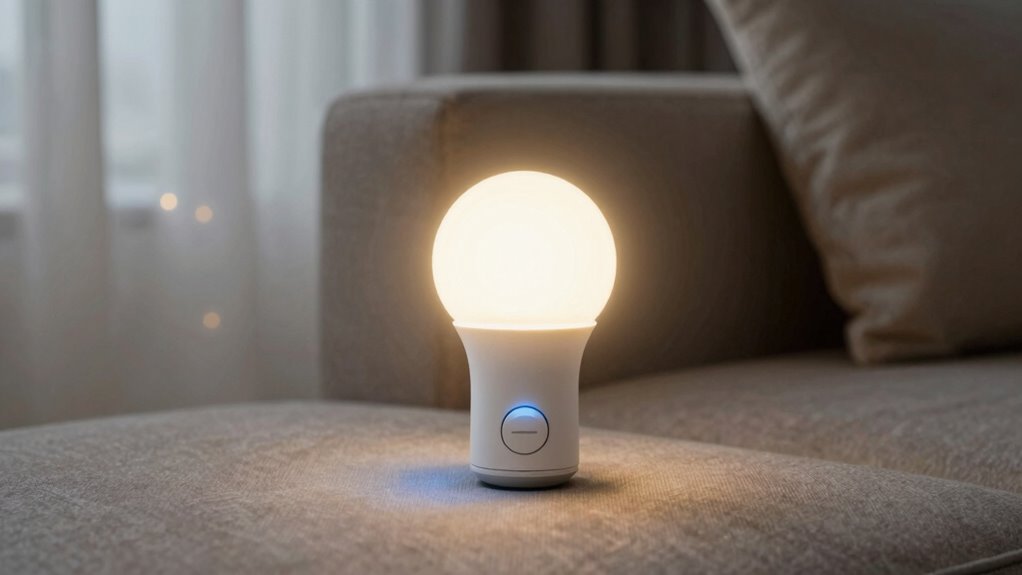

Smart lighting lets you customize your space with preset scenes and adjustable dimmers for the perfect ambiance at any time. You can control these features wirelessly via apps or voice commands, making your home more convenient and energy-efficient. Flickering often happens because of incompatible dimmers or poor-quality bulbs. Upgrading to flicker-free options and ensuring compatibility can fix this issue. Keep exploring to understand how these features can transform your lighting experience even further.
Key Takeaways
- Scenes preset different lighting configurations for various moods or activities, easily activated via smart controls.
- Dimmers enable precise brightness adjustments, enhancing ambiance and comfort in smart lighting systems.
- Flickering often results from incompatible dimmers, poor-quality bulbs, or electrical fluctuations.
- Upgrading to flicker-free, high-quality bulbs and ensuring compatibility with dimmers reduces flickering issues.
- Smart lighting integrates wireless connectivity, energy efficiency, and customization for a versatile, user-friendly experience.
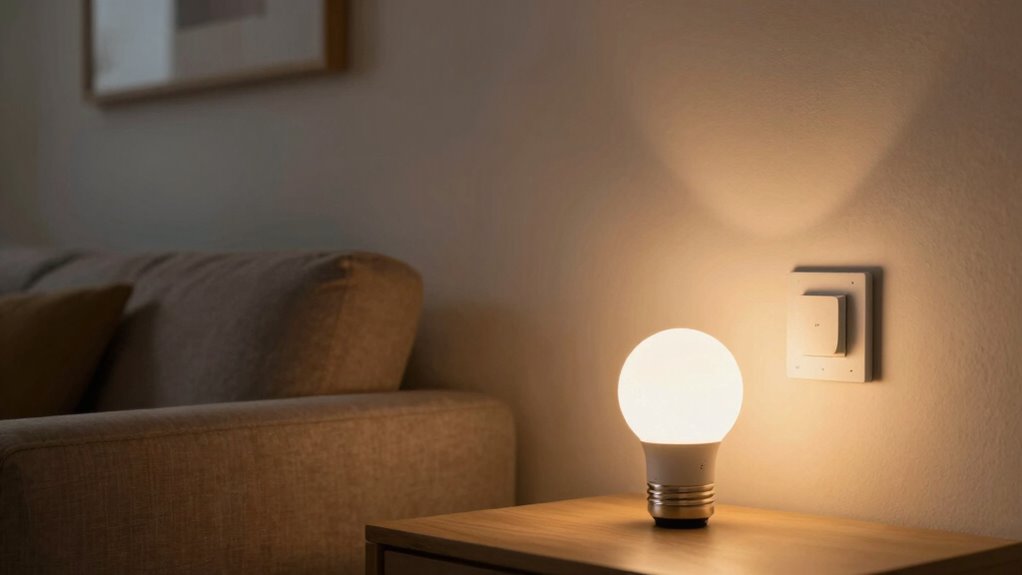
Ever wondered how intelligent lighting can transform your space? With the right setup, you can easily customize your environment to match your mood, activity, or time of day. One of the key features that make smart lighting so appealing is its ability to connect wirelessly to your home network. Wireless connectivity allows you to control your lights remotely via smartphone apps or voice commands, giving you unmatched convenience. This seamless communication between your devices and lights means you don’t need to worry about complicated wiring or manual switches. Instead, you can manage multiple lights or create complex scenes with just a few taps. Plus, because smart lighting systems rely on wireless signals like Wi-Fi or Zigbee, you can expand your setup easily as your needs grow. This flexibility guarantees your lighting remains adaptable without the hassle of rewiring or extensive installations.
Wireless smart lighting connects easily to your home network for remote control and seamless customization.
Another major advantage of smart lighting is energy efficiency. Unlike traditional bulbs, smart LEDs consume markedly less power while providing the same or better brightness. They can be programmed to turn off when not in use or dimmed to match the activity or ambiance you desire. For example, you might set your lights to dim automatically when you start a movie or turn off completely when you leave the room. These features help reduce energy waste, lowering your electricity bills and making your home more eco-friendly. Smart lighting systems often incorporate scheduling options, so your lights can operate at their best without your constant input. In addition, many systems include motion sensors that activate lights only when needed, further enhancing energy savings. This smarter use of electricity not only benefits your wallet but also contributes positively to the environment. Additionally, understanding the contrast ratio of your lighting setup can help you optimize the visual comfort and clarity of your space.
Understanding how scenes and dimmers work is another essential part of smart lighting basics. Scenes allow you to preset different lighting configurations for various occasions—whether it’s a cozy movie night, a lively party, or a relaxing evening. With a single command or tap, you can switch your entire space to match the mood. Dimmers, on the other hand, give you precise control over brightness levels, letting you adjust the light intensity to your liking. Both features add layers of customization, making your space more comfortable and functional. However, flickering can sometimes occur when using dimmers or certain smart bulbs. This flicker often results from incompatible dimmer switches, fluctuations in power supply, or poor-quality bulbs. To minimize flickering, ensure your bulbs are compatible with your dimmer switches and consider upgrading to high-quality, flicker-free options. Proper installation and choosing the right hardware can make a noticeable difference in providing stable, flicker-free lighting.
Altogether, smart lighting offers a combination of wireless connectivity, energy efficiency, and customizable features that can truly elevate your living space. When you understand these basics, you’re better equipped to create an environment that’s not only stylish and functional but also smart and sustainable.

MELPO Alexa Light Bulb 130W Equivalent, Smart Light Bulbs Warm White to Daylight Tunable, A19 E26 Bluetooth LED Bulbs Controlled by BRmesh APP and Alexa only, Timing, Flicker-Free(8 Pack (8)
【Smart Lighting】This is a Bluetooth connected MELPO Smart Light Bulbs that supports both Alexa speakers and BRmesh APP…
As an affiliate, we earn on qualifying purchases.
As an affiliate, we earn on qualifying purchases.
Frequently Asked Questions
Can Smart Lighting Systems Be Integrated With Existing Home Automation?
Yes, you can integrate smart lighting systems with your existing home automation. You’ll enjoy voice control and remote access, making it easy to manage your lights from anywhere. Most smart lights are compatible with popular platforms like Alexa, Google Assistant, or Apple HomeKit, allowing seamless control alongside your other smart devices. Just verify your system supports the specific smart lights you choose for smooth integration.
What Are the Energy Savings Associated With Smart Lighting?
You can achieve significant energy savings with smart lighting by optimizing energy efficiency. These systems automatically turn off or dim lights when not needed, reducing unnecessary power use. Over time, this leads to lower electricity bills and cost savings. Plus, smart lighting allows you to set schedules and control lights remotely, ensuring you’re not wasting energy, which benefits both your wallet and the environment.
How Secure Are Smart Lighting Networks From Hacking?
Did you know that less than 10% of smart home devices, including lighting, face cybersecurity vulnerabilities? Your smart lighting network’s security depends on robust encryption protocols, which protect data from hackers. While no system is completely invulnerable, using strong passwords and updated firmware greatly reduces risks. So, if you stay vigilant and maintain good cybersecurity practices, your smart lighting network can be quite secure from hacking threats.
Are Smart Lights Compatible With All Smart Home Devices?
Smart lights are generally compatible with many smart home devices, but it depends on your setup. You can easily control lighting color and brightness through voice control or apps, integrating with platforms like Alexa, Google Assistant, or Apple HomeKit. However, check each device’s compatibility first, as some may require specific hubs or apps. This way, you get seamless control and vibrant lighting effects tailored to your preferences.
What Is the Typical Lifespan of Smart LED Bulbs?
Smart LED bulbs generally last around 25,000 to 50,000 hours, giving you impressive bulb longevity. This means you’ll likely need to replace them every 3 to 7 years, depending on usage. To avoid frequent replacement, choose quality bulbs and keep an eye on their performance. By doing so, you guarantee your smart lighting stays bright and efficient, minimizing replacement frequency and maintaining your home’s ambiance effortlessly.

Kasa Smart Dimmer Switch HS220P3, Single Pole, Needs Neutral Wire, 2.4GHz Wi-Fi Light Switch Works with Alexa and Google Home, UL Certified,, No Hub Required, 3-Pack
App-Guided Install: The Kasa or Tapo app guides you through step-by-step setup. Requires neutral wiring and 2.4 GHz…
As an affiliate, we earn on qualifying purchases.
As an affiliate, we earn on qualifying purchases.
Conclusion
Now that you understand how scenes, dimmers, and flicker work, you’re ready to transform your space into a personalized haven. Imagine walking into a room where the lighting perfectly matches your mood, all at your fingertips. Isn’t it amazing how smart lighting can elevate your everyday experience? With a little knowledge, you can create the perfect ambiance effortlessly. So why settle for dull, static light when you can have dynamic, adaptable illumination at your command?

Syantek Remote Control Outlet Wireless Light Switch for Household Appliances, Expandable Remote Light Switch Kit, Up to 100 ft Range, FCC Certified, ETL Listed, White (5 Outlets + 2 Remotes)
Wireless remote control: Suitable for a variety of electrical devices; Easily control with an on-off switch; Ideal for…
As an affiliate, we earn on qualifying purchases.
As an affiliate, we earn on qualifying purchases.

TOPGREENER Smart Light Switch Wi-Fi Scene Controller, 8-Button Programmable Home Automation, Neutral Wire Required, 2.4GHz Network, UL Listed, FCC Compliant, TGWFSC8, White
Save all your scenes in one switch and access them in one convenient location; control a group of…
As an affiliate, we earn on qualifying purchases.
As an affiliate, we earn on qualifying purchases.