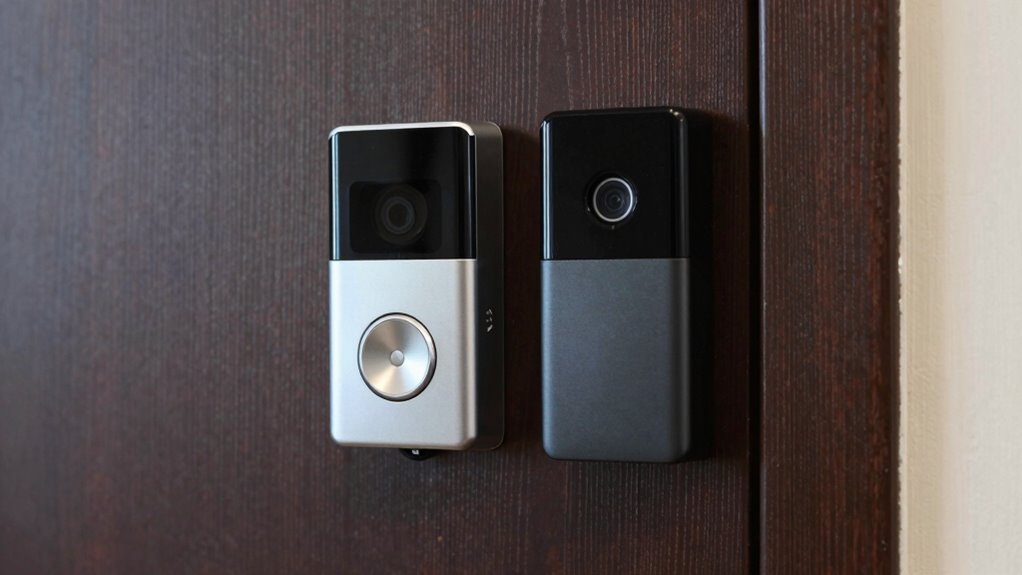

If you choose a wired video doorbell, you’ll benefit from constant power, ensuring uninterrupted operation and better video quality, but installation can be complex and may require professional help. Battery-powered models are easier to set up and move around but need regular recharging or battery replacements, which could be inconvenient. Your choice depends on your home’s wiring and your maintenance preference. To discover how these differences impact daily life, keep exploring further.
Key Takeaways
- Wired doorbells provide continuous power, ensuring consistent operation and higher video quality, unlike battery models that depend on recharging.
- Battery-powered doorbells are easier to install, requiring no wiring or professional help, making setup more flexible and less invasive.
- Wired systems are more reliable for constant use but may involve complex installation and higher upfront costs.
- Battery models require regular battery monitoring and recharging, which can impact convenience over time.
- Choice depends on home wiring accessibility, installation preferences, and desired maintenance level.
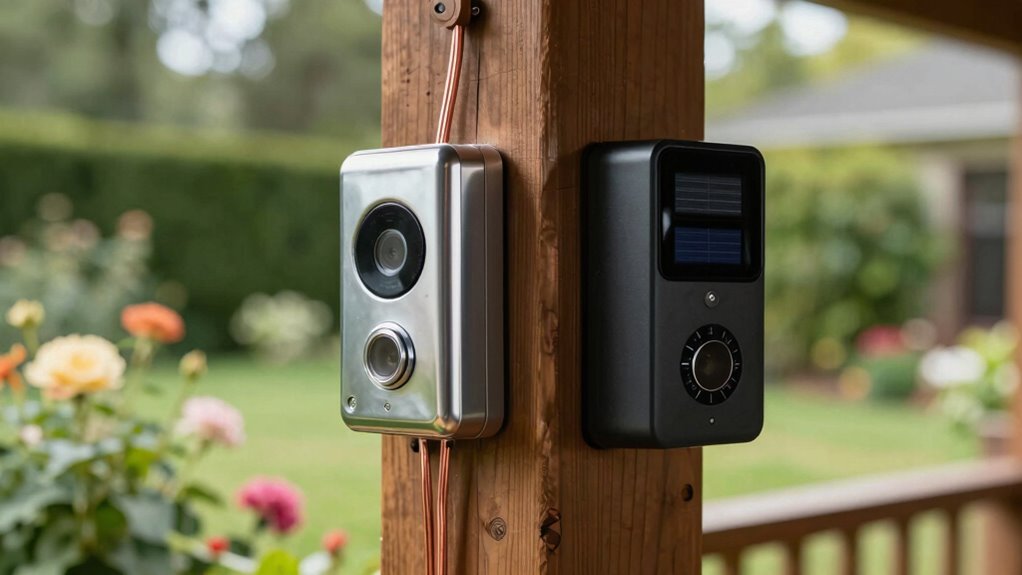
Have you ever wondered how to boost your home’s security while staying connected? Video doorbells are a popular choice, offering peace of mind and instant access to your front door. But deciding between wired and battery-powered models can be tricky, especially when contemplating real-life factors like installation challenges and power management. Wired video doorbells require hardwiring into your existing doorbell wiring, which can be a hassle if your home isn’t pre-wired or if you’re unsure about handling electrical components. You might face obstacles such as limited access to wiring, the need to drill holes, or concerns about compatibility with your current doorbell system. These installation challenges can delay setup or lead to unexpected costs if you need to hire an electrician. On the other hand, battery-powered doorbells sidestep these issues altogether. They’re easier to install—simply mount and connect—making them a good choice if you’re looking for a quick setup. However, battery-powered models introduce a different consideration: power management. You’ll need to keep an eye on the battery life, which can vary based on usage. Some models offer alerts when the battery is low, but frequent recharging might become a routine if you get lots of visitors or use motion alerts often. This ongoing maintenance can be a minor inconvenience, especially if you forget to recharge or replace batteries regularly. Wired video doorbells excel in continuous power supply, ensuring they’re always operational without the need to worry about charging. They also tend to have more advanced features and higher video quality since they’re not limited by battery life. But, the initial installation can be more involved, requiring planning around electrical wiring and possibly hiring professionals. Battery-powered doorbells are more flexible, especially if your home’s wiring isn’t suitable or if you prefer a less invasive installation. They’re also portable and can be moved easily if needed, providing a degree of convenience that wired models can’t match. Additionally, smart home integration can enhance your security system, making your doorbell a central part of your connected home ecosystem. Still, you’ll need to consider how often you’ll need to recharge the batteries and whether that fits into your routine. Ultimately, your choice depends on your home’s setup and your comfort level with installation and maintenance. If you want a seamless, always-on device with fewer installation challenges, a wired model might be the way to go. If you prefer an easy, quick install and don’t mind managing batteries, a battery-powered doorbell could be more suitable. Either way, understanding these factors will help you make a smart choice that keeps you connected and enhances your home security.
Frequently Asked Questions
How Long Do Battery-Powered Doorbells Typically Last Before Needing a Recharge?
Battery-powered doorbells usually last about 6 to 12 months before needing a recharge, depending on usage and settings. You’ll notice the battery lifespan gradually decreases, so recharge frequency increases over time. To avoid missing visitors, check the battery regularly and recharge it when it’s around 20-30%. Keeping an eye on the battery level helps guarantee your doorbell stays functional without surprises.
Can Wired Doorbells Function During a Power Outage?
Wired doorbells typically keep functioning during a power outage since they rely on your home’s electrical system, not batteries. However, if there’s signal interference or a power surge, their performance might be affected. Unlike battery-powered models, wired ones don’t need recharging, ensuring continuous operation. Just remember, if your home’s wiring is compromised, it could impact your doorbell’s reliability during outages or interference.
Are Wireless Doorbells More Susceptible to Hacking?
Ever wonder if wireless doorbells are more vulnerable to hacking? They can be, due to wireless security issues and hacking vulnerabilities inherent in Wi-Fi connections. While manufacturers implement encryption, savvy hackers might exploit weak passwords or outdated firmware. You can reduce risks by regularly updating firmware, using strong passwords, and enabling two-factor authentication. Staying vigilant helps protect your smart home from potential cyber threats, giving you peace of mind.
What Maintenance Is Required for Wired Versus Battery Doorbells?
Wired doorbells typically need less maintenance but may require professional installation, which can present installation challenges and impact your home’s aesthetic. You’ll need to check wiring periodically for corrosion or damage. Battery-powered doorbells need regular battery replacements or recharging, which is simple but ongoing. Consider aesthetic considerations too—wired models often blend seamlessly, while batteries may require recharging or replacement, affecting the look temporarily. Both need occasional cleaning to ensure clear video and operation.
How Do Video Quality and Storage Compare Between Wired and Wireless Options?
You’ll find that wired video doorbells typically offer higher video resolution, providing clearer images, and often have larger storage capacity through integrated or connected systems. Wireless options may have slightly lower resolution but still deliver decent quality with the convenience of cloud storage options, which can be expanded. Keep in mind, wired systems often require more setup, while wireless models offer easier installation and flexible storage solutions.
Conclusion
Choosing between wired and battery-powered video doorbells is like deciding whether to anchor your home or set it free. Both options offer security, but your choice shapes your daily routine and peace of mind. Imagine the gentle chime welcoming you home, whether it’s wired steady or battery ready to go. Ultimately, it’s about finding the perfect fit for your life—because securing your home should feel as natural as the breeze that whispers through your door.