Expense ratios are subtle fees deducted annually from your investment, including management and operational costs. While they might seem small, over time, these percentages can markedly reduce your gains due to compounding. Higher fees in actively managed funds eat into your returns faster than low-cost index funds or ETFs. To protect your wealth, it’s wise to compare fund costs carefully. Want to discover practical ways to minimize these hidden expenses and boost your growth? Keep exploring.
Key Takeaways
- Expense ratios are annual fees deducted from fund assets, reducing overall investment returns over time.
- Even small differences in expense ratios can significantly diminish long-term growth through compounding.
- Passive funds like index funds and ETFs generally have lower expense ratios than actively managed funds.
- Hidden costs such as trading commissions and bid-ask spreads can further erode investment gains.
- Comparing total costs and choosing low-fee funds can help protect returns and maximize wealth accumulation.
What Are Expense Ratios and How Do They Work?

Expense ratios are fees that mutual funds and exchange-traded funds (ETFs) charge annually to cover operating costs. These fees are part of the fund’s fee structures, which include costs for fund management, administrative expenses, and other operational needs. When you invest, these expenses are deducted from the fund’s assets, reducing your overall returns. The fee structure varies depending on the fund’s management style and complexity. Actively managed funds often have higher expense ratios because they require more hands-on management, while passively managed funds tend to have lower fees. Understanding how expense ratios work helps you evaluate the true cost of your investments and compare different funds more effectively. Keep in mind, these fees are ongoing and can quietly chip away at your gains over time. Managing investment costs is essential for maximizing your portfolio’s growth potential. Being aware of expense ratios can help you make more informed decisions and avoid unnecessary fees that diminish your investment performance. Additionally, transparent fee disclosures enable investors to better assess the costs associated with each fund before investing. Recognizing how costs impact returns over time emphasizes the importance of choosing funds with reasonable expense ratios to preserve your investment growth.
Why Expense Ratios Have a Big Impact on Your Investment Gains

Have you ever wondered how small differences in fees can considerably affect your investment returns over time? Expense ratios, especially fund management fees, directly reduce your gains each year, compounding over decades. Even a slight difference of a fraction of a percent can mean thousands of dollars lost in the long run. Plus, tax implications play a role—higher expense ratios often lead to more taxable distributions, further eating into your returns. When fund management fees are high, they diminish the amount you keep after taxes and fees, reducing your overall growth. Additionally, fund management fees can influence the overall success of your investment strategy and how well it aligns with your financial goals. Over time, these seemingly minor costs add up, making a significant impact on your wealth. Choosing low-cost funds can help maximize your gains and keep more money working for you. Moreover, understanding the cost structure of your investments is essential for effective financial planning. Being aware of investment fees helps you make informed decisions that support your long-term financial stability. Recognizing the importance of expense ratio comparison enables investors to select funds that align with their financial objectives and risk tolerance.
How to Spot and Compare Fund Expense Ratios Before Investing

Understanding how to spot and compare fund expense ratios before investing is essential for maximizing your returns. Start by checking the fund’s fee transparency, which is usually available in the fund’s prospectus or on the fund company’s website. Look for the expense ratio, expressed as a percentage of your assets, and note any additional fees. Conduct a thorough cost analysis by comparing expense ratios across similar funds in the same category. Lower ratios typically mean fewer costs eating into your gains. Be cautious of funds with unusually high fees, which might appear attractive due to past performance but could erode your returns over time. Being diligent in comparing expense ratios helps you select funds that align with your financial goals while minimizing unnecessary costs. Additionally, understanding how to interpret fund expense ratios and their impact on your overall returns can lead to more informed investment decisions. For example, cost comparison tools can streamline this process and help you identify the most cost-effective options, especially when considering the wave and wind of market fluctuations. Incorporating expense ratio analysis into your investment strategy ensures you’re making mindful choices that protect your financial growth. Recognizing the influence of filtering and pump protection measures can also help you avoid hidden costs that may impact your funds’ performance.
Expense Ratios Over Time: Real-Life Examples of Cost Impact
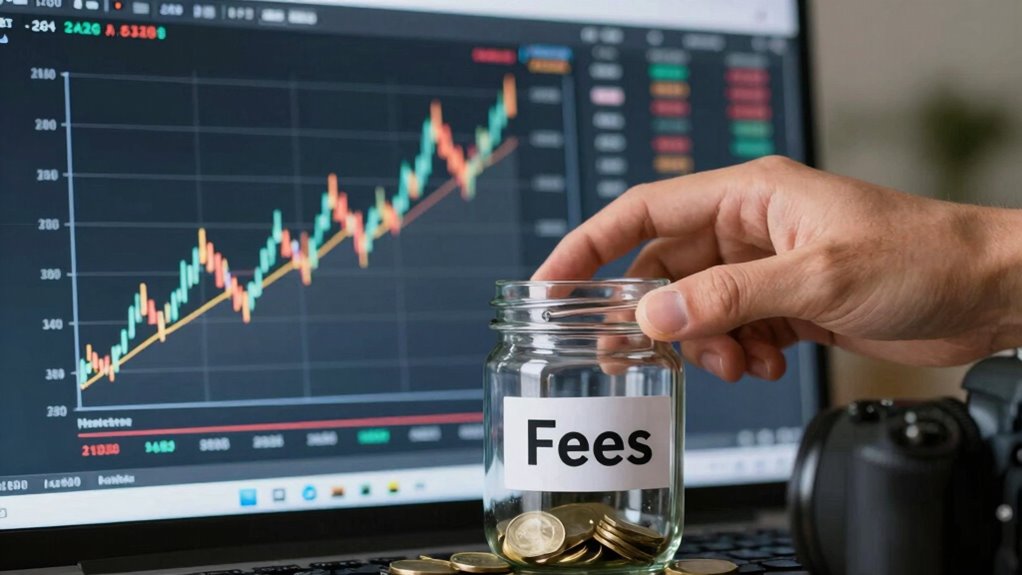
Over time, even small differences in expense ratios can substantially affect your investments’ growth. Comparing real-life investor cases and various funds shows how costs accumulate and impact your returns. Understanding these examples helps you make smarter choices to minimize long-term expenses. Being aware of piercing care and hygiene can also serve as a reminder that diligent maintenance is essential for overall health and safety. Similarly, in the realm of the supernatural, attention to detail and thorough investigation are crucial when uncovering hidden truths and avoiding false leads. Recognizing the importance of cost management can further enhance your ability to optimize investment performance and ensure financial stability over the long term. Additionally, understanding the tax implications of inheritances and gifts can help you plan more effectively to avoid unexpected expenses and reduce your taxable liabilities. Developing a clear understanding of investment fee structures allows investors to better compare funds and avoid unnecessary costs.
Long-Term Cost Accumulation
Even small differences in expense ratios can considerably impact your investment returns over time. Over the long term, those tiny percentage points add up through the power of compound interest, reducing your overall gains. For instance, a 0.50% expense ratio might seem minimal, but over 20 or 30 years, it can eat away a significant portion of your returns. Additionally, inflation impact compounds this effect, gradually eroding your purchasing power. As fees eat into your investment growth, your money grows more slowly, making it harder to reach your financial goals. Understanding the impact of fees can help investors make smarter choices and avoid unnecessary costs. Recognizing the cost difference between funds emphasizes how even small fee variations can lead to large disparities in your accumulated wealth over time. By understanding long-term cost accumulation, you see that choosing low-fee funds isn’t just a small saving—it’s an essential step toward maximizing your wealth over time. Moreover, being aware of cost-effective investing strategies can further enhance your ability to grow wealth efficiently. Emphasizing sound investment principles ensures that investors focus on long-term growth rather than short-term gains.
Comparing Different Funds
Have you ever wondered how small differences in expense ratios can markedly impact your investment results over time? When comparing different funds, it’s crucial to consider fund categories and fee structures. For example, actively managed funds often have higher expense ratios than index funds, which typically have lower costs. Here’s a quick comparison:
| Fund Category | Average Expense Ratio | Fee Structure |
|---|---|---|
| Index Funds | 0.03% – 0.20% | Passive |
| Actively Managed Funds | 0.50% – 1.00% | Active |
| ETFs | 0.05% – 0.50% | Usually passive |
Over time, these differences can substantially affect your returns. Choosing funds with lower expense ratios can help preserve your gains.
Real-Life Investor Cases
To truly understand how expense ratios impact your investment results, examining real-life examples can be eye-opening. Consider an investor focused on retirement planning who chooses a fund with a 0.75% expense ratio versus one with a 0.15% fee. Over 30 years, the higher-cost fund could erode a significant portion of gains, reducing your final nest egg. These cases highlight how even small differences in fees compound over time, affecting risk management and long-term growth. By analyzing actual investor experiences, you realize why minimizing expense ratios is vital for preserving returns and securing your financial future. Staying vigilant about costs ensures your investments work harder for you, especially during essential phases like retirement planning. Recognizing the impact of expense ratios helps investors make informed decisions to maximize their returns over the long term. Understanding the role of media in shaping perceptions can also influence how investors interpret fee disclosures and promotional materials, emphasizing the importance of due diligence.
Practical Strategies to Reduce Expense Ratios and Boost Your Returns

One of the most effective ways to lower your investment costs is to compare fund fees carefully. Opting for low-cost options can markedly boost your returns over time. Don’t assume all funds charge the same—make informed choices to keep more of your money working for you.
Compare Fund Fees
Wondering how to choose funds that keep your costs low? The key is to compare fund fees carefully, focusing on fund management expenses. Different funds charge varying management fees, which directly impact your returns. Look beyond the advertised expense ratio and dig into the fund’s prospectus to understand all costs involved. Some funds may have hidden fees for trading or administrative services. By comparing these fees across similar funds, you can identify options with lower management expenses, saving you money over time. Keep in mind that lower fees don’t always mean lower quality, especially when comparing funds with similar strategies. Taking the time to review and compare fund fees ensures you’re selecting options that maximize your investment growth.
Choose Low-Cost Options
Choosing low-cost investment options is a practical way to improve your returns by minimizing expense ratios. To do this, focus on options with lower mutual fund fees and ETF costs. Here are three strategies to help you choose wisely:
- Opt for index funds and ETFs, which typically have lower expense ratios than actively managed funds.
- Compare the expense ratios of different mutual funds and ETFs before investing.
- Avoid funds with high turnover rates, as they tend to have higher costs impacting your net returns.
Common Mistakes Investors Make When Considering Expense Ratios

Many investors overlook how small differences in expense ratios can substantially impact their long-term returns. A common mistake is ignoring hidden fees embedded in funds, such as marketing costs that aren’t immediately obvious. These expenses can silently chip away at your gains over time, often more than you realize. Some investors focus solely on the headline expense ratio without considering the true cost structure, including fund advertising or distribution fees. By not scrutinizing these hidden fees, you risk overpaying for funds that seem inexpensive but carry higher indirect costs. Always dig deeper into the fund’s disclosures and understand what’s included in the expense ratio. Failing to do so can lead to underestimating the true cost of your investments, diminishing your overall returns considerably.
Evaluating Total Investment Costs Beyond Expense Ratios

While expense ratios are an important factor, they don’t tell the whole story about your investment costs. To truly evaluate your expenses, consider other elements that impact your returns:
- Fund management fees: Some funds have additional charges for active management or specialized strategies, which can add up over time.
- Fee structures: Look beyond flat expense ratios; consider load fees, redemption fees, and performance-based fees that can increase total costs.
- Hidden costs: Trading commissions, bid-ask spreads, and tax implications also eat into your gains, often overlooked when focusing solely on expense ratios.
Frequently Asked Questions
Are High Expense Ratios Always a Sign of Poor Fund Management?
High expense ratios don’t always signify poor fund management; sometimes, a fund’s fee structure reflects specialized strategies or active management that aim to outperform the market. However, it’s essential for you to scrutinize whether the higher fees justify the fund’s performance. You should compare funds with similar strategies, considering both management quality and costs, to ensure you’re not overpaying for potentially mediocre results.
How Do Expense Ratios Differ Between Actively Managed and Passive Funds?
Think of actively managed funds as a race car—you’re paying for expert fund management fees that aim for higher fund performance. Passive funds, on the other hand, are like a bicycle—more budget-friendly with lower expense ratios. Generally, actively managed funds have higher fees because of their hands-on approach, but this doesn’t always guarantee better performance. You need to weigh whether the potential for higher returns justifies the extra cost.
Can Expense Ratios Change Over the Life of an Investment?
Yes, expense ratios can change over the life of your investment. Fund fee trends and management costs fluctuate due to factors like changes in fund size, operational expenses, or shifts in investment strategy. While some funds maintain consistent expense ratios, others may adjust them, often aligning with expense ratio benchmarks. Regularly review your fund’s prospectus or disclosures to stay informed about any potential changes affecting your returns.
What Are the Tax Implications of High Expense Ratios?
High expense ratios can reduce your investment returns, and you might face higher taxes. You may get a tax deduction for certain expenses, but high fees often mean less capital gains after taxes. Over time, these costs can substantially cut into your overall gains. Be aware that higher fees can lead to more taxable events, so understanding their tax implications helps you plan better and keep more of your money working for you.
Do Expense Ratios Vary by Fund Size or Asset Class?
Yes, expense ratios vary by fund size and asset class. Generally, larger funds tend to have lower expense ratios because their scale allows for more cost efficiency. Different asset classes also influence fees; for example, actively managed funds in niche markets usually charge higher than broad index funds. So, when choosing a fund, consider both its size and asset class to understand potential costs and how they might impact your returns.
Conclusion
Remember, every dollar spent on high expense ratios is like money slipping through your fingers in a busy marketplace. By choosing low-cost funds and staying vigilant, you’re steering your investments through calmer waters, avoiding unnecessary fees that quietly eat your returns. Picture your savings basking in the sun, growing stronger and brighter with each smart choice. Keep your eyes open, compare carefully, and watch your money flourish instead of fading away unnoticed.