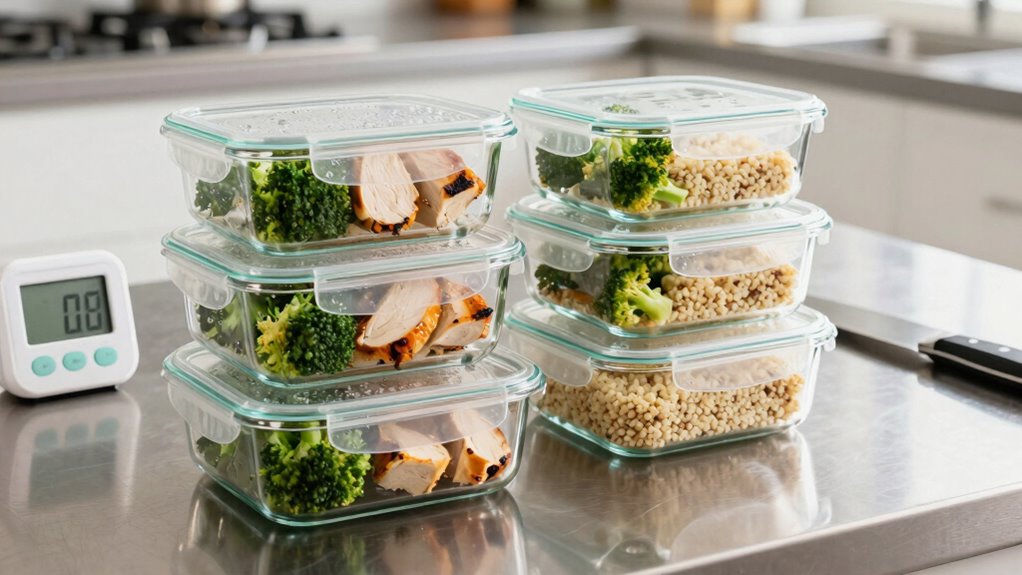
Cooked food stored properly in your fridge at or below 40°F is safe for 3 to 4 days. After this, bacteria can grow quickly, increasing the risk of foodborne illness. Freezing leftovers extends their safety for 3 to 6 months, depending on the dish. Proper storage, labeling, and reheating at the right temperature help keep your meals safe. To learn more about prolonging food safety, tips, and signs of spoilage, keep exploring helpful insights.

Get everyday essentials delivered free with Prime
- Fast, free delivery on millions of items
- Prime Video, Amazon Music and more included
- Member-only deals all year
Key Takeaways
- Cooked food is safe in the refrigerator for 3-4 days at or below 40°F.
- Freeze cooked meals promptly to extend shelf life up to 3-6 months, depending on the food.
- Proper storage containers and labeling help track safety and prevent waste.
- Signs of spoilage include bad odor, sliminess, or discoloration; discard unsafe leftovers.
- Reheat leftovers to at least 165°F to reduce bacteria, but some pathogens may survive reheating.
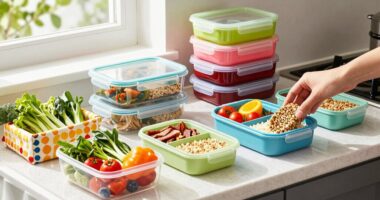
airtight food storage containers
As an affiliate, we earn on qualifying purchases.
As an affiliate, we earn on qualifying purchases.
How Long Is Cooked Food Safe in the Refrigerator?
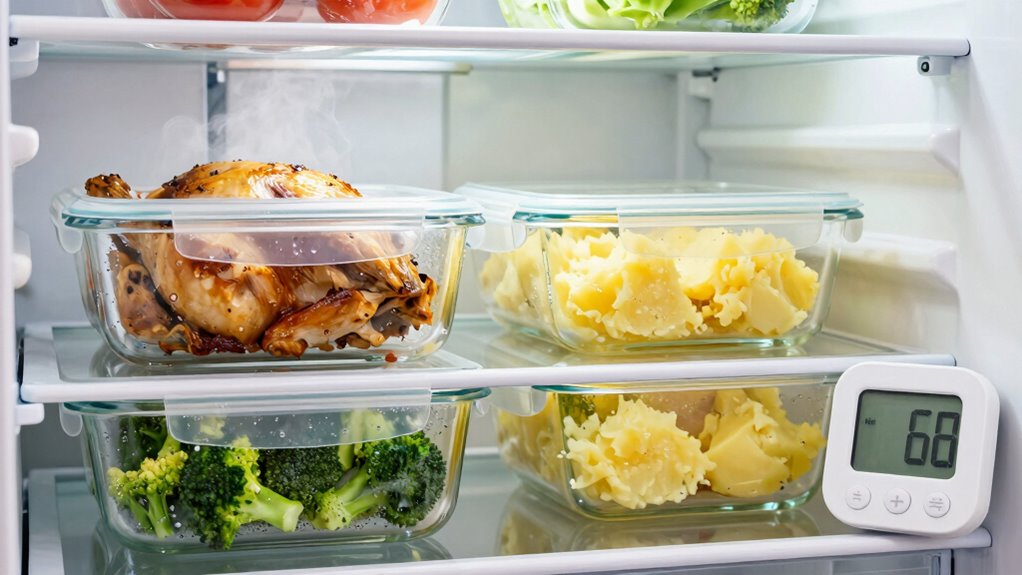
Wondering how long cooked food stays safe in your fridge? Proper food labeling is key. When you store leftovers, clearly mark the date on each container so you know exactly when it was cooked. This helps with meal portioning, ensuring you don’t accidentally eat food past its safe limit. Generally, cooked food stays safe for about 3 to 4 days in the refrigerator at or below 40°F. After that, bacteria can grow rapidly, increasing the risk of foodborne illness. Using airtight containers and dividing large portions into smaller servings can help maintain freshness. Remember, proper storage and labeling make it easier to track how long your leftovers have been stored, keeping your meals safe and reducing waste. Food safety also plays a role in ensuring your leftovers look appetizing and fresh. Additionally, understanding perishable food guidelines can help prevent spoilage and health issues. Proper refrigeration techniques are essential for preserving food quality, which is especially important in maintaining the safety of your leftovers. Maintaining proper temperature control is crucial to inhibit bacterial growth and keep your food safe longer.
How Long Can You Keep Cooked Food in the Freezer?
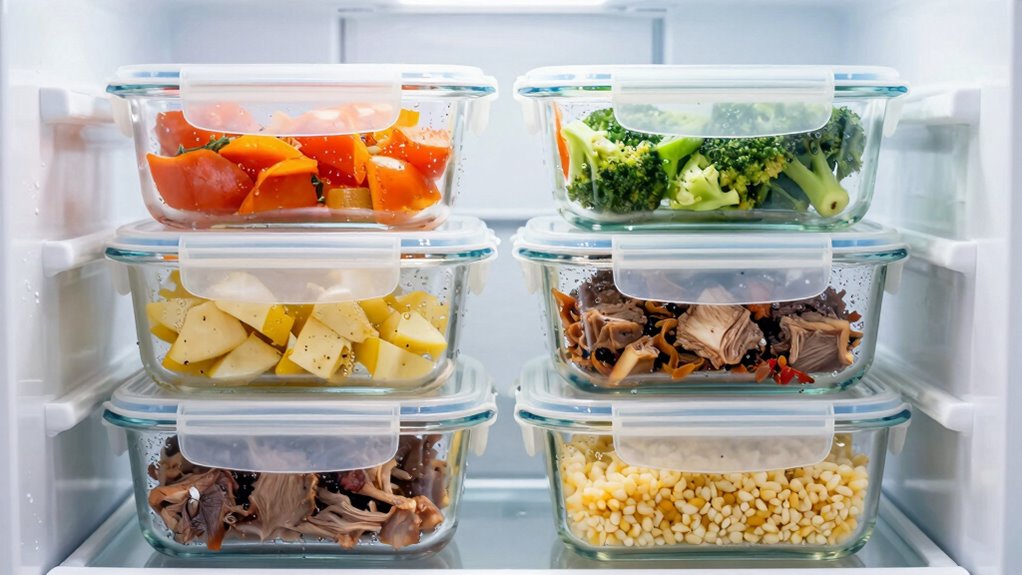
Knowing how long you can keep cooked food in the freezer depends on proper freezing techniques and storage methods. When done right, frozen meals can stay safe and maintain quality for several months. Proper storage practices are essential to prevent spoilage and ensure food safety over time. Using airtight containers can significantly reduce freezer burn and preserve flavor. Additionally, understanding freezer temperature and consistent maintenance can help preserve the integrity of your stored foods. Let’s explore the best practices for extending their shelf life.
Proper Freezing Techniques
Proper freezing techniques are vital to keep cooked food safe and maintain its quality. You should set your freezer to 0°F (−18°C) to guarantee optimal temperature control. When freezing, use airtight containers or freezer bags to prevent moisture loss and freezer burn. Proper air circulation is essential; avoid overcrowding to allow cold air to flow evenly around your food. Label packages with dates to track storage times. For best results, freeze food quickly by placing it near the coldest part of the freezer. Use the table below to understand storage times:
| Food Type | Storage Duration | Tips |
|---|---|---|
| Cooked meats | 2-3 months | Use airtight packaging |
| Soups & stews | 2-3 months | Cool before freezing |
| Vegetables | 8-12 months | Blanch before freezing |
Shelf Life of Frozen Meals
Once you’ve frozen your cooked meals using the right techniques, it’s important to keep track of how long they stay safe to eat. Generally, cooked meals can be stored safely in the freezer for about 3 to 6 months, depending on the type of food. Proper portion control helps you avoid waste and makes it easier to defrost only what you need, maintaining meal variety and freshness. For best quality, label each container with the date you froze it. While the food may remain safe beyond this period, texture and flavor can deteriorate. To maximize shelf life, keep your freezer at 0°F (-18°C), and avoid frequent temperature fluctuations. Regularly check stored meals and discard any that develop an off smell, color, or texture. Understanding freezer safety can help you make informed decisions about food storage, especially when considering Aero Guardians recommendations for maintaining optimal conditions. Additionally, using proper freezing techniques ensures the quality and safety of your stored meals over time.
Signs Your Cooked Food Has Gone Bad
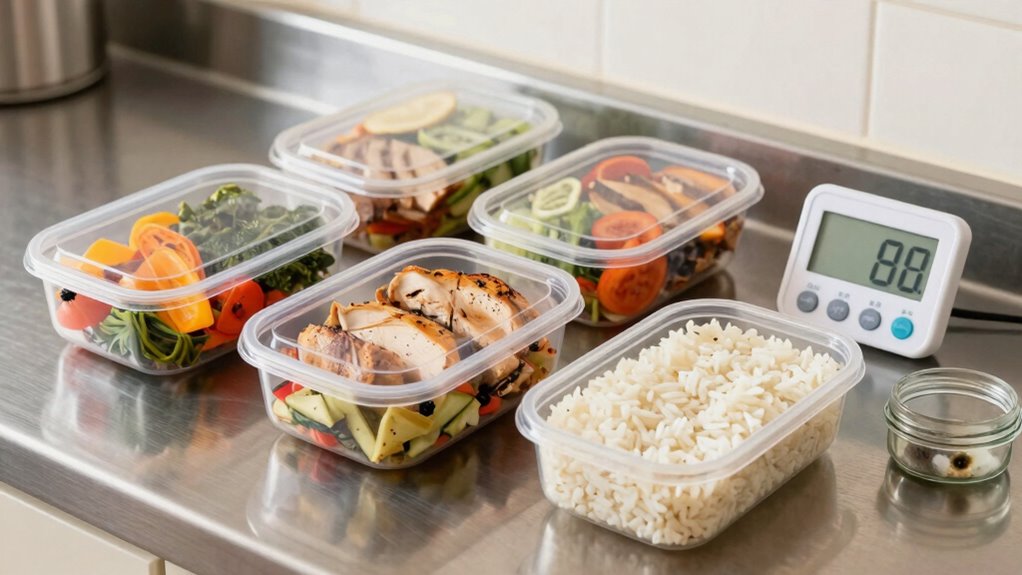
One of the clearest signs your cooked food has gone bad is an off-putting smell that’s different from its usual aroma. If the food emits a sour, rancid, or otherwise unusual odor, it’s best to discard it. Check the food labeling and your portion control; if you’ve stored leftovers beyond recommended times, the risk of spoilage increases. Also, look for changes in texture or color—slimy or discolored food often indicates bacterial growth. Trust your senses and avoid tasting questionable food. Remember, even if food looks okay, a strange smell is a strong warning sign. Proper storage and mindful portion control help you keep track of freshness, reducing the chances of consuming spoiled food. Being aware of food safety tips can further help prevent foodborne illnesses. For example, understanding the proper storage times ensures you consume leftovers while they are still safe. Additionally, paying attention to storage temperatures is crucial for inhibiting bacterial growth. Maintaining proper food storage conditions is essential for keeping cooked food safe longer and avoiding health risks. Incorporating temperature control practices can significantly extend the safety window for leftovers. When in doubt, it’s safer to toss it out.
Storage Tips to Keep Meal Prep Fresh and Safe
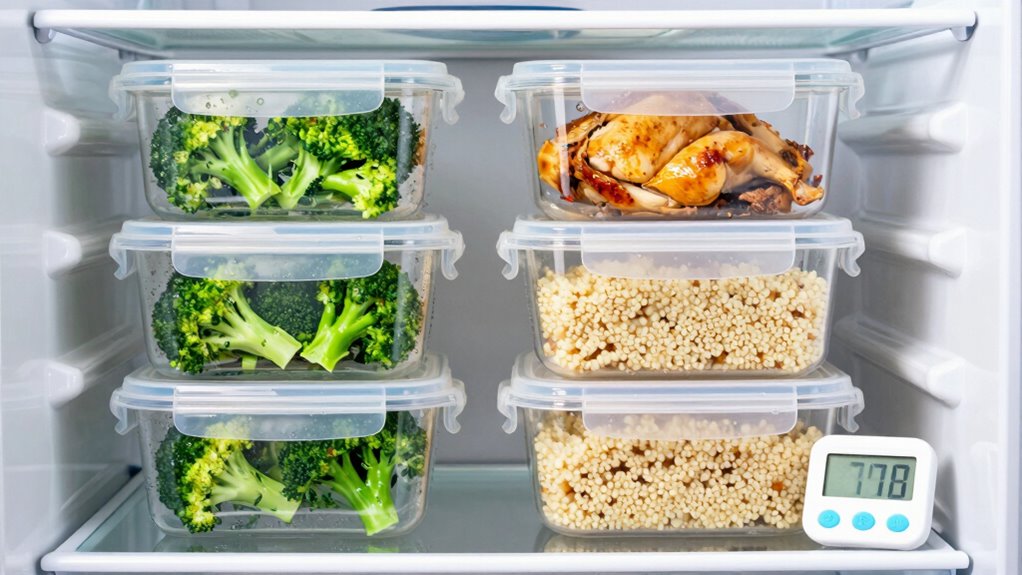
Choosing the right containers and storing your meals at the correct temperature are key to keeping food fresh and safe. Use airtight, BPA-free containers to prevent spills and contamination, and always refrigerate or freeze your meals promptly. Paying attention to storage conditions helps guarantee your meal prep stays delicious and safe to enjoy. Additionally, maintaining good air quality around your storage area can help prevent spoilage caused by mold or bacteria growth. Proper temperature control is essential, as storing food at too high or fluctuating temperatures can lead to faster spoilage and potential foodborne illness. Ensuring consistent storage conditions can significantly extend the safe shelf life of your prepared meals. Furthermore, selecting storage environments with optimal air circulation can help reduce moisture buildup and inhibit bacterial growth. Regularly monitoring and adjusting storage temperature helps maintain the safety and quality of your meal prep.
Proper Container Choices
Selecting the right containers is essential for keeping your meal prep fresh and safe. You want containers that are durable enough to withstand daily use and safe for storing food long-term. Material safety is vital; opt for BPA-free plastics, glass, or stainless steel to avoid harmful chemicals leaching into your meals. Choose containers with secure, leak-proof lids to prevent spills and contamination. Look for options that are dishwasher safe for easy cleaning and won’t warp or crack over time. Additionally, consider stackable designs to maximize fridge space and keep your meals organized. Investing in high-quality, safe containers helps maintain food quality and minimizes health risks, making your meal prep routine more efficient and worry-free.
- BPA-free plastic, glass, or stainless steel
- Leak-proof, secure lids
- Dishwasher safe for easy cleaning
- Stackable for space efficiency
Temperature and Storage Conditions
Proper storage conditions are key to keeping your meal preps safe and fresh. Use airtight storage containers to prevent contamination and moisture loss. Always store cooked foods in the refrigerator at the correct temperature—below 40°F (4°C)—to inhibit bacterial growth. Temperature control is essential; avoid leaving meals out at room temperature for more than two hours. When reheating, ensure foods reach an internal temperature of 165°F (74°C) to kill bacteria. If you’re storing meals for several days, consider dividing large portions into smaller containers for even cooling. Keep raw ingredients separate from cooked foods to prevent cross-contamination. Using energy-efficient storage methods can help maintain optimal temperatures and reduce energy consumption. Additionally, monitoring storage temperatures regularly ensures food remains at a safe temperature throughout storage. Proper temperature regulation is crucial; using temperature monitoring devices can help you maintain consistent safety standards. Employing proper food handling techniques further minimizes contamination risks, ensuring your meal preps stay safe longer. Incorporating temperature-sensitive labels can also alert you when storage conditions are no longer ideal, helping you stay vigilant. By maintaining proper temperature and using suitable storage containers, you’ll extend the freshness of your meal preps and reduce the risk of foodborne illnesses.
How Temperature Affects the Shelf Life of Cooked Food
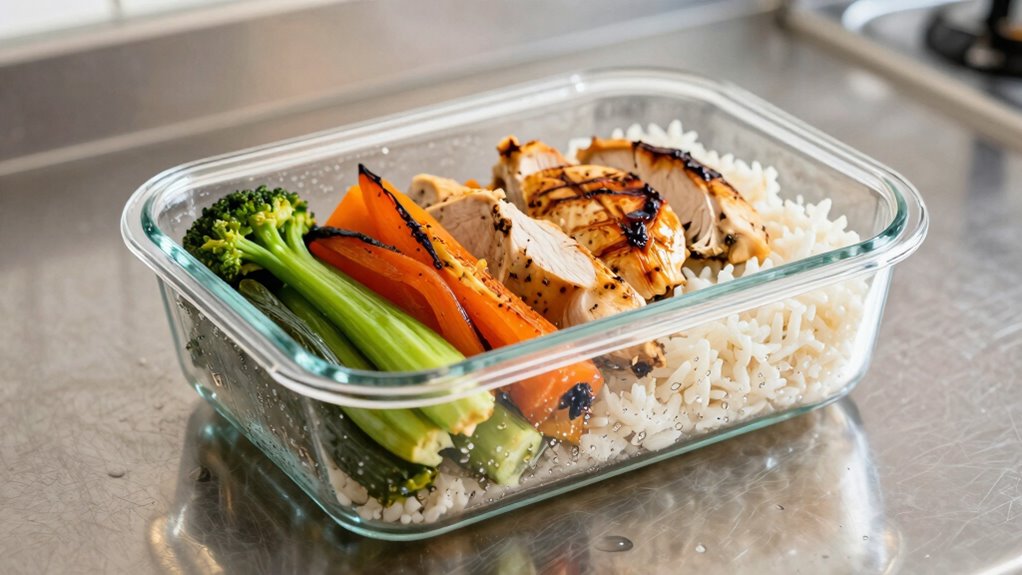
Temperature plays a crucial role in determining how long cooked food stays safe to eat. Proper temperature control slows bacterial growth, preventing foodborne illnesses and spoilage. When cooked food is kept at the right temperatures, its shelf life extends, ensuring freshness and safety. If food is stored too warm, bacteria multiply rapidly, shortening its safe lifespan. Conversely, keeping food too cold can sometimes cause textural changes, but it still inhibits bacterial growth. Always aim to refrigerate cooked food within two hours after cooking, ideally at 40°F (4°C) or below. Use a thermometer to check storage temperatures regularly. Maintaining consistent temperatures is key to avoiding dangerous bacteria and extending the usability of your meal prep. Proper temperature management saves your food—and your health.
Common Mistakes That Shorten Your Meal Prep’s Lifespan
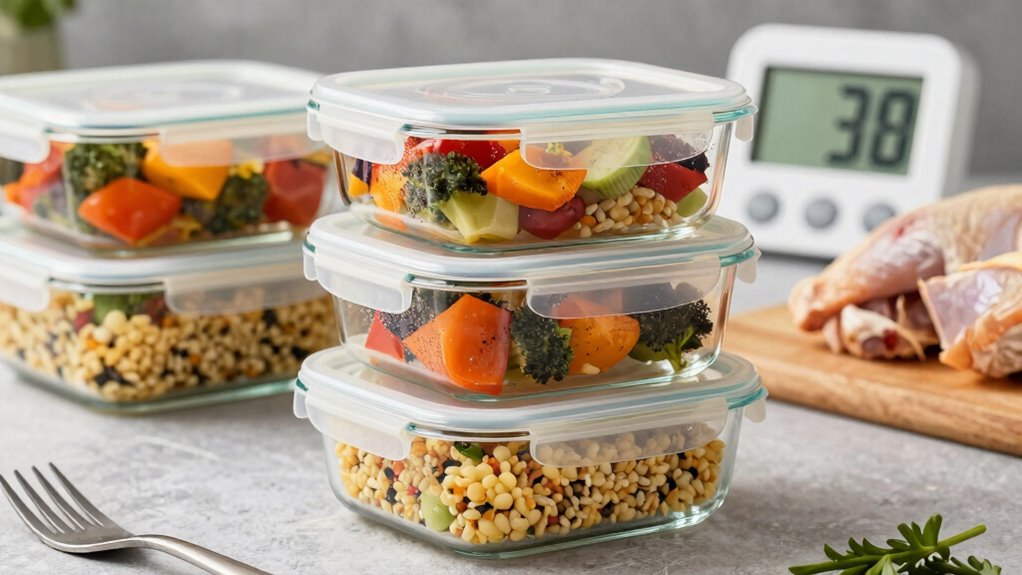
One of the most common mistakes that shortens your meal prep’s lifespan is leaving food at unsafe temperatures for too long. When you ignore proper portion control, you often end up handling larger quantities than you can safely store, increasing the risk of spoilage. Additionally, using ingredients that aren’t fresh enough can reduce how long your meals stay good. If you prepare meals with ingredients nearing their expiration, they’ll spoil faster, even if stored correctly. Overfilling containers or not dividing food into smaller portions can also trap heat and promote bacterial growth. To maximize shelf life, focus on proper portion control, use fresh ingredients, and store meals promptly at the right temperature. These habits help preserve your meal prep’s quality and safety longer.
Does Reheating Kill Bacteria? Food Safety Tips
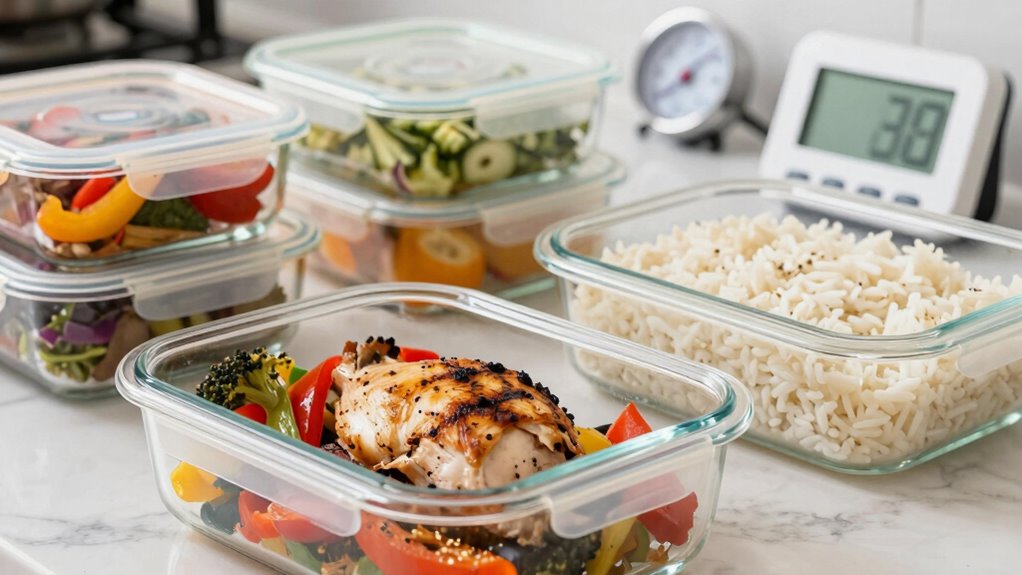
Reheating food can kill many bacteria, but some are more resistant to heat than you might think. To guarantee safety, you need to know the proper temperatures for reheating and how to store leftovers correctly. Understanding these points helps prevent foodborne illnesses and keeps your meals safe to enjoy.
Bacteria Resistance to Heat
Many bacteria can survive heating processes, making it important to understand whether reheating effectively kills harmful pathogens. Some bacteria have high heat resistance, thanks to bacteria adaptation, which allows them to withstand higher temperatures. This means that simply reheating food may not eliminate all bacteria, especially if they’re particularly resilient. To minimize risks, be aware that certain bacteria can endure cooking temperatures if not heated evenly or long enough. Proper handling and reheating practices are essential for food safety. Keep in mind these points:
- Some bacteria survive at typical reheating temperatures
- Bacteria adaptation increases heat resistance over time
- Uneven heating can leave bacteria alive
- Reheating doesn’t always guarantee food safety
Proper Reheating Temperatures
Even if bacteria can survive some heating processes, using the right temperatures during reheating considerably reduces the risk of foodborne illness. When reheating, guarantee your food reaches an internal temperature of at least 165°F (74°C). For microwave safety, stir food halfway through reheating to promote even temperature distribution, preventing cold spots where bacteria can survive. Oven reheating is also effective—set your oven to 350°F (177°C) and heat until the food reaches the safe temperature. Using a food thermometer helps verify proper reheating temperatures, confirming harmful bacteria are destroyed. Avoid guesswork, as uneven reheating can leave some bacteria alive. Proper reheating temperatures are vital to making your leftovers safe to eat and reducing foodborne illness risks.
Safe Storage Practices
Proper storage is essential to keeping your food safe and preventing illness. To do this, use appropriate storage containers that seal tightly and prevent cross-contamination. Always cool cooked food quickly to below 40°F (4°C) to inhibit bacterial growth, especially if planning to reheat later. Store leftovers in shallow, airtight containers for even cooling and easy reheating. Keep cooked food away from raw ingredients and raw meats to avoid bacteria transfer. Label containers with dates to track how long the food has been stored, and discard anything past its safe storage time. Maintaining proper cooking temperature during reheating ensures bacteria are killed, but proper storage is your first line of defense against foodborne illnesses.
How to Reheat Cooked Meals Safely and Deliciously
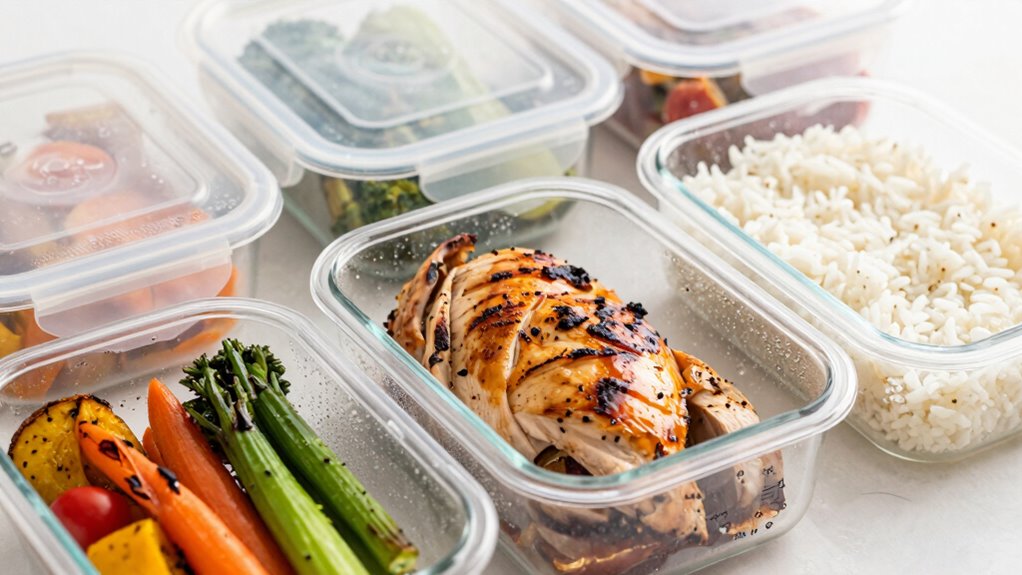
Reheating cooked meals safely is crucial to prevent foodborne illnesses and guarantee your food tastes great. To preserve flavor and maintain nutrient retention, use proper reheating techniques. Always reheat to an internal temperature of 165°F (74°C) using a thermometer for accuracy. Use a microwave, stovetop, or oven, stirring or turning food for even heat distribution. Cover dishes to retain moisture and flavor, preventing dryness. Avoid reheating multiple times, as this can degrade nutrients and compromise safety. Let the food sit for a minute after reheating to ensure even temperature distribution. Proper reheating not only keeps your meals safe but also preserves their original taste and nutritional value, making your leftovers just as satisfying as freshly cooked food.
Best Practices to Minimize Food Waste and Stay Safe
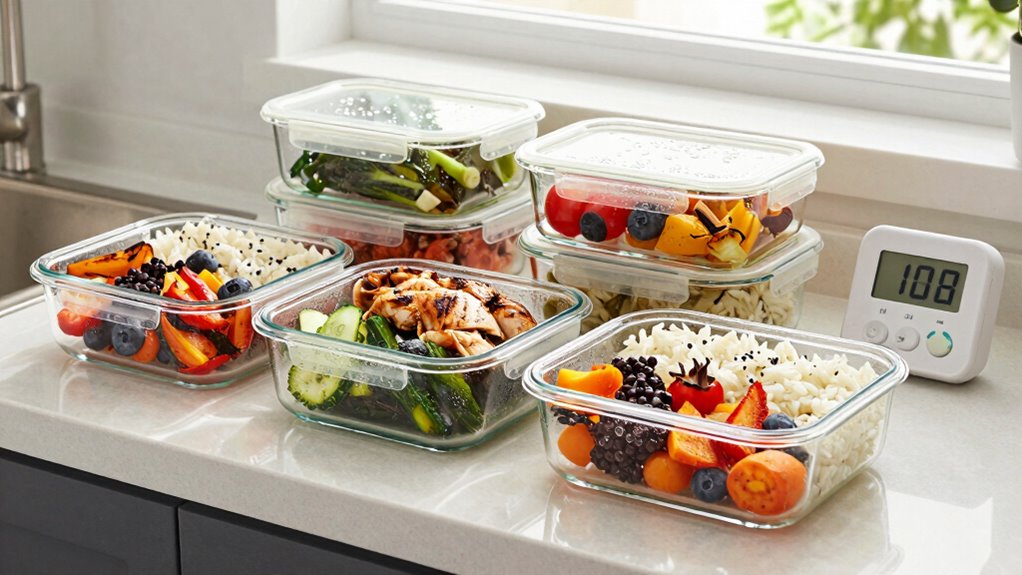
To minimize food waste and stay safe, it’s important to plan your meals carefully and store leftovers properly. Proper food labeling helps you keep track of expiration dates and prevents unnecessary waste. Regularly check ingredient freshness to avoid using spoiled items. When storing leftovers, use airtight containers and label them with dates to monitor their safety. Keep your fridge at the correct temperature to slow bacterial growth. Practice portion control to avoid leftovers that might spoil before you can eat them. Rotating your stored food ensures older items are used first. By paying attention to food labeling and ingredient freshness, you reduce waste and enhance food safety. Staying organized and mindful of storage practices keeps your meal prep efficient and safe.
FAQs: How Long Are Leftovers Good for?
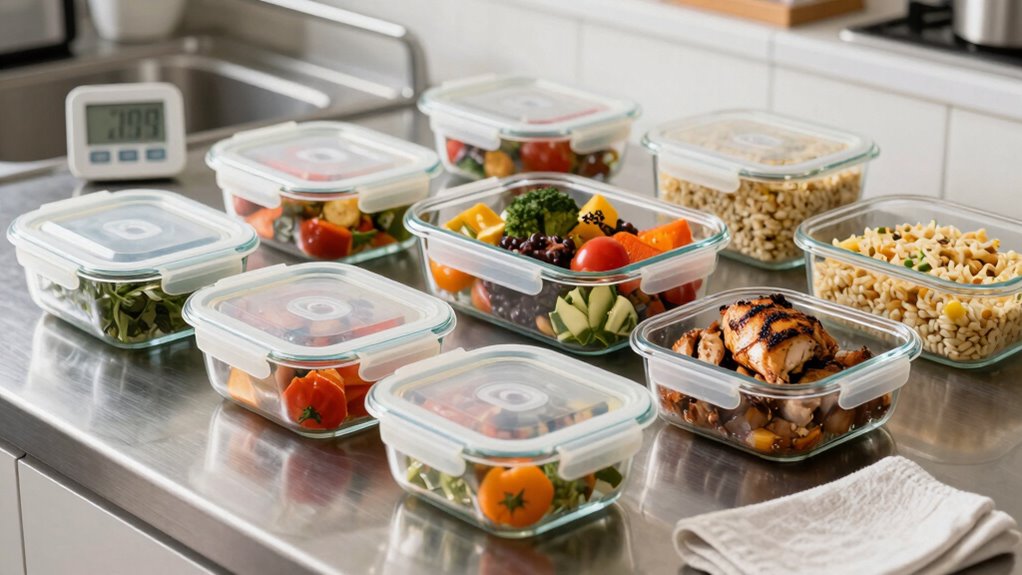
Wondering how long leftovers stay safe to eat? Typically, cooked leftovers last about 3 to 4 days in the fridge. If you’re unsure, trust your senses—look for any signs of spoilage like bad odor or sliminess. Proper food preservation is key to preventing food poisoning, so store leftovers in airtight containers and keep the fridge at 40°F (4°C) or below. For longer storage, consider freezing, which can extend safety for up to 2-6 months depending on the food. Remember, bacteria can grow quickly if leftovers are left out too long, increasing the risk of food poisoning. When in doubt, it’s better to discard leftovers that are past their safe window to avoid health issues.
Frequently Asked Questions
Can I Leave Cooked Food Out Overnight Safely?
You shouldn’t leave cooked food out overnight safely. Bacterial growth accelerates when food stays at unsafe food temperatures, typically between 40°F and 140°F. If cooked food sits out for more than two hours, bacteria can multiply rapidly, increasing your risk of foodborne illness. To keep your food safe, refrigerate leftovers promptly and reheat them thoroughly before eating. Always prioritize food temperature and limit the time food remains at room temperature.
How Does Packaging Affect Cooked Food’s Shelf Life?
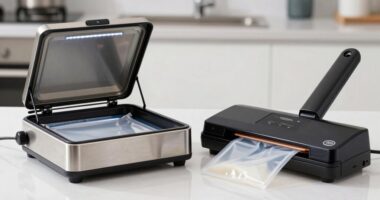
Ever notice how a sealed container keeps food fresher longer? Packaging integrity plays a key role in extending shelf life by preventing contamination and moisture loss. When you package cooked food properly, it reduces exposure to air and bacteria, slowing spoilage. Using airtight containers or vacuum-sealing can markedly prolong freshness, giving your leftovers a longer, safer window to enjoy. Proper packaging truly makes a difference in meal prep safety.
Is It Safe to Refreeze Cooked Leftovers?
Yes, you can refreeze cooked leftovers if you’ve cooled them promptly and stored them properly. Always check the food labeling for specific guidance. Be aware that refreezing may cause freezer burn, affecting texture and flavor, but it won’t make food unsafe. Just ensure the leftovers haven’t been left out too long and that they’re stored in airtight containers to maintain quality and safety.
What Are the Risks of Eating Expired Cooked Food?
Eating expired cooked food is like playing with fire—you risk foodborne illnesses that can cause nausea, vomiting, or worse. Spoilage indicators like foul odor, slimy texture, or discoloration are your warning signs to toss it out. Ignoring these signs can lead to serious health issues. Always trust your senses and remember, when in doubt, it’s safer to discard than to risk a food safety disaster.
How Do I Store Cooked Meals for Longer Periods?
To store cooked meals longer, focus on portion control by dividing food into small, manageable servings. Use airtight meal storage containers to prevent spoilage and freezer burn. Label each container with the date to track freshness. Store meals in the refrigerator for up to four days or in the freezer for several months. Proper storage guarantees your food stays safe, tasty, and ready for quick meals later.
Conclusion
Storing your meals properly keeps them safe, but neglecting time limits risks spoilage. While your fridge and freezer are your allies, bacteria can still lurk if you ignore signs of spoilage. Balancing convenience with caution, you can enjoy leftovers guilt-free—just stay vigilant. After all, good meal prep is about savoring safe, delicious food, not risking illness. So, keep track, reheat wisely, and enjoy your healthy, worry-free meals.
Halloween Picks
halloween
As an affiliate, we earn on qualifying purchases.