As a stunt double, you take on dangerous moments to keep actors safe and create thrilling action on screen. You train in martial arts, driving, and acrobatics, constantly working to master new techniques and stay safe with harnesses and digital effects. Your work often goes unnoticed, but it’s essential for gripping scenes. If you want to uncover what it’s really like to be an action hero behind the scenes, there’s more to discover.
Key Takeaways
- Stunt doubles perform dangerous action scenes, ensuring actor safety and enhancing movie realism.
- They undergo rigorous training in martial arts, gymnastics, and driving to execute complex stunts.
- Many work consistently for the same star over years, though most have only one or a few credits.
- Safety measures like harnesses and digital effects are vital to protect stunt performers during risky sequences.
- Despite limited public recognition, stunt doubles are essential for thrilling Hollywood action scenes.
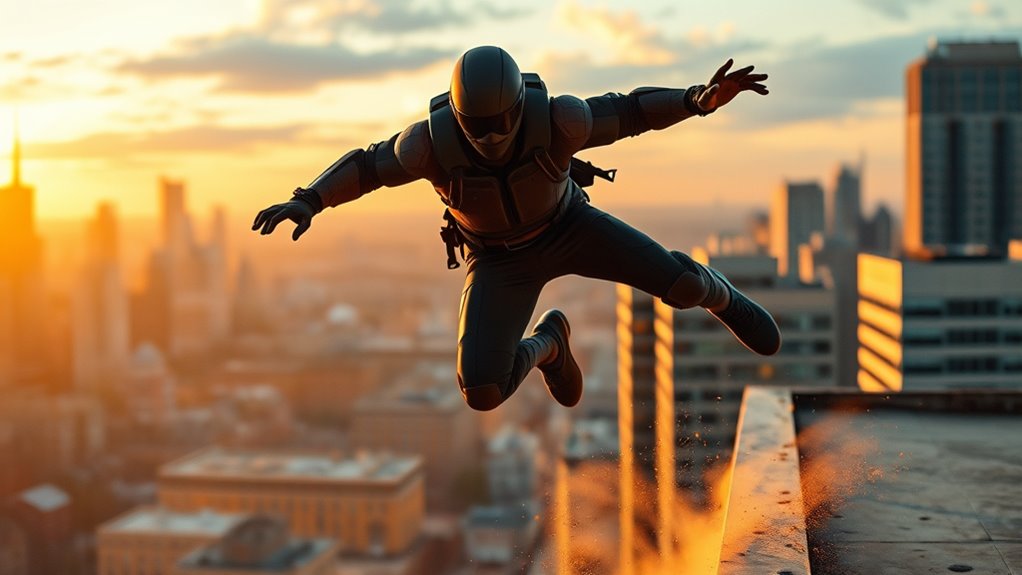
Have you ever wondered who performs the daring stunts that make action scenes so thrilling? These individuals are stunt doubles—unsung heroes who risk their safety to bring movie explosions, fight scenes, and high-speed chases to life. When actors can’t or won’t perform their own risky moves, stunt doubles step in, often operating behind the scenes but playing an essential role in creating the adrenaline-pumping moments fans love. They are part of a tight-knit support crew, much like trainers or assistants, and are carefully chosen for their body shape, height, and ability to resemble the stars they double for. Facial resemblance helps during close-up shots, adding to the illusion that the actor is performing the stunt. To prepare, stunt doubles undergo rigorous physical training, including gymnastics, martial arts, diving, and other specialized skills like driving or combat choreography. They often train multiple times daily, follow strict nutrition plans, and maintain peak physical condition to handle the intense demands of their work. Rigorous training programs are essential for stunt doubles to safely perform complex and dangerous sequences. A stunt double’s career can span many years and multiple films, especially when they become the go-to for a particular star. For example, some doubles have worked for the same actor, like Chris Hemsworth, in over a dozen movies since 2012. This consistency helps build a reputation within Hollywood’s competitive stunt industry. However, only a small percentage of stunt professionals maintain steady work year after year. Many are transient, with roughly 56% having just one film credit, while a core group with 17 or more credits makes up about 9%. During large-scale scenes, especially in blockbusters, dozens of stunt performers—sometimes 60 to 70—work together to pull off complex sequences like battles or car chases. High-profile movies can involve hundreds of stunt performers, with some productions employing over 200 for certain scenes. The skill set required is extensive, and continuous training is crucial to stay current with evolving stunt techniques and safety standards. Stunt doubles must master techniques like high diving, driving, and combat. They often perform their own stunts, but safety harnesses, wires, and digital effects help protect them from real harm. Body type similarity is essential, often requiring props like heel lifts to match actors’ heights precisely. Though their contributions are indispensable, they rarely receive the public recognition given to leading actors. Still, some earn industry awards such as the Taurus World Stunt Awards or are inducted into halls of fame, honoring their achievements. Veteran stunt doubles may work with multiple stars across decades, cementing their legacy as Hollywood’s action heroes behind the scenes. Their work may remain largely unseen, but their daring, precision, and commitment keep movie action alive and exciting.
Frequently Asked Questions
How Do Stunt Doubles Prepare Mentally for Dangerous Scenes?
You prepare mentally for dangerous scenes by visualizing the entire stunt, imagining yourself executing each move perfectly. You practice mental rehearsal, focusing on timing, positioning, and reactions. Staying calm with mindfulness exercises like deep breathing helps you maintain focus. Positive self-talk boosts your confidence, while simulating on-set conditions prepares you for real challenges. Combining these mental strategies with physical training guarantees you’re ready to perform safely and effectively under pressure.
What Safety Equipment Is Essential for Stunt Doubles?
Imagine you’re in the wild west of Hollywood stunt work—safety gear is your trusty cowboy hat. You need a helmet to protect your head from impacts, body armor and pads to cushion falls, and flame-resistant clothing for fire stunts. Fall protection like harnesses and inflatable bags keep you safe from height. Eye gear shields you from debris, ensuring you perform confidently and safely in every daring scene.
How Do Stunt Doubles Build Their Professional Reputation?
You build your reputation by consistently demonstrating professionalism, safety, and reliability on set. Networking is vital—reach out to coordinators, attend workshops, and stay in touch with industry contacts. Start with small roles like body doubles or minor stunts to gain experience. Keep your materials updated, including your resume, headshots, and demo reel. Show dedication, learn from feedback, and develop diverse skills to earn trust and secure repeated opportunities.
What Are the Most Common Injuries Stunt Doubles Face?
You’re basically a human pinball, bouncing from one injury to another. Most common are head impacts, causing concussions or brain trauma, and physical trauma like cuts, burns, and broken bones from falls or high-impact stunts. Sprains and strains also plague you, especially in joints and lower limbs. Long-term, this relentless abuse can lead to chronic pain, disabilities, or even neurodegenerative conditions, making your career a high-stakes game of damage control.
How Do Stunt Doubles Coordinate With Film Directors and Actors?
You coordinate closely with directors and actors by maintaining constant communication to understand the vision and guarantee stunt safety. You collaborate with directors to adapt stunts for safety and visual impact, and work with actors to create seamless transitions during scenes. Rehearsals, adjustments on set, and detailed planning help you balance spectacle with safety, building trust and ensuring everyone’s prepared for demanding stunt sequences.
Conclusion
Now that you know about stunt doubles, you realize they’re the real heroes behind the scenes. Did you know that stunt performers often face injuries at a rate five times higher than other film crew members? It’s a risky, adrenaline-fueled job that keeps your favorite action scenes alive and thrilling. So next time you watch an intense fight or daring jump, remember the unsung heroes making it all possible—heroes who risk it all for your entertainment.