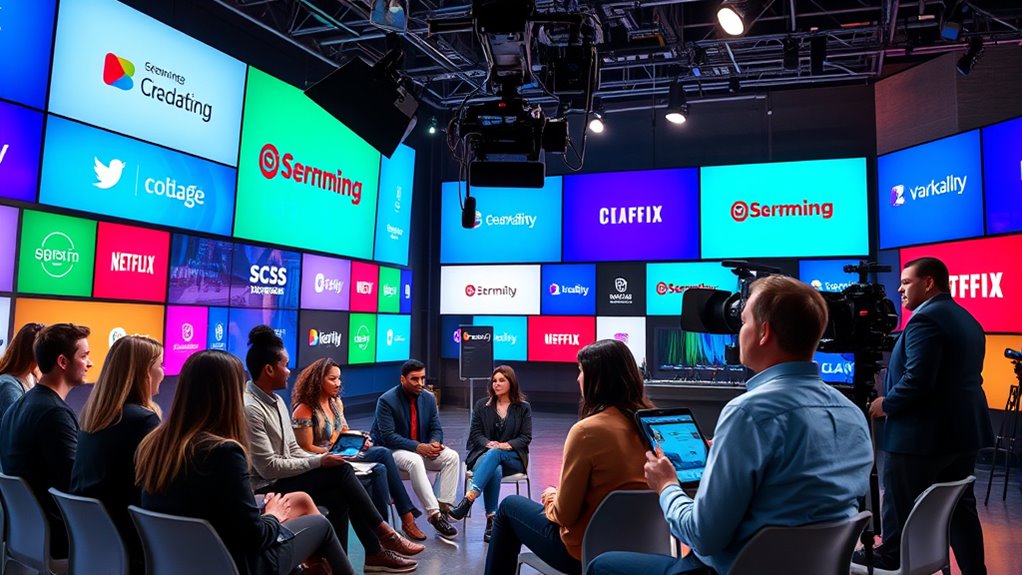

Streaming services are changing TV production and casting by focusing on diverse stories that appeal to global audiences. They leverage data analytics to make smarter decisions about which projects to greenlight and how to cast talent, often including multicultural and multilingual actors. This approach speeds up production cycles and fosters authentic storytelling. If you want to learn more about how these shifts influence the entertainment landscape, there’s plenty more to explore.
Key Takeaways
- Streaming platforms prioritize serialized, binge-worthy content with diverse genres to attract and retain global audiences.
- Data analytics guide casting choices, favoring multicultural, multilingual, and emerging talent to appeal across cultures.
- Increased budgets and faster production cycles enable high-quality, culturally authentic stories tailored to specific markets.
- Competition drives platforms to invest heavily in original, innovative content that aligns with social trends and viewer preferences.
- Content is increasingly personalized and inclusive, reflecting social issues and demographic shifts to engage diverse, fragmented audiences.

The rise of streaming services has transformed the television industry, reshaping how audiences consume content and how producers approach TV creation. With global streaming subscribers expected to surpass 1.1 billion by 2025, the demand for fresh, engaging content has skyrocketed. This surge pushes producers to create more original shows, often prioritizing binge-worthy series that keep viewers hooked for longer periods. Unlike traditional TV, streaming platforms favor serialized storytelling, which encourages viewers to watch multiple episodes back-to-back, boosting engagement and retention. As a result, the volume of original content produced has increased dramatically, with content now tailored to meet the tastes of diverse, international audiences. This also promotes the development of diverse genres to cater to various viewer preferences worldwide.
Streaming services are boosting original, binge-worthy content tailored for diverse global audiences.
This shift also influences how TV shows are made. Streaming services invest heavily in global productions, leveraging their broad subscriber bases across regions like Asia Pacific, led by India and China, and North America, which dominates revenue with about USD 50.66 billion expected in 2025. These platforms seek content that appeals across cultures, leading to more inclusive and multicultural casting choices. You’ll notice that casting decisions now lean toward actors with international appeal, aiming to attract and resonate with a broad spectrum of viewers. Streaming platforms are also emphasizing diversity and representation, reflecting social trends and subscriber demographics. This means you’ll see more multilingual and multicultural casts, tailored to specific markets and personal preferences, making shows more relatable and engaging for global audiences. Additionally, the use of data-driven insights from streaming platforms influences decisions about greenlighting projects, helping producers identify niche markets and customize content. These insights also support the trend toward inclusive casting, which broadens the appeal of shows across different demographics. Moreover, the integration of advanced analytics helps streamline production processes and optimize content strategies to better meet viewer demands. Furthermore, the increased competition among streaming platforms has led to higher investments in original programming, ensuring a steady stream of innovative content.
The impact extends beyond casting to how content is financed and developed. Data-driven insights from streaming platforms influence decisions about greenlighting projects, helping producers identify niche markets and customize content. This approach allows for more flexible casting, including emerging talent, and the creation of roles that better suit the interests of specific viewer segments. Additionally, the faster production timelines and higher budgets required for streaming content mean that shows are made more quickly while maintaining high visual quality. This agility enables producers to respond swiftly to trending topics or changing viewer preferences. The shift toward global content also encourages collaborations across different countries, resulting in more authentic and culturally rich stories.
For you as a viewer, these changes mean more diverse and personalized options, with content designed to reflect global cultures and social issues. It also means that traditional TV advertising is evolving, with advertisers shifting their focus to online platforms to reach fragmented audiences. Overall, streaming services are reshaping the industry landscape, pushing TV production toward more innovative, inclusive, and audience-centric storytelling.
Frequently Asked Questions
How Do Streaming Algorithms Influence Casting Choices?
You might notice that streaming algorithms heavily influence casting choices. They analyze viewer data to identify popular actors and genres, guiding producers to cast those who maximize engagement. These algorithms also favor familiar or trending talent, which can limit diversity. By focusing on viewer preferences, you see a shift toward casting actors who align with audience trends, often prioritizing popularity over fresh or diverse talent.
Are Traditional TV Networks Still Relevant in the Streaming Era?
Imagine you’re in the 1980s, watching the rise of cable TV. Today, you might wonder if traditional networks still matter. Despite declining viewership and revenue, they remain relevant by adapting through digital integration, offering hybrid models, and focusing on high-quality content. You can still find value in their programming, especially as they innovate to compete with streaming giants, ensuring they remain part of your entertainment landscape.
How Do Streaming Services Determine Episode Lengths?
Streaming services determine episode lengths by analyzing viewer preferences and engagement data, allowing them to tailor content for maximum appeal. They offer creators flexibility, letting episodes be longer or shorter based on storytelling needs. This approach contrasts with traditional TV’s fixed time slots. You’ll notice varied episode durations across platforms, which helps keep viewers engaged and supports more complex storytelling, ultimately shaping how shows are produced and cast.
What Impact Does Streaming Have on Diversity in Casting?
Ever wonder how streaming changes casting diversity? Well, streaming platforms actively prioritize diverse talent, leading to more inclusive representation on screen. They’ve increased the percentage of diverse cast members considerably, reflecting broader societal demographics. This shift isn’t just about fairness—it boosts audience engagement and ratings. Streaming’s creative freedom allows for authentic storytelling, encouraging industry-wide change. So, it’s clear that streaming’s focus on diversity is transforming the industry for the better.
How Do Viewer Data Influence Production Budgets?
Viewer data greatly influences production budgets. You find that platforms use real-time analytics and audience demand insights to allocate funds effectively. If data shows high interest in a genre or actor, more budget gets directed toward those projects to maximize engagement and revenue. Conversely, less popular content receives lower investment. This data-driven approach helps you optimize spending, balance risk, and guarantee the content produced aligns with viewer preferences, boosting overall profitability.
Conclusion
As streaming services continue to reshape TV production and casting, you’re witnessing a shift toward more diverse stories and innovative formats. These platforms give creators freedom and audiences access to a wider range of content. So, isn’t it exciting to think about how your favorite shows might evolve in this new era? With streaming’s influence growing, one thing’s clear: the future of television is in your hands, and it’s more dynamic than ever.