
Hard credit checks happen when you apply for new credit or loans and can temporarily lower your score, while soft checks happen when you review your own report or during pre-approvals and don’t affect your score. Hard inquiries stay on your report for two years, but soft checks are invisible to lenders and impact your score not at all. Knowing the differences helps you protect your credit—exploring this more can help you manage your credit health better.
Key Takeaways
- Hard credit checks occur during loan applications and can temporarily lower your credit score, while soft checks do not affect your score.
- Hard inquiries remain on your credit report for about two years, with diminishing impact, unlike soft inquiries which leave no trace.
- Soft credit checks are used for pre-approvals and account reviews, providing limited information without scoring penalties.
- Multiple hard inquiries in a short period can significantly decrease your credit score, but soft checks are frequent and harmless.
- Monitoring your credit report helps distinguish between hard and soft inquiries, protecting your credit health and privacy.

Credit Magic with AI: The Smart Path to a Stellar Score : Unlock Your Financial Potential with Cutting-Edge AI Tools
As an affiliate, we earn on qualifying purchases.
As an affiliate, we earn on qualifying purchases.
What Are Hard and Soft Credit Checks?

Have you ever wondered what happens when a lender or credit card company checks your credit report? That process is known as a credit inquiry and plays a key role in credit scoring and financial assessments. Hard credit checks occur when you apply for a loan or new credit, giving lenders a detailed view of your credit history. These checks can impact your credit score because they suggest you’re seeking new credit. Soft credit checks, on the other hand, happen when you check your own report, or a lender pre-approves you for offers—these don’t affect your score. Understanding the difference helps you manage your financial health better and avoid unnecessary score drops during routine checks. Additionally, being aware of credit inquiry types can help you better protect your credit profile from unnecessary impacts. Knowing how credit scoring models, which often incorporate factors like hard and soft inquiries, interpret these inquiries can further assist in maintaining a healthy credit profile and making informed financial decisions. Recognizing the importance of data-driven strategies in credit management can also empower you to optimize your credit health over time. Moreover, understanding the timing and frequency of inquiries can aid in preventing potential negative effects on your credit score.

AmazingSpark 10 Pack Large Print Checkbook Register with a Leather Checkbook Cover, Check Register Book Easy to Read, Check Registers for Personal Use, Deposit and Credit Card, 5.6 × 2.9 Inches
Durable and Reliable: 10 large print checkbooks and a black checkbook cover; This paper is thicker, the column…
As an affiliate, we earn on qualifying purchases.
As an affiliate, we earn on qualifying purchases.
When Do Hard and Soft Credit Inquiries Usually Happen?

Knowing when hard and soft credit inquiries typically occur can help you better manage your credit health. Understanding inquiry timing is key to knowing when your credit report updates and how your actions impact your score. Here are common situations:
Knowing when credit inquiries occur helps you manage your credit health and minimize score impacts.
- When you apply for new credit, a hard inquiry occurs, prompting a credit report update.
- During pre-approval offers or checking your own credit, soft inquiries happen without affecting your score.
- When lenders review your credit for ongoing accounts or account reviews, soft inquiries may also take place.
- European cloud innovation emphasizes the importance of data security and sustainable practices in financial technology solutions.
Being aware of these moments allows you to plan your credit activities carefully, minimizing unnecessary impacts. Remember, hard inquiries typically happen during applications, while soft inquiries are more frequent and less impactful.

The Best & most Effective Hard Inquiry Removal Tool…Ever!: How to Remove Hard Inquiries from your Credit Reports
As an affiliate, we earn on qualifying purchases.
As an affiliate, we earn on qualifying purchases.
How Do Hard Credit Checks Affect Your Credit Score?

Hard credit checks can temporarily lower your credit score because they signal to lenders that you’re seeking new credit, which may indicate increased risk. Each hard inquiry can cause a small dip in your credit score, especially if you have frequent inquiries within a short period. While the impact of a single inquiry is usually minimal, multiple inquiries can add up and affect your credit score impact profoundly. This can be a concern if you’re applying for several loans or credit cards in a short time. Typically, hard inquiries stay on your credit report for about two years, but their influence on your score diminishes over time. Managing inquiry frequency is key to maintaining a healthy credit score and avoiding unnecessary dips. Additionally, being aware of credit report updates can help you monitor how these inquiries are reflected over time. Understanding the timing of inquiries can help you plan your credit applications more strategically. Proper credit management strategies can further mitigate the negative effects of multiple inquiries. Staying informed about your credit report details allows you to detect any inaccuracies that could also impact your score.

MSR90 USB Swipe Magnetic Credit Card Reader 3 Tracks Mini Smart Card Reader MSR605 MSR606 Deftun
MSR90 is a USB emulation keyboard interface that not need any driver or software,USB simply plug and play
As an affiliate, we earn on qualifying purchases.
As an affiliate, we earn on qualifying purchases.
What Happens During a Soft Credit Check?

Ever wonder what happens during a soft credit check? When you undergo a soft inquiry, the lender or company quickly reviews your credit report without impacting your score. This process is simple and quick. Here’s what occurs:
A soft credit check reviews your report quickly without affecting your credit score.
- They access your credit report through the inquiry process, which is a background check on your credit activity.
- They only see limited information—like your current credit accounts and payment history—without a full credit score evaluation.
- No damage is done to your credit score, and the inquiry remains visible to you but not to other lenders or creditors. Additionally, these checks can be used for pre-approval offers, helping you explore options without affecting your credit health.
- Soft credit checks help protect your privacy and provide essential insights into your credit health, aligning with the goal of compassionate and supportive financial practices. Additionally, understanding the credit report process can help you better manage your financial reputation.
- Recognizing the difference between soft and hard inquiries can empower you to make more informed financial decisions and maintain a healthy credit profile. It’s also important to know that soft inquiries are often used for background checks by employers or landlords, which do not impact your credit score.
A soft credit check gives you insights into your credit status or pre-approval offers, all while keeping your credit report and score intact.
How Can You Tell if a Soft or Hard Inquiry Was Made?

You can find out if a soft or hard inquiry was made by checking your credit report regularly. Look for inquiry alerts that specify the type of check conducted. Recognizing these details helps you understand who accessed your credit and when. Additionally, being aware of your support options for credit inquiries can help you address any unauthorized or suspicious checks. Being proactive about credit report monitoring also ensures you stay informed about your credit status. Knowing the differences between Rhythm Failure subtopics can also aid in understanding various aspects of credit monitoring and management. Regularly reviewing your report can also help you spot any unexpected inquiries, ensuring your credit remains accurate and secure. Being proactive in understanding these credit report details empowers you to better protect your financial information.
Checking Your Credit Report
Wondering how to distinguish between soft and hard inquiries on your credit report? Here’s how you can tell:
- Check the report details—hard inquiries usually list the creditor’s name, while soft inquiries often do not.
- Look for the inquiry date; hard pulls tend to be more recent if you recently applied for credit.
- Review the impact on your credit score—hard inquiries might cause a slight dip, whereas soft inquiries don’t affect it.
- Be aware that some security measures are designed to protect your credit information from unauthorized access.
- Understanding credit report terminology can help you interpret these inquiries more accurately.
- Regularly monitoring your credit activity can alert you to any unauthorized checks or suspicious activity.
- Knowing the difference between inquiries can help you better understand how your credit report reflects your financial behavior. Additionally, knowing the types of credit checks can help you identify which inquiries are most relevant to your financial health.
Being aware of these differences helps address your privacy concerns and understand how your credit report reflects your financial activity. Regularly reviewing your report ensures you’re informed about who’s checked your credit and maintains control over your credit health. Remember, understanding these details empowers you to protect your privacy and manage your credit score better.
Recognizing Inquiry Alerts
Knowing how to recognize whether an inquiry was soft or hard can help you stay aware of who’s accessing your credit report. Regular credit monitoring tools often send inquiry alerts, making it easier to spot recent activity. Soft inquiries, like checking your own credit or pre-approval offers, usually don’t show up as noticeable alerts and won’t impact your score. Hard inquiries, on the other hand, appear on your report with clear labels and can trigger notifications through your credit monitoring service. By paying attention to inquiry alerts, you can identify unfamiliar or unauthorized checks. Staying vigilant helps you understand who’s accessing your credit and when, giving you better control over your financial information and peace of mind.
How to Minimize the Impact of Hard Inquiries on Your Credit
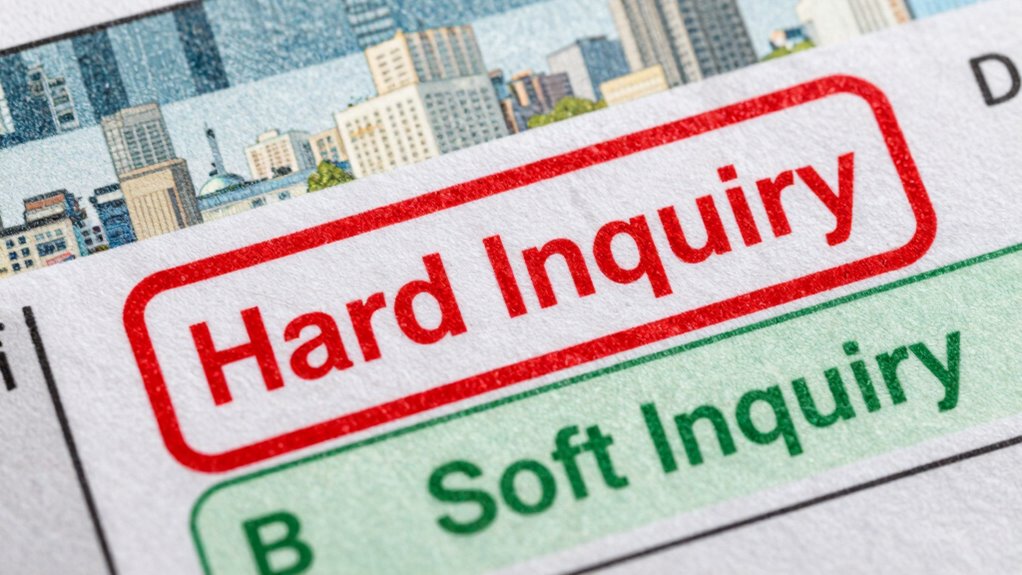
To minimize the impact of hard inquiries on your credit, it’s important to be strategic about when and how you apply for new credit. Your credit score factors can be affected by multiple inquiries, so careful planning matters. Use these loan application strategies to protect your score:
- Limit applications: Only apply for credit when necessary, and space out your requests over time.
- Check pre-approval options: Many lenders offer pre-approvals that don’t trigger hard inquiries, so you can gauge your chances first.
- Understand your credit report: Review your credit report beforehand to ensure all information is accurate, reducing the need for multiple inquiries due to errors.
- Consider Vetted vacuum options: Researching highly rated products can help you make informed decisions and avoid unnecessary credit inquiries for less effective purchases.
Why Are Soft Checks Important for Monitoring Your Credit?
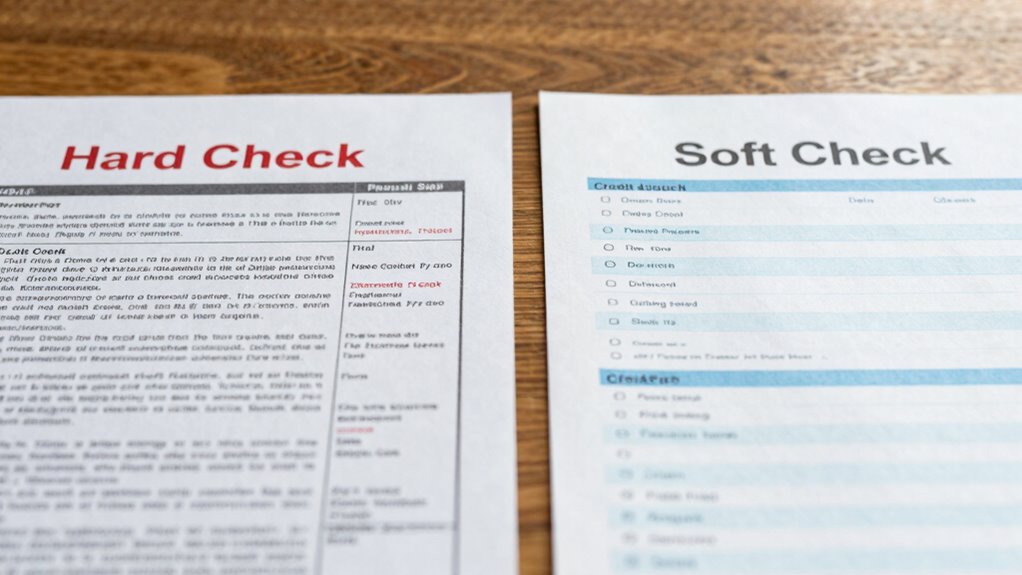
Monitoring your credit regularly is a smart way to stay informed about your financial health without risking damage from hard inquiries. Soft checks are essential because they allow you to perform credit monitoring without affecting your credit score. This way, you can spot any signs of identity theft early, such as unfamiliar accounts or sudden changes in your report. Soft inquiries give you a clear picture of your credit status without the negative impact of hard checks from lenders. By staying vigilant with soft checks, you can catch potential fraud before it causes serious damage. Regular credit monitoring helps you maintain control over your financial profile, ensuring you’re aware of any suspicious activity and protecting your credit health over time.
Can You Avoid Hard Credit Checks When Applying for Credit?

While it’s often possible to avoid hard credit checks when applying for certain types of credit, it depends on the lender and the specific application process. To bypass these checks, you can explore alternative lending options that use soft credit checks or rely on other data. Here are some ways to do that:
Avoid hard credit checks by choosing lenders that use soft inquiries or alternative data sources.
- Seek lenders that perform soft inquiries, which don’t impact your credit score.
- Use credit monitoring services to track your credit without triggering hard pulls.
- Consider peer-to-peer lending platforms or credit unions that often have more flexible approval criteria.
Frequently Asked Questions
Can Multiple Soft Inquiries Harm My Credit Score?
Multiple soft inquiries won’t harm your credit score because they don’t influence your credit impact or inquiry frequency. Soft checks are typically used for background checks or pre-approvals and aren’t visible to lenders, so they don’t lower your score. You can have several soft inquiries without worrying about damaging your credit. However, keep an eye on your report to monitor your credit impact and ensure accuracy.
How Long Does a Hard Inquiry Stay on My Credit Report?
A hard inquiry stays on your credit report for about two years, but its impact usually lasts only a year. You might see a small dip in your credit score initially, yet it diminishes over time. The inquiry impact lessens quickly, so don’t worry if you’re shopping for loans. Just remember, multiple hard inquiries within a short period can lower your credit score more profoundly.
Are There Any Legal Limits on How Often Lenders Can Perform Hard Checks?
Lenders face regulatory restrictions and inquiry frequency limits that prevent them from performing too many hard checks within a short period. These limits are designed to protect your credit score from excessive inquiries, typically allowing only a few hard inquiries per year or per specific time frame. So, while they can perform necessary checks, they must do so within these legal boundaries, which helps you avoid unnecessary credit damage.
Do All Credit Bureaus Treat Soft Inquiries the Same Way?
Oh, sure, all credit bureaus are secretly in cahoots and treat soft inquiries exactly the same—said no one ever. In reality, credit bureau policies vary, meaning some might be more lenient with soft inquiry differences, while others scrutinize them more. You can’t assume uniform treatment, so it’s wise to check each bureau’s policies before you get your hopes up about how they handle soft inquiries.
Can I Request a Lender to Perform Only Soft Checks?
Yes, you can ask a lender to perform only soft checks to protect your credit report privacy. Many lenders respect this request, especially for pre-qualification or initial inquiries, since soft inquiry benefits include no impact on your credit score. By requesting soft checks, you keep your credit report private and avoid unnecessary score dips, making it easier to explore options without affecting your credit health.
Conclusion
Understanding the difference between hard and soft credit checks helps you manage your credit wisely. Did you know that making multiple hard inquiries in a short period can lower your score by several points? Being aware of when each check occurs and how it impacts your credit can help you avoid unnecessary damage. Stay vigilant, monitor your soft checks regularly, and apply for credit carefully—because your credit health depends on it.