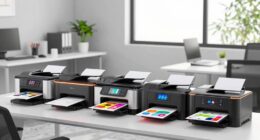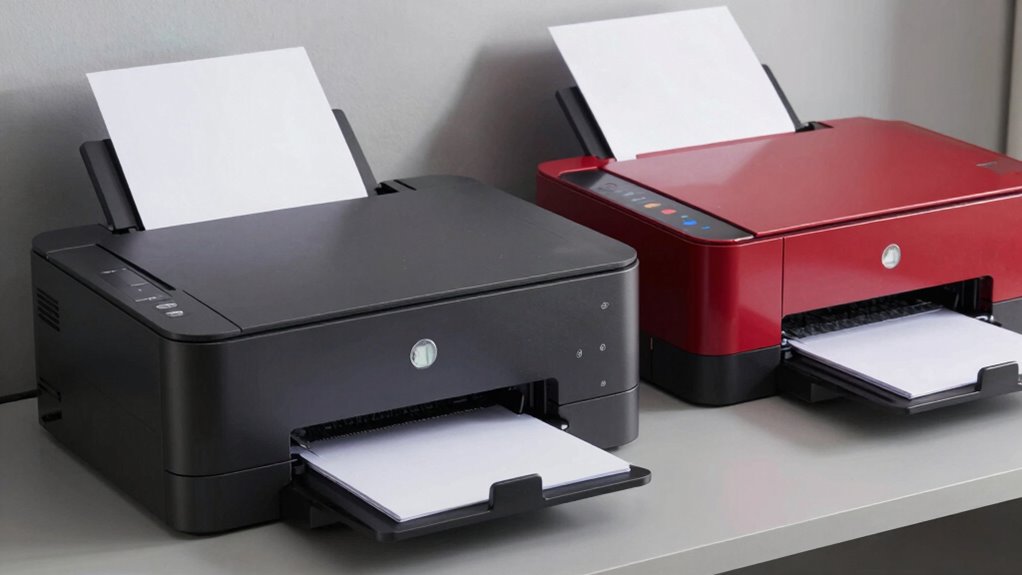

Laser printers generally cost less per page because their toner cartridges last longer and need fewer replacements, especially for high-volume printing. Inkjet printers, on the other hand, use smaller cartridges that run out quickly, making each page more expensive over time. If you print a lot, a laser may save you money in the long run. Keep exploring to discover how choosing the right printer can further reduce your costs and improve your printing experience.
Key Takeaways
- Laser printers typically have a lower cost per page due to larger toner cartridges and longer lifespan.
- Inkjet cartridges are smaller and need frequent replacement, increasing the cost per page.
- Toner in laser printers fuses directly onto paper, providing more efficient and cost-effective printing for high volumes.
- Inkjet printers excel in photo printing but generally have a higher cost per page for text documents.
- Overall cost per page depends on print volume, with laser printers being more economical for high-volume printing.
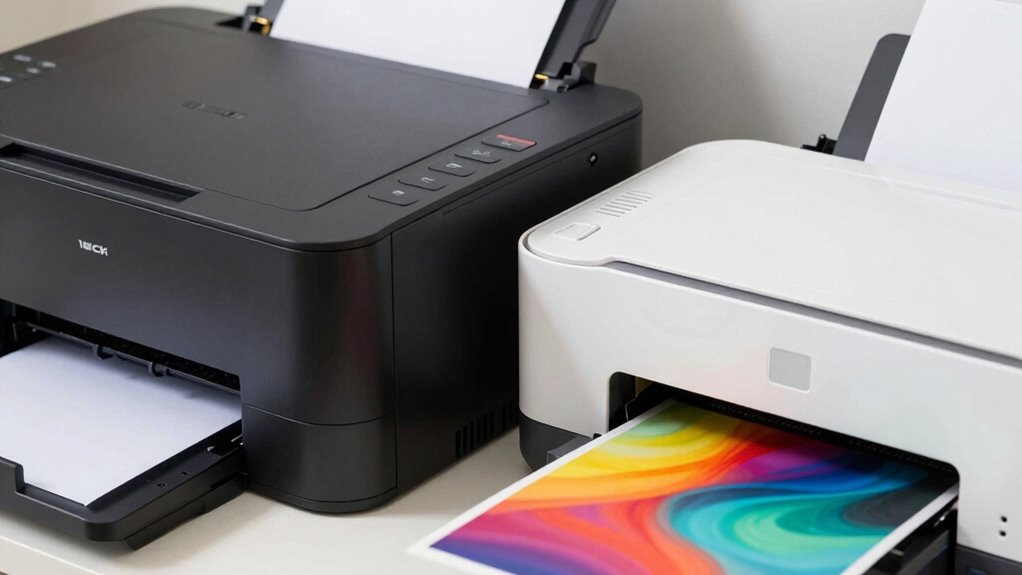
When choosing a printer, understanding the differences between laser and inkjet models is essential. One of the key factors to contemplate is the ink cartridge lifespan, which directly impacts your ongoing costs. Inkjet printers tend to use smaller cartridges that need replacement more often, especially if you’re printing frequently. These cartridges can run out quickly, leading to higher costs per page over time. Conversely, laser printers typically have larger toner cartridges that last much longer, making them more economical if you print a lot. The longer ink cartridge lifespan of laser models means fewer replacements and less frequent trips to buy supplies, saving you both time and money. Additionally, considering the cost efficiency over the printer’s lifespan can help ensure you choose a device that suits your printing needs and budget. Another important aspect to evaluate is the print quality comparison. Inkjet printers generally excel at producing high-quality images, photographs, and color-rich documents. They can deliver smoother gradients and more vibrant colors, which is why they’re preferred for photo printing or detailed graphics. Laser printers, on the other hand, are often better suited for sharp text and simple graphics. The toner particles in laser printers are fused directly onto the paper, resulting in crisp, clear text that’s ideal for professional documents or bulk printing. If your primary need is printing detailed photos or color-rich materials, an inkjet might be the better choice. But if your focus is on printing large volumes of text documents with crisp clarity, a laser printer will serve you well.
Frequently Asked Questions
How Does Printer Maintenance Affect Long-Term Costs?
Your printer maintenance routines substantially impact long-term costs by preventing issues that lead to costly repairs or replacements. Regular cleaning and inspections reduce ink drying times and guarantee smooth operation. Neglecting maintenance can cause clogs, smudges, or hardware failures, increasing your expenses over time. Staying proactive with routine upkeep helps keep your printer running efficiently, saving you money and extending its lifespan.
Are Refillable Inkjet Cartridges More Economical Than Standard Ones?
Refillable inkjet cartridges are generally more economical than standard ones because they let you buy ink in bulk, increasing your ink savings over time. By refilling instead of replacing cartridges, you reduce waste and costs, especially if you print frequently. Plus, refillable cartridges often last longer, making them a smarter choice for those looking to cut expenses without sacrificing print quality.
What Environmental Impacts Do Laser and Inkjet Printers Have?
You need to face the facts—both laser and inkjet printers impact the environment. Laser printers consume more energy during operation, increasing their carbon footprint, while inkjet printers generate more waste with frequent cartridge replacements. Waste management becomes a challenge, especially with disposable cartridges. To minimize your environmental impact, consider eco-friendly models and proper disposal practices, because every little bit helps in protecting our planet.
Can Printing Speed Influence the Overall Cost per Page?
Printing speed can definitely influence your overall cost per page. Faster printers save you time, but they often consume more energy, which adds to costs. If you print large volumes regularly, opting for a high-speed model could be cost-effective despite higher energy use. However, slower printers might save energy but could increase your per-page expenses due to longer print times. Balance your needs to find the best cost-efficiency for your printing habits.
How Do Different Paper Types Affect Printing Costs?
Choosing the right paper is like picking the perfect outfit; it can make or break your print job. Higher-quality paper, with its better ink absorption and smoother surface, often costs more but yields sharper images and less ink wastage. Lower-quality paper might seem cheaper but can lead to smudges, increased ink use, and frequent jams, ultimately raising your overall printing costs. So, select wisely to keep costs in check.
Conclusion
Now that you see the true costs behind laser and inkjet printers, you can choose with confidence. Imagine your workspace, cluttered with pages, each print a small investment of ink or toner. Whether you prefer the crisp, sharp lines of laser or the vibrant hues of inkjet, knowing the real costs helps you make smarter decisions. So, next time you hit ‘print,’ you’ll do so with clarity—balancing your budget and your needs perfectly.