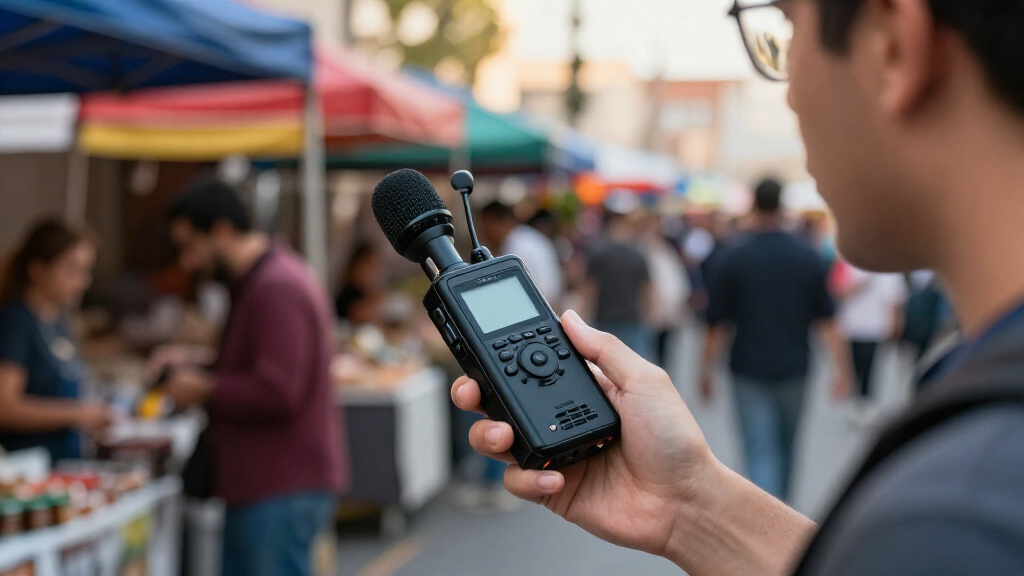

Portable field recorders make it easier to capture interviews, music, ambience, and location sound without carrying a full studio rig. I rank the Zoom H4essential as the best overall for its broader recording flexibility, while the Zoom H1essential stands out as a simple, compact choice and the Zoom F3 suits demanding two-channel work. The main tradeoffs are size versus input options, straightforward operation versus advanced control, and whether bundled accessories are useful or duplicate gear you already own. Several entries are variations of the same Zoom models, so the right choice often comes down to connectivity and included extras rather than the recorder name alone. Continue reading for the full breakdown and a guide to choosing the right portable field recorder for your work.

Get everyday essentials delivered free with Prime
- Fast, free delivery on millions of items
- Prime Video, Amazon Music and more included
- Member-only deals all year
Key Takeaways
- The Zoom H4essential leads for versatility: it offers a stronger fit for varied recording jobs than the simpler H1essential models, which prioritize compactness and ease.
- The Zoom F3 serves a different kind of buyer: its professional two-channel design favors dedicated external microphones and controlled field workflows over an all-in-one handheld format.
- H1essential bundles do not change the core recorder: choose the lavalier, accessory, or basic version based on what you need to carry, not an expectation of a different recording platform.
- The H2essential is the specialist pick for stereo capture: its multi-microphone approach gives ambience-focused users a reason to choose it over the more basic H1essential.
- The H1 XLR models prioritize external microphone connections: they make more sense for mic-led setups than for buyers who mainly want a pocketable recorder with built-in microphones.
| Zoom H1essential Handy Recorder Bundle with Case, Windscreens, and Tripod |  | Best Ready-to-Record Kit | Recording: 32-bit float | Maximum sample rate: 96 kHz | Microphones: Built-in X/Y stereo | VIEW LATEST PRICE | See Our Full Breakdown |
| Xvive XV1-R Portable Stereo Audio Recorder with 32-Bit Float |  | Best for Loud Sources | Recording formats: WAV (32-bit float or 24-bit PCM), AAC | Maximum sample rate: 96 kHz | Microphones: Built-in X/Y directional microphones | VIEW LATEST PRICE | See Our Full Breakdown |
| Zoom H4essential Handheld Recorder |  | Best for External Microphones | Recording tracks: 4 | Recording resolution: 32-bit float | Maximum sample rate: 96 kHz | VIEW LATEST PRICE | See Our Full Breakdown |
| Zoom H1essential 2-Track 32-Bit Float Portable Audio Recorder Bundle with APH-1e Accessories |  | Best for USB Recording and Wind Protection | Recording format: WAV | Recording: 2-track, 32-bit float stereo | Maximum sample rate: 96 kHz | VIEW LATEST PRICE | See Our Full Breakdown |
| Zoom H1 XLR Recorder Bundle with 64GB microSD Card and SD Adapter |  | Best Compact XLR Recorder Bundle | Recording format: WAV | Recording resolution: 32-bit float, up to 96 kHz | Inputs: Two XLR/TRS combo inputs; 3.5 mm stereo input | VIEW LATEST PRICE | See Our Full Breakdown |
| Zoom H1essential Stereo Audio Recorder |  | Best for Simple Stereo Recording | Microphones: Built-in X/Y stereo microphones | Recording: WAV, 32-bit float | USB interface: USB Type-C | VIEW LATEST PRICE | See Our Full Breakdown |
| Zoom H1essential Handy Recorder Bundle with Lavalier Microphone and Accessories |  | Best Ready-to-Record Bundle | Model: ZH1E Bundle | Recording: 32-bit float | Built-in microphones: X/Y | VIEW LATEST PRICE | See Our Full Breakdown |
| Zoom H1 XLR 2-Channel Handy Recorder |  | Best Compact Recorder for XLR Inputs | Inputs: 2 locking XLR/TRS combo inputs; 3.5 mm stereo input | Recording format: WAV, 32-bit float up to 96 kHz | Display: 0.96-inch OLED | VIEW LATEST PRICE | See Our Full Breakdown |
| Zoom H2essential Handheld Recorder |  | Best for Flexible Microphone Patterns | Built-in microphones: 3 | Recording patterns: 9 | Recording modes: Mono, stereo, and surround | VIEW LATEST PRICE | See Our Full Breakdown |
| Zoom F3 Professional 2-Channel Field Recorder |  | Best for Professional Two-Mic Field Work | Channels: 2 | Recording format: WAV, 32-bit float | Inputs: 2 locking XLR inputs | VIEW LATEST PRICE | See Our Full Breakdown |
| portable field recorder | Microphones |
|---|---|
| Zoom H1essential Handy Recorde | Built-in X/Y stereo |
| Xvive XV1-R Portable Stereo Au | Built-in X/Y directional microphones |
| Zoom H4essential Handheld Reco | Built-in stereo |
| Zoom H1essential 2-Track 32-Bi | X/Y stereo microphones |
| Zoom H1 XLR Recorder Bundle wi | — |
| Zoom H1essential Stereo Audio | Built-in X/Y stereo microphones |
| Zoom H1essential Handy Recorde | — |
| Zoom H1 XLR 2-Channel Handy Re | — |
| Zoom H2essential Handheld Reco | — |
| Zoom F3 Professional 2-Channel | — |
More Details on Our Top Picks
Zoom H1essential Handy Recorder Bundle with Case, Windscreens, and Tripod
I’d choose this bundle for portable stereo recording when I want wind protection and a way to position the recorder without assembling a separate kit. Its built-in X/Y microphones and 32-bit float WAV recording suit interviews, ambient sound, and changing-volume sources, while the furry and foam windscreens cover different recording conditions. The included flexible tripod and case give it a more field-ready package than the standalone Zoom H1essential Stereo Audio Recorder. It can also serve as a USB microphone with compatible devices, adding a desk-recording option.
The tradeoff is its two-track, built-in-mic focus: unlike the Zoom H4essential, it has no XLR/TRS inputs for external microphones. It also runs on two AAA batteries, and the supplied details do not specify battery life or included storage, so I’d plan to check both before a long session.
Pros:- 32-bit float recording reduces the need to set input gain precisely.
- Built-in X/Y stereo microphones capture a wide range of everyday field audio.
- Furry and foam windscreens, an EVA case, and a flexible tripod support varied recording locations.
- Can function as a USB microphone with compatible devices.
Cons:- No XLR/TRS inputs for connecting professional external microphones.
- Requires two AAA batteries, with battery life not specified in the supplied details.
- Included storage is not specified.
Best for: Solo creators and field recordists who want a compact stereo recorder with wind protection, a case, and a flexible tripod included.
Not ideal for: Musicians or interview crews who need XLR inputs for external microphones; the Zoom H4essential is a better fit for that setup.
- Recording:32-bit float
- Maximum sample rate:96 kHz
- Microphones:Built-in X/Y stereo
- Maximum sound pressure level:120 dB SPL
- Audio format:WAV
- Connections:3.5 mm audio, USB-C
- Power:2 AAA batteries
- Dimensions:5.38 × 2.12 × 1.14 inches
- Included accessories:EVA case, furry windscreen, foam windscreen, octopus tripod
Our verdict“Choose this bundle for portable stereo recording with useful field accessories, but pick the H4essential if you need external mic inputs.”
Xvive XV1-R Portable Stereo Audio Recorder with 32-Bit Float
The Xvive XV1-R stands out for recording situations where sound pressure can climb: its 130 dB SPL handling gives it more headroom for loud sources than the Zoom H1essential bundles, which are specified at 120 dB SPL. Built-in X/Y microphones and 32-bit float recording make it a self-contained choice for stereo field capture, while WAV and AAC options let me choose between uncompressed files and a compressed format. USB-C microphone support also makes it useful for computer and mobile recording.
It is less convenient for monitoring than the Zoom H1 XLR Recorder, since the supplied product details specify no headphone jack. Its two AA batteries are rated for up to 12 hours, and storage supports up to 128 GB, but those details do not compensate for the lack of real-time headphone checks when a take matters. I’d favor this model for loud, self-contained recording over a setup that needs close monitoring or external XLR microphones.
Pros:- 130 dB SPL maximum gives it more stated loud-source capacity than the Zoom H1essential models in this batch.
- Records stereo WAV in 32-bit float or 24-bit PCM, with AAC also available.
- USB-C supports USB microphone use with computers, tablets, and smartphones.
- Up to 12 hours of battery life and support for up to 128 GB of storage.
Cons:- No headphone jack for checking audio during a take.
- Requires two AA batteries.
- No XLR/TRS inputs for external microphones.
Best for: Field recordists capturing loud events or instruments who want built-in stereo mics, 32-bit float, and USB microphone use.
Not ideal for: Recordists who need to monitor audio through headphones while recording or connect XLR microphones.
- Recording formats:WAV (32-bit float or 24-bit PCM), AAC
- Maximum sample rate:96 kHz
- Microphones:Built-in X/Y directional microphones
- Maximum sound pressure level:130 dB SPL
- Storage capacity:Up to 128 GB
- USB interface:USB-C, USB Audio Class 2.0
- Battery:2 AA batteries
- Battery life:Up to 12 hours
- Screen size:1.7 inches
Our verdict“Pick the XV1-R for loud stereo sources and flexible file formats, but skip it if headphone monitoring is part of your field workflow.”
Zoom H4essential Handheld Recorder
I’d put the Zoom H4essential ahead of the H1essential models when a field recording may need more than its built-in stereo microphones. Its two XLR/TRS inputs accept external microphones, instruments, and mixers, while four-track recording gives more room to combine sources. The built-in stereo mics still allow quick grab-and-go capture, and 32-bit float recording up to 96 kHz helps handle unpredictable changes in level. A 3.5 mm headphone jack supports monitoring, and it can record to a connected device while saving an SD-card backup.
That flexibility comes with more setup and a larger workflow than the compact Zoom H1essential Handy Recorder Bundle. It also needs two AA batteries, and the supplied details do not list an SD card or external microphones as included. I’d choose it for interviews, music, or video work that benefits from added inputs, not for the lightest possible recorder-and-go kit.
Pros:- Two XLR/TRS inputs support external microphones, instruments, and mixers.
- Four-track recording combines internal microphones and external sources.
- Can record to a connected device while saving an SD-card backup.
- Includes a 3.5 mm headphone jack and spoken menu guidance.
Cons:- Requires two AA batteries.
- SD card and external microphones are not specified as included.
- More involved than the compact H1essential models for simple stereo recording.
Best for: Interviewers, musicians, and video crews who need built-in stereo mics plus two external XLR/TRS inputs and headphone monitoring.
Not ideal for: Travelers seeking the smallest, simplest recorder for stereo capture; the H1essential bundles are more compact and include field accessories.
- Recording tracks:4
- Recording resolution:32-bit float
- Maximum sample rate:96 kHz
- Microphones:Built-in stereo
- Inputs:2 XLR/TRS
- Storage:SD card, up to 1 TB
- Display:2-inch color LCD
- Recording time:Up to 10 hours
- Weight:243 g
Our verdict“Choose the H4essential when external inputs and backup recording matter more than a compact, accessory-packed stereo kit.”
Zoom H1essential 2-Track 32-Bit Float Portable Audio Recorder Bundle with APH-1e Accessories
This H1essential bundle suits buyers who want a compact stereo recorder that can also serve as a USB microphone, with a hairy windscreen, padded case, AC adapter, and USB-C cable supplied. Its X/Y microphones and 32-bit float WAV recording give it the same basic grab-and-record appeal as the Zoom H1essential Handy Recorder Bundle with Case, Windscreens, and Tripod. The accessory mix is different: this package adds an AC adapter and USB-C cable, while the other bundle includes a flexible tripod and both furry and foam windscreens.
That makes this version a better match for a field-and-desk workflow than for flexible mic placement outdoors. It records two-track stereo and has no XLR/TRS inputs, unlike the Zoom H4essential. An SD card is required, so I’d factor storage into the kit rather than assume it is ready to record straight from the box.
Pros:- 32-bit float stereo recording reduces the need for manual gain adjustments.
- Built-in X/Y microphones capture stereo audio in a compact setup.
- USB microphone compatibility includes PC, Mac, iOS, and Android.
- Bundle includes a hairy windscreen, padded case, AC adapter, and USB-C cable.
Cons:- An SD card is required for recording.
- No XLR/TRS inputs for external microphones.
- Does not include the flexible tripod found in the other H1essential bundle in this batch.
Best for: Mobile creators who want a compact stereo recorder for field capture and USB microphone use, with a case and windscreen included.
Not ideal for: Buyers who need a tripod, multiple windscreen types, or XLR inputs; the other H1essential bundle or H4essential better suits those needs.
- Recording format:WAV
- Recording:2-track, 32-bit float stereo
- Maximum sample rate:96 kHz
- Microphones:X/Y stereo microphones
- Maximum SPL:120 dB
- Headphone jack:3.5 mm
- USB microphone compatibility:PC, Mac, iOS, Android
- Included accessories:Hairy windscreen, padded shell case, AC adapter, USB-C cable
- Warranty:1 year manufacturer
Our verdict“Choose this H1essential bundle for a compact field recorder that can double as a USB mic, provided you supply an SD card.”
Zoom H1 XLR Recorder Bundle with 64GB microSD Card and SD Adapter
The Zoom H1 XLR is the most input-focused option here for a compact recorder: it pairs two XLR/TRS combo inputs with a 3.5 mm stereo input and headphone output. That makes it better suited than the Zoom H1essential bundles to users bringing their own microphones or line-level sources, while the OLED waveform display offers a visual way to check the recording. The included 64GB microSD card and adapter also make this bundle more immediately storage-ready than the H4essential package described here.
Its focus is different from an all-in-one stereo recorder: the supplied details do not list built-in microphones, so I’d plan on bringing a mic or another source rather than relying on onboard capture. External microphones are not included either. It offers 32-bit float WAV recording up to 96 kHz, but buyers wanting a self-contained stereo setup should compare it with the H1essential, while those needing more flexible multitrack recording may prefer the H4essential.
Pros:- Two XLR/TRS combo inputs accept microphones and line-level sources.
- OLED waveform display provides a visual reference while recording.
- 3.5 mm stereo input and headphone output support external connections and monitoring.
- Includes a 64GB microSD card and SD adapter.
Cons:- External microphones are not included.
- Supplied product details do not specify built-in microphones.
- The included memory card and adapter are not covered by the stated recorder warranty.
Best for: Mobile audio creators who already own microphones and need a compact recorder with two XLR/TRS inputs, headphone monitoring, and included storage.
Not ideal for: Field recordists who want built-in microphones for quick ambient stereo capture or need external mics included in the bundle.
- Recording format:WAV
- Recording resolution:32-bit float, up to 96 kHz
- Inputs:Two XLR/TRS combo inputs; 3.5 mm stereo input
- Headphone output:3.5 mm
- Display:OLED waveform display
- Storage support:microSDHC and microSDXC cards up to 1 TB
- Included storage:64GB microSD card
- Hardware interface:USB Type-C
- Included accessories:SD adapter
Our verdict“Choose the H1 XLR bundle if you already have microphones and want compact XLR recording with storage included, rather than built-in stereo mics.”
Zoom H1essential Stereo Audio Recorder
I’d pick the Zoom H1essential Stereo Audio Recorder for portable recording that should stay simple: its built-in X/Y stereo microphones capture a ready-to-use stereo image without external mic setup. The key advantage over the Zoom H1 XLR 2-Channel Handy Recorder is that this model is built around its onboard mics rather than external XLR sources, making it a lighter fit for ambient sound, quick interviews, and video scratch audio. 32-bit float WAV recording also gives more room to handle unexpected changes in volume without setting gain as carefully. It can double as a USB microphone, though it needs two AAA batteries for standalone use, and the supplied-items list does not include an SD card. Choose it for a compact, direct workflow; skip it if you need professional mic inputs.
Pros:- Built-in X/Y microphones capture stereo without extra gear
- 32-bit float recording helps accommodate sudden level changes
- USB-C operation supports use as a computer or mobile-device microphone
- Spoken menu guidance and a straightforward workflow suit occasional recording
Cons:- Two AAA batteries are required for portable operation
- No SD card is listed among the included items
- Built-in microphones limit flexibility compared with recorders that offer XLR inputs
Best for: Solo creators, students, and video makers who want a lightweight stereo recorder for interviews, ambience, and quick USB use.
Not ideal for: Audio crews using XLR microphones or anyone who needs recording media included and ready at setup.
- Microphones:Built-in X/Y stereo microphones
- Recording:WAV, 32-bit float
- USB interface:USB Type-C
- Headphone jack:3.5 mm
- Power:2 AAA batteries
- Digital recording time:10 hours
- Dimensions:5.38 x 2.12 x 1.14 in
- Weight:92 g
Our verdict“Choose the H1essential for uncomplicated, lightweight stereo capture, but choose the H1 XLR if your microphones connect through XLR or TRS.”
Zoom H1essential Handy Recorder Bundle with Lavalier Microphone and Accessories
This Zoom H1essential bundle keeps the same basic appeal as the standalone H1essential—32-bit float recording and built-in X/Y microphones—but adds the practical pieces that make a field kit usable straight away. The included 32GB microSDHC card, lavalier microphone, furry windscreen, and batteries give it an advantage over the standalone Zoom H1essential, which lists no SD card among its included items. Pre-recording and auto recording can also help when a speaker starts unexpectedly or a session needs hands-off capture. The tradeoff is that it remains a small recorder without the two locking XLR inputs of the Zoom F3; the lavalier is useful for close speech, not a substitute for a more flexible external-mic setup. I’d verify the included card capacity rather than rely on the separate 1TB memory listing.
Pros:- Includes a 32GB microSDHC card, lavalier microphone, and furry windscreen
- Four AAA batteries are included for portable use
- 32-bit float recording reduces dependence on precise input-level setting
- Pre-recording, auto recording, and overdubbing add useful capture options
Cons:- No locking XLR inputs for connecting professional microphones
- The listed 1TB storage capacity does not match the included 32GB card
- Accessory bundle adds pieces but does not change the recorder’s basic input limitations
Best for: Interviewers, students, and solo video creators who want a compact recorder with a lavalier, wind protection, batteries, and card in the box.
Not ideal for: Field sound professionals who need locking XLR connections, or buyers who want clearly documented high-capacity media included.
- Model:ZH1E Bundle
- Recording:32-bit float
- Built-in microphones:X/Y
- Maximum sound level:120 dB SPL
- Headphone jack:3.5 mm
- Included media:32GB microSDHC card
- Other included accessories:Lavalier microphone, furry windscreen, four AAA batteries, cloth
- Recording features:Overdubbing, pre-recording, auto recording, playback speed adjustment
Our verdict“Choose this bundle over the standalone H1essential if you want a card, lavalier, windscreen, and batteries together for speech-focused recording.”
Zoom H1 XLR 2-Channel Handy Recorder
The Zoom H1 XLR is the more suitable H1-sized option when a recording plan depends on external microphones or instruments. Its two locking XLR/TRS combo inputs help keep cables secure, and the 32-bit float format at up to 96 kHz offers headroom for changing levels. Compared with the Zoom H1essential Stereo Audio Recorder, it gives up the emphasis on built-in X/Y stereo capture in favor of connection flexibility; compared with the Zoom F3, it has a smaller OLED display and a more compact handheld format. The OLED waveform still provides a quick visual check, while the separate 3.5 mm stereo input adds another source option. Two AA batteries and the small 0.96-inch display are the compromises: this is portable, but not the easiest device for extended menu work.
Pros:- Two locking XLR/TRS combo inputs support microphones and instruments
- 32-bit float recording up to 96 kHz handles variable input levels
- OLED waveform display offers a quick visual recording check
- SDXC support accommodates cards up to 1 TB
Cons:- Small 0.96-inch display can make navigation and monitoring less comfortable
- Requires two AA batteries, with listed battery life up to 10 hours
- Less suited to standalone stereo ambience recording than the H1essential’s built-in X/Y microphones
Best for: Musicians, interview recordists, and compact video crews who need two secure XLR/TRS connections in a small recorder.
Not ideal for: Buyers who want built-in stereo microphones as their main capture method or a larger screen for detailed monitoring.
- Inputs:2 locking XLR/TRS combo inputs; 3.5 mm stereo input
- Recording format:WAV, 32-bit float up to 96 kHz
- Display:0.96-inch OLED
- Storage support:SDXC cards up to 1 TB
- Headphone output:3.5 mm
- Power:2 AA batteries
- Battery life:Up to 10 hours
- Dimensions and weight:4.21 x 2.44 x 1.55 in; 6.4 oz
Our verdict“Pick the H1 XLR if secure external-mic connections matter more than onboard stereo microphones or a larger monitoring screen.”
Zoom H2essential Handheld Recorder
I’d choose the Zoom H2essential when a single portable recorder needs to handle more than straightforward stereo. Its three built-in microphones and nine recording patterns let a buyer select mono, stereo, or surround capture, a wider range than the fixed built-in X/Y approach of the Zoom H1essential Stereo Audio Recorder. It also records at up to 32-bit float/96 kHz, works as a USB microphone, and supports cards up to 2TB. The stated battery life of up to 20 hours is another advantage over the H1essential’s listed 10 hours, though both rely on replaceable batteries. Bluetooth timecode can help sync compatible units, but it depends on compatible equipment and is not a universal shortcut. This is a flexible handheld choice, not a replacement for the Zoom F3 when locking XLR inputs are needed.
Pros:- Three built-in microphones support nine recording patterns
- Captures mono, stereo, and surround sound at up to 32-bit float/96 kHz
- Can record to an SD card while serving as a USB microphone
- Up to 20 hours of stated battery life and support for cards up to 2TB
Cons:- Requires two AA batteries for portable operation
- Bluetooth timecode syncing depends on compatible units
- No locking XLR inputs for external professional microphones
Best for: Documentary makers, sound collectors, and small video teams who need one handheld recorder for mono, stereo, and surround capture.
Not ideal for: Users whose microphones require XLR inputs, or buyers who only need basic stereo recording and prefer a simpler recorder.
- Built-in microphones:3
- Recording patterns:9
- Recording modes:Mono, stereo, and surround
- Maximum recording quality:32-bit float/96 kHz
- Storage:SD card, up to 2 TB
- USB interface:USB 3.0 Type-C
- Power and battery life:2 AA batteries; up to 20 hours
- Weight:6.72 ounces
Our verdict“Choose the H2essential over the H1essential when selectable mono, stereo, and surround patterns matter more than a simpler stereo workflow.”
Zoom F3 Professional 2-Channel Field Recorder
For field work built around external microphones, I’d put the Zoom F3 ahead of the more handheld-style H1 options. Its two locking XLR inputs and low-noise preamps make it the strongest fit here for dialogue, location sound, and other jobs where reliable connections and clean capture matter. Like the Zoom H1 XLR, it records two external sources in 32-bit float, but the F3’s listed up to 73 hours of recording time and AA-or-USB power options make it more accommodating for long sessions or a power-bank workflow. The tradeoff is clear: it has no built-in microphones listed, so it needs external mics and cables, while the H1essential can capture stereo on its own. Choose the F3 for a dedicated two-input kit, not for quick pocket recording with no accessories.
Pros:- Two locking XLR inputs help keep microphone connections secure
- 32-bit float recording handles a broad range of changing audio levels
- Low-noise preamps support clean recordings from external microphones
- Can run on two AA batteries or USB power
Cons:- Requires external microphones and cables for recording; built-in microphones are not listed
- AA-powered operation may require battery changes during long field sessions
- MicroSD support is limited to cards up to 512 GB
Best for: Location-sound recordists and documentary crews using two external XLR microphones who need secure connections and flexible power.
Not ideal for: Casual recordists seeking an all-in-one handheld with built-in microphones and minimal cabling.
- Channels:2
- Recording format:WAV, 32-bit float
- Inputs:2 locking XLR inputs
- Storage:MicroSD, up to 512 GB
- Power:2 AA batteries or USB
- Recording time:Up to 73 hours
- Headphone jack:3.5 mm
- Dimensions and weight:3.04 x 2.95 x 1.88 in; 8.48 oz
Our verdict“Choose the F3 for a dedicated two-XLR field setup, but pick the H1essential if you need microphones built into the recorder.”
How We Picked
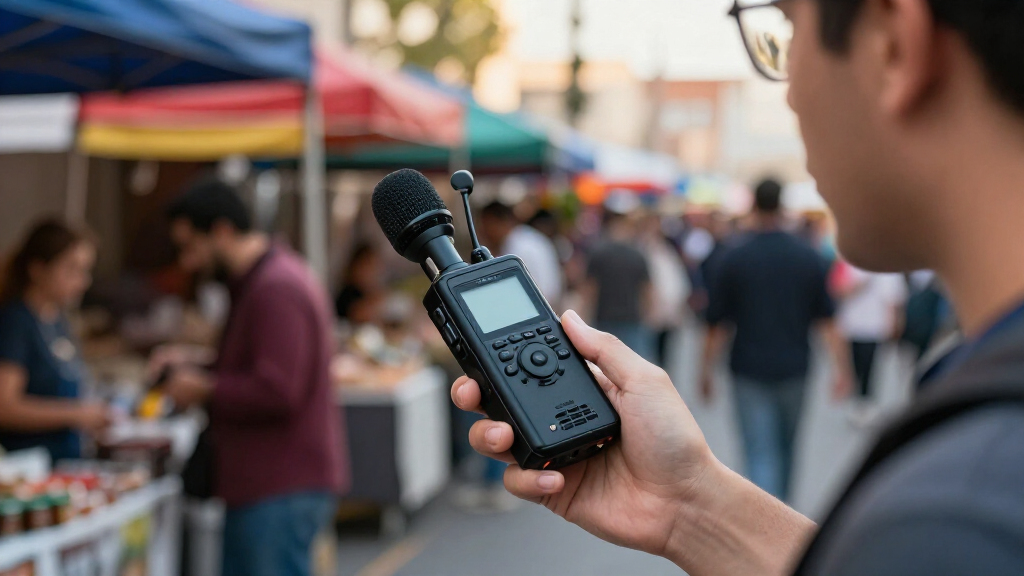
I ranked these portable field recorders by how well they match real location-recording jobs: capturing clear sound, adapting to different sources, and staying manageable to carry and operate. I weighed recording flexibility, input options, onboard microphone usefulness, portability, and handling simplicity alongside the role of bundled accessories. A recorder that suits interviews, ambience, and quick video work earns a broader recommendation than one built around a narrower setup.
The order reflects the range of buyers each model can serve, not a claim that every recorder has the same purpose. The H4essential ranks first for all-around flexibility, while the F3 and H1 XLR models rank for buyers who already know they need external-mic workflows. I treat bundles as convenience choices rather than upgrades to the recorder itself, and I distinguish the H1essential variations by their included accessories. Since several entries share a product family, I give more weight to meaningful differences in recording approach than to bundle labels.
| portable field recorder | Microphones |
|---|---|
| Zoom H1essential Handy Recorde | Built-in X/Y stereo |
| Xvive XV1-R Portable Stereo Au | Built-in X/Y directional microphones |
| Zoom H4essential Handheld Reco | Built-in stereo |
| Zoom H1essential 2-Track 32-Bi | X/Y stereo microphones |
| Zoom H1 XLR Recorder Bundle wi | — |
| Zoom H1essential Stereo Audio | Built-in X/Y stereo microphones |
| Zoom H1essential Handy Recorde | — |
| Zoom H1 XLR 2-Channel Handy Re | — |
| Zoom H2essential Handheld Reco | — |
| Zoom F3 Professional 2-Channel | — |
Factors to Consider When Choosing Portable Field Recorders
Before choosing, decide what the recorder needs to do on a typical outing, not what it might do in an unlikely future project. These broader choices help prevent paying for connections you will not use—or buying a compact unit that cannot support your microphone setup.
Choose the Recording Workflow Before the Recorder
Start by listing the sources you record most often: built-in microphones for quick capture, a lavalier for a speaker, or external microphones for a more deliberate setup. A handheld recorder can reduce setup time when you move between locations, while a recorder designed around external inputs is more useful when your microphones and placement drive the session. A common mistake is buying based on the maximum number of possible jobs rather than the job you do every week. If your work is mostly spontaneous ambience or notes, extra input options may add bulk without improving the result. If you regularly record multiple sources, a minimal pocket recorder can become a limitation. Match the device to the chain of equipment you actually plan to carry.
Treat 32-Bit Float as a Safety Net, Not a Sound Upgrade
32-bit float recording can give you more room to recover levels after capture, which helps when a source changes volume unexpectedly or you cannot monitor closely. It does not make a poorly placed microphone sound clear, remove wind, or fix room echo. Buyers sometimes focus on bit depth and overlook microphone position, wind protection, and handling noise. For controlled interviews, a stable mic position and consistent distance may matter more than extra level flexibility. For unpredictable outdoor sounds, headroom can be a valuable safeguard. Choose the feature for the recording conditions you face, rather than assuming it improves every recording automatically.
Plan Around the Microphone, Not Just the Recorder
Onboard microphones are convenient for quick stereo capture, but external microphones can offer better placement and a more suitable pickup pattern for a particular source. A lavalier keeps a speaker’s voice close and consistent, while a stand-mounted microphone can stay out of the operator’s hands. Do not assume a bundle solves every microphone need: a supplied accessory may be useful for one job and irrelevant for another. Check whether your preferred microphone connects directly or calls for an adapter, cable, or separate power arrangement. Also budget room in your kit for wind protection and a way to keep the recorder steady. The complete recording setup, not the recorder body alone, determines how ready you are to work.
Balance Portability Against Inputs and Controls
A smaller recorder is easier to carry and quicker to deploy, but compact designs can leave less room for controls and connections. More inputs and dedicated controls can simplify a multi-source session, yet they add setup decisions and may make a recorder less convenient for casual capture. Think about whether you will operate it while holding a camera, monitoring a conversation, or leaving it unattended in a fixed position. Buyers often overvalue a feature list without asking whether they can reach and adjust the controls in their actual setup. For bag-based recording, a slightly larger unit may be a worthwhile trade for connection flexibility. For pocket carry, simplicity and immediate access can matter more than expansion options.
Compare Bundles by What You Would Buy Separately
Accessory bundles can save packing time when they include items that suit your work, such as a case, windscreen, tripod, or lavalier microphone. They can also create clutter if you already own those items or prefer different accessories. Compare each bundle against the recorder-only version by making a list of what is genuinely missing from your kit. A windscreen is especially relevant for outdoor capture, while a lavalier is useful only if your recording involves a speaker and the connection fits your setup. Avoid choosing a bundle simply because its name sounds more complete. The recorder’s core capabilities should fit first; extras should be the deciding factor only when they solve a real need.
Frequently Asked Questions
Should I choose a handheld recorder or a model built around external microphones?
Choose a handheld model if you want a fast, self-contained way to capture sound using onboard microphones, with external connections as a secondary need. A recorder built around external microphones suits a planned setup where mic placement, cabling, or a dedicated audio chain matters more than pocket convenience. Think about how often you will record without extra gear; if that is most sessions, an external-mic-focused unit may slow you down. If you already own microphones and expect to use them on nearly every job, the added setup may be worthwhile. The best choice follows your normal workflow, not the most complex project you might take on.
Is a recorder bundle a better choice than buying the recorder on its own?
A bundle makes sense when its included accessories match your actual recording kit and save you from sourcing compatible items separately. A case or windscreen can be useful for field carry, while a lavalier only helps if you record a person and can connect it to your setup. Bundles do not change the underlying recorder’s features, so compare the core model before focusing on the extras. If you already own suitable accessories, a bundle may add duplicates rather than value. Make a short list of missing items and select the package that fills those gaps.
Can a portable recorder replace a camera’s audio input?
A portable recorder can capture audio separately and may offer more control or microphone flexibility than a camera’s built-in audio path. That approach also creates a synchronization step: you must align the separate sound with the video during editing unless your workflow records a reference signal. For short clips and quick social video, a direct camera connection may be simpler. For interviews, performances, or location sound where audio quality matters, separate recording can give you more placement options. Decide whether your editing process can accommodate syncing before building your kit around a separate recorder.
How much should I prioritize onboard microphones over input connections?
Prioritize onboard microphones if you need to record immediately, travel light, or capture stereo ambience without setting up additional equipment. Prioritize input connections if you already rely on lavaliers, directional microphones, or other external sources. Some buyers assume they can always add an external mic later, but connector compatibility and the practical burden of cables can affect portability. On the other hand, choosing a recorder only for its built-in microphones can restrict future mic placement options. Consider the source you record most often and how much setup time you can accept in the field.
Is 32-bit float worth choosing if I already know how to set recording levels?
It can still be useful when sound levels are unpredictable, but experienced level setting reduces how often you need that extra recovery room. If you record controlled interviews or music in a stable environment, careful gain choices and monitoring may be enough for your needs. For changing outdoor sources or fast-moving sessions, 32-bit float can reduce the risk of a recording that is difficult to recover after the fact. It does not replace monitoring, mic technique, or protection from wind and handling noise. Treat it as insurance for uncertain levels, not a reason to ignore the rest of the recording process.
Conclusion
For most buyers, I recommend the Zoom H4essential as the best overall because it balances broader recording flexibility with a portable handheld format. The Zoom H1essential is my best value and beginner-friendly choice for straightforward capture; select a bundle only when its accessories fit your kit. For a more demanding external-microphone workflow, the Zoom F3 is the best premium-style specialist pick in this lineup, while the H1 XLR models suit buyers who want a compact recorder centered on external microphones. Choose the H2essential for stereo ambience-focused work, or an H1essential lavalier bundle when recording a close-miked speaker is the specific need. The right pick is the one that fits your usual source and setup without adding gear you will not use.
Halloween Picks
halloween
As an affiliate, we earn on qualifying purchases.