
The best broadcast microphone for most home studios is the Shure SM7B, a well-known dynamic XLR option with a forgiving pickup pattern and a sound suited to close-mic speech. For a simpler computer setup, the RØDE PodMic USB adds USB and XLR connections, while the Shure MV7X offers a more direct route into XLR recording. The main tradeoff is between controlled speech pickup and easy setup: dynamic XLR microphones can help manage room noise, but they need compatible audio hardware and careful gain planning. USB and hybrid models are easier to connect, though they differ in flexibility and room-noise handling. Read on for how the 15 options compare and which one fits your recording space and workflow.

Get everyday essentials delivered free with Prime
- Fast, free delivery on millions of items
- Prime Video, Amazon Music and more included
- Member-only deals all year
Complete the kit

Key Takeaways
- The SM7B leads for a dedicated voice setup: it is the roundup’s strongest all-around fit for buyers prioritizing close-mic speech and a broadcast-oriented XLR workflow, but it calls for a compatible interface or mixer.
- Hybrid connectivity is a practical dividing line: the RØDE PodMic USB and FIFINE AM8 models let buyers choose between computer-friendly USB and XLR setups, while the SM7B, Procaster, and MV7X depend on an XLR signal chain.
- Dynamic designs dominate the speech-focused choices: most picks use dynamic capsules, reflecting the roundup’s emphasis on close speech and limiting unwanted room sound; the Sennheiser Profile and Blue Yeti offer different USB-oriented approaches.
- Specialized needs change the ranking: the Audio-Technica BPHS1 combines a headset and boom mic for live communication, while the MAONO PD200W stands apart for wireless flexibility.
- Similar names do not mean identical workflows: the standard RØDE PodMic is XLR-only, the PodMic USB adds USB connectivity, and the white PodMic is a color variation rather than a separate feature tier.
| Shure SM7B Dynamic Vocal Microphone |  | Best for Established Broadcast Setups | Connectivity: XLR | Microphone type: Dynamic | Polar pattern: Unidirectional cardioid | VIEW LATEST PRICE | See Our Full Breakdown |
| FIFINE AmpliGame AM8 USB/XLR Dynamic Microphone |  | Best Value for a Flexible Starter Setup | Connectivity: USB, XLR | Microphone type: Dynamic | Polar pattern: Unidirectional cardioid | VIEW LATEST PRICE | See Our Full Breakdown |
| Sennheiser Profile USB Cardioid Condenser Microphone with Table Stand |  | Best for Simple USB Recording | Connectivity: USB | Microphone type: Cardioid condenser | Polar pattern: Unidirectional | VIEW LATEST PRICE | See Our Full Breakdown |
| RØDE PodMic USB Dynamic Broadcast Microphone |  | Best Hybrid Broadcast Mic | Connectivity: USB-C, XLR | Polar pattern: Unidirectional | Frequency range: 20 Hz–20 kHz | VIEW LATEST PRICE | See Our Full Breakdown |
| Audio-Technica AT2040 Hypercardioid Dynamic Podcast Microphone |  | Best for Rejecting Off-Axis Noise | Connectivity: XLR | Microphone type: Dynamic | Polar pattern: Hypercardioid, unidirectional | VIEW LATEST PRICE | See Our Full Breakdown |
| RØDE Procaster Broadcast Dynamic Vocal Microphone |  | Best for a Traditional XLR Broadcast Setup | Microphone type: Dynamic | Polar pattern: Cardioid (unidirectional) | Connector: XLR3 | VIEW LATEST PRICE | See Our Full Breakdown |
| MAONO PD200W Hybrid Wireless Dynamic Podcast Microphone |  | Best for Wireless and Multi-Connection Flexibility | Microphone type: Dynamic | Polar pattern: Unidirectional | Connectivity: Wireless, USB, XLR | VIEW LATEST PRICE | See Our Full Breakdown |
| MXL BCD-1 Dynamic Broadcast and Podcast Microphone |  | Best for a No-Frills XLR Recording Chain | Microphone type: End-address dynamic | Polar pattern: Unidirectional | Connectivity: Wired | VIEW LATEST PRICE | See Our Full Breakdown |
| RØDE PodMic Cardioid Dynamic Broadcast Microphone | 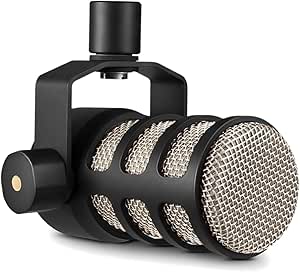 | Best for Speech-Focused Podcasting | Microphone type: Dynamic | Polar pattern: Unidirectional (cardioid) | Connectivity: XLR | VIEW LATEST PRICE | See Our Full Breakdown |
| Audio-Technica BPHS1 Broadcast Stereo Headset with Dynamic Cardioid Boom Microphone |  | Best for Live Announcing and Sports Coverage | Microphone type: Dynamic cardioid | Headphone type: Closed-back, circumaural | Microphone frequency response: 40 Hz–20 kHz | VIEW LATEST PRICE | See Our Full Breakdown |
| Logitech Blue Yeti USB Microphone, Blackout |  | Best for Flexible USB Recording | Connectivity: USB | Microphone design: Three-capsule array | Pickup patterns: Cardioid, omnidirectional, bidirectional, stereo | VIEW LATEST PRICE | See Our Full Breakdown |
| RØDE PodMic Cardioid Dynamic Broadcast Microphone, White |  | Best for Straightforward XLR Podcasting | Connectivity: XLR | Microphone type: Dynamic | Polar pattern: Unidirectional (cardioid) | VIEW LATEST PRICE | See Our Full Breakdown |
| Shure MV7X XLR Dynamic Podcast and Recording Microphone, Black |  | Best for Voice Isolation on a Budgeted XLR Setup | Connectivity: XLR | Microphone type: Dynamic | Polar pattern: Unidirectional cardioid | VIEW LATEST PRICE | See Our Full Breakdown |
| Electro-Voice RE20 Dynamic Broadcast Microphone, Black |  | Best for Professional Broadcast Voice Work | Connectivity: XLR | Microphone type: Dynamic | Polar pattern: Cardioid | VIEW LATEST PRICE | See Our Full Breakdown |
| FIFINE AmpliGame AM8T USB/XLR Dynamic Gaming Microphone Kit with Boom Arm |  | Best Starter Kit for USB-to-XLR Flexibility | Connectivity: USB, XLR | Microphone type: Dynamic | Polar pattern: Cardioid (unidirectional) | VIEW LATEST PRICE | See Our Full Breakdown |
| broadcast microphone | Connectivity | Microphone type | Polar pattern | Signal-to-noise ratio |
|---|---|---|---|---|
| Shure SM7B Dynamic Vocal Micro | XLR | Dynamic | Unidirectional cardioid | — |
| FIFINE AmpliGame AM8 USB/XLR D | USB, XLR | Dynamic | Unidirectional cardioid | 80 dB |
| Sennheiser Profile USB Cardioi | USB | Cardioid condenser | Unidirectional | 60 dB |
| RØDE PodMic USB Dynamic Broadc | USB-C, XLR | — | Unidirectional | 60 dB |
| Audio-Technica AT2040 Hypercar | XLR | Dynamic | Hypercardioid, unidirectional | 76 dB |
| RØDE Procaster Broadcast Dynam | Wired | Dynamic | Cardioid (unidirectional) | — |
| MAONO PD200W Hybrid Wireless D | Wireless, USB, XLR | Dynamic | Unidirectional | 82 dB |
| MXL BCD-1 Dynamic Broadcast an | Wired | End-address dynamic | Unidirectional | 78 dB |
| RØDE PodMic Cardioid Dynamic B | XLR | Dynamic | Unidirectional (cardioid) | 78 dB |
| Audio-Technica BPHS1 Broadcast | — | Dynamic cardioid | — | — |
| Logitech Blue Yeti USB Microph | USB | — | — | 100 dB |
| RØDE PodMic Cardioid Dynamic B | XLR | Dynamic | Unidirectional (cardioid) | 78 dB |
| Shure MV7X XLR Dynamic Podcast | XLR | Dynamic | Unidirectional cardioid | 72 dB |
| Electro-Voice RE20 Dynamic Bro | XLR | Dynamic | Cardioid | 78 dB |
| FIFINE AmpliGame AM8T USB/XLR | USB, XLR | Dynamic | Cardioid (unidirectional) | 80 dB |
More Details on Our Top Picks
Shure SM7B Dynamic Vocal Microphone
The SM7B is my pick for a treated studio or broadcast desk where vocal control matters more than plug-and-play convenience. Its cardioid pattern, shock isolation, and pop filtering help limit room spill, handling noise, and plosives, while the metal body is built for regular studio use. Compared with the RØDE PodMic USB, it offers a straightforward XLR-only signal path rather than USB recording and onboard digital processing. That simplicity suits buyers who already have a mixer or interface and want to shape the sound there. The tradeoff is a demanding gain requirement: the recommended 60 dB of gain can mean extra equipment or a suitable high-gain preamp. I would skip it as a first desktop mic if you want to connect directly to a computer.
Pros:- Cardioid pickup, shock isolation, and pop filtering help control room and handling noise.
- Warm, balanced vocal character with clear detail.
- Durable metal enclosure with electromagnetic shielding.
- Does not require phantom power.
Cons:- XLR connection requires a separate interface or mixer.
- Recommended gain of at least 60 dB can call for a capable preamp or additional gear.
- Heavy body may need a sturdy stand or boom arm.
Best for: Broadcasters and voice-over creators with an XLR interface or mixer that can provide ample clean gain.
Not ideal for: New podcasters seeking direct USB connection or buyers whose interface cannot provide the recommended gain.
- Connectivity:XLR
- Microphone type:Dynamic
- Polar pattern:Unidirectional cardioid
- Frequency response:50–20,000 Hz
- Impedance:150 ohm
- Recommended gain:At least 60 dB
- Power:Phantom power not required
- Weight:2.7 pounds
Our verdict“Choose the SM7B for a capable XLR broadcast setup focused on controlled vocals, and pass if you need an easy USB connection.”
FIFINE AmpliGame AM8 USB/XLR Dynamic Microphone
The FIFINE AmpliGame AM8 makes the most sense for a new streamer or podcaster who wants to start over USB and keep an XLR option for a later studio upgrade. In USB mode, tap-to-mute, headphone monitoring, and onboard gain and volume controls keep common adjustments close at hand. Its cardioid pattern helps reduce sound arriving from off-axis, though it still benefits from sensible mic placement and a quiet room. Compared with the XLR-only Shure SM7B, the AM8 is easier to connect to a computer and less dependent on a separate audio setup. The compromise is that its RGB lighting and function controls stop working in XLR mode, so those conveniences do not carry over to a mixer-based rig. An XLR cable is also not included.
Pros:- USB and XLR connections support both computer-first and interface-based setups.
- USB mode provides tap-to-mute and headphone monitoring.
- Built-in gain and volume controls simplify basic adjustments.
- Mounting threads fit common 3/8-inch and 5/8-inch stands.
Cons:- RGB lighting and onboard function controls are inactive in XLR mode.
- XLR cable is not included.
- USB feature set is tied to a desktop-style workflow.
Best for: First-time streamers and home podcasters who want USB convenience now with the option to move to XLR later.
Not ideal for: Broadcast users who need the same onboard controls in XLR mode or want an XLR cable included.
- Connectivity:USB, XLR
- Microphone type:Dynamic
- Polar pattern:Unidirectional cardioid
- Frequency response:50 Hz–16 kHz
- Signal-to-noise ratio:80 dB
- Channels:1
- Mounting threads:3/8 inch and 5/8 inch
- Included accessory:Windscreen
Our verdict“Pick the AM8 for an adaptable, control-rich USB starting point, but choose another mic if you need those controls over XLR.”
Sennheiser Profile USB Cardioid Condenser Microphone with Table Stand
The Sennheiser Profile is the clearest choice here for someone who wants a dedicated USB desktop mic without setting up an audio interface or separate control software. Its condenser capsule is designed for natural voice capture, while onboard gain, mix, volume, and mute controls make routine adjustments accessible at the mic. The included table stand and USB-C cable help get a basic setup running quickly. Unlike the dynamic FIFINE AmpliGame AM8, the Profile is USB-only, so it does not offer an XLR route for a later mixer-based broadcast chain. Its condenser design and cardioid pickup also make placement and room sound more relevant than they may be with a close-positioned dynamic mic. The table stand is convenient, but less flexible than a boom arm for keeping the mic near the speaker.
Pros:- USB plug-and-play setup requires no additional software.
- Onboard mute, gain, mix, and volume controls.
- Included table stand and USB-C cable provide a ready desktop setup.
- Metal construction.
Cons:- USB-only connectivity does not support an XLR upgrade path.
- Included table stand offers less positioning flexibility than a boom arm.
- Single-channel audio.
Best for: USB-first podcasters, streamers, and remote speakers who want onboard controls and an included desk stand.
Not ideal for: Broadcasters planning an XLR mixer workflow or speakers who need a highly adjustable boom-arm position.
- Connectivity:USB
- Microphone type:Cardioid condenser
- Polar pattern:Unidirectional
- Controls:Mute, gain, mix, volume
- Signal-to-noise ratio:60 dB
- Channels:1
- Included accessories:Table stand, 1.2 m USB-C cable
- Weight:717 g
Our verdict“Choose the Profile for straightforward USB speech recording with accessible controls, not for a modular XLR broadcast chain.”
RØDE PodMic USB Dynamic Broadcast Microphone
The RØDE PodMic USB earns its place as the most adaptable broadcast pick in this group: it can connect by USB-C for a computer setup or by XLR for a mixer-based chain. In USB mode, built-in APHEX processing and zero-latency headphone monitoring give speakers useful recording tools without requiring a separate interface. Its pop filter and internal shock mount also help manage plosives and mechanical vibration. Compared with the FIFINE AmpliGame AM8, this model emphasizes digital processing and monitoring rather than RGB lighting and desktop controls. The tradeoff is that the described processing is specifically for USB; buyers moving to XLR should plan on external processing. It is also a substantial metal microphone, so a suitable mount and placement matter.
Pros:- USB-C and XLR connectivity support different recording setups.
- APHEX digital signal processing is available over USB.
- Zero-latency headphone monitoring supports real-time listening.
- Pop filter and internal shock mount help control plosives and vibration.
Cons:- APHEX processing is specified for USB mode, not the XLR signal path.
- Metal construction may call for a sturdy mounting setup.
- Warranty is listed as one year unless extended through product registration.
Best for: Podcasters and broadcasters who want one dynamic mic for USB recording now and XLR studio use later.
Not ideal for: Buyers who need onboard digital processing through XLR or a very lightweight desktop microphone.
- Connectivity:USB-C, XLR
- Polar pattern:Unidirectional
- Frequency range:20 Hz–20 kHz
- Signal-to-noise ratio:60 dB
- Audible noise:94 dB
- Channels:1
- Enclosure material:Metal
- Included components:Pop filter, USB-C cable, pouch, swing mount
Our verdict“Choose the PodMic USB if you want a broadcast-style dynamic mic with both direct USB features and an XLR path.”
Audio-Technica AT2040 Hypercardioid Dynamic Podcast Microphone
The Audio-Technica AT2040 is the lineup’s focused choice for speakers who want a dynamic XLR mic with a tighter pickup area. Its hypercardioid pattern is intended to reduce sound from the sides and rear, which can help in a shared room or a modest home studio when the mic is positioned carefully. The large diaphragm, multistage windscreen, and integrated shock mount target the close, controlled vocal sound broadcast users often seek. Compared with the cardioid Shure SM7B, the AT2040’s narrower stated pickup pattern makes placement more directional, but it does not offer the same listed frequency-response detail or built-in pop-filter description. It is XLR-only, and the included mount and adapter do not amount to a stand or boom arm, so budget room and mounting setup accordingly.
Pros:- Hypercardioid pickup helps reduce side and rear noise when positioned carefully.
- Large diaphragm is designed for warm, natural vocals.
- Integrated shock mount and multistage windscreen help limit vibration and plosives.
- Includes pivoting mount, threaded adapter, and protective pouch.
Cons:- XLR connection requires a separate interface or mixer.
- No stand or boom arm is listed among the included accessories.
- The supplied frequency specification is limited to a 15 kHz figure.
Best for: Home podcasters and voice-over artists who need a directional XLR dynamic mic to limit side and rear room sound.
Not ideal for: USB-only creators, speakers who move around while recording, or buyers needing a stand included.
- Connectivity:XLR
- Microphone type:Dynamic
- Polar pattern:Hypercardioid, unidirectional
- Diaphragm:Large
- Frequency response:15 kHz
- Signal-to-noise ratio:76 dB
- Weight:2.2 pounds
- Included accessories:Pivoting stand mount, 5/8-inch to 3/8-inch threaded adapter, soft protective pouch
Our verdict“Choose the AT2040 for directional XLR voice recording in a noisy space, provided you already have a suitable stand and interface.”
RØDE Procaster Broadcast Dynamic Vocal Microphone
The RØDE Procaster suits broadcasters who want a purpose-built dynamic mic and already record through XLR. Its cardioid pattern helps limit sound arriving from the sides, while the internal pop filter and shock mount address plosives and handling noise without relying entirely on external accessories. Compared with the more connection-flexible MAONO PD200W, the Procaster is a straightforward wired choice: there is no wireless mode or USB connection, but there are fewer setup paths to manage. It also comes with a stand mount, adaptor, and pouch, unlike the MXL BCD-1, for which a stand is optional. Buyers should account for the need for an XLR interface or mixer, and its listed 1,500-ohm impedance is higher than the PodMic’s 150 ohms, so check compatibility with your signal chain.
Pros:- Internal pop filter helps reduce plosive bursts
- Internal shock mount helps limit handling noise
- Cardioid pattern helps reject sound from the sides
- Stand mount, 3/8-inch adaptor, and zip pouch are included
Cons:- Requires a wired XLR connection and compatible recording equipment
- Does not offer USB or wireless connectivity
- Listed 1,500-ohm impedance merits a compatibility check with the rest of the signal chain
Best for: Podcasters and voice-over creators with an XLR interface who want a dedicated cardioid dynamic mic with built-in pop and handling-noise measures.
Not ideal for: USB-first beginners or mobile hosts who want a plug-and-play or wireless connection without an XLR interface.
- Microphone type:Dynamic
- Polar pattern:Cardioid (unidirectional)
- Connector:XLR3
- Connectivity:Wired
- Frequency range:75 Hz–18 kHz
- Impedance:1,500 ohms
- Included accessories:Stand mount, 3/8-inch adaptor, zip pouch
- Warranty:1 year
Our verdict“Choose the Procaster if you have an XLR setup and want a broadcast-focused dynamic mic with useful noise-control features included.”
MAONO PD200W Hybrid Wireless Dynamic Podcast Microphone
The MAONO PD200W is the most adaptable connection choice in this group: it supports wireless, USB, and XLR, so a creator can choose a computer-friendly setup or connect to a traditional mixer. Its up-to-60-hour battery life with RGB lighting off and 60 m stated wireless range suit recording away from a desk, while app controls offer noise cancellation and sound adjustments. That flexibility sets it apart from the wired RØDE Procaster and MXL BCD-1, which depend on XLR connections. The tradeoff is a more involved setup: camera and Lightning accessories are sold separately, and recording with two microphones needs a compatible wireless setup. At 1.32 kg, it is also a substantial option for a portable rig. This is a better fit for creators who value connection choices than for buyers seeking a simple, fixed broadcast chain.
Pros:- Wireless, USB, and XLR connectivity support different recording setups
- Up to 60 hours of battery life with RGB lighting off
- Stated wireless range of up to 60 m
- App offers preset modes and EQ and reverb adjustments
Cons:- Camera and Lightning accessories are sold separately
- Two-microphone recording requires a compatible wireless setup
- At 1.32 kg, it is heavier than a simple desktop broadcast microphone
Best for: Podcast and streaming creators who switch between wireless recording, computer USB, and an XLR mixer, or need freedom to record away from a desk.
Not ideal for: Buyers seeking a lightweight, purely wired studio mic or a ready-to-use camera or Lightning setup without separate accessories.
- Microphone type:Dynamic
- Polar pattern:Unidirectional
- Connectivity:Wireless, USB, XLR
- Connectors:USB Type-C, XLR
- Signal-to-noise ratio:82 dB
- Maximum SPL:128 dB
- Wireless range:60 m
- Battery life:Up to 60 hours with RGB lighting off
- Weight:1.32 kg
Our verdict“Pick the PD200W if changing between wireless, USB, and XLR matters more than keeping your broadcast setup simple and lightweight.”
MXL BCD-1 Dynamic Broadcast and Podcast Microphone
The MXL BCD-1 makes sense for buyers who want a conventional XLR broadcast mic with noise-control features built into the body. Its internal shock mount and pop filter help address vibration and plosives, while side rejection can help keep unwanted sound from competing with a close-miked voice. Like the RØDE Procaster, it is a wired dynamic microphone that does not require phantom power; unlike the Procaster, the BCD-1 is sold as a microphone only, so a stand must be sourced separately. Its metal enclosure and compact 6.2-inch length suit a fixed desktop or studio setup, but the single-channel XLR connection is not a direct USB route to a computer. I would favor it over the more versatile MAONO PD200W for a pared-back wired chain, not for anyone who wants wireless convenience or bundled mounting hardware.
Pros:- Built-in pop filter helps reduce plosive sounds
- Built-in shock mount helps reduce handling noise
- Side rejection helps limit unwanted sound around the mic
- Dynamic capsule does not require phantom power
Cons:- Wired XLR connection requires compatible recording equipment
- Stand is optional and not included
- No USB or wireless connection
Best for: Home-studio podcasters and announcers who already own an XLR interface and stand and want a straightforward dynamic mic with built-in pop and shock control.
Not ideal for: USB-only creators, mobile hosts who need wireless recording, or buyers who want a stand included in the box.
- Microphone type:End-address dynamic
- Polar pattern:Unidirectional
- Connectivity:Wired
- Connector:XLR
- Impedance:600 ohms
- Signal-to-noise ratio:78 dB
- Enclosure material:Metal
- Dimensions:2 x 2 x 6.2 inches
- Warranty:1 year
Our verdict“Choose the BCD-1 for a simple XLR broadcast setup if you already have a stand and do not need wireless or USB.”
RØDE PodMic Cardioid Dynamic Broadcast Microphone
The RØDE PodMic is aimed squarely at speech, pairing a dynamic capsule with a cardioid pickup pattern and internal measures to reduce plosives and vibration. Its integrated swing mount gives it a more self-contained mounting setup than the MXL BCD-1, which is supplied without a stand, though the PodMic still needs a compatible arm or support. The listed 20 Hz–20 kHz frequency range is broader than the Procaster’s 75 Hz–18 kHz range, but those figures alone do not determine which voice will sound better. Both are wired XLR choices; the PodMic’s listed 150-ohm impedance is much lower than the Procaster’s 1,500 ohms. Neither connects directly by USB, so this model is best for someone prepared to use an interface or mixer rather than someone seeking the all-in-one flexibility of the MAONO PD200W.
Pros:- Speech-focused dynamic design with cardioid pickup
- Internal pop filter helps tame plosives
- Shock mounting helps reduce vibration
- Metal enclosure and integrated swing mount
Cons:- Requires an XLR interface or mixer
- Not a USB microphone
- A compatible arm or support is still needed
Best for: Podcast hosts and speech-focused broadcasters with an XLR interface or mixer who want a sturdy mic with an integrated swing mount and internal pop control.
Not ideal for: USB-only users, wireless presenters, or buyers who do not have an interface, mixer, or separate mic support.
- Microphone type:Dynamic
- Polar pattern:Unidirectional (cardioid)
- Connectivity:XLR
- Frequency range:20 Hz–20 kHz
- Impedance:150 ohms
- Signal-to-noise ratio:78 dB
- Weight:937 g
- Enclosure material:Metal
- Included accessory:Integrated swing mount
Our verdict“The PodMic fits speech creators who already have XLR recording gear and want an integrated-mount design rather than wireless or USB convenience.”
Audio-Technica BPHS1 Broadcast Stereo Headset with Dynamic Cardioid Boom Microphone
The Audio-Technica BPHS1 takes a different approach from the standalone RØDE and MXL microphones: it combines a cardioid boom mic with closed-back stereo headphones. That makes it a natural fit for announcers, interviewers, and sports coverage, where monitoring the program feed while speaking is part of the job. The boom can be positioned on either side, and the closed-back cups help reduce surrounding sound reaching the wearer. Unlike the RØDE PodMic, this is a complete headset rather than a desk microphone, but that convenience comes with a specialized connector arrangement: an 8-pin headset connector, separate XLR mic output, and 1/4-inch headphone output. Its 3.3 m cable supports a wired broadcast position but limits freedom of movement. Skip it if you need a general-purpose mic for a stationary podcast desk or a wireless headset.
Pros:- Combines a dynamic cardioid boom microphone with stereo headphones
- Closed-back ear cups help reduce background sound during monitoring
- Microphone boom can be positioned on either side
- Includes three windscreens and a spare connector screw
Cons:- Wired design and 3.3 m cable limit mobility
- Uses separate headset, microphone, and headphone connections
- Not water resistant
Best for: Sports commentators, live announcers, and interview hosts who need a boom microphone and closed-back monitoring headphones in one wired headset.
Not ideal for: Desk podcasters who already have headphones and want a standalone microphone, or mobile presenters who need a wireless connection.
- Microphone type:Dynamic cardioid
- Headphone type:Closed-back, circumaural
- Microphone frequency response:40 Hz–20 kHz
- Headphone frequency response:20 Hz–20 kHz
- Cable length:3.3 m (10.8 ft)
- Connectors:8-pin headset connector, 3-pin XLRM microphone output, 6.3 mm (1/4 in) TRS headphone output
- Weight:9.3 oz
- Included items:Three windscreens and spare connector screw
- Warranty:1 year
Our verdict“Choose the BPHS1 for live announcing or sports work when integrated headphone monitoring matters more than a standalone or wireless microphone.”
Logitech Blue Yeti USB Microphone, Blackout
The Blue Yeti is the most adaptable plug-and-play choice here: its four pickup patterns let one desktop mic handle solo voice work, two-person interviews, group calls, and stereo recording. That flexibility sets it apart from the RØDE PodMic and Shure MV7X, which use focused cardioid pickup and need an XLR connection. Onboard mute, gain, pattern, and headphone-volume controls make routine adjustments easy, while zero-latency monitoring helps you hear your voice without distracting delay. The tradeoff is its condenser design and open-pattern options: they suit varied setups, but are less purpose-built for isolating a single speaker than the dynamic broadcast models. Blue VO!CE effects also require Logitech G HUB, so the straightforward USB setup does not cover every software feature.
Pros:- Four pickup patterns support solo, interview, group, and stereo recording
- Onboard mute, gain, pattern, and headphone-volume controls
- USB setup and included desktop stand make it accessible without extra audio hardware
- No-latency headphone monitoring
Cons:- Condenser design and wider pickup patterns can capture more room sound than the cardioid dynamic PodMic or MV7X
- Blue VO!CE effects require installing Logitech G HUB
- USB-only connectivity limits use with conventional XLR mixers and interfaces
Best for: PC or Mac users who want one USB microphone for solo podcasting, calls, interviews, and occasional stereo recording without buying an audio interface.
Not ideal for: Broadcasters in noisy or untreated rooms who need a close-talk dynamic mic with focused voice pickup, or users who want XLR-based studio routing.
- Connectivity:USB
- Microphone design:Three-capsule array
- Pickup patterns:Cardioid, omnidirectional, bidirectional, stereo
- Frequency response:20 Hz–20 kHz
- Signal-to-noise ratio:100 dB
- Channels:2
- Construction:Metal enclosure
- Compatibility:PC and Mac
Our verdict“Choose the Blue Yeti if pickup-pattern flexibility and direct USB operation matter more than the room rejection and XLR workflow of a broadcast-focused dynamic mic.”
RØDE PodMic Cardioid Dynamic Broadcast Microphone, White
The RØDE PodMic is a practical broadcast-style pick for a host who wants a focused dynamic mic and already has an XLR interface or mixer. Its built-in pop filter helps tame plosive bursts, and an internal shock mount reduces vibration reaching the capsule—useful safeguards for close-up podcast recording. Compared with the Blue Yeti, it gives up USB convenience and multiple pickup patterns, but its cardioid dynamic design is better matched to a single speaker working close to the mic. The all-metal build and integrated yoke make it feel ready for a fixed desk or studio arm. This is a simpler proposition than the Electro-Voice RE20, which adds Variable-D control for proximity effects, but the PodMic still requires XLR gear and offers less flexibility if you change recording setups.
Pros:- Dynamic cardioid pickup is suited to focused, single-speaker broadcast use
- Built-in pop filter helps reduce plosive sounds
- Internal shock mount helps limit transmitted knocks and vibration
- All-metal construction with integrated yoke mount
Cons:- XLR connection requires a compatible interface or mixer
- Single cardioid pattern is less flexible than the Blue Yeti’s four patterns
- Does not provide the Variable-D proximity-effect control found on the RE20
Best for: Podcast hosts and home broadcasters with an XLR interface or mixer who want a sturdy, close-talk cardioid mic with built-in plosive and vibration control.
Not ideal for: USB-only beginners, multi-person recording setups needing selectable pickup patterns, or speakers who want more control over proximity effect than this model specifies.
- Connectivity:XLR
- Microphone type:Dynamic
- Polar pattern:Unidirectional (cardioid)
- Frequency response:20 kHz
- Signal-to-noise ratio:78 dB
- Audible noise:18 dB
- Weight:937 g
- Mounting:Integrated yoke mount with 3/8-inch and 5/8-inch threads
Our verdict“Pick the PodMic for a durable, no-frills XLR podcast setup with built-in plosive control, but skip it if you need direct USB recording or broader pattern choices.”
Shure MV7X XLR Dynamic Podcast and Recording Microphone, Black
The Shure MV7X suits broadcasters who need an XLR dynamic mic designed to keep attention on a close speaker. Its Voice Isolation Technology and integrated shock mount target room noise and handling vibration, making it a more focused choice than the multi-pattern Blue Yeti for a single-host desk setup. It shares the PodMic’s cardioid, XLR-only approach, but adds an adjustable yoke and supplied 3/8-inch adapter for mounting flexibility. The all-metal construction also fits regular studio use. The tradeoff is a conventional XLR workflow: unlike the Yeti or FIFINE AM8T, the MV7X cannot connect directly by USB, so a compatible interface or mixer is part of the setup. Its stated frequency range tops out at 16 kHz, which is narrower than the Yeti’s published range.
Pros:- Voice Isolation Technology is designed to reduce background room sound
- Integrated shock mount helps limit vibration
- XLR output works with audio interfaces and mixers
- All-metal build with adjustable yoke and included 3/8-inch adapter
Cons:- XLR-only connection requires compatible audio equipment
- Single cardioid pattern does not offer the Yeti’s multi-person and stereo options
- Published frequency range ends at 16,000 Hz
Best for: Solo podcasters and streamers with an XLR interface who record in imperfect rooms and want a dynamic mic built around close-voice isolation.
Not ideal for: USB-only creators, people recording several speakers around one mic, or buyers seeking a single microphone that can also connect directly to a computer.
- Connectivity:XLR
- Microphone type:Dynamic
- Polar pattern:Unidirectional cardioid
- Frequency response:50–16,000 Hz
- Signal-to-noise ratio:72 dB
- Channels:1
- Construction:All-metal
- Included adapter:3/8-inch
Our verdict“Choose the MV7X for an XLR voice setup that prioritizes isolating one speaker, not for USB convenience or multi-pattern recording.”
Electro-Voice RE20 Dynamic Broadcast Microphone, Black
The Electro-Voice RE20 is the most broadcast-specialized choice in this group for buyers building an XLR studio chain around controlled close-mic speech. Its Variable-D design is intended to reduce proximity effect, helping keep bass response more consistent as a speaker shifts distance; the internal pop filter and shock mount also address plosives and vibration. That makes it a step up in voice-control features from the RØDE PodMic and Shure MV7X, both of which offer simpler cardioid dynamic approaches. The cost of that specialization is a substantial, 2.9-pound metal microphone and a required XLR connection. It is less convenient than the Blue Yeti or FIFINE AM8T for computer-first creators, and the supplied product data does not list a frequency-response range.
Pros:- Variable-D design helps control proximity effect as speaking distance changes
- Internal pop filter helps reduce plosive noise during close recording
- Internal shock mount helps limit vibration noise
- Metal construction and a three-year warranty
Cons:- Requires an XLR connection and compatible audio equipment
- At 2.9 pounds, it is heavier than the other listed microphones
- Product data does not specify a frequency-response range
Best for: Radio presenters, voice-focused podcasters, and studio operators with XLR equipment who want a substantial broadcast mic with built-in proximity-effect and plosive control.
Not ideal for: USB-first creators, mobile recording setups, or anyone who needs a lightweight mic and a simple direct-to-computer connection.
- Connectivity:XLR
- Microphone type:Dynamic
- Polar pattern:Cardioid
- Form factor:Handheld
- Signal-to-noise ratio:78 dB
- Weight:2.9 pounds
- Dimensions:12 x 7 x 4 inches
- Warranty:3 years
Our verdict“Choose the RE20 for a dedicated XLR broadcast chain where controlled proximity effect matters more than portability or plug-and-play setup.”
FIFINE AmpliGame AM8T USB/XLR Dynamic Gaming Microphone Kit with Boom Arm
The FIFINE AmpliGame AM8T makes the most sense for a new creator who wants a mic, boom arm, and a choice of USB or XLR connection in one kit. USB supports a direct computer setup, while XLR offers a route to an interface or mixer later; that flexibility distinguishes it from the XLR-only RØDE PodMic and Shure MV7X. Its dynamic cardioid design, onboard mute and gain controls, and headphone monitoring are useful for close-up streaming and spoken-word recording. The included arm also frees desk space compared with the Blue Yeti desktop stand. This kit is less suited to formal broadcast rooms than the RE20, which adds Variable-D control, and the AM8T’s clamp only fits desks up to two inches thick. The XLR cable is not included.
Pros:- USB and XLR connectivity support both direct computer use and interface-based setups
- Includes adjustable boom arm, C-clamp, and windscreen
- On-mic mute, gain, and headphone monitoring controls
- Dynamic cardioid pickup is suited to focused, close-range speech
Cons:- XLR cable is not included
- Desk clamp only fits desktop thicknesses up to two inches
- Does not offer the RE20’s Variable-D feature for proximity-effect control
Best for: New streamers and podcasters who want a supplied boom arm, direct USB recording now, and the option to move to XLR equipment later.
Not ideal for: Professional broadcast studios seeking RE20-style proximity-effect control, creators with desks thicker than two inches, or buyers who expect an XLR cable in the kit.
- Connectivity:USB, XLR
- Microphone type:Dynamic
- Polar pattern:Cardioid (unidirectional)
- Frequency range:50 Hz–16 kHz
- Signal-to-noise ratio:80 dB
- Weight:2.6 lb
- Included accessories:Boom arm stand, C-clamp, 8.2 ft USB-to-USB-C cable, windscreen
- Desk clamp fit:Desktop thickness up to 2 in
Our verdict“Pick the AM8T if you want a flexible starter broadcast setup with a boom arm and USB-to-XLR options, provided its clamp fits your desk.”

How We Picked
I ranked these microphones around broadcast-style speech recording, not general-purpose studio use. The main criteria were voice-focused pickup, connection options, ease of getting a usable signal, compatibility with common desk setups, and how well each model’s design matches its intended work. I also weighed practical build and mounting considerations, since a mic that is awkward to position or needs extra gear can complicate regular recording.
The order reflects how broadly useful each option is for spoken-word creators, balanced against setup demands and specialization. The SM7B ranks first as a dedicated XLR voice mic; hybrid models score well for flexibility, while simpler USB choices make more sense for plug-and-play users. Headset, wireless, and gaming-kit models serve narrower needs, so they appear lower as general broadcast picks—not because those use cases lack value, but because they suit fewer workflows. I treat the white PodMic as a finish choice, not a distinct performance upgrade.
| broadcast microphone | Connectivity | Microphone type | Polar pattern |
|---|---|---|---|
| Shure SM7B Dynamic Vocal Micro | XLR | Dynamic | Unidirectional cardioid |
| FIFINE AmpliGame AM8 USB/XLR D | USB, XLR | Dynamic | Unidirectional cardioid |
| Sennheiser Profile USB Cardioi | USB | Cardioid condenser | Unidirectional |
| RØDE PodMic USB Dynamic Broadc | USB-C, XLR | — | Unidirectional |
| Audio-Technica AT2040 Hypercar | XLR | Dynamic | Hypercardioid, unidirectional |
| RØDE Procaster Broadcast Dynam | Wired | Dynamic | Cardioid (unidirectional) |
| MAONO PD200W Hybrid Wireless D | Wireless, USB, XLR | Dynamic | Unidirectional |
| MXL BCD-1 Dynamic Broadcast an | Wired | End-address dynamic | Unidirectional |
| RØDE PodMic Cardioid Dynamic B | XLR | Dynamic | Unidirectional (cardioid) |
| Audio-Technica BPHS1 Broadcast | — | Dynamic cardioid | — |
| Logitech Blue Yeti USB Microph | USB | — | — |
| RØDE PodMic Cardioid Dynamic B | XLR | Dynamic | Unidirectional (cardioid) |
| Shure MV7X XLR Dynamic Podcast | XLR | Dynamic | Unidirectional cardioid |
| Electro-Voice RE20 Dynamic Bro | XLR | Dynamic | Cardioid |
| FIFINE AmpliGame AM8T USB/XLR | USB, XLR | Dynamic | Cardioid (unidirectional) |
Factors to Consider When Choosing Broadcast Microphones
Before choosing a broadcast microphone, match the mic to your room, connection setup, and recording habits. A feature list alone can hide the costs of extra equipment, the limits of a noisy space, or the inconvenience of a mic that does not fit your desk routine.
Match the microphone to your room
Microphone type does not replace room treatment, but pickup behavior can affect how much unwanted sound reaches your recording. In a lively room with hard surfaces, a close-positioned dynamic mic is often easier to manage than a sensitive setup used farther away. A quieter, treated space gives you more freedom to choose based on tone and workflow instead. Common mistakes include buying a mic for its reputation and then speaking too far from it, which can make the room more audible and the voice less consistent. Plan where the mic will sit and how close you can comfortably speak before choosing a model.
Count the whole signal chain
An XLR microphone is only one part of a recording system: you also need an interface or mixer, a suitable cable, and enough clean gain for the mic. That extra hardware can offer control and future flexibility, but it adds setup steps and desk space. USB models connect more directly to a computer, while hybrid microphones can preserve an XLR path for later expansion. Check that your computer, streaming software, and any console or mobile device support the connection you intend to use. Avoid treating USB/XLR labeling as a promise that every feature works identically across both modes.
Choose for your recording distance and movement
Broadcast mics generally reward consistent positioning, so think about whether you will stay seated at a desk, move during a show, or share a mic with other speakers. A boom arm can bring a mic close without taking up the center of the desk, but it must support the microphone and keep it stable. Headset microphones suit presenters who need hands-free movement, while wireless designs trade a fixed cable for battery and signal-management concerns. If you frequently lean back or turn away, a mic that depends on close, steady placement may demand more adjustment than you expect. Consider your actual speaking posture rather than a studio photo.
Decide how much setup you want to manage
Plug-and-play convenience matters most when recording needs to start quickly or when several people use the same computer. USB microphones reduce the number of separate components, though software settings and monitoring still need attention. XLR setups can be more adaptable for mixers, multi-mic sessions, and future equipment changes, but they require more initial configuration. Hybrid models bridge those approaches, yet buyers should check which connection they will use day to day instead of paying attention only to the number of ports. Choose the simplest workflow that still supports your planned recording format.
Budget for mounting and monitoring
The microphone itself may not complete a desk setup. Some models include a table stand or boom arm, while others need a separate mount, and the right choice depends on desk depth, keyboard position, and available space. A stable mount helps keep distance consistent and can reduce handling noise from bumps or adjustments. Closed-back headphones are also useful for checking levels and spotting noise before a session, especially when monitoring through an interface or software. Compare the complete setup you need, not just the microphone body.
Prioritize the features you will keep using
Paying for added flexibility makes sense when it solves a real workflow problem, such as needing both USB and XLR or recording away from a fixed desk. It makes less sense when the extra connection, wireless function, or kit accessory will sit unused. New creators often benefit more from a reliable, easy-to-position setup than from complex controls they have not learned to use. Established presenters may value XLR compatibility and integration with existing mixers more than quick computer connection. Write down your must-haves and one likely future change, then choose a mic that covers both without adding features for their own sake.
Frequently Asked Questions
Do I need an audio interface for a broadcast microphone?
You need an interface or mixer for an XLR-only mic such as the SM7B, Procaster, or MV7X. A USB microphone can connect directly to a computer, so it is often the simpler starting point. Hybrid models offer both routes, but each connection still has its own setup requirements. Before buying an XLR mic, check that your interface has a suitable mic input and enough gain for your intended recording level. If you already own a mixer or interface, XLR may fit your setup better than adding another USB device.
Will a dynamic microphone remove background noise in a home office?
No microphone can remove room noise by itself. Dynamic broadcast mics are commonly used close to the speaker, which can make the voice more prominent relative to sounds farther away, but keyboard clicks, fans, and reflections may still be audible. Placement, speaking distance, gain settings, and room treatment all affect the result. A mic positioned too far away can pick up more of the room and make the recording sound less focused. Address loud sources and keep a consistent close-mic position before relying on software cleanup.
Should I choose USB, XLR, or a microphone with both?
USB is a straightforward choice if you record directly to a computer and want fewer separate components. XLR is better suited to buyers who already use an interface or mixer, or who want to build a more adaptable audio setup. A hybrid model can cover both situations, but it may add cost and controls you do not need if you will only use one connection. Check compatibility with your recording device and software, especially if you plan to use a console or mobile setup. Choose based on your current workflow and a realistic upgrade plan.
Is the RØDE PodMic USB meaningfully different from the standard PodMic?
Yes: the PodMic USB offers USB as well as XLR connectivity, while the standard PodMic is an XLR model. That makes the USB version more flexible for someone starting with direct computer recording who may later add an interface. The standard version makes more sense if an XLR signal chain is already part of your setup. The white PodMic listed here is a color variation of the standard model, not a separate connectivity option. Compare connection needs first, then choose a finish if the models otherwise fit your workflow.
Can I use a broadcast microphone for gaming and live streaming?
Yes, several options in this roundup can work for streaming, but the best fit depends on your desk and how much equipment you want. USB and hybrid models can reduce setup friction for a computer-based stream, while XLR mics can connect through an interface or mixer for more hands-on control. A boom arm can free desk space and keep the mic close, though it adds a mounting requirement. If you move around or need hands-free communication, a headset or wireless option may suit you better than a fixed desk mic. Check monitoring and software compatibility as well as the microphone connection.
Conclusion
For a dedicated spoken-word setup, I recommend the Shure SM7B as the best overall, provided you have the XLR gear and gain planning it needs. The FIFINE AmpliGame AM8 is my best value and beginner-friendly direction for buyers who want USB/XLR flexibility without starting with a full studio chain. Choose the RØDE PodMic USB if you want one mic that can serve a direct computer setup and a later XLR workflow; for a more established premium XLR setup, compare the Electro-Voice RE20 and SM7B around your recording space and equipment. The Audio-Technica BPHS1 is the specialist pick for headset-based live work, while the MAONO PD200W is the one to examine when wireless operation matters most. Start with your room and connection needs, then choose the microphone that fits the way you will actually record.