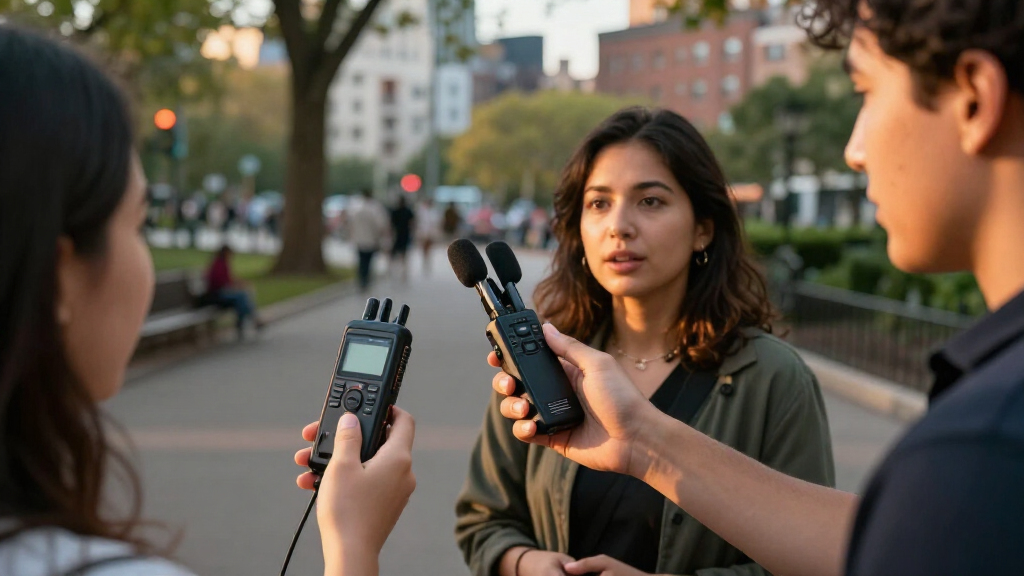

When it comes to portable audio recorders, choosing the right device depends on your specific needs, whether it’s for interviews, music, or lectures. The Zoom H1 Essential stands out as the overall best for its versatility and sound quality. For those who prioritize large storage capacity, the Elasound Voice-Activated Recorder offers 128GB with advanced noise reduction. Meanwhile, budget-conscious buyers might prefer the 8GB USB Digital Audio Recorder for simple, straightforward recordings. All options involve tradeoffs between storage, features, and ease of use. Keep reading to explore each product’s strengths and weaknesses to find your perfect fit.

Get everyday essentials delivered free with Prime
- Fast, free delivery on millions of items
- Prime Video, Amazon Music and more included
- Member-only deals all year
Key Takeaways
- Top picks balance storage capacity with usability; larger storage is essential for extended recordings.
- Sound quality and noise reduction features significantly impact recording clarity, especially in noisy environments.
- Portability and form factor vary, with some models favoring compactness over expanded features.
- Additional functionalities like transcription, playback options, and connectivity can add value for specific use cases.
- Price ranges reflect tradeoffs; more affordable options often lack advanced noise reduction and extensive storage.
| 8GB USB Digital Audio Recorder 2-in-1 for Meetings, Interviews, Lectures – 96 Hours Storage |  | Best for Quick, On-the-Go Recordings with Easy File Transfer | Compatible Devices: Personal Computer | Hardware Interface: USB 2.0 | Microphone Form Factor: Built-In | VIEW LATEST PRICE | See Our Full Breakdown |
| Digital Voice Recorders 8GB Audio Recorder Voice Activated Recorder for Lectures, Meetings, Interviews Recording Device with Microphone USB Cable, MP3 Player (8GB) |  | Best for High-Quality, Voice-Activated Recordings with Playback Flexibility | Compatible Devices: Personal Computer | Hardware Interface: Micro USB | Microphone Form Factor: Built-In | VIEW LATEST PRICE | See Our Full Breakdown |
| Zoom H1 Essential Recorder Bundle with Case, Windscreens & Tripod |  | Best for Professional-Grade Audio Capture and Creative Flexibility | Compatible Devices: Camera, PC, Smartphone | Hardware Interface: 3.5mm Audio, USB Type C | Microphone Form Factor: X/Y Microphone | VIEW LATEST PRICE | See Our Full Breakdown |
| Elasound Voice-Activated Recorder with 128GB Storage and Triple Noise Reduction |  | Best for Long-Form, High-Volume Recordings with Noise Suppression | Brand: Elasound | Storage: 128GB TF card | Recording Capacity: Up to 9800 hours | VIEW LATEST PRICE | See Our Full Breakdown |
| EVISTR L357 64GB Digital Voice Recorder with Playback, Voice‑Activated, Portable Mini, USB Type‑C, MP3/WAV |  | Best for Compact, Durable Recordings with Easy File Management | Storage Capacity: 64 GB | Battery Type: Lithium Polymer | Battery Life: 100 hours standby / 32 hours recording | VIEW LATEST PRICE | See Our Full Breakdown |
| EVIDA 128GB Digital Voice Recorder with Voice Activation and Playback |  | Best for Long-Term Lecture Archives | Storage: 128 GB | Recording formats: WAV, MP3 | Maximum bitrate: 1536 Kbps | VIEW LATEST PRICE | See Our Full Breakdown |
| Zoom H1 XLR 2-Channel Recorder for Filmmakers, Musicians & Podcasters |  | Best for External Microphone Setups | Recording format: WAV | Recording mode: 32-bit float, up to 96 kHz | Microphone inputs: 2 locking XLR/TRS combo inputs | VIEW LATEST PRICE | See Our Full Breakdown |
| Digital Voice Recorder 16GB with Playback for Lectures, USB Rechargeable, Compact Tape Recorder |  | Best for First-Time Recorder Buyers | Storage: 16 GB | Recording format: WAV | Battery life: 30 hours | VIEW LATEST PRICE | See Our Full Breakdown |
| Cappsu Digital Voice Recorder with Playback, 32GB Built-in Memory |  | Best Compact Voice-Activated Pick | Storage: 32 GB built-in | Recording quality: Up to 1536 Kbps | Continuous battery life: 20 hours | VIEW LATEST PRICE | See Our Full Breakdown |
| Tonfarb 64GB Digital Voice Recorder with Playback |  | Best for Organized Daily Recording | Storage: 64 GB | Recording formats: WAV, MP3 | Maximum audio quality: Up to 1536 kbps PCM | VIEW LATEST PRICE | See Our Full Breakdown |
| Zoom H4 Essential Handheld Recorder for Musicians, Podcasters & Filmmakers |  | Best Overall for Versatility and High-Quality 4-Track Recording | Compatible Devices: Laptop, Personal Computer, Smartphone, Tablet | Hardware Interface: Secure Digital Card, USB Microphone | Form Factor: Built-In | VIEW LATEST PRICE | See Our Full Breakdown |
| EVISTR Digital Voice Recorder 128GB with AI Transcription & Summarization |  | Best for Students and Professionals Who Need Smart Transcription | Storage Capacity: 128 GB | Audio Format: MP3, WAV | Recording Time: 33 hours | VIEW LATEST PRICE | See Our Full Breakdown |
| Tonfarb 136GB Digital Voice Recorder with Playback, 9775 Hours Audio Recording |  | Best for Long-Duration Recording and Extended Sessions | Memory Storage Capacity: 136 GB | Battery: 1100mAh rechargeable lithium | Battery Life: 68 hours | VIEW LATEST PRICE | See Our Full Breakdown |
| Pexqil 136GB AI Noise Reduction Voice Activated Recorder with OTG Transfer |  | Best for Ultra-Lightweight, High-Capacity, Voice-Activated Recording | Compatible Devices: MP3 Player | Hardware Interface: USB Type C | Microphone Form Factor: Built-In | VIEW LATEST PRICE | See Our Full Breakdown |
| Zoom H1 Essential Recorder for Musicians, Podcasters & Content Creators |  | Best Budget-Friendly for Beginners and Casual Creators | Compatible Devices: Camera, Personal Computer, Smartphone | Hardware Interface: USB Type C | Microphone Form Factor: X/Y Microphone | VIEW LATEST PRICE | See Our Full Breakdown |
More Details on Our Top Picks
8GB USB Digital Audio Recorder 2-in-1 for Meetings, Interviews, Lectures – 96 Hours Storage
This compact device stands out for combining a voice recorder and a USB flash drive, making it an excellent choice for users who want simplicity and portability. Compared with larger standalone recorders like the Zoom H1, this model’s dual function minimizes bulk and streamlines file management, though it sacrifices some recording quality and monitoring features. Its 96-hour recording capacity is sufficient for most interviews or meetings, but the limited internal storage means frequent file transfers are necessary for longer sessions. The plug-and-play design ensures quick setup with most computers, ideal for students and professionals needing fast, hassle-free recordings. However, the absence of a headphone jack limits real-time monitoring, which some users may find restrictive during live recordings.
Pros:- Dual functionality as a USB flash drive and voice recorder
- Long 96-hour recording capacity
- Plug-and-play compatibility with most computers
- Lightweight and portable for on-the-go use
Cons:- No headphone jack limits real-time monitoring
- Limited internal storage may require frequent file management
Best for: Travelers and students who need an ultra-light, all-in-one device for quick recordings and easy file sharing.
Not ideal for: Audio professionals requiring high-fidelity recordings or real-time monitoring, as this device lacks advanced audio controls and a headphone jack.
- Compatible Devices:Personal Computer
- Hardware Interface:USB 2.0
- Microphone Form Factor:Built-In
- Memory Storage Capacity:8 GB
- Digital Recording Time:96 hours
- Warranty:1 Year
Our verdict“This device is perfect for users seeking a simple, portable recorder with quick transfer capabilities for everyday use.”
Digital Voice Recorders 8GB Audio Recorder Voice Activated Recorder for Lectures, Meetings, Interviews Recording Device with Microphone USB Cable, MP3 Player (8GB)
This recorder excels in delivering high-definition stereo sound thanks to its upgraded microphone and noise reduction tech, making it ideal for capturing detailed audio in noisy environments. Unlike the EVISTR L357, which offers larger storage, this device’s 8GB capacity requires careful management of recordings, but it compensates with features like voice activation and adjustable recording sensitivity that help save space and focus on important sounds. Its simple three-button operation streamlines quick recording, and the MP3/WAV support makes file transfer and playback straightforward. However, the small screen can be frustrating for navigating menus, and the lack of wireless connectivity limits remote control or streaming options.
Pros:- High-definition stereo recording with noise reduction
- Voice-activated recording reduces silent gaps
- Supports MP3/WAV formats for easy transfer
- Simple three-button operation for quick use
Cons:- Limited internal storage requires careful file management
- Small display makes menu navigation less convenient
Best for: Students and journalists who need reliable, high-quality voice recordings with basic playback features.
Not ideal for: Long-form recording users or those requiring large storage, since its 8GB capacity may fill quickly during extended sessions.
- Compatible Devices:Personal Computer
- Hardware Interface:Micro USB
- Microphone Form Factor:Built-In
- Format:MP3, WAV
- Digital Recording Time:128 hours
- Battery Average Life:20 hours
Our verdict“This recorder offers superior sound quality and smart features for on-the-go interviews and lectures, suited for users prioritizing audio clarity over capacity.”
Zoom H1 Essential Recorder Bundle with Case, Windscreens & Tripod
The Zoom H1 bundle stands out for its high-quality X/Y microphones and 32-bit float recording, making it a top choice for content creators, musicians, and journalists who need clear, natural sound. Compared to smaller, simpler recorders like the EVISTR L357, the H1 offers advanced features such as professional-grade stereo recording and a more versatile microphone setup, though it requires two AAA batteries and has a small screen that may hinder detailed navigation. Its included accessories, like the case and tripod, support flexible recording setups in various environments. This model is less suited for casual users or those seeking a lightweight, minimal device, as it’s slightly bulkier and more complex to operate.
Pros:- High-quality X/Y stereo microphones
- 32-bit float recording prevents clipping
- Includes protective case and tripod for flexible use
- Suitable for capturing natural, detailed sound
Cons:- Requires 2 AAA batteries, which need purchasing separately
- Small screen can make detailed menu navigation cumbersome
Best for: Content creators and field recordists who require professional audio quality and versatile accessories.
Not ideal for: Casual or beginner users seeking a simple, pocket-sized recorder without extra accessories or advanced features.
- Compatible Devices:Camera, PC, Smartphone
- Hardware Interface:3.5mm Audio, USB Type C
- Microphone Form Factor:X/Y Microphone
- Format:WAV
- Headphones Jack:3.5mm
- Item Dimensions:5.38″D x 2.12″W x 1.14″H
Our verdict“This bundle appeals to serious content creators needing professional sound quality and flexible recording options despite its slightly larger size.”
Elasound Voice-Activated Recorder with 128GB Storage and Triple Noise Reduction
The Elasound NZ007 offers massive storage and advanced noise reduction, making it ideal for long interviews, lectures, or meetings where clarity and capacity are priorities. Its voice activation and one-touch recording streamline operation, while its 128GB storage supports up to 9800 hours of audio at low bitrates. Compared with the EVISTR L357, which has a smaller capacity, this device excels in handling extended sessions without frequent file management. However, its inconsistent storage capacity listing and lack of independent review for noise reduction effectiveness leave some questions about performance under challenging conditions. Its bulkier size and feature set might be overkill for casual users.
Pros:- 128GB storage supports long recordings
- Voice activation and one-touch operation
- Triple noise reduction enhances clarity
- Includes multiple adapters and accessories
Cons:- Inconsistent storage capacity listing
- Bulkier dimensions may reduce portability
- Noise reduction performance not independently verified
Best for: Professionals and researchers needing extensive recording capacity with noise reduction in demanding environments.
Not ideal for: Casual users or those who prefer compact devices for quick, short recordings, due to its larger size and complex feature set.
- Brand:Elasound
- Storage:128GB TF card
- Recording Capacity:Up to 9800 hours
- Continuous Recording Battery Life:Up to 100 hours
- Connectivity:USB Type-C
- Headphone Jack:3.5mm
Our verdict“This recorder is well-suited for long, high-volume recordings where noise suppression and capacity are critical, despite its larger size and some uncertainty about noise reduction efficacy.”
EVISTR L357 64GB Digital Voice Recorder with Playback, Voice‑Activated, Portable Mini, USB Type‑C, MP3/WAV
The EVISTR L357 combines a durable metal case with a sizable 64GB of storage, making it a strong choice for users who want a compact device with long recording times. Its voice-activation feature, with seven sensitivity levels, helps optimize storage by reducing silent gaps, similar to the Zoom H1 but with a more straightforward two-button operation. Its 1-inch screen, however, can make menu navigation less efficient, especially in low-light conditions. While lacking wireless features like Bluetooth, the USB Type-C port ensures fast file transfers, making it suitable for students, journalists, or field reporters who need a rugged recorder for everyday use.
Pros:- Large 64GB internal memory
- Voice-activated recording with multiple sensitivity levels
- Durable metal construction
- USB Type-C fast charging and file transfer
Cons:- Small 1-inch screen hampers menu navigation
- No wireless or Bluetooth connectivity
Best for: Field reporters and students who need a durable, easy-to-use recorder with ample storage and fast transfer speeds.
Not ideal for: Users who prefer larger, feature-rich devices or need wireless streaming, due to its small screen and wired connectivity.
- Storage Capacity:64 GB
- Battery Type:Lithium Polymer
- Battery Life:100 hours standby / 32 hours recording
- Recording Time:107 hours
- Dimensions:0.47″ D x 1.2″ W x 3.86″ H
- Microphone:Stereo with noise reduction
Our verdict“This compact, rugged recorder with long battery life is ideal for users needing dependable, high-capacity recordings in the field or classroom.”
EVIDA 128GB Digital Voice Recorder with Voice Activation and Playback
The EVIDA is the strongest fit here when recording capacity matters more than connecting external microphones. Its 128GB storage is four times the Cappsu V02’s built-in memory, giving students or interviewers more room before transferring files. Voice activation can also help conserve space by skipping silence, while WAV and MP3 support let you choose between fuller recordings and smaller files. The mono built-in microphone and noise cancellation suit spoken notes, but they do not offer the placement options or two XLR/TRS inputs of the Zoom H1 XLR. Its listed 54-hour continuous recording time is useful for extended use, though the required C battery and lack of a headphone jack make day-to-day power and playback less convenient. I’d choose it for long archives, not for production work.
Pros:- 128GB of built-in storage for large recording libraries
- Voice activation can reduce silent passages and conserve storage
- Records in both WAV and MP3 formats
- Password protection and bookmarks help organize and protect recordings
Cons:- Mono built-in microphone offers less flexibility than the Zoom H1 XLR’s external inputs
- No headphone jack for direct monitoring or playback
- Requires a C battery
Best for: Students, researchers, and interviewers who want substantial built-in storage for many voice recordings
Not ideal for: Filmmakers and musicians who need external microphone inputs or headphone monitoring
- Storage:128 GB
- Recording formats:WAV, MP3
- Maximum bitrate:1536 Kbps
- Continuous recording time:Up to 54 hours
- Microphone:Built-in mono with noise cancellation
- Display:1.5 inches
- Interface:USB 2.0
- Dimensions:2.59 × 0.41 × 0.77 inches
- Weight:3.35 ounces
Our verdict“Choose the EVIDA if you need ample built-in space for spoken recordings and can work without external mic inputs or headphone monitoring.”
Zoom H1 XLR 2-Channel Recorder for Filmmakers, Musicians & Podcasters
The Zoom H1 XLR serves buyers whose recorder needs to be the hub for a small audio setup. Its two locking XLR/TRS inputs accept microphones or instruments, making it far more adaptable for interviews, music, and camera audio than the built-in-mic EVIDA or Cappsu V02. The 32-bit float recording mode is designed to give more headroom when levels vary, while the waveform display helps you check incoming audio on the device. A 3.5mm input and headphone output add useful connections for compact rigs. This flexibility comes with a practical tradeoff: you must bring and connect compatible microphones, and the listed battery life is 10 hours. It also records to SDXC cards rather than internal memory. I’d pick it for a mic-based setup, not simple pocket voice notes.
Pros:- Two locking XLR/TRS combo inputs support external microphones and instruments
- 32-bit float recording helps accommodate changing input levels
- Waveform display gives a visual check of recorded audio
- 3.5mm input and headphone output support compact monitoring setups
Cons:- Requires external microphones for many recording setups
- Listed battery life is 10 hours, shorter than the voice-focused EVIDA’s stated 54 hours
- Uses SDXC cards rather than built-in memory
Best for: Filmmakers, podcasters, and musicians who need a compact recorder with two mic or instrument inputs
Not ideal for: Students seeking a self-contained, one-button recorder with large built-in storage
- Recording format:WAV
- Recording mode:32-bit float, up to 96 kHz
- Microphone inputs:2 locking XLR/TRS combo inputs
- Additional audio connection:3.5mm stereo input and headphone output
- Storage:SDXC cards up to 1 TB
- Display:0.96-inch OLED
- Battery life:10 hours
- Power:2 AA batteries required
- Weight:6.4 ounces
Our verdict“Choose the Zoom H1 XLR when external mic connections and recording flexibility matter more than pocket-simple operation.”
Digital Voice Recorder 16GB with Playback for Lectures, USB Rechargeable, Compact Tape Recorder
This 16GB recorder keeps the task simple: its one-button operation makes it easier to start capturing a lecture or meeting without sorting through a feature-heavy interface. The mono microphone and noise cancellation are aimed at speech, and the 3.5mm headphone jack lets you listen back directly. It is a more straightforward starter option than the EVIDA, which adds password protection, bookmarks, and much more storage. That simplicity also sets a limit: the EVIDA’s 128GB is a better match for someone building a large archive, while the Zoom H1 XLR is the clear choice for external microphones. This model is listed with 30 hours of battery life and WAV recording, but its mono mic and lack of external mic support constrain more demanding uses.
Pros:- One-button operation makes starting a recording straightforward
- Noise cancellation is suited to spoken material
- 3.5mm headphone jack supports direct playback
- USB connection supports file transfer to a computer
Cons:- 16GB storage is limited compared with the EVIDA’s 128GB
- Mono microphone does not capture stereo space
- No built-in support for an external microphone
Best for: Students and meeting attendees who want a simple recorder for speech and occasional playback
Not ideal for: Interviewers or creators who need stereo capture, external microphones, or extensive built-in storage
- Storage:16 GB
- Recording format:WAV
- Battery life:30 hours
- Microphone:Mono with noise cancellation
- Headphone jack:3.5 mm
- Interface:USB
- Dimensions:0.5 × 1.4 × 3.3 inches
- Weight:35 g
Our verdict“Choose this model for uncomplicated lecture and meeting recordings, provided mono capture and 16GB storage are enough.”
Cappsu Digital Voice Recorder with Playback, 32GB Built-in Memory
The Cappsu V02 is a pocket-friendly choice for people who want to start recording quickly and let voice activation handle quiet gaps. At 1.6 ounces, it is lighter than the EVIDA, and its USB-C interface is a convenient modern connection for transferring files. The built-in 32GB memory avoids the need to manage a separate card, though it gives you less room than the EVIDA’s 128GB. Its stated voice-activated runtime reaches 50 hours, but continuous recording is listed at 20 hours, so buyers should distinguish between those two use patterns. The built-in microphone keeps setup simple for lectures and notes; unlike the Zoom H1 XLR, it cannot take external microphones. Fixed storage and a nonstandard included battery make it less adaptable for long-term or professional recording workflows.
Pros:- Lightweight 1.6-ounce body is easy to carry
- Voice-activated mode can extend listed runtime and save space during silence
- Built-in 32GB memory requires no separate card
- USB-C and 3.5mm headphone jack provide useful everyday connections
Cons:- Storage is fixed at 32GB, less than the EVIDA’s 128GB
- Built-in microphone only, with no external mic input
- Continuous recording time is listed as 20 hours, well below its voice-activated figure
Best for: Commuters, students, and note-takers who want a light recorder with voice-triggered capture
Not ideal for: People recording long uninterrupted sessions or using external microphones who need expandable capacity
- Storage:32 GB built-in
- Recording quality:Up to 1536 Kbps
- Continuous battery life:20 hours
- Voice-activated battery life:Up to 50 hours
- Microphone:Built-in
- Interface:USB-C
- Headphone jack:3.5 mm
- Dimensions:4.16 × 1.46 × 0.47 inches
- Weight:1.6 ounces
Our verdict“Choose the Cappsu for lightweight, voice-triggered note-taking, but look to the Zoom H1 XLR for external-mic work or the EVIDA for a larger archive.”
Tonfarb 64GB Digital Voice Recorder with Playback
The Tonfarb balances capacity and everyday controls for buyers who record regularly and want files they can manage on the device. Its 64GB storage lands between the EVIDA’s 128GB and the Cappsu V02’s 32GB, while the 1.44-inch screen, one-click recording, voice activation, and password protection cover common lecture and interview needs. Stereo microphone operation is a useful step up from the mono EVIDA and the 16GB starter recorder, though it still lacks the Zoom H1 XLR’s external input flexibility. The stated 48-hour use time is substantial, but power details are mixed: the listing describes a 600mAh battery and also specifies one AAA battery. Buyers should confirm the actual power arrangement before relying on it for long sessions. I’d favor it for organized speech recording, not complex production.
Pros:- 64GB capacity sits between the Cappsu V02 and EVIDA in the lineup
- Stereo microphone operation suits speech with more spatial detail than mono models
- One-click recording and voice activation support quick capture
- Password protection and playback functions aid private, organized use
Cons:- Power information is inconsistent, listing both a 600mAh battery and one AAA battery
- No external microphone inputs like those on the Zoom H1 XLR
- The 1.44-inch screen may be cramped for navigating recordings
Best for: Frequent lecture and interview recorders who want stereo capture, on-device controls, and password protection
Not ideal for: Audio creators who need XLR inputs, predictable rechargeable power, or a large readable display
- Storage:64 GB
- Recording formats:WAV, MP3
- Maximum audio quality:Up to 1536 kbps PCM
- Battery:600mAh listed; also specifies 1 AAA battery
- Listed use time:Up to 48 hours
- Microphone operation:Stereo
- Display:1.44 inches
- Headphone jack:3.5 mm
- Interface:USB 2.0
Our verdict“Choose the Tonfarb for frequent stereo voice recording and built-in organization, after confirming which battery setup the unit uses.”
Zoom H4 Essential Handheld Recorder for Musicians, Podcasters & Filmmakers
The Zoom H4 Essential stands out for offering a comprehensive 4-track recording experience with 32-bit float technology, making it ideal for musicians, podcasters, and filmmakers who need flexibility. Compared with the Zoom H1 Essential, it provides more input options, including external mics and instruments, plus higher resolution audio, which is a key advantage for high-quality production. However, this versatility makes the H4 slightly heavier and bulkier for handheld use, and it’s limited to 1 TB of storage, which could be restrictive for long sessions. Its reliance on 2 AA batteries can also be a drawback for extended outdoor use. This pick is perfect for creators who prioritize audio quality and multiple input options but can accept some added weight and size.
Pros:- High-quality 4-track recording with 32-bit float technology
- Flexible input options including built-in mics, external mics, and instruments
- Records directly to device or SD card with high-resolution audio
Cons:- Relatively heavy for handheld use
- Limited to 1 TB storage capacity
- Requires 2 AA batteries which may need frequent replacements
Best for: Musicians, podcasters, and filmmakers needing high-quality, multi-track recordings with flexible input options.
Not ideal for: Travelers or outdoor vloggers who require a lightweight, compact recorder for on-the-go use without heavy batteries or multiple inputs.
- Compatible Devices:Laptop, Personal Computer, Smartphone, Tablet
- Hardware Interface:Secure Digital Card, USB Microphone
- Form Factor:Built-In
- Format:WAV
- Headphones Jack:3.5 millimeters
- Memory Storage Capacity:1 TB
- Screen Size:2 inches
- Digital Recording Time:10 hours
Our verdict“This device is best suited for creators who need professional-grade multi-track recording in a portable form, accepting some bulk.”
EVISTR Digital Voice Recorder 128GB with AI Transcription & Summarization
The EVISTR Digital Voice Recorder excels for users who need reliable, high-quality audio with integrated AI transcription supporting 113 languages. Its large 128 GB storage capacity allows for extensive recordings—ideal for students, journalists, and busy professionals. Compared with the Pexqil 136GB Recorder, it offers built-in AI transcription and encryption without a bulky design, but lacks Bluetooth connectivity and is limited to mono microphone operation, which could be restrictive for stereo recording needs. Its wired OTG transfer might also be inconvenient for quick file sharing. This recorder makes sense for those prioritizing transcription and security over wireless features or stereo audio.
Pros:- High-quality HD audio with noise reduction
- AI transcription supports 113 languages
- Secure with password encryption and privacy lock
Cons:- Requires wired OTG connection for data transfer
- Limited to mono microphone operation
- No built-in Bluetooth connectivity
Best for: Students, journalists, and professionals needing long recordings with smart transcription and privacy features.
Not ideal for: Content creators who require stereo recording or wireless transfer, as it lacks Bluetooth and supports mono microphone only.
- Storage Capacity:128 GB
- Audio Format:MP3, WAV
- Recording Time:33 hours
- Microphone Operation Mode:Mono, Speech Recognition
- Dimensions:0.39″D x 1.25″W x 4″H
- Weight:2.24 ounces
Our verdict“This device suits users who need smart transcription and secure audio storage in a compact, wired setup.”
Tonfarb 136GB Digital Voice Recorder with Playback, 9775 Hours Audio Recording
The Tonfarb 136GB Recorder offers an enormous 9775 hours of recording capacity, making it ideal for journalists, researchers, and professionals who need to record lengthy sessions without interruption. Its large storage, combined with noise cancellation and voice activation, provides a smooth experience for extended use. Compared with the Pexqil 136GB Recorder, it emphasizes longer battery life and simple interface, but its format support is limited to MP3 and WAV, and it lacks rugged features like waterproofing. Its 68-hour battery life is impressive, though the absence of ruggedization limits outdoor durability. This recorder is best for stationary or indoor use where long recording durations matter most.
Pros:- High-capacity 136GB storage for extended recordings
- Excellent sound quality with noise reduction and voice activation
- Long battery life of up to 68 hours
Cons:- Limited to specific formats (MP3/WAV)
- No rugged or waterproof design
- Requires USB-C port for file transfer
Best for: Journalists, researchers, and professionals conducting lengthy interviews or meetings requiring extensive storage and stable operation.
Not ideal for: Outdoor fieldwork or rugged environments where waterproof or shock-resistant features are necessary, as these are not included.
- Memory Storage Capacity:136 GB
- Battery:1100mAh rechargeable lithium
- Battery Life:68 hours
- Recording Time:68 hours
- Dimensions:0.47″D x 1.45″W x 4″H
- Weight:100 g
Our verdict“Ideal for prolonged indoor recordings, offering massive storage and long battery life, but not suited for harsh outdoor conditions.”
Pexqil 136GB AI Noise Reduction Voice Activated Recorder with OTG Transfer
The Pexqil 136GB Recorder combines massive internal storage with advanced AI noise reduction and voice activation, making it perfect for field reporters and busy professionals on the move. Its ultra-lightweight design at just 1 ounce and rapid 1.5-hour charging make it exceptionally portable. Compared with the EVISTR 128GB Recorder, it offers more storage and longer recording time, with AI DSP 5.0 filtering ambient noise up to 97%. However, it lacks an LCD screen for easy navigation, and its fixed internal memory prevents expansion. While ideal for capturing relevant audio discreetly, it may not suit users who want detailed file management on the device or need multi-channel recording. This device is best for users prioritizing portability, large storage, and noise filtering.
Pros:- Huge 136GB internal storage for up to 18,800 hours
- AI DSP 5.0 noise reduction filters ambient sounds effectively
- Fast charge in 1.5 hours for up to 48 hours of recording
Cons:- No expandable storage option
- Lacks an LCD screen for navigation
- Limited to basic USB-C file transfer
Best for: Field reporters, researchers, and professionals who need lightweight, long-duration, voice-activated recording with large storage.
Not ideal for: Users who require real-time menu navigation or expandable storage, as it lacks an LCD screen and microSD support.
- Compatible Devices:MP3 Player
- Hardware Interface:USB Type C
- Microphone Form Factor:Built-In
- Headphones Jack:3.5 mm
- Memory Storage Capacity:136 GB
- Battery Average Life:48 hours
- Digital Recording Time:48 hours
Our verdict“Best suited for highly mobile users needing large storage and noise filtering, willing to forgo detailed on-device navigation.”
Zoom H1 Essential Recorder for Musicians, Podcasters & Content Creators
The Zoom H1 Essential offers a straightforward, affordable solution for beginners and casual users who need decent stereo sound. Its built-in X/Y microphones capture a clear stereo image, and supporting 32-bit float recording ensures dynamic range, making it versatile for various content types. Compared to the EVISTR Recorder, it’s more accessible for newcomers but has a smaller storage capacity of 1 TB, which might be limited for longer projects. Its reliance on 2 AAA batteries adds ongoing cost and inconvenience, and it lacks wireless connectivity options like Bluetooth. Nonetheless, its simplicity and price make it an appealing choice for those starting out or recording in controlled environments. This device is ideal for entry-level users who want reliable stereo recording without bells and whistles.
Pros:- Affordable and easy to operate
- Captures clear stereo sound with built-in X/Y microphones
- Supports 32-bit float recording for dynamic range
Cons:- Limited to 1 TB of storage, which may be insufficient for large projects
- Requires 2 AAA batteries, which need replacement
- No built-in Wi-Fi or Bluetooth for wireless transfer
Best for: Beginners, hobbyists, and content creators seeking an easy-to-use, affordable stereo recorder for short to medium sessions.
Not ideal for: Advanced professionals or those recording lengthy sessions, as its storage and battery setup may be limiting for demanding use.
- Compatible Devices:Camera, Personal Computer, Smartphone
- Hardware Interface:USB Type C
- Microphone Form Factor:X/Y Microphone
- Microphone Format:WAV
- Headphones Jack:3.5 millimeters
- Number of Batteries:2 AAA batteries
- Memory Storage Capacity:1 TB
- Screen Size:2.8 centimeters
Our verdict“A solid starter recorder for new users needing straightforward stereo capture on a budget, accepting limited storage and battery dependency.”
How We Picked
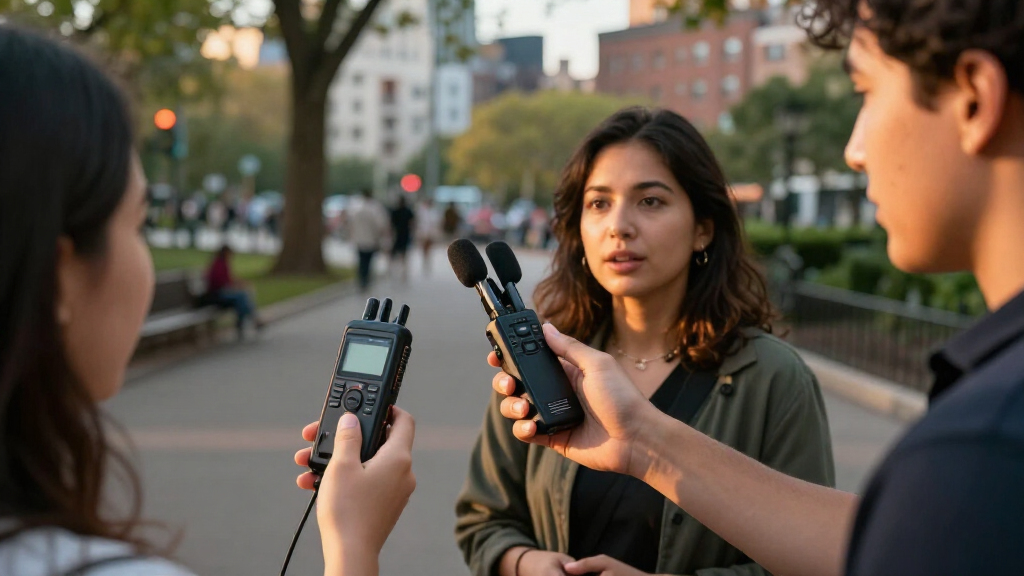
Our evaluation focused on core factors that matter most to users of portable audio recorders. Performance was assessed through sound clarity, noise reduction, and microphone quality, ensuring recordings are crisp and intelligible. Usability considered interface simplicity, battery life, and portability, as these directly influence convenience during field use. Build quality and durability were also evaluated, given that many users need reliable devices for on-the-go recording. Finally, value was measured by comparing features against price, helping identify options that deliver the best balance of cost and capability. This approach ensures the ranking highlights devices suitable for a range of needs and budgets.Factors to Consider When Choosing Portable Audio Recorders
Choosing the right portable audio recorder involves several key considerations. While features like storage capacity and microphone quality are critical, understanding how these factors align with your specific use case can prevent costly mistakes. Being aware of common pitfalls, such as underestimating storage needs or overlooking battery life, helps ensure your device meets your expectations. This guide covers essential factors to consider for making an informed purchase that balances performance, usability, and value.
Storage Capacity
Storage size directly affects how long you can record without transferring files. For interviews or lectures, a minimum of 8GB might suffice, but longer sessions or higher-quality recordings demand 32GB or more. Consider models offering expandable storage via SD cards, especially if you plan extended recording sessions. Overestimating your needs can lead to unnecessary costs, but running out of space mid-recording is a common frustration that can be avoided with accurate planning.
Microphone Quality and Noise Reduction
Microphone sensitivity and noise reduction capabilities determine clarity, especially in unpredictable environments. Directional microphones help focus on the sound source and minimize background noise, while advanced noise reduction software can clean up recordings afterward. For field use, durable microphones that resist wind and handling noise are valuable. Skipping these considerations often results in recordings that are muffled or filled with unwanted ambient sounds, reducing their usefulness.
Battery Life and Power Options
Extended recording sessions require long-lasting batteries or easy power options. Many recorders feature rechargeable batteries, but some rely on replaceable batteries or external power banks. Always check the estimated recording time per charge, especially if you need to record for hours at a stretch. Neglecting this factor can lead to unexpected shutdowns or the need to carry extra batteries, complicating field use.
Size and Portability
Portability is vital if you’re frequently recording on the go. Compact, lightweight models fit easily into pockets or bags, making them ideal for quick interviews or field reporting. Larger models may offer more features but can be cumbersome for continuous mobility. Balance your need for features with ease of transport to avoid sacrificing comfort or convenience during use.
Additional Features and Connectivity
Extras like built-in transcription, Bluetooth connectivity, or multi-channel recording can significantly enhance workflow. Consider whether you need features like real-time monitoring, file transfer options, or editing tools. However, avoid overpaying for features that won’t be used, as they can add complexity and cost. Prioritize features that genuinely streamline your recording and post-processing tasks.
Frequently Asked Questions
How much storage do I need for typical recordings?
The amount of storage depends on your recording quality and session length. A standard 8GB device can hold roughly 10-12 hours of quality audio, which is enough for short interviews or lectures. For longer sessions or higher bitrates, opting for 32GB or more is advisable to avoid frequent file transfers. Always consider future needs; larger storage provides flexibility and peace of mind during extended recordings.
Is noise reduction worth paying extra for?
Noise reduction features can dramatically improve audio clarity, especially in noisy environments like outdoor recordings or crowded settings. While they usually come at a higher cost, these features reduce background noise and wind interference, making recordings more usable without extensive editing. If your work depends on clear audio, investing in models with advanced noise suppression is often justified.
Should I prioritize size or features?
If portability is essential, a compact recorder that fits in your pocket is a clear choice, but this may limit some features like multiple channels or large storage. Conversely, larger models often include more advanced microphones, bigger batteries, and expanded storage, but at the expense of portability. Your decision should align with how mobile you need to be versus how many features you require for your recordings.
Can I use a portable recorder for professional music recordings?
Yes, some portable recorders, especially those with XLR inputs and high-quality preamps, are suitable for music production and live recording. Devices like the Zoom H1 XLR or H4 models cater specifically to musicians and content creators. However, for studio-quality recordings, dedicated studio microphones and interfaces might be necessary, as portable recorders generally have limitations in frequency response and preamp quality.
What’s the best way to extend battery life during long recordings?
To maximize battery life, consider models with high-capacity rechargeable batteries or those that support external power sources like USB power banks. Turning off unnecessary features and lowering recording bitrates can also conserve energy. Always carry spare batteries or power banks when planning for extended sessions to prevent interruptions, especially in remote locations.
Conclusion
For casual users or those new to recording, the Zoom H1 Essential offers a balanced mix of features, ease of use, and portability. If you need large storage and advanced noise reduction, the Elasound Voice-Activated Recorder is a strong choice for professionals or field reporters. Budget-conscious buyers will find the 8GB USB Digital Audio Recorder sufficient for basic needs, while content creators and musicians should consider models with XLR inputs like the Zoom H4. Ultimately, your choice should reflect your primary use case, budget, and desired level of audio quality.
As an affiliate, we earn on qualifying purchases.Halloween Picks
halloween