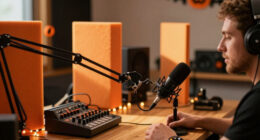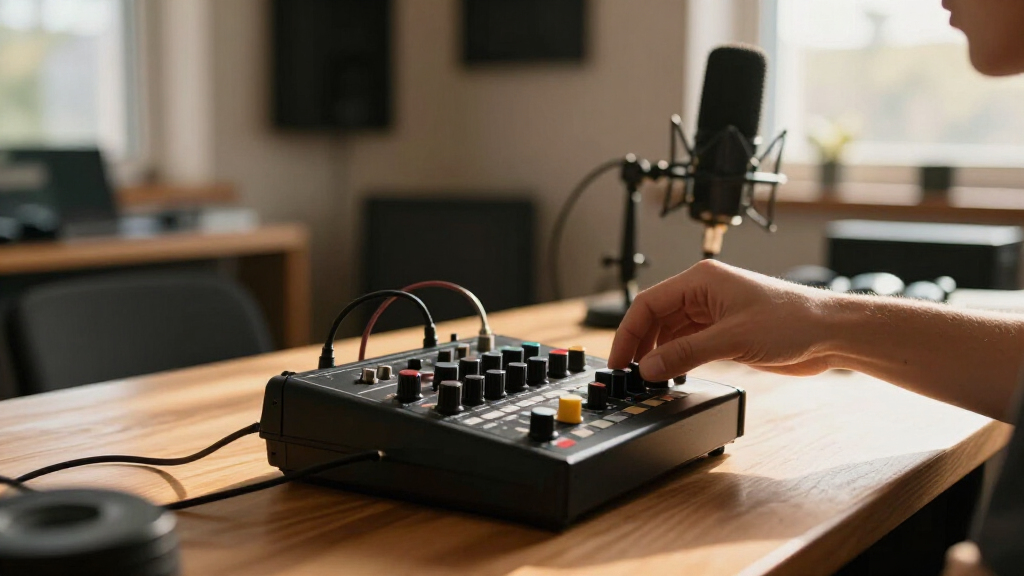
Portable podcast mixers range from pocket-friendly USB interfaces to standalone recorders that can capture a full group without a computer. My best overall pick is the Zoom PodTrak P4 for its purpose-built portable recording workflow, while the Zoom LiveTrak L-8 stands out for larger, more involved sessions and the MAONO P2 Hybrid for a compact dual-XLR setup. The main tradeoff is between simplicity and portability on one side and more inputs, controls, and recording flexibility on the other. Bundle-based and desktop-oriented options may suit specific setups, but they are not automatically the easiest to carry or expand. Read on for how the six compare and which features matter most for your recording style.

Get everyday essentials delivered free with Prime
- Fast, free delivery on millions of items
- Prime Video, Amazon Music and more included
- Member-only deals all year
Key Takeaways
- The Zoom PodTrak P4 leads for portable, computer-free podcasting: its recorder-first design suits creators who want a straightforward field workflow rather than a general-purpose mixer.
- The LiveTrak L-8 is the group-session choice: it offers a more involved multitrack setup than the P4, but its larger control surface is less convenient for minimal travel kits.
- The MAONO P2 Hybrid prioritizes compact dual-XLR recording: it fits a smaller setup than the L-8, though buyers should check that its connections and workflow match their planned recording method.
- MAONO’s E2 Gen2 and AME2 emphasize interface-and-mixer operation: they make more sense when USB-based production and hands-on controls matter more than standalone recording.
- The MAONO bundle is the all-in-one route, not the automatic upgrade: bundled microphone gear can simplify a first setup, but buyers with existing mics may get more value from choosing the mixer around their actual input needs.
| Zoom PodTrak P4 Portable Podcast Recorder |  | Best Overall for Portable, Multi-Mic Podcasts | Microphone inputs: 4 XLR inputs with phantom power | Headphone outputs: 4, each with individual volume control | Sound pads: 4 programmable | VIEW LATEST PRICE | See Our Full Breakdown |
| MAONO Podcast Equipment Bundle with Audio Mixer and 3.5mm Microphone |  | Best Starter Bundle for Streaming | Channels: 9 | Connectivity: USB Type-C, 3.5 mm, auxiliary, and Bluetooth | Microphone input: 3.5 mm; phantom power not supported | VIEW LATEST PRICE | See Our Full Breakdown |
| MAONO E2 Gen2 Podcast Audio Interface and Mixer |  | Best for Battery-Powered Streaming | Channels: 10 | XLR inputs: 2 combo inputs | Preamp gain: Up to 60 dB | VIEW LATEST PRICE | See Our Full Breakdown |
| MAONO P2 Hybrid USB Audio Interface with Dual XLR Inputs |  | Best Compact USB Interface | Channels: 2 | Inputs: 2 XLR inputs | XLR gain: 56 dB | VIEW LATEST PRICE | See Our Full Breakdown |
| MAONO AME2 Podcast Audio Interface Mixer |  | Best for Effects-Heavy Podcast Production | Channels: 10 | Microphone inputs: 2 XLR inputs | Phantom power and gain: 48V phantom power; up to 60 dB microphone gain | VIEW LATEST PRICE | See Our Full Breakdown |
| Zoom LiveTrak L-8 Battery-Powered Mixer and Recorder |  | Best for Multitrack Field Sessions | Channels: 8 | Preamps: 6 | Inputs: 6 combo and 2 stereo inputs | VIEW LATEST PRICE | See Our Full Breakdown |
| portable podcast mixer | Dimensions and weight | Channels | Connectivity | Power |
|---|---|---|---|---|
| Zoom PodTrak P4 Portable Podca | 6.1 × 4.41 × 1.85 in; 130 g | — | — | 2 AA batteries; up to 3.5 hours |
| MAONO Podcast Equipment Bundle | 9.44 × 5.11 × 1.65 in; 1.3 kg | 9 | USB Type-C, 3.5 mm, auxiliary, and Bluetooth | Battery powered; 5 V |
| MAONO E2 Gen2 Podcast Audio In | 9.64 × 6.18 × 2.16 in; 0.89 kg | 10 | USB, Bluetooth, AUX, and 3.5 mm audio | — |
| MAONO P2 Hybrid USB Audio Inte | 6.42 × 8.27 × 3.23 in; 0.5 kg | 2 | USB-C | — |
| MAONO AME2 Podcast Audio Inter | 9.64 × 6.18 × 2.16 in; 0.95 kg | 10 | XLR, 3.5 mm TRRS, 6.35 mm, USB-C, and Bluetooth | Corded electric, 5 V |
| Zoom LiveTrak L-8 Battery-Powe | 11.1 x 10.55 x 2.91 in; 1500 g | 8 | — | — |
More Details on Our Top Picks
Zoom PodTrak P4 Portable Podcast Recorder
The Zoom PodTrak P4 is my strongest fit for a podcast crew that needs to record several voices away from a desk. Its four XLR inputs and four individually controlled headphone outputs make it easier to accommodate a small group than the two-input MAONO E2 Gen2 or AME2. Automatic mix-minus and a TRRS phone connection also simplify bringing a remote caller into the conversation without a separate mix-minus setup. It records multitrack WAV files and can serve as a USB interface, giving it more recording flexibility than the effects-focused MAONO bundle. The tradeoff is its leaner live-production setup: it has four programmable pads, rather than the AME2’s 11, and its AA-powered runtime is listed at up to 3.5 hours. I’d choose it for location recording, but not for long sessions without a backup power plan.
Pros:- Four XLR inputs with phantom power accommodate a multi-person mic setup.
- Four headphone outputs have individual volume controls for easier monitoring.
- Automatic mix-minus and a TRRS jack support remote phone interviews.
- Multitrack WAV recording and USB interface mode offer flexible recording workflows.
Cons:- Battery life is listed at up to 3.5 hours, which can constrain longer mobile sessions.
- Requires two AA batteries rather than offering a built-in battery.
- Four programmable sound pads provide fewer live audio cues than the MAONO AME2’s 11.
Best for: Small podcast teams recording in different locations who need four XLR mics, separate headphone levels, and straightforward phone interviews.
Not ideal for: Creators who record long sessions away from power or want extensive sound effects and live-stream controls built into the mixer.
- Microphone inputs:4 XLR inputs with phantom power
- Headphone outputs:4, each with individual volume control
- Sound pads:4 programmable
- Recording:Multitrack WAV
- USB interface:2-in/2-out
- Phone connection:TRRS jack
- Power:2 AA batteries; up to 3.5 hours
- Dimensions and weight:6.1 × 4.41 × 1.85 in; 130 g
Our verdict“Choose the PodTrak P4 for portable, multi-mic podcast recording and phone guests; skip it if long battery runtime or extensive live effects matter more.”
MAONO Podcast Equipment Bundle with Audio Mixer and 3.5mm Microphone
For a new creator who wants a mixer and basic recording gear in one package, the MAONO Podcast Equipment Bundle has a clear advantage over the mixer-only MAONO P2: it includes a 3.5 mm microphone, tripod, windscreen, and connection cables. Its nine-channel mixer emphasizes streaming tools, with customizable effects, voice changes, reverb, tone controls, and support for multiple devices and platforms. That makes it a different kind of portable podcast option from the Zoom PodTrak P4, which is better equipped for several XLR microphones and multitrack recording. The bundle’s main limitation is its 3.5 mm mic input without phantom power; it is not the pick for upgrading to conventional XLR studio microphones. Phone connections may also need an extra OTG adapter, and connecting instruments calls for another adapter. I’d treat this as an accessible streaming kit, not a flexible field recorder.
Pros:- Includes a microphone, tripod, windscreen, and cables alongside the mixer.
- Offers customizable sound effects, voice effects, reverb, and tone controls.
- Supports streaming with up to two people, four devices, and four platforms simultaneously.
- Works with Windows, macOS, iOS, Android, computers, phones, and tablets.
Cons:- The 3.5 mm microphone input does not support phantom power for standard XLR condenser microphones.
- Phones without a 3.5 mm jack require an additional OTG adapter.
- Guitars and keyboards require a separate adapter, limiting out-of-the-box instrument use.
Best for: First-time podcasters and casual streamers who want a bundled microphone and mixer for a computer or compatible mobile device.
Not ideal for: Podcast teams using XLR microphones, recording separate tracks, or connecting instruments without extra adapters.
- Channels:9
- Connectivity:USB Type-C, 3.5 mm, auxiliary, and Bluetooth
- Microphone input:3.5 mm; phantom power not supported
- Output connectors:1/4-inch, XLR, 3.5 mm, and USB Type-C
- Power:Battery powered; 5 V
- Supported devices:Windows, macOS, iOS, Android, PCs, smartphones, and tablets
- Dimensions and weight:9.44 × 5.11 × 1.65 in; 1.3 kg
- Included items:Mixer, 3.5 mm microphone, mic cable, tripod, windscreen, charging cable, two TRRS cables, and manual
Our verdict“Pick this bundle for a ready-to-start streaming setup, but choose the Zoom PodTrak P4 or MAONO AME2 if XLR mics and podcast-focused recording are priorities.”
MAONO E2 Gen2 Podcast Audio Interface and Mixer
The MAONO E2 Gen2 suits creators who want a portable streaming interface with more onboard production controls than a basic two-mic recorder. It pairs two XLR combo inputs with preamps offering up to 60 dB of gain, plus Bluetooth, 3.5 mm audio, loopback, monitoring, and mute functions. Its built-in battery is rated for up to eight hours, outlasting the Zoom PodTrak P4’s listed 3.5 hours on AA batteries, although the Zoom has twice as many XLR inputs and headphone outputs for a larger in-person panel. Eight customizable effect buttons give the E2 Gen2 more cue options than the P4’s four pads, but it does not record multitrack WAV files as the Zoom does. I’d favor the E2 Gen2 for battery-powered streaming and effects; phone charging is not supported, so mobile creators need another power plan.
Pros:- Two XLR combo inputs and up to 60 dB of preamp gain support co-hosts and dynamic microphones.
- Eight customizable sound buttons provide cues for live streams and recorded shows.
- Loopback, monitoring, and one-touch mute support common streaming workflows.
- Built-in battery is rated for up to 8 hours of use.
Cons:- Two XLR inputs cannot match the four-mic capacity of the Zoom PodTrak P4.
- Phone charging and power delivery are not supported.
- It is a streaming interface rather than a multitrack WAV recorder like the PodTrak P4.
Best for: Solo streamers and two-person podcast hosts who want XLR inputs, onboard effects, loopback, and a rechargeable portable setup.
Not ideal for: Four-mic podcast crews, users who need multitrack WAV recording, or mobile creators who expect the interface to charge a phone.
- Channels:10
- XLR inputs:2 combo inputs
- Preamp gain:Up to 60 dB
- Maximum sample rate:48 kHz
- Connectivity:USB, Bluetooth, AUX, and 3.5 mm audio
- Sound effect buttons:8 customizable; up to 20 seconds per button
- Battery life:Up to 8 hours
- Dimensions and weight:9.64 × 6.18 × 2.16 in; 0.89 kg
Our verdict“Choose the E2 Gen2 for portable two-person streaming with effects and loopback, not for larger panels or standalone multitrack recording.”
MAONO P2 Hybrid USB Audio Interface with Dual XLR Inputs
The MAONO P2 is the most interface-oriented pick here: a compact, two-channel unit for recording or streaming through a computer and mobile device. Its dual XLR inputs, direct monitoring, loopback, independent mute controls, and software routing suit creators who already have a recording setup and want a streamlined connection point. The stated 24-bit/192 kHz support is broader than the MAONO E2 Gen2’s 48 kHz maximum, but the E2 Gen2 is better equipped for untethered use thanks to its built-in battery and physical sound-effect buttons. Unlike the Zoom PodTrak P4, the P2 is not presented as a standalone multitrack recorder and does not offer four mic inputs for a panel. It also lacks built-in battery power, and advanced routing depends on compatible software. I’d choose it for a compact desk-to-mobile interface workflow, not for a self-contained field kit.
Pros:- Two XLR inputs support a pair of microphones for co-host recording.
- Direct monitoring, loopback, and independent mute controls help manage recording and streaming.
- Supports up to 24-bit/192 kHz audio.
- Aluminum-alloy housing and compact dimensions suit a portable interface setup.
Cons:- No built-in battery is listed, making it less suited to untethered recording than the MAONO E2 Gen2.
- Advanced routing and VST effects depend on compatible software.
- Two channels do not match the Zoom PodTrak P4’s four-mic capacity for group podcasts.
Best for: Two-mic creators who record through compatible computer or mobile software and want direct monitoring, loopback, and software routing.
Not ideal for: Field podcasters seeking a battery-powered standalone recorder, multiple headphone outputs, or built-in sound pads.
- Channels:2
- Inputs:2 XLR inputs
- XLR gain:56 dB
- Audio resolution:24-bit
- Maximum sample rate:192 kHz
- Connectivity:USB-C
- Housing:Aluminum alloy
- Dimensions and weight:6.42 × 8.27 × 3.23 in; 0.5 kg
Our verdict“Pick the P2 for a compact, software-based two-mic recording setup; choose the E2 Gen2 for built-in battery power and onboard streaming effects.”
MAONO AME2 Podcast Audio Interface Mixer
The MAONO AME2 is a better fit for a host who wants sound shaping and performance cues built into the mixer, rather than the simplest possible field-recording setup. It has two XLR inputs with 48V phantom power and up to 60 dB of gain, then adds 11 customizable pads, reverb modes, tone controls, pitch changing, and a 6.35 mm instrument input. Compared with the MAONO E2 Gen2, it gives you more pads and a wider set of listed effects, while the E2 Gen2 is the more clearly portable choice with a built-in battery rated for up to eight hours. The Zoom PodTrak P4 remains the stronger option for a larger group or standalone multitrack recording. The AME2 supports computer and mobile connections, but its 5 V corded-electric power and multiple connection types make it less convenient for spontaneous recording away from a setup.
Pros:- Two XLR inputs with 48V phantom power and up to 60 dB gain support many XLR microphone setups.
- Eleven customizable sound pads offer more cue buttons than the E2 Gen2’s eight.
- Reverb, auto-tune, tone controls, and pitch changing provide onboard sound-shaping options.
- A 6.35 mm input accommodates guitars, basses, and other instruments.
Cons:- USB microphones are not supported.
- 5 V corded-electric power makes it less self-contained for mobile recording than the battery-powered E2 Gen2.
- Separate connections for different devices and outputs can make setup less straightforward.
Best for: Podcast hosts and streamers who use XLR microphones and want built-in effects, customizable cues, and an instrument input.
Not ideal for: Mobile recording crews who need a built-in battery, four microphone inputs, or support for USB microphones.
- Channels:10
- Microphone inputs:2 XLR inputs
- Phantom power and gain:48V phantom power; up to 60 dB microphone gain
- Sound pads:11 customizable; 3 support up to 60 seconds and 8 support up to 20 seconds
- Audio effects:6 reverb modes, 12-step auto-tune, 3-band tone controls, and pitch changer
- Connectivity:XLR, 3.5 mm TRRS, 6.35 mm, USB-C, and Bluetooth
- Power:Corded electric, 5 V
- Dimensions and weight:9.64 × 6.18 × 2.16 in; 0.95 kg
Our verdict“Choose the AME2 for an effects-rich, instrument-friendly podcast setup, but favor the E2 Gen2 for battery-powered portability or the PodTrak P4 for larger groups.”
Zoom LiveTrak L-8 Battery-Powered Mixer and Recorder
The Zoom LiveTrak L-8 suits podcasters who need a standalone recorder and a flexible mixer for more than a simple two-mic conversation. It captures up to 12 tracks at 24-bit/96kHz to an SD card, and can record to the card and a computer at the same time, giving you a separate recording path during a session. Compared with the Zoom PodTrak P4, the L-8 offers more recording and monitor-routing capacity, making it a stronger fit for multi-person shows, music guests, or live sessions. That added flexibility comes with more setup complexity and a larger footprint. Although it has eight channels, only six preamps are available, so not every channel can serve as a mic input. Four headphone outputs and three monitor mixes help keep several contributors comfortable without forcing everyone to share one feed.
Pros:- Records up to 12 tracks at 24-bit/96kHz to an SD card
- Can record to an SD card and computer simultaneously
- Four headphone outputs and three monitor mixes support multi-person sessions
- Battery-powered design works for gigs and recording away from a fixed studio
Cons:- Only six preamps are available across eight channels
- Its routing and recording options may be more involved than needed for a basic podcast setup
- At 1500 g and about 11 inches wide, it is less compact than a small portable recorder
Best for: Podcast hosts recording several mic-equipped guests or live sessions who want multitrack SD recording, computer connectivity, and separate headphone mixes.
Not ideal for: Solo podcasters or small two-person setups seeking a simple, compact recorder; the extra routing and channel capacity add complexity, and only six channels have preamps.
- Channels:8
- Preamps:6
- Inputs:6 combo and 2 stereo inputs
- Simultaneous recording:12 tracks
- Recording resolution:24-bit/96kHz
- Headphone outputs:4
- Monitor mixes:3
- Power source:Battery powered
- Dimensions and weight:11.1 x 10.55 x 2.91 in; 1500 g
Our verdict“Choose the LiveTrak L-8 for portable, multitrack sessions with several contributors; choose a simpler recorder such as the Zoom PodTrak P4 if you do not need its expanded routing.”

How We Picked
I compared these six options through the needs that define portable podcasting: how easily each supports recording away from a full studio, how many people and sources it can accommodate, and whether it can work independently or depends on a computer. I also weighed setup clarity, control access during a live conversation, practical carrying demands, and flexibility for later changes to a show.
The ranking favors products whose core design fits mobile podcast recording, rather than simply counting features. That puts the Zoom PodTrak P4 first for its recorder-focused role, while the L-8 earns its place for larger sessions and the MAONO models serve narrower interface, compact, or bundled setups. A richer control set does not automatically rank higher: added size, setup complexity, or reliance on a host device can matter more to a traveler than extra options.
| portable podcast mixer | Connectivity |
|---|---|
| Zoom PodTrak P4 Portable Podca | — |
| MAONO Podcast Equipment Bundle | USB Type-C, 3.5 mm, auxiliary, and Bluetooth |
| MAONO E2 Gen2 Podcast Audio In | USB, Bluetooth, AUX, and 3.5 mm audio |
| MAONO P2 Hybrid USB Audio Inte | USB-C |
| MAONO AME2 Podcast Audio Inter | XLR, 3.5 mm TRRS, 6.35 mm, USB-C, and Bluetooth |
| Zoom LiveTrak L-8 Battery-Powe | — |
Factors to Consider When Choosing Portable Podcast Mixers
Before choosing a portable podcast mixer, decide what “portable” means for your recording routine. A compact interface that travels easily can still depend on a laptop, while a standalone recorder may simplify field work but take up more bag space. These factors help separate a useful mobile rig from a feature list that does not match how you record.
Standalone Recording or Laptop-Based Production?
Start by deciding whether you want to record without a computer or use the mixer as part of a laptop-based setup. Standalone recording can reduce cables and setup steps on location, but you will need a clear file-transfer and backup routine afterward. A USB interface may fit better if your editing and monitoring workflow already centers on a computer. A common mistake is treating USB connectivity as proof that a unit records independently. Check the exact recording modes and where the audio files are saved before buying. Choose for the setting where you record most often, not the occasional scenario you might try later.
Count People and Sources, Not Just Microphone Inputs
Plan around the largest session you expect to record, including remote callers, phones, music, and backup sources. A show with two hosts and occasional guests may need a different connection plan from a roundtable, even if both are called podcasts. Input count alone can mislead: check which connections are available, whether they can be used at the same time, and how sources are monitored. Leave some capacity for a guest or phone connection if your format may grow. Buying far more inputs than your show needs can add bulk and complexity without improving a typical episode. On the other hand, a setup with no spare path may force an upgrade as soon as the format changes.
Prioritize Controls You Can Reach While Recording
On location, easy access to gain, mute, and monitoring controls can matter more than a long list of effects. Consider whether you can make a quick correction without stopping the conversation or searching through software menus. Built-in sound pads and processing can help a host manage a show live, but they may add little if you edit everything later. Too many controls can also slow a beginner down during setup. Look for a layout that matches the jobs you handle in real time. A simple, understandable signal path often beats extra functions that stay unused.
Account for Power, Cables, and the Whole Travel Kit
A mixer’s size is only one part of its portability. Add the microphones, headphones, cables, power source, and any laptop needed to record; that complete kit determines how easy the setup is to carry and deploy. Check what power options the device supports and whether your planned recording location has reliable outlets. Do not assume that a portable label means a unit can run untethered in every mode. Battery operation can help in the field, but it may require spare batteries or a charging plan. Compare the full rig’s weight and setup time, not just the mixer’s footprint.
Match the Mixer to Your Existing Microphones
Before choosing a bundle, list the microphones and accessories you already own and identify what your show still lacks. A bundle can reduce the work of assembling a first kit, but included equipment may not suit every voice, mounting arrangement, or future upgrade. If you already have microphones, focus on compatible inputs and the routing you need rather than paying for duplicate gear. Also check whether the included microphone uses a connection that fits your intended setup. Buyers often overlook stands, cables, and headphones until after the main purchase. A complete working chain matters more than a longer accessory list.
Choose Multitrack Flexibility Only If You Will Use It
Separate tracks can make it easier to adjust individual voices during editing, especially when guests speak at different volumes. That flexibility can also mean more files to manage, more storage, and a more involved post-production routine. A single mixed recording may be perfectly adequate for a tightly controlled solo show. Before paying for a more elaborate recorder, decide who will edit episodes and how much time they can spend cleaning them up. Ask whether you need isolated tracks for every session or only for occasional complex recordings. The right choice is the one your publishing workflow can support consistently.
Frequently Asked Questions
Can I record a podcast with a portable mixer without bringing a laptop?
Yes, but only if the specific device supports standalone recording rather than acting solely as a USB interface. Confirm where it records, what storage it uses, and whether the chosen mode captures the number of tracks your show needs. A laptop-free kit can be easier to set up in a venue or while traveling, but it still needs a file-transfer and backup plan. If you edit on a computer later, check that the recorded files fit your editing software workflow. Do not infer standalone recording capability from a product’s portable design.
Is the Zoom PodTrak P4 a better choice than the Zoom LiveTrak L-8 for a two-person show?
For a straightforward two-person show, the P4 is the more natural starting point if you want a recorder-focused workflow and fewer controls to manage. The L-8 makes more sense when you need a broader mixer layout or expect larger, more involved sessions. Its extra scope can be useful, but it may add carrying and setup overhead that a small show does not need. Compare the recording modes and connections required for your guests before choosing. If your format is unlikely to grow, the simpler fit may serve you better.
Should I buy the MAONO bundle if I do not own a microphone?
A bundle can be a practical first step when its included microphone and accessories match your recording space and connection needs. It reduces the number of separate choices, but the package should not be treated as a guarantee that every component suits your voice or planned show. Check what is included and what must be supplied separately, such as headphones or a stand. If you expect to replace the microphone soon, buying the mixer and microphone separately may leave you with fewer unused accessories. Pick the bundle for a useful, compatible starting kit rather than for quantity alone.
Do I need a portable mixer with dual XLR inputs if I record alone?
Not necessarily. A single-host setup may be better served by a smaller or simpler device unless you regularly add a guest, a second microphone, or another audio source. Dual XLR inputs provide room for two microphone connections, but they do not by themselves guarantee that every other source can be connected or recorded at once. Think about your typical session and the largest one you genuinely expect to run. If a second mic is only a rare possibility, a flexible connection plan may matter more than buying extra inputs now.
When is a mixer with multitrack recording worth the added complexity?
Multitrack recording is most useful when speakers need separate volume or noise corrections during editing, or when the show has multiple sources that should remain independently adjustable. It can be less useful for a solo program recorded in a stable space with a simple mix. Separate files take more storage and require an editor who knows how to manage them. Consider your post-production time as well as the recording benefits. If isolated tracks would rarely change the final episode, a simpler recording workflow may be the better fit.
Conclusion
For most people seeking a portable podcast recorder and mixer in one, I recommend the Zoom PodTrak P4 as the best overall because its role aligns closely with field podcasting. The best premium choice for larger sessions is the Zoom LiveTrak L-8, provided you want its broader workflow enough to accept a less minimal kit. For best value in a first setup, consider the MAONO bundle if its included gear fits your needs; otherwise, the E2 Gen2 or AME2 may be a more sensible interface-centered starting point. The MAONO P2 Hybrid is the specific pick for a compact dual-XLR setup, while beginners should favor the option whose recording method and controls they can use confidently. Match your choice to the number of speakers, need for computer-free recording, and full kit you are willing to carry.
Halloween Picks
halloween
As an affiliate, we earn on qualifying purchases.