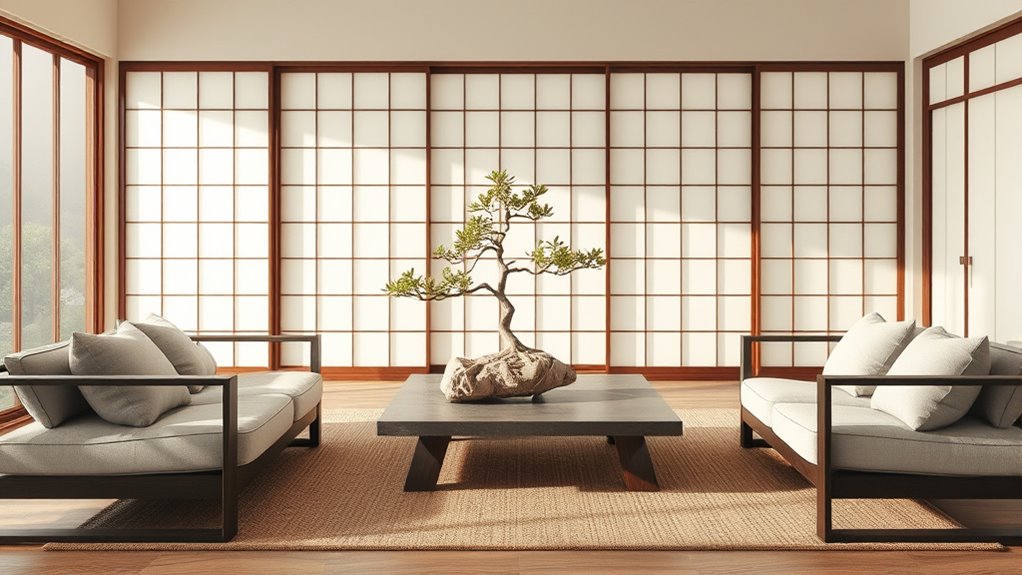

Japandi style blends Japanese Zen minimalism with Scandinavian hygge, creating calm, functional spaces for 2025. You’ll find neutral, earthy tones, natural materials like wood and linen, and clean-lined furniture that promote simplicity and comfort. Soft lighting and uncluttered arrangements foster tranquility, making your home a soothing retreat. If you want to explore how this East-meets-West trend transforms interiors into harmonious havens, there’s more to discover ahead.
Listen free for 30 days with Audible
Thousands of audiobooks and originals — cancel anytime.
As an affiliate, we earn on qualifying purchases.
Key Takeaways
- Japandi combines Japanese minimalism with Scandinavian coziness, emphasizing serenity, functionality, and natural aesthetics for 2025 interiors.
- The trend features earthy, muted color palettes and sustainable materials like wood, linen, and ceramics to evoke calmness.
- Furniture is sleek, low-profile, and purpose-driven, balancing minimalism with comfort through handcrafted, eco-friendly pieces.
- Lighting emphasizes warm, soft illumination with natural materials, creating cozy, tranquil atmospheres.
- Japandi 2025 reflects a shift towards intentional living, blending East-West cultural values for harmonious, clutter-free spaces.
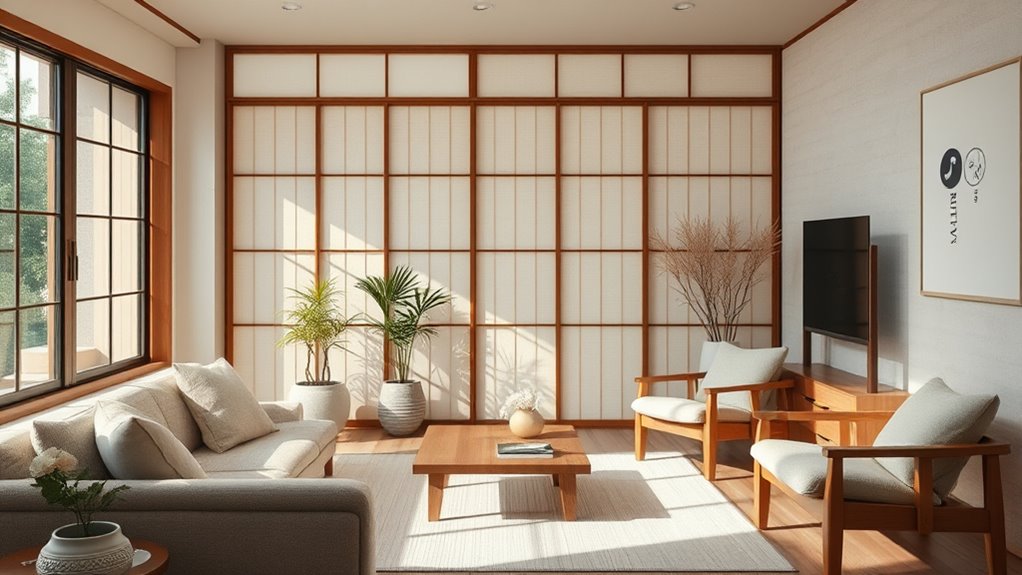
Japandi style blends the calming simplicity of Japanese Zen minimalism with the cozy comfort of Scandinavian hygge, creating spaces that feel both serene and inviting. As you immerse yourself in this design philosophy, you’ll notice how every element is carefully chosen to promote intentional living. It’s about more than aesthetics; it’s a way to foster harmony and balance amid the chaos of modern life. The core idea is to craft environments that are uncluttered yet warm, combining functionality with beauty seamlessly. Rooted in Japanese and Scandinavian cultural values, Japandi emphasizes natural beauty, simplicity, and practicality, encouraging you to curate your space with purpose.
Japandi blends Japanese minimalism with Scandinavian coziness to create serene, functional, and intentionally curated living spaces.
In Japandi interiors, your color palette plays a crucial role. Expect to see neutral, earthy tones like clay reds, warm beiges, muted greys, and soft whites. These hues are deliberately subdued, designed to soothe your senses rather than shout for attention. They evoke natural elements like soil, wood, and stone, reinforcing a connection to the environment. When you choose these muted shades, you create a calming backdrop that supports peace and balance, making your space feel grounded and restorative.
Materials and textures are equally important in Japandi design. You’ll find natural, sustainable materials such as raw wood, linen, rattan, bamboo, and ceramics. Light to medium wood tones with visible grain add a touch of authenticity and warmth. The textures balance clean, simple lines with softness—think wool throws, linen cushions, and rattan furniture—that invite touch and foster comfort. Eco-conscious sourcing is essential, so handcrafted and responsibly made pieces are preferred. These materials not only look beautiful but also support sustainable practices, helping you create a space that’s both aesthetically pleasing and environmentally mindful. Incorporating eco-friendly materials ensures your decor aligns with eco-conscious values while enhancing the natural feel of the space.
Furniture in Japandi style is characterized by minimalism and purpose. Low-profile, sleek pieces with clean lines dominate the scene. Every item serves a clear function, promoting decluttering and emphasizing the beauty of utility. Storage solutions like minimalist sideboards help reduce visual clutter while maximizing practicality. Furniture combines strength with comfort, such as upholstered wood chairs that provide support without sacrificing warmth. The focus is on curated, balanced arrangements that elevate simplicity and organization.
Lighting in Japandi spaces is soft and warm, enhancing a sense of calm. You’ll notice fixtures made from natural materials like rattan or paper that diffuse light gently. Lampshades and ceiling lights are designed to create a cozy ambiance, highlighting natural textures and colors. Warm lighting enhances comfort and makes the space inviting, transforming your environment into a soothing retreat.
Japandi style minimalist furniture
As an affiliate, we earn on qualifying purchases.
As an affiliate, we earn on qualifying purchases.
Frequently Asked Questions
How Does Japandi Style Influence Furniture Choices?
You’re drawn to furniture that combines simplicity with warmth, favoring natural materials like wood, bamboo, and linen. You choose pieces with clean lines and multifunctional features for space efficiency. Neutral, earthy tones create calm, unified environments, while subtle textures add tactile interest. You also incorporate smart, sustainable technologies that enhance functionality without sacrificing minimalist aesthetics, supporting a harmonious, eco-conscious, and modern lifestyle.
What Are Common Color Palettes in Japandi Interiors?
Did you know that neutral and earthy tones top the list for popular interior palettes? In japandi interiors, you’ll often see warm beiges and soft whites creating a calming base. Green accents inspired by nature, like sage or moss, add subtle freshness. Dark touches like black detailings provide contrast without overwhelming, while personalized earthy hues make spaces uniquely yours. This balanced palette perfectly captures japandi’s minimalist, serene vibe.
Can Japandi Be Integrated Into Small Apartments?
You can definitely integrate Japandi into small apartments. It emphasizes space efficiency and multi-functional furniture, like foldable tables and hidden storage, to keep things minimal and organized. Use a neutral, earthy color palette and natural materials such as wood and linen to create a calming atmosphere. Keep the layout open and airy, maximize natural light, and incorporate plants for a serene vibe, making your small space feel larger and peaceful.
What Materials Are Typical in Japandi Decor?
You’re asking what materials are typical in Japandi decor, and it’s clear you want a style that’s both beautiful and functional. Think natural woods, bamboo, and reclaimed materials for authenticity and eco-friendliness. Soft textiles like linen and wool add warmth, while handcrafted ceramics bring a touch of imperfection and charm. These elements come together to create a calm, balanced space that’s sustainable and timeless, hitting the sweet spot between East and West.
How to Incorporate Japanese Minimalism With Scandinavian Coziness?
To incorporate Japanese minimalism with Scandinavian coziness, focus on creating open, clutter-free spaces that feel calm and inviting. Use natural materials like light wood, linen, and stone for warmth and authenticity. Add soft textiles such as wool throws and cushions to introduce coziness without overpowering the minimalist aesthetic. Keep colors muted with earthy tones and soft pastels, and prioritize functional furniture with gentle curves for a balanced, serene environment.
Conclusion
Embracing Japandi style means you’re blending the best of both worlds—simplicity and warmth. As the trend continues to grow in 2025, it’s clear that this design approach isn’t just a fleeting fancy but a timeless fusion of East and West. If you want your space to feel balanced and inviting, remember that Rome wasn’t built in a day. Take your time, and you’ll create a harmonious haven that truly feels like home.
Back to school Picks
back to school
As an affiliate, we earn on qualifying purchases.