

When choosing an ETF, focus on its expense ratio to keep costs low and preserve your gains over time. Check its tracking accuracy to ensure it closely follows the underlying index, and assess liquidity to guarantee you can buy or sell easily without impacting the price. Considering these factors helps you select a fund that suits your goals. Keep exploring to find out how other features can influence your investment success.

Get everyday essentials delivered free — and shop member deals
- Fast, free delivery on millions of items
- Access to Prime Big Deal Days deals on October 6–7
- Prime Video, Amazon Music and more included
Key Takeaways
- Prioritize ETFs with low expense ratios to maximize long-term returns and minimize management fees.
- Evaluate tracking error to ensure the ETF closely mirrors its underlying index.
- Choose ETFs with high liquidity to facilitate easy buying and selling without significant price impact.
- Consider tax implications, such as distribution frequency and structure, to optimize after-tax gains.
- Assess ethical and structural factors, like ESG alignment and fund backing, to match your values and ensure transparency.
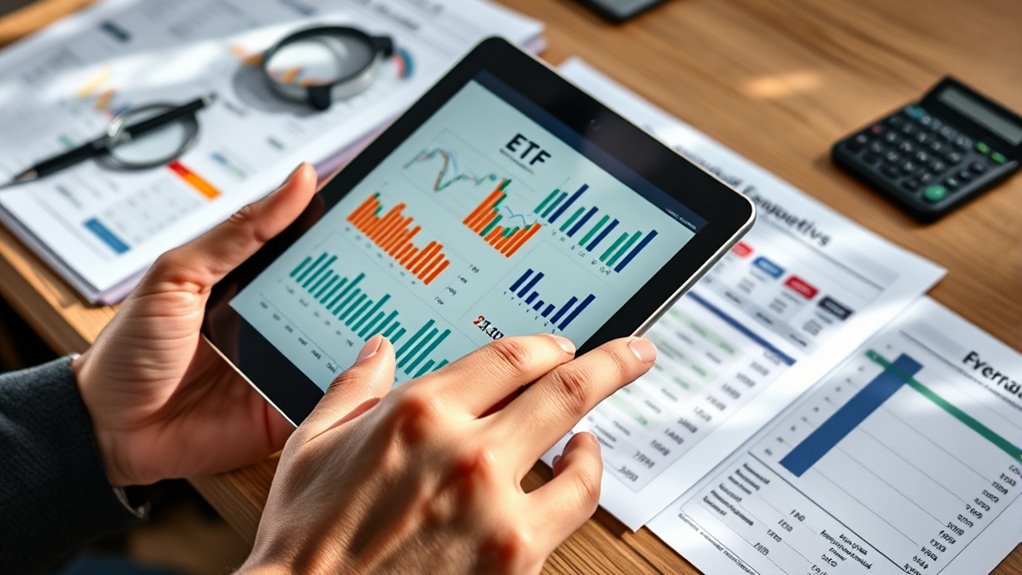
Are you overwhelmed by the variety of exchange-traded funds (ETFs) available? With so many options, it can be tough to determine which one aligns with your financial goals. When choosing an ETF, start by considering the expense ratio, as it directly impacts your returns over time. A lower expense ratio means fewer fees eating into your gains, making it a smarter choice for long-term investing. But don’t forget to evaluate the fund’s tracking accuracy—how well it mirrors its underlying index. A fund with high tracking error might not perform as expected, which could affect your investment’s growth. Liquidity is another key factor; an ETF with high trading volume ensures you can buy or sell shares quickly without considerably impacting the price. This flexibility is especially important if you need to access your money promptly or want to avoid slippage.
Beyond these practical considerations, it’s essential to think about the tax implications of your ETF choice. Some funds distribute capital gains more frequently, which can trigger tax liabilities even if you haven’t sold any shares. Opting for ETFs with tax-efficient structures can minimize your tax burden, preserving more of your investment returns. Additionally, ethical considerations are increasingly important for investors. If social responsibility matters to you, look for ETFs that track companies committed to environmental, social, and governance (ESG) principles. These funds allow you to invest in line with your values while still aiming for solid financial performance.
It’s also worth examining the fund’s structure—whether it’s physically-backed or synthetically replicated—as this can influence both tax implications and ethical considerations. Physically-backed ETFs hold the actual securities, often making tax reporting straightforward, while synthetic ETFs use derivatives, which might involve more complex tax scenarios. When evaluating an ETF, consider how these factors align with your personal ethics and financial planning. Additionally, understanding the role of affiliate disclosures can help you make more transparent and informed decisions about your investments.
In the end, choosing the right ETF involves balancing cost, tracking precision, liquidity, tax efficiency, and your ethical stance. Do your research, compare multiple funds, and think about how each aligns with your broader investment strategy. Remember, the goal is to find a fund that not only performs well but also fits your values and minimizes potential pitfalls. Making informed choices now will help you build a resilient, ethical portfolio that supports your long-term financial well-being.
As an affiliate, we earn on qualifying purchases.
Frequently Asked Questions
How Often Are ETF Holdings Updated?
You can typically expect ETF holdings to be updated daily, reflecting ongoing fund turnover and portfolio rebalancing. This frequent update guarantees the ETF closely tracks its index or strategy. However, some ETFs, especially those tracking less liquid assets, might update holdings less often, like weekly or monthly. Regular updates help maintain accurate tracking and allow you to see how the fund’s composition evolves over time.
What Are the Tax Implications of ETFS?
You benefit from ETFs’ tax efficiency because they typically generate fewer capital gains compared to mutual funds. When you sell ETF shares, you usually avoid immediate tax bills unless you cash out. This is because ETFs often use in-kind creations and redemptions, which help to minimize capital gains distributions. Keep in mind, you’ll owe taxes on dividends and any realized gains, so consider your overall tax situation when investing.
How Does ETF Liquidity Impact Trading Costs?
When ETF liquidity is high, trading costs drop because you benefit from narrower bid-ask spreads and minimal market impact. Conversely, low liquidity widens spreads, increasing your costs and making trades more expensive. Think of liquidity as the highway’s traffic; smooth flow keeps costs low, while congestion raises them. So, always verify the ETF’s trading volume to guarantee liquidity, saving you money on buy-sell spreads and reducing market impact.
Can I Buy Fractional Shares of ETFS?
Yes, you can buy fractional shares of ETFs through many brokerage platforms that offer fractional trading. This allows you to invest smaller amounts, helping you diversify your ETF holdings more easily without needing to buy whole shares. Fractional trading makes it simple to build a diversified portfolio, even with limited funds, giving you more flexibility in managing your investments and spreading your risk across various ETFs.
What Are the Risks of Investing in Leveraged ETFS?
Investing in leveraged ETFs comes with significant leverage risks, especially during market volatility. You might experience amplified gains, but losses can also be magnified quickly, risking your entire investment. These funds are designed for short-term trading, not long-term holding, because daily resets can erode value over time. Be aware of the increased exposure and carefully monitor your positions to avoid unexpected losses during turbulent market conditions.
Conclusion
So, armed with this knowledge, choosing the perfect ETF becomes your ultimate secret weapon in the investing universe. Immerse yourself in expense ratios, tracking accuracy, and liquidity like a financial ninja, and you’ll outsmart even the most seasoned investors. With these tools, you’ll conquer the markets, leaving chaos in your wake. Remember, the right ETF isn’t just a choice — it’s your golden ticket to financial greatness, transforming you into a legendary investor in the blink of an eye.
Fall Picks
fall essentials
As an affiliate, we earn on qualifying purchases.