To create a sturdy gingerbread house, start with a classic dough made from ginger, cinnamon, molasses, and butter, rolled to about 1/4 inch thick for clean cuts. Use royal icing, whipped to a smooth, firm consistency, to attach walls and roof pieces securely. Let the icing set before adding decorations like candies and sprinkles for a festive look. Mastering these steps guarantees your house stays intact and looks impressive—if you want to learn more, you’ll find useful tips and techniques ahead.
Key Takeaways
- Use chilled gingerbread dough with precise rolling and templates for uniform wall and roof pieces.
- Bake at consistent temperatures to ensure sturdy, warp-free panels suitable for assembly.
- Prepare royal icing to a smooth, pipeable consistency for effective bonding and detailed decoration.
- Assemble the house by attaching walls with generous icing, allowing joints to set for stability.
- Decorate with candies and edible embellishments after assembly for a festive, professional appearance.
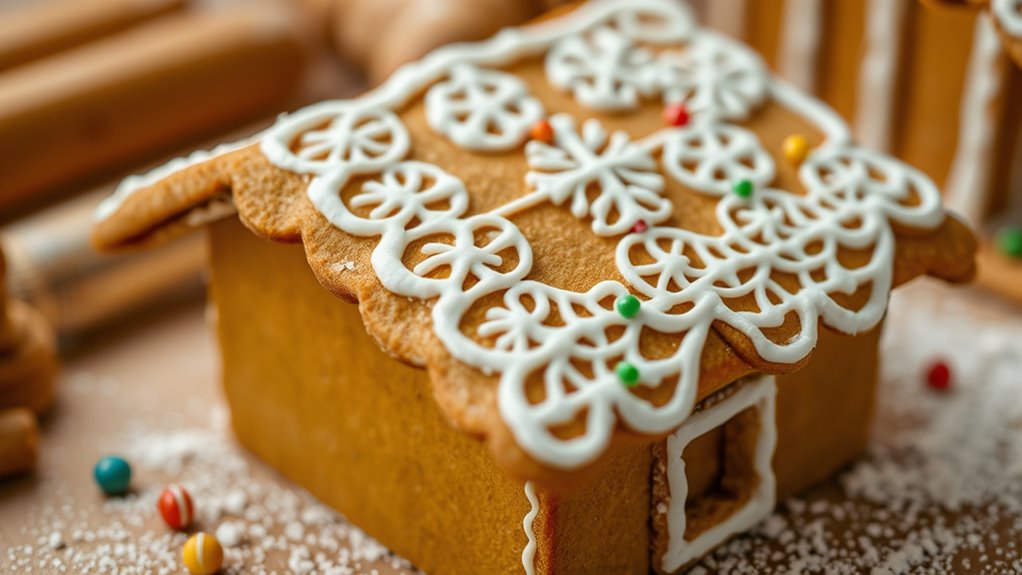
Gingerbread houses have become a beloved holiday tradition, inspiring creativity and festive cheer. You may wonder how this sweet craft started and how it’s evolved over time. The gingerbread house history dates back centuries, with roots in medieval Europe where gingerbread was used for medicinal purposes and decorated elaborately for festivals. Over time, it transitioned into a decorative treat, especially in Germany, where the famous “Lebkuchen” houses gained popularity. Today, the tradition has expanded worldwide, and modern gingerbread techniques have made creating these miniature homes easier and more artistic than ever. Advanced tools, pre-made templates, and innovative decorating methods allow you to craft intricate designs that rival professional displays.
When it comes to making the dough, you’ll want to start with a sturdy, flavorful gingerbread recipe that holds its shape well. Classic ingredients include ginger, cinnamon, cloves, molasses, and butter, which combine to give that warm, spicy aroma. To guarantee your house pieces don’t spread or warp while baking, roll out the dough to a consistent thickness—about 1/4 inch—and chill it before cutting. Modern gingerbread techniques often incorporate chilled dough for cleaner cuts and sharper edges, making assembly easier. Using precise templates for walls, roof, and windows ensures uniformity, especially if you’re aiming for a professional look. Cutting out the shapes carefully and baking them evenly will give you sturdy panels ready for assembly.
Royal icing acts as the glue that holds everything together. You’ll want to whip up a smooth, glossy icing that hardens quickly once piped. Modern techniques emphasize the importance of consistency—neither too runny nor too stiff—to get clean lines and reliable adhesion. Using a piping bag with various tips allows you to create decorative details like window frames, shingles, and icing icicles. As you assemble, start by attaching the walls with a generous layer of royal icing, giving each piece time to set before adding the roof. Patience is key; you might need to reinforce joins or hold pieces in place briefly until the icing dries. Once assembled, you can add a variety of decorations—candies, sprinkles, and edible glitter—to enhance the festive appearance.

Gingerbread House Kit 1.1 Lbs– Holiday Cookie Decorating Kit with Icing & Candies – Christmas DIY Activity for Kids & Adults – Pre-Baked Panels – Assembly Required (Medium)
Complete DIY Gingerbread House Kit (1.1 lbs): Includes everything you need—pre-baked gingerbread panels, colorful candies, and white icing…
As an affiliate, we earn on qualifying purchases.
As an affiliate, we earn on qualifying purchases.
Frequently Asked Questions
What Are the Best Types of Gingerbread Dough for Building?
You should choose a sturdy gingerbread dough that holds its shape well for building. Look for a recipe with a good gingerbread flavor and a firm dough consistency, so your structures don’t collapse or spread. Rolling the dough evenly and chilling it before cutting helps achieve clean edges. This way, your gingerbread house will be durable and beautifully detailed, making your creation both tasty and impressive.
How Do I Prevent My Royal Icing From Cracking?
Think of royal icing as a delicate bridge—its stability depends on proper care. To prevent cracking, make sure your icing has the right consistency, not too stiff or runny. Use Cracking prevention tips like adding a pinch of meringue powder and letting it rest before use. Keep your workspace cool and covered. These steps strengthen royal icing stability, helping your gingerbread masterpiece stay intact and beautiful.
What Tools Are Essential for Assembling a Gingerbread House?
You’ll need a steady piping bag and tips to apply royal icing with the right consistency for assembly. A small spatula or butter knife helps smooth and adjust pieces. Use a level surface to guarantee stability. Always prioritize tool safety by handling sharp tips carefully. Keep your icing at the proper consistency—thick enough to hold pieces but not so stiff it’s hard to work with. These tools make assembly easier and safer.
How Long Does It Take for Royal Icing to Dry Completely?
Royal icing takes about 24 hours to dry completely if you keep a consistent, firm consistency and guarantee a dry, cool environment. Think of it as a delicate dance—you need patience for it to set perfectly. If your drying environment is humid or warm, it might take longer. To speed things up, keep the icing in a cool, dry place, and avoid touching it until it’s fully hardened.
Can Gingerbread Houses Be Made in Advance?
Yes, you can make gingerbread houses in advance. To keep them fresh, store the assembled house in an airtight container at room temperature or in a cool, dry place. For decorating ideas, add candies and details just before display to prevent damage. Use tissue paper or bubble wrap around delicate parts for storage tips, and consider making and decorating the house a day ahead to reduce stress and guarantee everything stays intact.

Cookie Piping Tips with Coupler,Small Icing Tips for Writing,Detail,Royal Icing & Plastic Piping Coupler for Easy Switching
Precision Every Small Round Piping Tip: Imagine the joy of crafting precise lacework, the elegance of fine lines,…
As an affiliate, we earn on qualifying purchases.
As an affiliate, we earn on qualifying purchases.
Conclusion
Now that you know how to make the perfect gingerbread house, are you ready to impress your friends and family with your creativity? Remember, it’s all about patience and having fun with the process. Don’t worry if it’s not perfect—every house is unique and special. So, gather your ingredients, roll out your dough, and start building. After all, isn’t creating sweet memories just as important as the house itself?

Gingerbread House Cookie Cutters Shapes Set, Large 3D Gingerbread House Kit for Kids, 10Pcs Stainless Steel Biscuit Molds for Christmas Winter Holiday Baking and Decoration, Gift Package
Gingerbread House Cookie Cutters Shapes: 3D Gingerbread house kit contains 10 different metal cookie cutters shapes – wall,…
As an affiliate, we earn on qualifying purchases.
As an affiliate, we earn on qualifying purchases.
Gingerbread House Cookie Cutters Shapes Set, Large 3D Gingerbread House Kit for Kids, 10Pcs Stainless Steel Biscuit Molds for Christmas Winter Holiday Baking and Decoration, Gift Package
Gingerbread House Cookie Cutters Shapes: 3D Gingerbread house kit contains 10 different metal cookie cutters shapes – wall,…
As an affiliate, we earn on qualifying purchases.
As an affiliate, we earn on qualifying purchases.