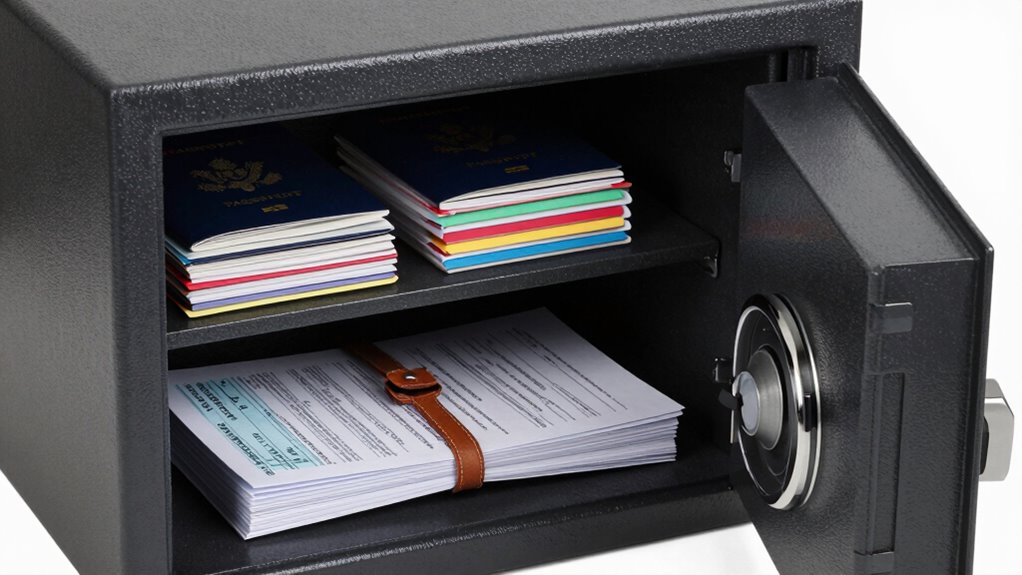

To protect your passports, deeds, and tax documents, use a simple, layered system involving a sturdy, fireproof safe placed in a discreet spot. Store physical copies securely inside it and keep digital backups on encrypted cloud services or external drives. Regularly update passwords and check safes for integrity. Shred old papers and maintain an inventory. This approach guarantees your essential records stay safe and accessible when you need them most. Keep going to learn more about setting up your security system effectively.

Get everyday essentials delivered free with Prime
- Fast, free delivery on millions of items
- Prime Video, Amazon Music and more included
- Member-only deals all year
Key Takeaways
- Store passports, deeds, and tax records in a sturdy, fireproof safe in a discreet location for physical protection.
- Create digital copies stored securely in encrypted cloud services and external drives, with strong passwords and two-factor authentication.
- Organize physical documents in labeled folders and maintain digital backups in multiple secure locations.
- Regularly review and update security measures, check safe integrity, and refresh digital passwords and backups.
- Combine physical safes with digital security for a layered, simple protection system that ensures quick access during emergencies.
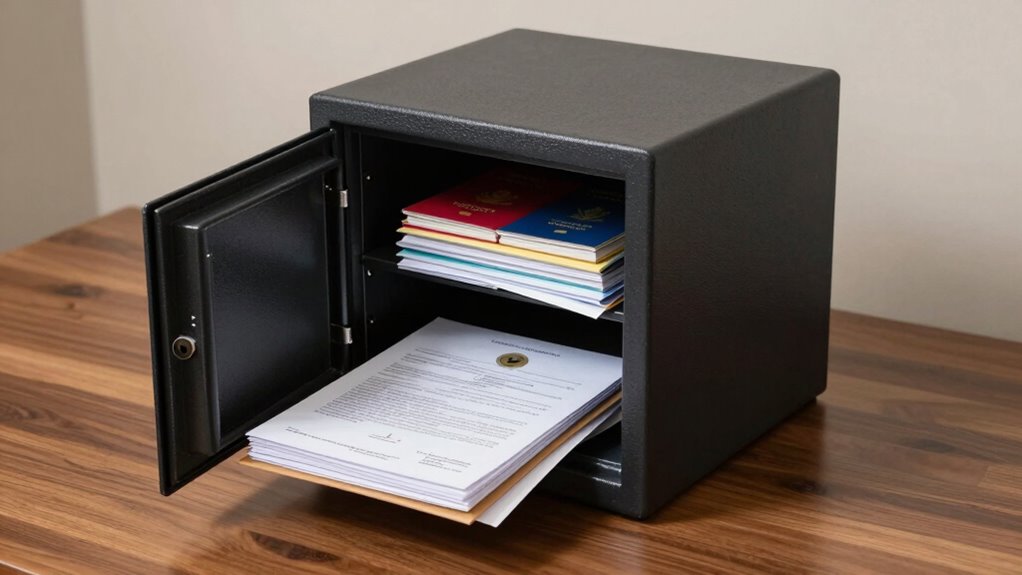
In today’s digital world, protecting your documents from unauthorized access and potential threats is more important than ever. Whether it’s your passport, deed, or tax records, ensuring they stay safe requires a straightforward system that combines digital security with physical safeguards. While digital security involves strong passwords, encryption, and secure backups, physical safes offer an added layer of protection for your most sensitive paper documents. You need to think holistically about safeguarding your important records—both online and offline.
First, consider the significance of physical safes. They’re simple but highly effective tools to keep your physical documents secure from theft, fire, or flood damage. A sturdy, fireproof safe placed in a discreet location can protect your passports, deeds, and tax papers from physical threats. When choosing a safe, look for one with fire and water resistance, solid construction, and reliable locking mechanisms. It’s best to keep the safe in a hidden spot that isn’t obvious to intruders, such as a closet or basement corner. Remember, the goal is to prevent unauthorized access while ensuring quick retrieval when needed.
Alongside a physical safe, digital security plays a critical role. Digital copies of your important documents can be stored securely in encrypted cloud services or on an external hard drive kept in the safe. Use strong, unique passwords for your online accounts where these files are stored, and enable two-factor authentication whenever possible. Regularly update your security software to fend off cyber threats. This layered approach ensures that even if someone gains physical access to your safe, they won’t necessarily have access to your digital copies, and vice versa.
Organizing your documents is equally essential. Create a dedicated folder or binder for physical documents, clearly labeled and kept in your safe. For digital copies, maintain a well-structured folder system with encrypted backups stored in multiple locations. When it comes to sensitive information like tax records or property deeds, consider shredding outdated or unnecessary papers before disposal to prevent identity theft. Always keep a list of what’s stored where, so you don’t waste time searching in emergencies. Additionally, regularly reviewing your security measures helps identify vulnerabilities and adapt to new threats.
Finally, review and update your protection system regularly. Check the condition of your safe, update digital passwords, and ensure your backups are current. Staying proactive about document protection means you’re prepared for unexpected events and can access your vital records quickly and securely. Combining physical safes with robust digital security creates a simple yet comprehensive system that keeps your important documents safe from both physical and cyber threats.
Popular right now

Ninja CREAMi 7-in-1 Ice Cream Maker, NC301

Dyson Car+Boat Cordless Handheld Vacuum

Shark Rocket Pet Plus Corded Stick Vacuum, Bordeaux, HV322
As an affiliate, we earn on qualifying purchases.
Frequently Asked Questions
How Do I Choose the Right Document Protection System?
To choose the right document protection system, consider your needs for digital encryption and access controls. You want a system that encrypts your sensitive data, preventing unauthorized access, and offers flexible access controls so you can manage who sees what. Look for solutions that are easy to use, reliable, and adaptable to your specific documents like passports, deeds, or taxes. Prioritize security features that match the level of confidentiality required.
What Are the Costs Associated With Implementing These Protections?
The costs of implementing document protection vary based on your needs, but a thorough cost analysis helps you manage expenses effectively. You’ll likely face initial setup fees, software or hardware investments, and ongoing maintenance costs. By evaluating these expenses upfront, you can develop a clear expense management plan, ensuring you allocate resources wisely without overspending. This approach helps you maintain strong document protection without unexpected financial burdens.
Can I Upgrade or Customize the Protection System Later?
You can definitely upgrade or customize your protection system later, and it’s often easier than you think. Think of it as building a house—you add features as needed. By implementing advanced digital encryption and access controls, you can tailor your security to fit evolving needs. Regular updates and enhancements guarantee your documents stay protected, so don’t worry about getting it perfect from the start; flexibility is built-in.
How Often Should I Review or Update My Document Protections?
You should review your document protections at least once a year to guarantee they stay effective. Establish a regular timing schedule, such as every six months or annually, to check for any updates needed due to changes in your circumstances or new threats. This review frequency helps you stay proactive, adjusting your protections as necessary to keep your important documents secure and up-to-date with evolving security measures.
Are There Legal Requirements for Document Protection in My Region?
Imagine your important documents as the crown jewels—protected and secure. In your region, legal compliance and regional regulations set the rules for safeguarding these treasures. You must check local laws to verify you’re meeting legal requirements for document protection. Staying informed helps you avoid penalties and keeps your valuables safe. Regularly review regional regulations, adapt your system as needed, and keep your documents protected with confidence and clarity.
Conclusion
Now that you know the simple system to protect your essential documents, imagine what could happen if you overlook this step. Are your passports, deeds, or tax records truly secure? Don’t leave your future vulnerable. The key is within your reach—just a small change could make all the difference. Stay one step ahead, and keep your important documents safe from unexpected threats. The next move is yours—will you act now or risk losing it all?