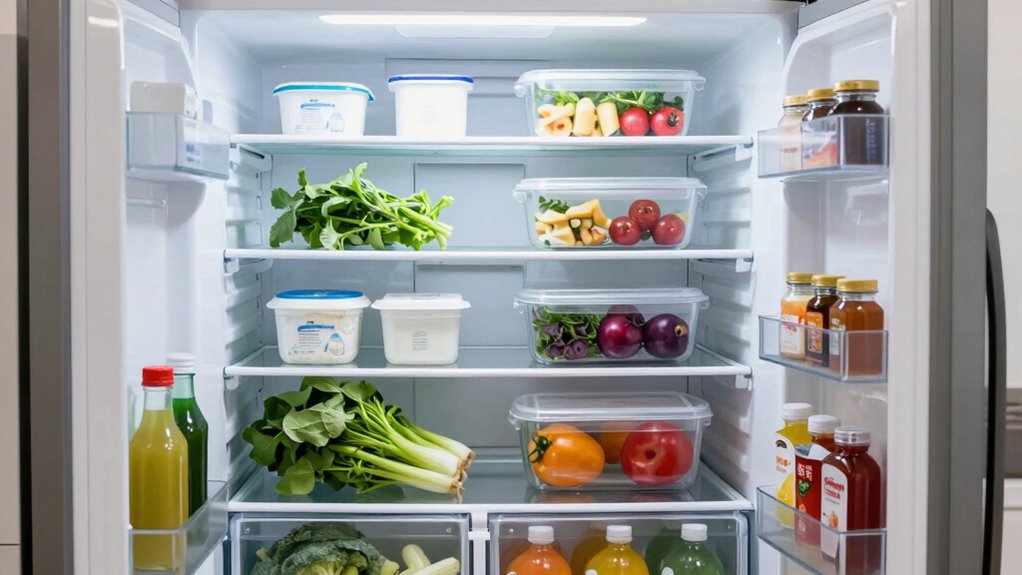

To reduce waste, organize your fridge with specific shelf rules: keep high-moisture fruits and leafy greens in humidity-controlled drawers, place dairy and leftovers on middle shelves, and use door shelves for condiments and drinks. Label and rotate items to guarantee you use older products first, and store things in clear containers for easy visibility. Maintaining this system will keep your food fresher longer and save you money—if you want to learn more, keep exploring these practical tips.

Get everyday essentials delivered free — and shop member deals
- Fast, free delivery on millions of items
- Access to Prime Big Deal Days deals on October 6–7
- Prime Video, Amazon Music and more included
Key Takeaways
- Designate specific fridge zones for different food types to optimize freshness and prevent cross-contamination.
- Store high-moisture produce in crisper drawers and keep dairy on middle shelves for stable temperatures.
- Use the FIFO method and regularly rotate items to ensure older food is used first, reducing spoilage.
- Label items with purchase and expiry dates to facilitate quick identification and proper stock rotation.
- Keep the fridge organized with clear containers and designated spots to enhance visibility and minimize waste.
As an affiliate, we earn on qualifying purchases.
Why a Well-Organized Fridge Saves Money and Reduces Waste
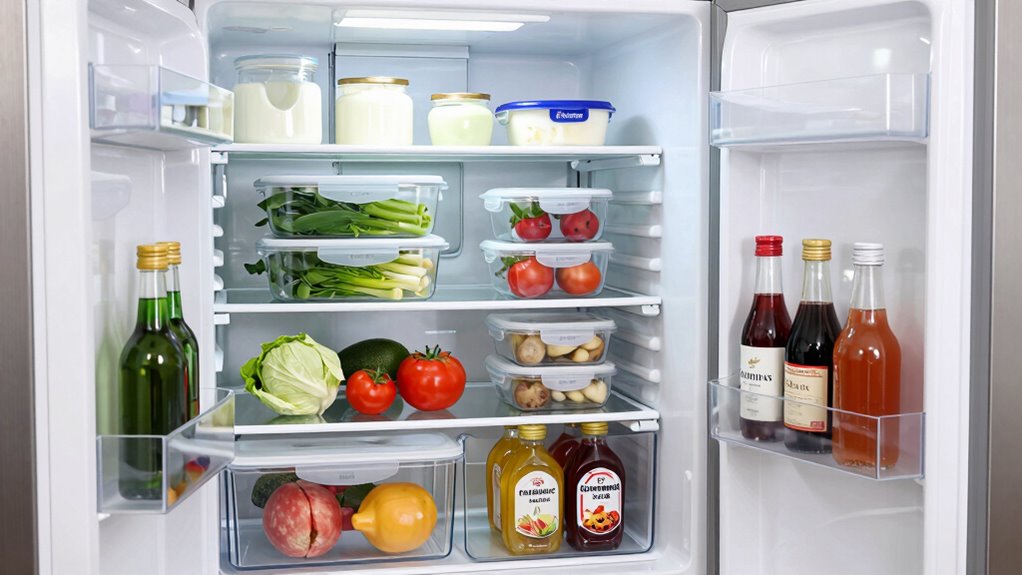
A well-organized fridge helps you save money and cut down on food waste because it makes it easier to see what you have and use items before they spoil. When your fridge is tidy, you’re less likely to forget about leftovers or produce, reducing unnecessary trips to the store. This organization also promotes energy conservation since cold air stays contained, requiring less energy to keep everything cool. By knowing exactly what’s in your fridge, you can plan meals more efficiently, which improves grocery budgeting. Less impulse buying and fewer expired items mean you spend smarter and waste less. Incorporating efficient storage techniques can further optimize space and maintain optimal temperature zones. Additionally, implementing energy-efficient appliances can enhance your fridge’s overall performance and sustainability. A smart fridge with features like temperature sensors and inventory tracking can also help you monitor food freshness and reduce waste. Overall, a neat fridge helps you save money, conserve energy, and make the most of your groceries.
Understanding Fridge Shelf Zones and Their Purposes

To keep your fridge organized and maximize its efficiency, understanding the different shelf zones and their specific purposes is essential. Each fridge zone is designed to optimize storage conditions and reduce waste. Recognizing the shelf purposes helps you place items logically, ensuring freshness and easy access. For example, the top shelf typically maintains a consistent temperature for leftovers and drinks, while the crisper drawers are best for produce. The door shelves are ideal for condiments and beverages, as they experience more temperature fluctuations. Properly utilizing fridge zones minimizes spoilage and prevents cross-contamination. Additionally, knowing how to manage temperature zones within your fridge can further improve food preservation. Being aware of air circulation patterns can also help you prevent cold spots and uneven cooling. For instance, proper airflow ensures that cold air reaches all areas evenly, maintaining consistent temperatures throughout. Improving your fridge ventilation can also help in reducing humidity and mold growth. – Store dairy and leftovers on the middle or top shelves for consistent temperature. – Use crisper drawers for fruits and vegetables to control humidity. – Keep condiments in door shelves for easy access. – Place raw meats on the bottom shelf to avoid drips. – Reserve the upper shelves for ready-to-eat foods. – Regularly clean and organize your fridge to maintain optimal conditions and prevent spoilage.
Common Mistakes That Waste Food and How to Avoid Them
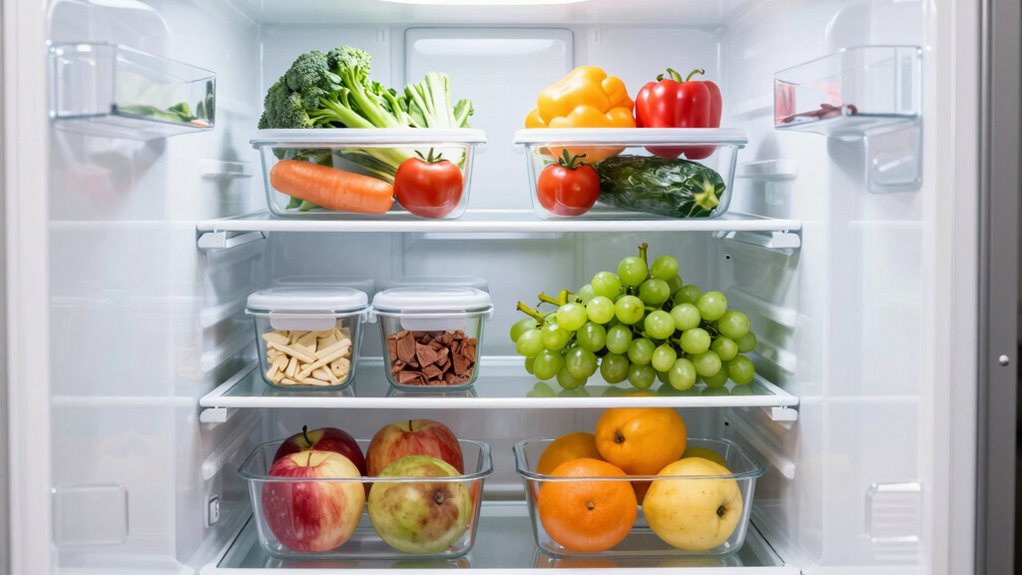
One common mistake is buying more perishable items than you can use before they spoil. Ignoring expiry dates also leads to wasting food that’s no longer safe to eat. To avoid these issues, plan your grocery list carefully and check expiration labels regularly.
Overbuying Perishable Items
Overbuying perishable items is a common mistake that leads to food waste and unnecessary expenses. When you don’t plan your meals carefully or rush grocery shopping, you often purchase more than you need, causing produce and dairy to spoil. To avoid this, focus on accurate meal planning that matches your household’s consumption. Stick to your shopping list to prevent impulse buys. Consider buying smaller quantities of perishable items more frequently. Proper storage will extend freshness, reducing waste. Also, check your fridge regularly to use items before they expire. Understanding free floating storage techniques can further help in maintaining perishable items efficiently and minimizing food spoilage. Incorporating effective organization strategies can optimize your fridge space and keep perishables fresher for longer. Developing product rotation habits ensures older items are used first, preventing unnecessary waste and maximizing your grocery investments. Additionally, understanding temperature control within your fridge can significantly impact the longevity of perishable goods, helping to reduce spoilage even further.
Ignoring Expiry Dates
Have you ever tossed out food because you ignored its expiry date? Many people rely solely on expiration dates, but food labeling can be misleading. Some products remain safe for consumption after the date, while others spoil quickly. Ignoring these labels can lead to unnecessary waste or, worse, foodborne illness. To avoid this mistake, check the packaging carefully and understand the difference between “sell by,” “use by,” and “best before” dates. Use your senses—look, smell, and taste—if you’re unsure, rather than automatically discarding items. Remember, expiration dates are guidelines, not strict cut-offs. Properly understanding food labeling helps reduce waste and ensures you consume food at its best quality and safety. Additionally, being aware of the food safety guidelines provided by health authorities can help you make better decisions. food labeling can be confusing, so learning how to interpret these labels is essential for minimizing waste. Don’t let a label cause you to toss food prematurely.
How to Place Items Strategically for Maximum Freshness
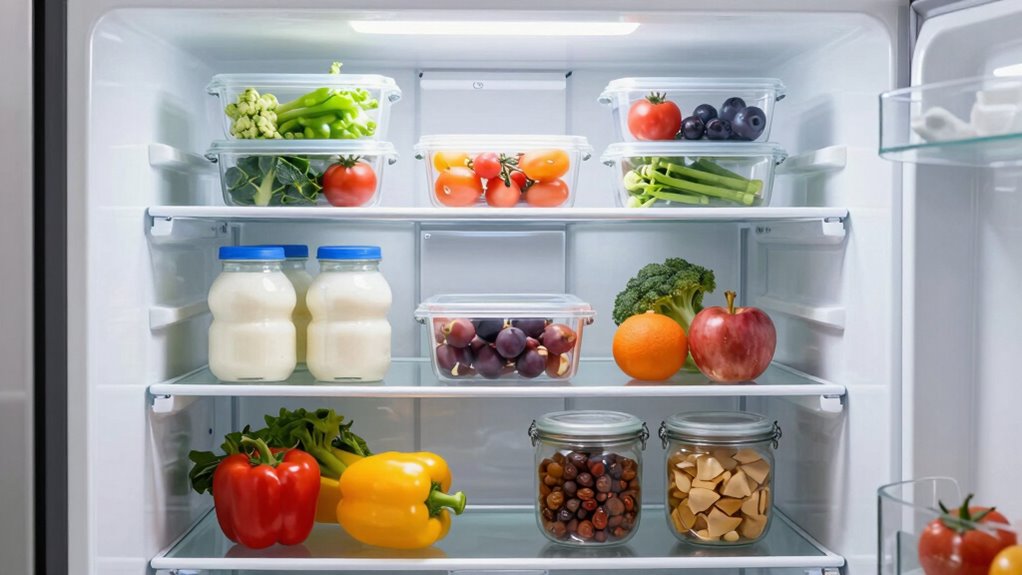
To keep your food fresh for as long as possible, you need to place items strategically within your fridge. Proper fruit placement and moisture control are key. Store fruits that emit high moisture, like berries, in the crisper drawer to maintain humidity. Keep leafy greens in moisture-controlled compartments to prevent wilting. Place dairy and cooked leftovers on the middle shelves, where temperatures stay stable. Avoid overcrowding, which hampers air circulation and accelerates spoilage. Use the door for condiments and beverages, as temperature fluctuations are common there. Additionally, regularly check and adjust humidity settings to optimize moisture levels for different produce types. Maintaining consistent temperature zones in your fridge helps preserve freshness, reduces waste, and keeps your fridge organized efficiently. Proper air circulation is essential to prevent spoilage and ensure even cooling throughout your fridge. Incorporating ventilation considerations can further enhance the overall temperature stability, helping your food stay fresher longer. Ensuring good airflow within your fridge is crucial for preventing hotspots and maintaining optimal storage conditions.
Essential Shelf Rules to Use Food Before It Spoils
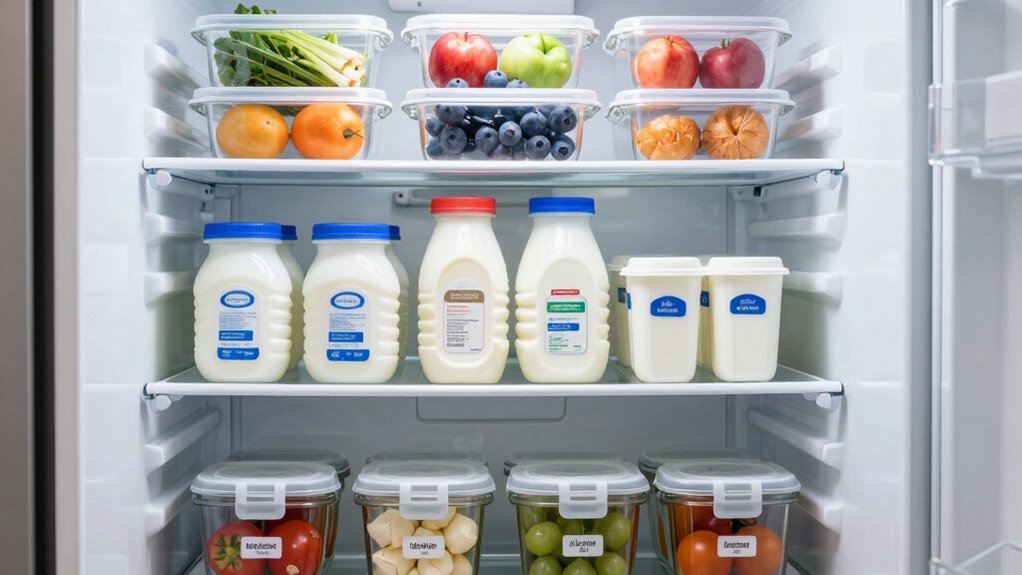
To prevent food from spoiling, you should always use older items first. Organizing your fridge with the “First In, First Out” rule helps guarantee nothing gets forgotten or wasted. By prioritizing older foods, you keep your supplies fresh and reduce unnecessary waste. Incorporating smart habits into your routine can further enhance food preservation and minimize spoilage. Additionally, understanding proper storage conditions for different types of food can extend their freshness and safety, especially when tailored to specific refrigeration techniques recommended by experts. Using vetted products such as specialized storage containers can also support these practices and ensure a more organized, efficient fridge space.
Prioritize Older Items First
Since food naturally spoils over time, it’s essential to use older items before they go bad. Prioritizing older ingredients helps reduce waste and ensures freshness. When meal prepping or organizing snack storage, place older items at the front of shelves so you see them first. This simple step reminds you to consume those items before they expire. Keep track of expiration dates, especially for perishable ingredients. Use clear containers to quickly identify what needs attention. Regularly check your fridge and move older items forward. This habit minimizes food waste and saves money. Remember, the goal is to make use of what’s already there, preventing spoilage and maximizing freshness. A proactive approach keeps your fridge efficient and your food safe to enjoy. Additionally, incorporating affordable storage solutions can help organize items more effectively and extend their usability.
Use “First In, First Out”
Implementing the “First In, First Out” (FIFO) rule guarantees you utilize older food items before newer ones, reducing waste and keeping your fridge organized. To do this effectively, track your inventory by placing newly bought items behind older stock. This simple practice helps prevent spoilage and promotes portion control, so you only take what you need. Use clear labels or separate shelves to distinguish between items. Here’s a visual guide:
| Item | Placement | Expiry Date |
|---|---|---|
| Milk | Back of the top shelf | 10/15/24 |
| Leftover veggies | Middle shelf | 10/12/24 |
| Yogurt | Front of the shelf | 10/10/24 |
This setup ensures you see which items to use first, making inventory tracking straightforward and waste minimal.
Labeling and Rotation Tips to Minimize Waste
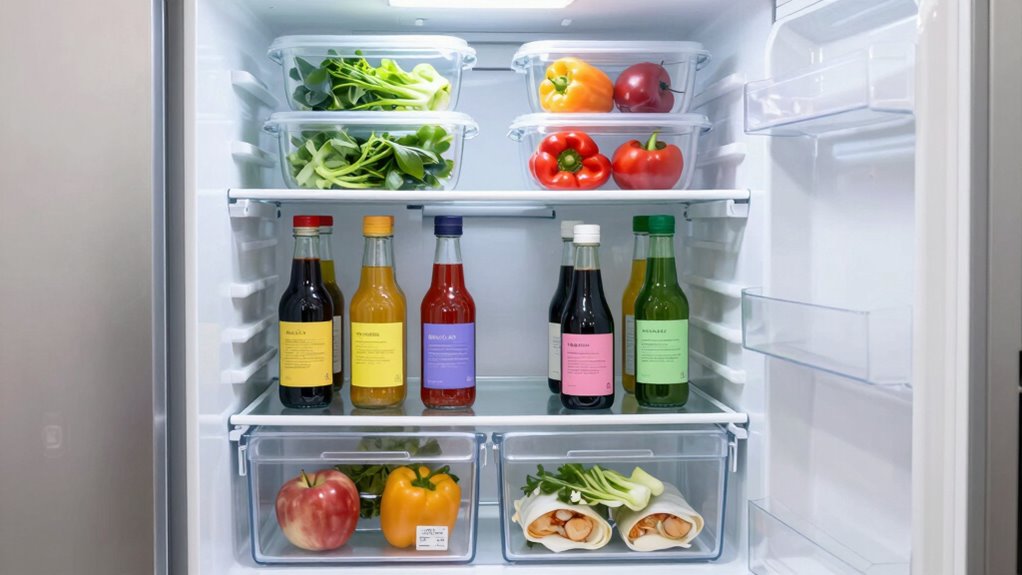
Labeling your items clearly and consistently is key to reducing waste in your fridge. Effective labeling strategies help you identify expiration dates, contents, and purchase dates at a glance, preventing overlooked food. Rotation techniques ensure older items are used first, minimizing spoilage. Use waterproof markers or labels to maintain clarity, and update labels when you rearrange or refreeze items. Organize your fridge so labeled items are visible and accessible. Consider color-coded labels for different food groups to streamline your process. Regularly check labels to confirm freshness and discard expired items promptly. This systematic approach keeps your fridge tidy, minimizes waste, and encourages mindful eating habits. Incorporating simple labeling and rotation practices makes your fridge more efficient and reduces unnecessary food waste.
Easy Habits to Keep Your Fridge Organized and Waste-Free
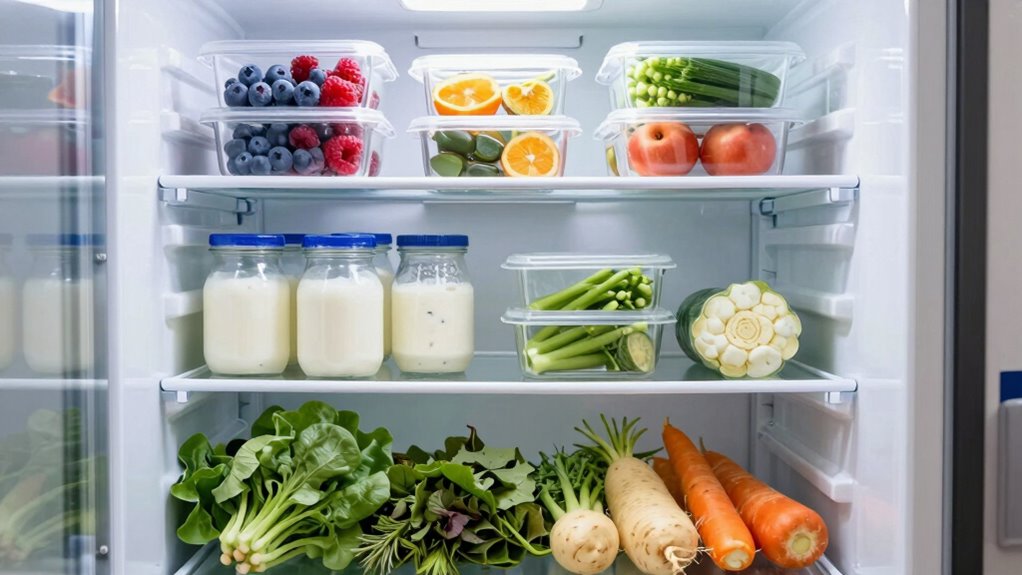
Maintaining an organized and waste-free fridge becomes easier when you develop simple, consistent habits. Start by designating specific spots for snacks and beverages. Place snacks at eye level for easy access, making it simple to grab without overbuying. Store beverages in a dedicated section to prevent spills and clutter. Use the following table as a guide:
| Habit | Benefit |
|---|---|
| Regularly check expiry dates | Prevents consuming spoiled food |
| Keep a snack bin | Reduces impulse buys and waste |
| Designate beverage spots | Streamlines beverage retrieval |
| Rotate items weekly | Minimizes forgotten, expired food |
| Use clear containers | Enhances visibility and organization |
Frequently Asked Questions
How Often Should I Clean and Reorganize My Fridge for Optimal Efficiency?
You should clean and reorganize your fridge every 2 to 4 weeks to maintain ideal efficiency. Follow a consistent fridge cleaning schedule and use organization maintenance tips like labeling shelves and grouping similar items. Regular checks help prevent spoilage and cross-contamination, keeping your fridge tidy and functional. Staying on top of these routines ensures your fridge stays fresh, reducing waste and making meal prep easier.
What Are the Best Containers to Prevent Spoilage and Cross-Contamination?
You should use airtight containers made from BPA-free plastics to prevent spoilage and cross-contamination. These containers lock in freshness, keep odors contained, and are safe for food storage. Opt for stackable, leak-proof designs for better organization. Regularly check and replace damaged containers to maintain peak food safety. Using the right containers helps extend your food’s freshness and keeps your fridge clean and hygienic.
How Can I Tell if a Stored Item Is Still Safe to Eat?
Think of your food as a story waiting to unfold. To tell if it’s safe, check expiration dates first—those are like chapter markers. Then, do a smell test: if it smells off, that’s a red flag. Trust your senses, and when in doubt, discard. Your fridge’s organization helps reduce waste, but your eyes and nose are the final guardians of your health.
Are There Specific Shelf Rules for Storing Leftovers Safely?
Yes, there are specific shelf rules for storing leftovers safely. Place leftovers on the middle shelf, where temperatures are most consistent, to guarantee leftover safety. Use airtight containers to prevent spoilage and cross-contamination. Label leftovers with dates and consume them within 3-4 days. Organize your fridge with a clear shelf arrangement, keeping raw meats on the bottom and leftovers above, to maintain proper hygiene and safety.
How Do Seasonal Changes Affect My Fridge Organization Strategies?
Seasonal changes impact your fridge organization because temperature fluctuations and seasonal produce alter storage needs. During summer, you’ll want to keep perishables cooler and prioritize quick consumption to prevent spoilage. In winter, slightly higher temperatures may require you to monitor leftovers more closely. Be mindful of seasonal produce, storing it appropriately to extend freshness. Adjust shelf placement and temperature settings accordingly, ensuring your fridge stays efficient and your food stays fresh year-round.
Conclusion
By following these fridge organization tips, you’ll save money and cut down on waste effortlessly. Imagine regularly checking your shelves and placing leftovers on the front for easy access—you’ll always know what’s fresh and avoid spoilage. For instance, Sarah started labeling her items, reducing food waste by 30%. With simple habits like strategic placement and proper labeling, you can enjoy fresher food, save money, and make your kitchen more efficient every day.
Fall Picks
fall essentials
As an affiliate, we earn on qualifying purchases.