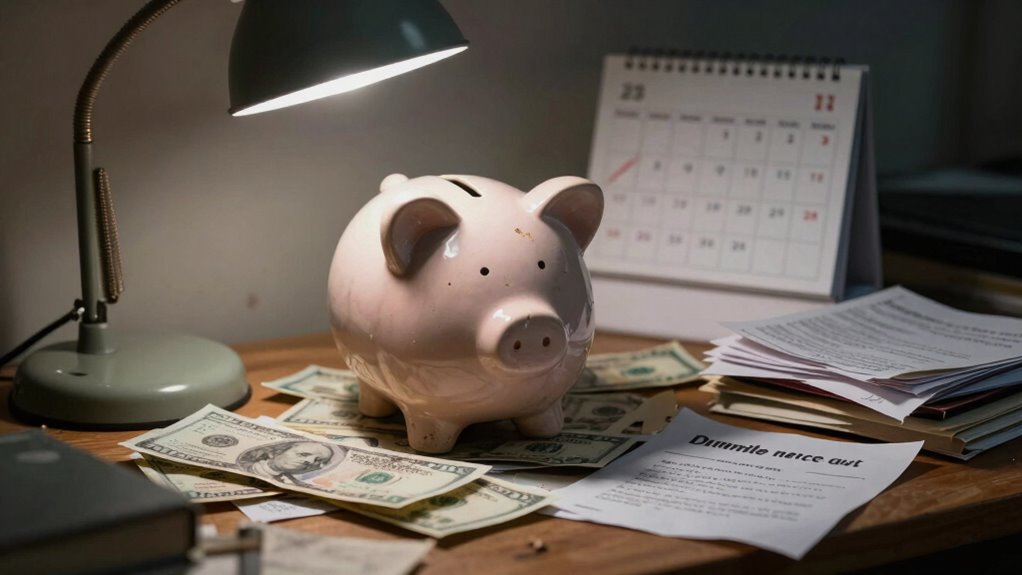

Waiting too long to fix small money problems can cause them to snowball into bigger debts, leading to higher interest, fees, and penalties. Over time, neglected issues damage your credit score and limit your ability to save and invest. The longer you postpone action, the more complex and costly resolving these problems becomes. Early intervention helps prevent these setbacks and keeps your financial future on track—stick around to discover how you can turn things around.
Key Takeaways
- Small debts can snowball into larger, uncontrollable financial burdens over time.
- Delaying action damages credit scores, increasing future borrowing costs.
- Ignoring minor issues leads to accumulating interest, fees, and penalties.
- Procrastination hampers wealth-building and reduces investment opportunities.
- Waiting causes stress and overwhelm, making problems more complex and costly to resolve.

Waiting too long to fix minor financial problems can seem harmless at first, but in reality, it often leads to bigger, more costly issues down the line. When you ignore small debts or missed payments, they tend to snowball, making it harder to manage your money and limiting your opportunities for growth. Small debts or missed payments may seem insignificant now, but they can damage your credit score, making future loans or credit cards more expensive or even unavailable. Over time, these neglected problems can accumulate interest, fees, and penalties, turning manageable issues into overwhelming financial burdens.
One of the biggest risks of delaying action is missing out on potential investment opportunities. When you don’t resolve small money problems promptly, you may find yourself unable to save or invest enough to capitalize on opportunities that could notably boost your financial future. For example, failing to pay off a small credit card balance regularly might lead to higher interest rates and fewer funds available for investment. Over the years, this lack of savings and missed opportunities can severely limit your wealth-building capacity. Developing good financial habits early on is essential, and ignoring small issues undermines those habits, making it harder to stay disciplined and focused on long-term goals.
Furthermore, waiting too long to fix minor financial problems can erode your confidence and create stress. When you see unresolved issues piling up, you might feel overwhelmed or helpless, which discourages you from taking decisive action. This procrastination often leads to a cycle of avoidance, where you delay fixing problems only to find them worsening. The longer you wait, the more complex and costly the solution becomes. It’s easier to address small problems as they arise—by paying off a small debt, adjusting a budget, or setting up automatic savings—because early intervention can prevent them from spiraling out of control. Additionally, understanding the importance of financial literacy can help you prevent these issues from escalating. According to financial education, building awareness about managing money can significantly reduce the likelihood of neglecting small problems in the first place.
Your financial habits are shaped by how you handle small issues. If you develop the discipline to tackle problems early, you build a foundation of responsible money management that benefits all areas of your financial life. Conversely, neglecting small problems fosters poor habits like procrastination and complacency, which can hinder your progress toward financial independence. The sooner you act, the less damage you’ll sustain, and the better your chances of seizing investment opportunities that can secure your future. Remember, small financial issues ignored today can become noteworthy obstacles tomorrow—so don’t wait to fix them. Addressing problems promptly keeps your financial habits strong, preserves your options, and helps you grow wealth steadily over time.

Victor 9700 12-Digit Standard Function Business Calculator, Battery and Solar Hybrid Powered Tilt LCD Display, Great for Home and Office Use, Black
- Large 12-Digit Tilt LCD Display: Extra large 12-digit tilt LCD screen
- Dedicated Financial Keys: Cost, sell, and margin keys
- Automatic Tax Keys: Built-in automatic tax calculation keys
As an affiliate, we earn on qualifying purchases.
As an affiliate, we earn on qualifying purchases.
Frequently Asked Questions
How Can I Identify Small Money Problems Early?
You can identify small money problems early by regularly reviewing your budget planning and tracking expenses. Watch for signs like overspending or recurring missed payments. Building an emergency fund helps you spot issues before they escalate. If you notice your savings aren’t growing or you’re dipping into funds unexpectedly, it’s a clear sign to address your financial habits now, preventing minor problems from becoming major financial setbacks.
What Are Common Signs of Financial Neglect?
You can spot signs of financial neglect by noticing poor savings habits and unmanaged debt. If you’re consistently missing savings goals or rely heavily on credit, those are red flags. You might also feel overwhelmed by bills or avoid reviewing your finances. These signs indicate you’re neglecting your financial health. Address them promptly by creating a budget, improving savings habits, and developing a debt management plan to prevent bigger problems later.
How Does Patience Affect Financial Recovery?
Patience can turn tiny financial issues into monumental setbacks or propel your investment growth. When you practice financial discipline, you avoid rushing into risky decisions that could derail progress. Patience allows your money to grow steadily, compounding over time, and keeps you focused on long-term goals. Without it, you risk impulsive moves that may seem tempting but ultimately hinder your financial recovery. Stay disciplined, be patient, and watch your wealth flourish.
Can Small Issues Lead to Legal Consequences?
Small money issues can indeed lead to legal liabilities and credit implications if left unchecked. Ignoring unpaid debts or contractual disputes might result in lawsuits or damage your credit score. Over time, these small problems can snowball, making it harder to secure loans or housing. Addressing issues early helps prevent legal consequences and maintains your financial reputation, saving you money and stress in the long run.
What Tools Help Track Minor Expenses Effectively?
Think of your finances as a garden that needs tending. To keep it flourishing, you use tools like budgeting strategies and expense categorization. Apps like Mint or YNAB act as your vigilant gardeners, tracking minor expenses effortlessly. They help you spot weeds early, preventing small issues from taking over. With these tools, you stay organized, ensuring every dollar is planted where it belongs, safeguarding your financial landscape from unseen chaos.
Conclusion
Don’t wait too long to address small money issues—they often grow into bigger problems. By acting early, you save yourself stress, interest, and potential penalties. Remember, a stitch in time saves nine; ignoring minor financial concerns now can lead to major setbacks later. Take control today, fix those small problems before they snowball, and secure your financial future. The sooner you act, the easier it is to stay ahead.