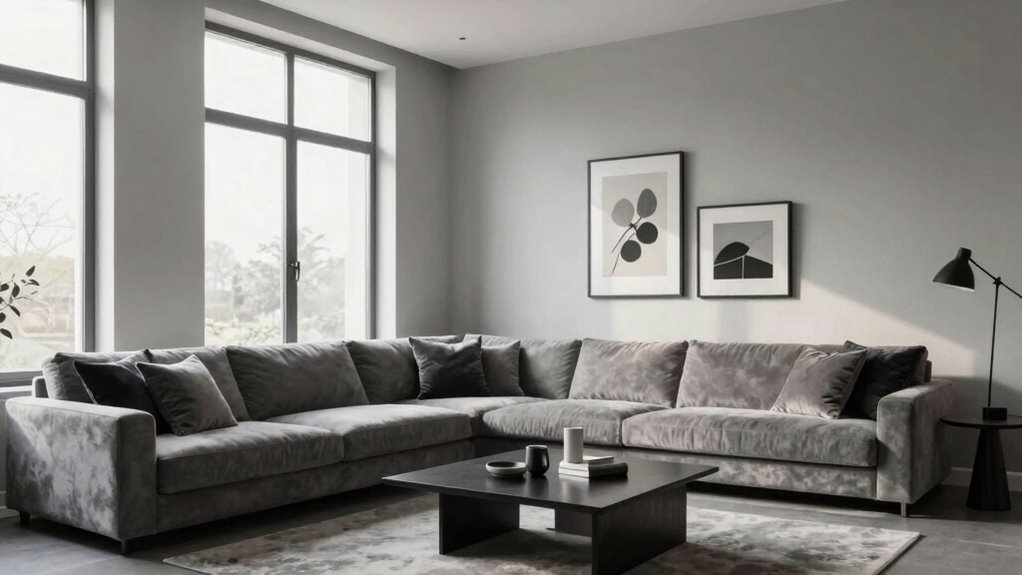

Even when your decor matches perfectly, your room can still feel off if the lighting and textures aren’t in harmony. Bright, harsh lights or dim, uneven illumination can flatline the mood, while conflicting textures can cause visual discord. Balancing layered lighting with a variety of textures creates warmth, depth, and cohesion. When these elements work together, your space feels inviting and complete. Keep exploring, and you’ll discover how to truly bring harmony to your room.
Key Takeaways
- Improper lighting layers can create dull or overly harsh atmospheres, disrupting the room’s intended mood.
- Lack of texture variety results in visual monotony, making the space feel flat or uninviting.
- Overly uniform textures or materials can cause the room to feel cold or sterile despite matching decor.
- Inconsistent balance of textures and materials can lead to visual discord and discomfort.
- Misaligned lighting and texture choices hinder the creation of a cohesive, harmonious environment.
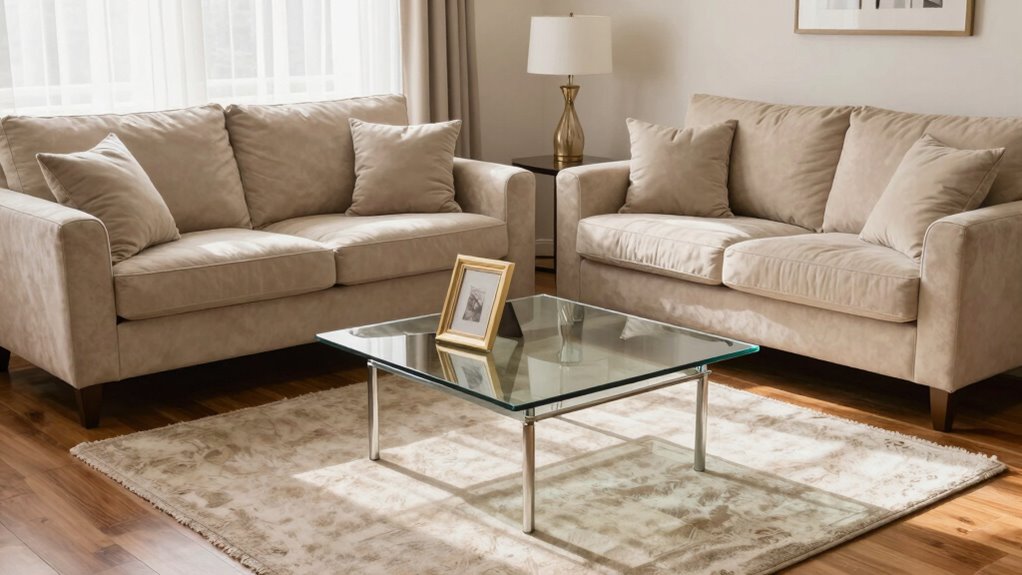
Even when everything in a room seems perfectly coordinated, it can still feel off. You might have matched your furniture, chosen complementary colors, and arranged everything with care, but somehow, the space still doesn’t quite sit right. The reason often isn’t about mismatched decor or poor choices; it’s more subtle. Small details, like the lighting mood and texture balance, play huge roles in how a room feels. If these elements aren’t aligned, even a perfectly matched room can seem disjointed or uninviting.
Lighting mood is a key factor. Bright, harsh overhead lights may illuminate the space well but can wash out the cozy or inviting atmosphere you want. Conversely, if the lighting is too dim or uneven, it can create shadows or an overall sense of unease. The right lighting should enhance your room’s mood, whether you’re aiming for a relaxing retreat or a lively gathering spot. Layered lighting—adding lamps, wall sconces, or accent lights—helps create a warm, welcoming glow. This layered approach adds depth and makes the space feel more intentional. When the lighting doesn’t match the room’s purpose or aesthetic, it throws off the mood, making your well-coordinated decor seem disconnected from how you actually feel in the space. Paying attention to lighting design can significantly improve the overall ambiance.
Layered lighting creates warmth and depth, enhancing your room’s mood and making your decor feel truly inviting.
Texture balance is another crucial element often overlooked. You might have chosen matching colors or sleek furniture, but if the textures are all too uniform or too busy, it can create a sense of visual discord. For example, pairing a smooth leather sofa with a shiny glass table can seem sleek, but if everything’s too shiny or smooth without variety, the room might feel cold or sterile. Adding different textures—like soft throws, woven rugs, matte finishes, and rougher wood accents—breaks up visual monotony. Balance is key: if you overdo it with too many contrasting textures, the room can feel chaotic. If you stick to too few, it can seem flat or dull. Achieving the right texture balance adds tactile interest and warmth, making the space feel harmonious rather than mismatched. Incorporating natural elements like plants or wood accents can also help tie different textures together seamlessly and bring a sense of life into the room. Additionally, paying attention to the scale and proportion of textures prevents visual clutter and maintains harmony within the space. A thoughtful consideration of lighting and textures ensures that each element complements the other rather than competing for attention.
Ultimately, even a room with perfect decor can feel off if these subtle elements aren’t aligned. Your goal should be to create a cohesive atmosphere where lighting and textures work together. When you pay attention to the lighting mood and texture balance, you craft a space that feels genuinely inviting, comfortable, and complete—regardless of how perfectly everything matches on paper.
layered ambient lighting for living room
As an affiliate, we earn on qualifying purchases.
As an affiliate, we earn on qualifying purchases.
Frequently Asked Questions
How Do Lighting Choices Affect Room Ambiance?
Lighting choices markedly affect your room’s ambiance by influencing mood and perception. You should pay attention to color temperature; warm tones create cozy, inviting spaces, while cool tones feel modern and energetic. Using light layering—combining ambient, task, and accent lighting—adds depth and flexibility, preventing the room from feeling flat or off. Proper lighting enhances your decor and makes the space feel balanced, comfortable, and inviting.
Can Scent Influence the Perception of a Space?
You might notice a room feels different even with matching decor because scent influences your perception more than you realize. Scent memory and aroma therapy shape your emotional response, subtly altering how you experience space. When a familiar scent triggers positive feelings, the room feels welcoming. Conversely, an unfamiliar or unpleasant aroma can create discomfort, making you unaware that scent’s power is subtly guiding your mood and perception of the environment.
What Role Does Furniture Placement Play in Room Harmony?
Furniture placement plays a essential role in room harmony by establishing focal points and enhancing spatial flow. When you arrange furniture thoughtfully around a central focal point, like a fireplace or art piece, the space feels balanced. Avoid cluttering pathways, allowing smooth movement and good visual flow. This careful placement makes your room feel cohesive and inviting, preventing that off-kilter feeling even when everything visually matches.
How Does Sound Impact the Feeling of a Room?
Think of your room as a musical instrument; sound shapes its mood. Acoustic design and noise control are like tuning the strings, ensuring clarity and harmony. When sound bounces unpredictably or noise intrudes, it’s like a discordant note, making the space feel off. Proper sound management creates a peaceful environment, allowing you to relax and enjoy your space fully, just as a well-tuned instrument brings beautiful music.
Do Psychological Factors Affect How We Perceive Rooms?
Yes, psychological factors influence how you perceive rooms. Your emotional associations with certain colors or layouts can make a space feel welcoming or uncomfortable. Cognitive biases, like familiarity bias, also play a role, causing you to feel more at ease in environments that remind you of positive experiences. These factors shape your emotional response, making a room feel right or off, even when everything physically appears to match perfectly.
Conclusion
You walk into a room that looks perfect, yet something feels off. It’s like a puzzle missing a piece—you can’t quite put your finger on it. Sometimes, it’s the subtle details that throw us off, like mismatched textures or overlooked lighting. Think of it as tuning a musical instrument; even if everything seems in tune, a tiny misalignment can disrupt the harmony. Small adjustments can make your space feel just right, restoring that comforting sense of balance.