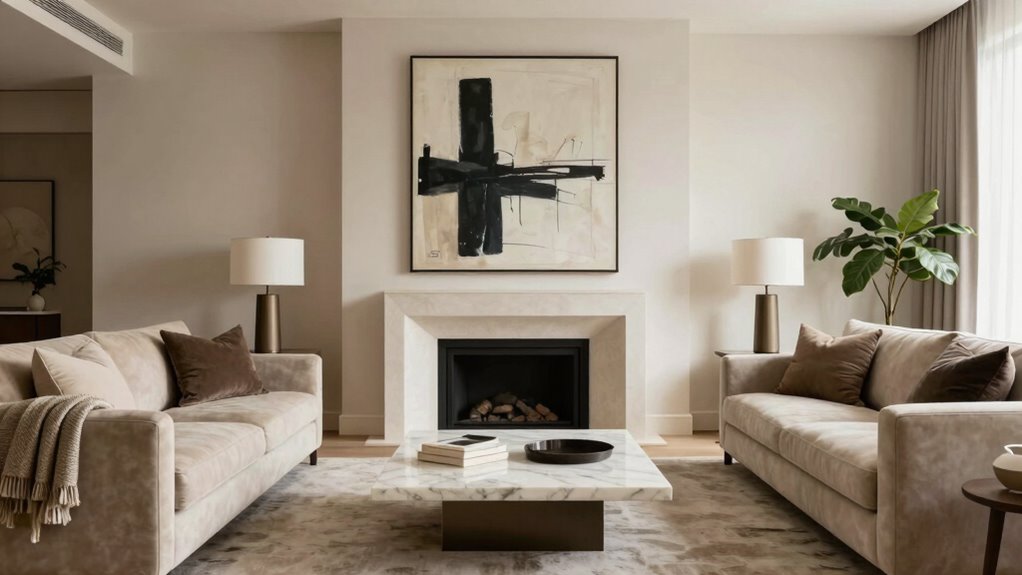

To use symmetry without making a room look stiff, focus on creating balance through visual weight and varied sizes, rather than perfect mirror images. Mix furniture styles and heights, and group accessories with different shapes and textures for a lively feel. Use asymmetrical elements, like placing tall vases off-center, to keep things relaxed. You’ll discover how subtle variations can create harmony without rigidity as you explore these simple tips further.
Listen free for 30 days with Audible
Thousands of audiobooks and originals — cancel anytime.
As an affiliate, we earn on qualifying purchases.
Key Takeaways
- Use asymmetrical arrangements with balanced visual weight to create harmony without rigidity.
- Vary furniture styles and sizes while maintaining overall balance to keep the space lively.
- Incorporate diverse textures and materials to soften symmetry and add warmth.
- Place decorative accessories in groups with different heights and shapes for visual interest.
- Use lighting variations and subtle color differences to enhance balance without stiff uniformity.
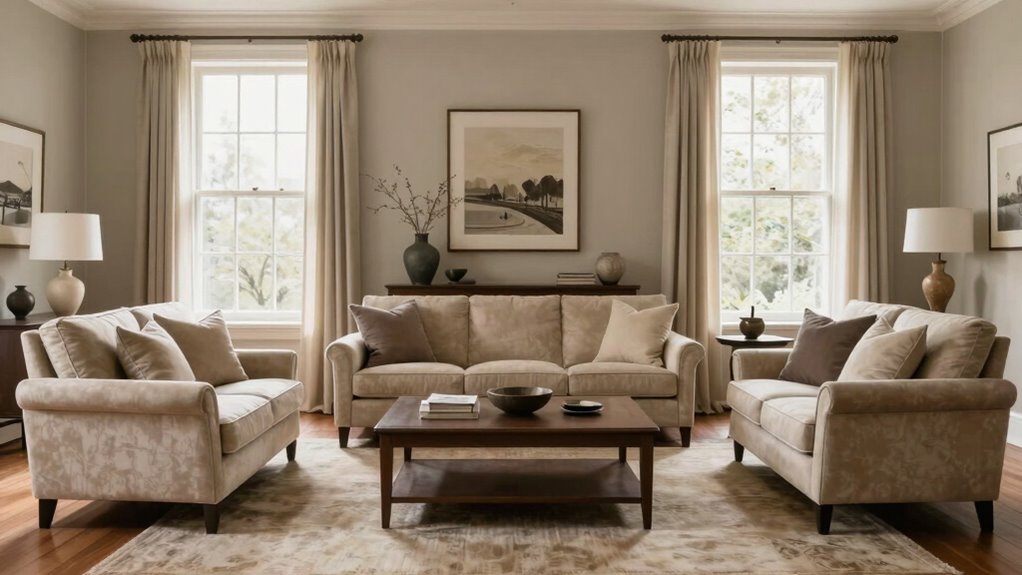
Symmetry can create a balanced and harmonious look in your room, but it’s easy for the design to feel stiff or overly formal if not handled carefully. To avoid that, focus on achieving furniture balance that feels natural and inviting. Instead of perfectly matching pairs of chairs or identical lamps on each side, aim for visual weight that’s evenly distributed. For example, place a large sofa opposite a pair of armchairs with similar visual impact, rather than identical pieces. This approach maintains symmetry while adding variety, making your space feel cohesive yet lively.
Create balanced, inviting spaces by mixing furniture styles and sizes for a harmonious yet lively look.
Color coordination plays a vital role in keeping symmetry from feeling rigid. Stick to a palette that complements your overall decor, but don’t be afraid to introduce subtle variations. For instance, if you’re using two lamps, choose shades in slightly different shades of the same color family. This avoids the sense of perfection that can make a room seem stiff, while still maintaining a harmonious look. When selecting furniture and accessories, coordinate their colors to create a unified aesthetic, but allow some room for personal touches that introduce warmth and personality.
You also want to contemplate the arrangement of accessories and decor. Instead of mirroring everything exactly, create a sense of balance through grouping. For example, place a tall vase on one side of a mantel and a similar-sized sculpture on the other, but vary their shapes and textures. This technique keeps the symmetry intact without making the space feel robotic. Incorporate different heights and forms that complement each other, which adds visual interest without sacrificing harmony. Additionally, visual balance can be enhanced by varying textures and materials, adding depth and richness to your design. Introducing varied textures not only enriches the tactile experience but also prevents the space from feeling monotonous. Paying attention to furniture placement further helps create a more inviting and less rigid atmosphere. When arranging furniture, consider the proportional elements to ensure that each piece contributes to a cohesive and comfortable setting. For example, mixing different lighting styles can subtly break the predictability and add character to your room.
Lighting is another key element. Use matching sconces or lamps on either side of a focal point, but vary their styles slightly or incorporate different light intensities. This prevents the lighting from feeling too predictable, which can contribute to stiffness. When you arrange furniture and decor, think about flow and ease of movement. Symmetry shouldn’t feel like a strict rule but rather a guideline that enhances the room’s comfort and style.
symmetry balance decorative vases
As an affiliate, we earn on qualifying purchases.
As an affiliate, we earn on qualifying purchases.
Frequently Asked Questions
Can Symmetry Work in Small Rooms Effectively?
Symmetry can work well in small rooms if you’re strategic with decorative accents and furniture placement. Use matching pieces or balanced arrangements to create harmony without overwhelming the space. Keep larger furniture asymmetrical or spaced out, and add decorative accents that mirror each other on either side. This approach maintains a balanced look, making your small room feel cozy yet visually appealing without feeling stiff or cluttered.
How Do I Balance Asymmetry With Symmetry?
To balance asymmetry with symmetry, focus on creating a sense of coincidence—where contrasting elements complement each other naturally. You can achieve this by pairing a large, eye-catching piece with smaller, contrasting accents, emphasizing contrast without overcrowding. Use asymmetry as your focus, placing it intentionally to draw attention, then balance the visual weight with symmetrical elements nearby. This approach keeps your room lively yet harmonious, avoiding stiffness.
What Colors Best Complement Symmetrical Layouts?
You should choose colors that create appealing color contrast, like pairing neutrals with bold hues, to enhance symmetry without making the room stiff. Incorporate pattern mixing with your color choices to add visual interest and soften the formal look. Stick to a harmonious palette, mixing textures and shades carefully, so the symmetrical layout feels balanced but lively. This approach keeps your space inviting and dynamic, avoiding a rigid or overly predictable vibe.
How Can I Incorporate Symmetry in Non-Traditional Styles?
Imagine a room where mirror accents reflect unexpected angles, and geometric patterns dance across textiles and walls. To incorporate symmetry in non-traditional styles, mix asymmetrical furniture with balanced mirror accents and bold, unconventional geometric patterns. This contrast creates visual rhythm without stiffness, giving your space personality. Play with varied sizes and shapes, ensuring symmetry is felt rather than rigid, turning your room into a lively, harmonious sanctuary.
Are There Any Common Mistakes to Avoid When Using Symmetry?
Yes, avoid common mistakes like placing mirrors too symmetrically or creating a stiff look around a focal point. Instead, you should vary mirror placement slightly to add interest, ensuring they complement your focal point without overpowering it. Be mindful of balance—don’t mirror every element exactly—and mix in asymmetrical pieces to keep the space lively and inviting, preventing the room from feeling overly rigid.
Conclusion
By balancing symmetrical elements with unexpected accents, you keep your room inviting and dynamic. For example, if you place matching lamps on each side of your sofa, add a colorful throw pillow or a quirky artwork off to one side. This subtle contrast keeps the space lively yet harmonious. Remember, symmetry doesn’t mean perfection—embrace small variations to create a welcoming, stylish room that feels thoughtfully designed, not stiff or predictable.
College move-in / dorm season Picks
dorm essentials
As an affiliate, we earn on qualifying purchases.