Convection ovens and air fryers both cook food with hot air, but they do so differently. Convection ovens use a fan inside a larger chamber to circulate heat evenly, making them ideal for baking and roasting. Air fryers have a smaller space with a powerful fan that rapidly blows hot air, creating a crispy, fried-like result with less oil. If you want to understand how these heat flows shape your cooking, keep exploring the details.
Key Takeaways
- Both use hot air circulation; convection ovens rely on a fan in a large chamber, air fryers use rapid airflow in a smaller space.
- Air fryers generate faster cooking times due to higher airflow speed and smaller cooking chambers.
- Convection ovens provide even heat distribution, ideal for baking, while air fryers produce crispy textures with intense, high-speed air.
- The size difference affects efficiency: air fryers heat quickly for small batches, convection ovens handle larger quantities and diverse recipes.
- Understanding heat flow shows both appliances circulate hot air, but design and airflow speed determine their specific cooking results.

When you’re choosing between convection ovens and air fryers, understanding how each appliance works can help you make an informed decision. Both use the power of hot air to cook food quickly and evenly, but they do so through different mechanisms that impact baking techniques and cooking efficiency. Convection ovens rely on a fan to circulate hot air around the food inside a larger chamber, creating a consistent temperature that enhances browning and crispiness. This setup allows you to use familiar baking techniques, like roasting and baking, with excellent results. The air circulation ensures even heat distribution, which is especially beneficial when you’re cooking multiple dishes or larger batches. As a result, convection ovens tend to be more versatile, accommodating a broader range of recipes while maintaining high cooking efficiency. Additionally, convection ovens often feature precise temperature control, making them suitable for delicate baked goods.
Air fryers, on the other hand, are fundamentally compact convection devices designed specifically for frying with less oil. They typically have a smaller cooking chamber and a powerful fan that circulates hot air at high speeds. This rapid air movement creates a crispy exterior similar to deep frying but with considerably less fat. Because of their size, air fryers heat up quickly and cook food faster than traditional convection ovens, making them highly efficient for quick snacks, small meals, or reheating leftovers. Their design promotes a unique cooking technique that emphasizes achieving a crispy, fried texture without the mess or added calories of traditional frying. When evaluating baking techniques, keep in mind that air fryers excel at producing crispy results but may be less suitable for delicate baked goods or recipes requiring precise temperature control.
In terms of cooking efficiency, air fryers often outperform convection ovens for smaller tasks because they heat up rapidly and cook faster due to their compact size and high-speed air circulation. They save time and energy, especially when you’re preparing single servings or small quantities. Convection ovens, while slightly slower to heat and cook, offer greater capacity and flexibility, allowing you to bake bread, roast large cuts of meat, or cook multiple dishes at once. Both appliances utilize the principle of circulated hot air, but their differences in size, airflow speed, and design influence how efficiently they perform specific tasks. When deciding which to use, consider the types of dishes you cook most often and whether you prioritize quick, crispy results or versatility and larger cooking capacity.
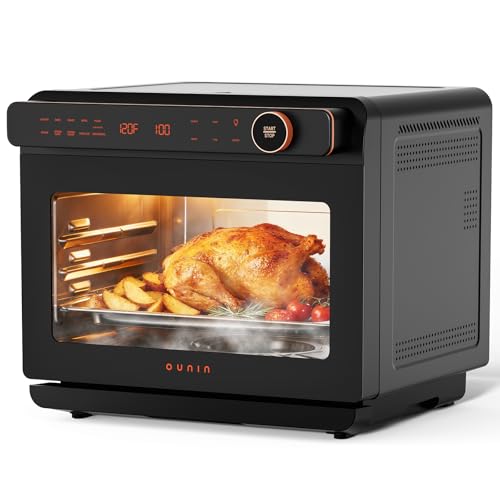
OUNIN 24L Steam and Air Fryer Combo Countertop Oven,11-in-1 Convection Baking and Steam,Bake,Broil,Dehydrate,304 Stainless Steel,Fast Cooking with Precise Electronic Temperature Control,for Gifting
【11-IN-1 VERSATILE KITCHEN POWERHOUSE】Replace multiple countertop appliances with one space-saving combo! This all-in-one unit functions as a Convection…
As an affiliate, we earn on qualifying purchases.
As an affiliate, we earn on qualifying purchases.
Frequently Asked Questions
Can Air Fryers Also Use Convection Heat?
Yes, air fryers also use convection heat, which enhances their versatility. You’ll notice that convection heat provides consistent cooking results, making your food crispy on the outside and tender inside. This heat flow technology allows air fryers to perform similarly to convection ovens, giving you multiple cooking options in one appliance. So, with convection heat, your air fryer becomes a more efficient and versatile kitchen tool.
Which Method Is More Energy-Efficient?
You’ll find that air fryers are generally more energy-efficient than traditional convection ovens because they heat up faster and cook food more quickly, saving you energy. Their compact size enhances appliance efficiency, reducing overall power consumption. If energy savings are your priority, opting for an air fryer is a smart choice, as it uses less electricity while still delivering crispy, delicious results.
Do All Convection Ovens Produce Similar Heat Flow?
Not all convection ovens produce similar heat flow. You’ll notice differences in heat distribution and airflow patterns, which affect cooking results. Some models have more advanced fans that circulate hot air evenly, while others may have uneven airflow, causing hot spots. When choosing an oven, consider these factors to guarantee consistent cooking performance. Your cooking experience depends on the design’s ability to create ideal airflow patterns for even heat distribution.
How Does Humidity Affect Convection and Air Frying?
Humidity impacts both convection and air frying by influencing moisture levels in your food. Higher humidity can slow down browning and crisping because moisture keeps food from drying out, while lower humidity promotes better crispiness. You’ll notice that in humid environments, your dishes might turn out softer, and in dry conditions, they’ll get crispier faster. Adjust your cooking time and temperature accordingly to account for moisture influence and get ideal results.
Are There Foods Better Suited for Convection or Air Frying?
Imagine crispy chicken wings or tender vegetables—some foods shine more in convection, while others excel in air frying. For a perfectly crispy texture with quicker cooking time, air frying works best for snacks and delicate items. Convection suits large roasts or baked goods, where even heat guarantees even cooking. You’ll notice food texture improves with the right method, making your meals flavorful and efficiently prepared.

Cosori 9-in-1 TurboBlaze Air Fryer 6 Qt, Premium Ceramic Coating, 90°–450°F, Precise Heating for Even Results, Air Fry, Roast, Bake, Broil, Dry, Frozen, Proof, Reheat, Keep Warm, 120V, Dark Gray
𝘼𝙞𝙧 𝙁𝙧𝙮𝙚𝙧 𝙐𝙥𝙜𝙧𝙖𝙙𝙚: Innovative TurboBlaze Technology delivers a powerful 3600 rpm fan speed and temperatures up to 450℉,…
As an affiliate, we earn on qualifying purchases.
As an affiliate, we earn on qualifying purchases.
Conclusion
Now that you understand the heat flow differences, convection and air frying no longer need to compete. Convection’s gentle, consistent warmth gently surrounds your food, while air frying’s rapid, targeted heat crisps with precision. Both methods harness airflow, but their unique approaches influence texture and taste. So, whether you crave even cooking or crispy perfection, choosing between them becomes less about confusion and more about your culinary intent—each method, a different path to delicious.

Elite Gourmet ETO-4510M French Door 47.5Qt, 18-Slice Convection Oven 4-Control Knobs, Bake Broil Toast Rotisserie Keep Warm, Includes 2 x 12" Pizza Racks, Stainless Steel
45L capacity – Fits 9 slices of toast on 2 racks for a total of 18 slices and…
As an affiliate, we earn on qualifying purchases.
As an affiliate, we earn on qualifying purchases.

CHEFMAN 2 Qt Mini Air Fryer – Digital Space-Saving Compact Air Fryer with Nonstick and Dishwasher Safe Basket, Quick & Easy Meals in Minutes, Features Digital Timer and Shake Reminder – Black
FAST AND EASY: This small air fryer comes prepared for any culinary challenge. The capacitive touch screen display…
As an affiliate, we earn on qualifying purchases.
As an affiliate, we earn on qualifying purchases.