The weight of a Dutch oven directly impacts how easily you can lift and handle it during cooking or serving. Heavier pans offer better heat retention and even cooking but can be exhausting to move, especially when full or hot. Handles on sturdy, heavier models are designed for safety, but if you have limited strength, it might be a challenge. Understanding how weight influences performance and handling can help you choose the right oven—continue to discover more.
Key Takeaways
- Heavier Dutch ovens are harder to lift and maneuver, especially when full or hot, impacting handling ease.
- Increased weight often means more durable handles, but can also cause fatigue during lifting.
- The weight enhances heat retention and distribution, improving cooking performance but making movement more difficult.
- Insulation adds to weight, making the oven sturdier but more cumbersome to handle.
- Balancing weight for durability and manageability is essential to prevent arm strain and ensure safe use.
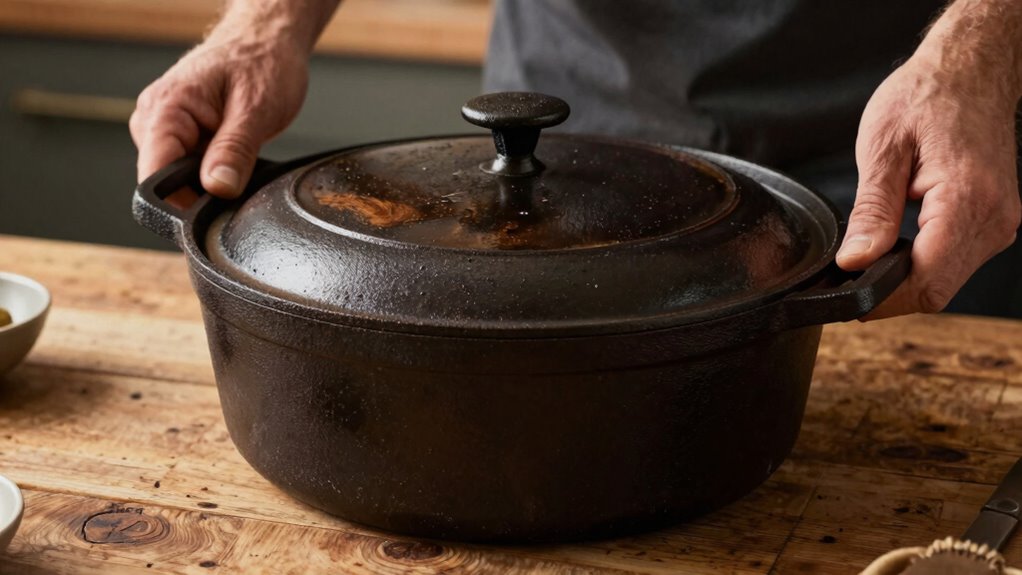
When choosing a Dutch oven, weight often gets overlooked, but it plays a crucial role in your cooking experience. A heavier oven isn’t just about durability; it influences how easy or difficult it is to handle, especially when you’re lifting it in and out of the oven or stovetop. One key aspect that contributes to this weight is oven insulation. A well-insulated Dutch oven retains heat efficiently, which means you can cook at lower temperatures and save energy. However, increased insulation often adds to the weight, making the pot sturdier but also more cumbersome to maneuver. If you plan to do a lot of oven-to-table serving or need to frequently lift the lid, consider how the weight impacts your comfort and safety. Additionally, handle design can significantly affect how manageable the Dutch oven is when hot or full. Handle durability is another critical factor that’s affected by weight. Heavier Dutch ovens tend to have more robust handles, designed to support the added mass without bending or breaking. These handles often come reinforced with sturdy materials like cast iron or heat-resistant silicone, ensuring they can withstand the weight over time. When handles are durable, you can confidently lift and carry the oven, knowing they won’t give out mid-use. But keep in mind, that added handle strength usually correlates with increased weight. If you have limited strength or arthritis, a heavy Dutch oven with reinforced handles might be a challenge, so weigh the benefits of handle durability against the potential strain on your arms. The weight of the Dutch oven also influences how it performs during cooking. A heavier pot generally distributes heat more evenly thanks to its thicker walls and dense construction. This consistency in heat distribution helps prevent hot spots and results in uniformly cooked meals. On the flip side, if the oven is too heavy, you might struggle with moving it around, especially when it’s hot or full. This makes choosing the right weight a balancing act: you want enough heft to benefit from good heat retention and sturdy handles, but not so much that it becomes a burden.
Frequently Asked Questions
How Much Does a Typical Dutch Oven Weigh?
A typical Dutch oven weighs between 12 and 20 pounds, depending on the material comparison and size. Cast iron models tend to be heavier, which can strain your arms, especially if the ergonomic design isn’t well thought out. If you’re frequently moving or lifting your Dutch oven, consider lightweight options or those with ergonomic handles to reduce fatigue and make cooking more comfortable.
Does a Heavier Dutch Oven Improve Cooking Results?
Ever wondered if a heavier Dutch oven boosts your cooking performance? Yes, it does! A heavier pot typically offers better heat retention, ensuring even cooking and consistent results. The added weight helps stabilize temperature, reducing hot spots. While it might be a bit tougher to lift, the improved heat distribution makes it worth it, especially for slow cooking and braising. Your dishes come out more flavorful and evenly cooked every time.
Can I Use a Dutch Oven if I Have Arthritis?
Yes, you can use a Dutch oven if you have arthritis, but choose one with good ergonomics and comfort features. Look for models with ergonomic handles, lightweight designs, and smooth edges to reduce strain on your joints. These features help make lifting and handling easier, providing more comfort during cooking. Prioritize a Dutch oven that feels manageable and safe, so you enjoy cooking without aggravating your arthritis symptoms.
Are Lightweight Dutch Ovens Durable Enough for Regular Use?
Lightweight Dutch ovens can be durable enough for regular use, thanks to improved material strength and smart weight distribution. Manufacturers now use stronger cast iron or alternative materials that withstand daily cooking without feeling heavy. You’ll find these options easier to handle, especially if you prefer a lighter pot. Just make certain you check reviews and specifications, so you choose a lightweight Dutch oven built with quality materials and balanced weight distribution for longevity.
How Does Weight Affect the Handling and Storage of a Dutch Oven?
The weight of your Dutch oven impacts ergonomic handling and storage convenience. Heavier models can be tough to lift, especially when full, leading to fatigue or even injury over time. On the other hand, lighter Dutch ovens are easier to handle and maneuver. For storage, heavier pots may take up more space and require sturdy shelving. Choose a weight that balances ease of use with your storage needs to enjoy cooking comfortably.
Conclusion
Remember, the weight of your Dutch oven isn’t just a number—it’s a test of strength and patience. While a heavier pot might challenge your arms, it also promises better heat retention and more even cooking, turning your kitchen into a culinary sanctuary. So, embrace the heft, knowing it’s a small price to pay for delicious meals. Because sometimes, the heaviest tools produce the lightest, most flavorful results.