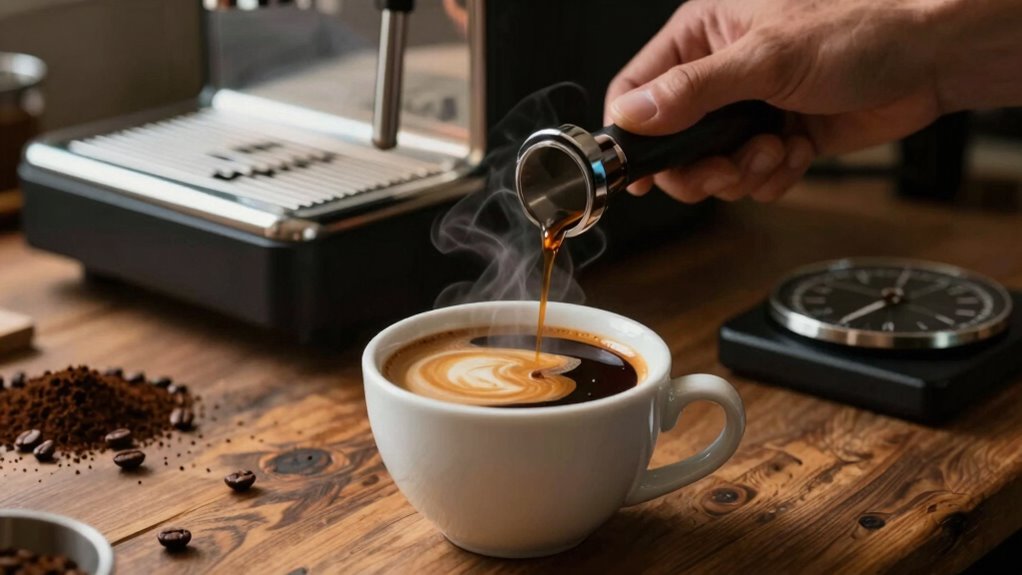

If your coffee tastes bitter, start by adjusting your grind size and water temperature. Using a grind that’s too fine or water that’s too hot can cause over-extraction, releasing bitter compounds. Try coarsening the grind slightly and lowering the temperature to between 195°F and 205°F. Small tweaks to these factors often fix bitterness and bring out better flavor. Keep experimenting with these adjustments, and you’ll discover the perfect balance for your brew.
Listen free for 30 days with Audible
Thousands of audiobooks and originals — cancel anytime.
As an affiliate, we earn on qualifying purchases.
Key Takeaways
- Use a coarser grind to reduce over-extraction caused by overly fine grounds.
- Lower water temperature to prevent extracting bitter compounds during brewing.
- Maintain water temperature between 195°F and 205°F for optimal extraction balance.
- Adjust grind size and temperature together to prevent harsh, bitter flavors.
- Monitor brew time to avoid over-extracting and resulting bitterness.
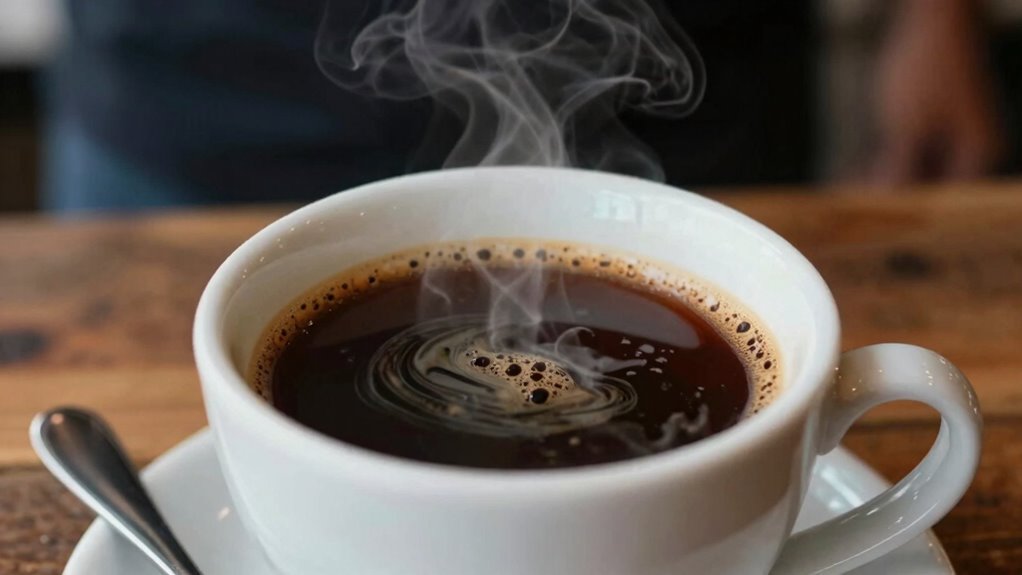
Have you ever sipped your coffee only to be hit by an unexpectedly bitter taste? It’s frustrating, especially when you’re craving that smooth, flavorful sip. Often, bitterness isn’t just about the beans; it’s about how you’ve prepared your brew. Two common culprits are grind size and water temperature, and understanding how they influence extraction can help you fix that bitter edge.
First, consider your grind size. If your coffee is ground too fine, it can lead to over-extraction during brewing. When the grind is too small, the water struggles to flow through the coffee evenly, causing certain particles to release more bitter compounds. Think of it like trying to squeeze out too much flavor from tiny particles—your brew ends up overly intense and harsh. Conversely, if your grind is too coarse, you risk under-extraction, which can produce a weak, sour taste, but it can also leave behind bitter notes if the water doesn’t adequately extract the desirable flavors. Finding the right grind size is essential. For drip coffee, aim for a medium grind similar to sand; for espresso, go finer, but not so fine that it clogs your machine.
Adjust grind size: medium for drip, finer for espresso, to balance extraction and flavor.
Water temperature plays an equally vital role. If your water is too hot, it can quickly break down coffee compounds, releasing excessive bitter flavors. Temperatures above 205°F (96°C) tend to over-extract the coffee, intensifying bitterness. On the other hand, water that’s too cool won’t extract enough flavor, leading to a flat, underwhelming brew. The sweet spot is usually close to boiling but just below it—around 195°F to 205°F (90°C to 96°C). Using a thermometer or a good-quality coffee maker that controls temperature can help you hit that ideal range consistently.
Adjusting these factors is simple but effective. If your coffee tastes bitter, try coarsening your grind slightly or lowering your brewing water temperature. It’s often a matter of small tweaks rather than complete overhauls. Remember, brewing coffee is a delicate balance, and paying attention to grind size and water temperature can make all the difference between a bitter mess and a beautifully balanced cup. One way to further improve extraction is by controlling brew time and ensuring your process aligns with your chosen grind and temperature. Keep experimenting with these parameters until you find the perfect harmony. Your taste buds will thank you, and you’ll enjoy a smoother, more enjoyable coffee experience every time.
As an affiliate, we earn on qualifying purchases.
Frequently Asked Questions
Can Water Quality Affect Coffee Bitterness?
Yes, water quality affects coffee bitterness. If your water has high mineral content, it can lead to over-extraction, making your coffee taste bitter. Using filtration systems helps remove excess minerals and impurities, resulting in a smoother, more balanced brew. By controlling water quality, you guarantee your coffee isn’t overly bitter and tastes just right. So, invest in good filtration to improve your coffee’s flavor and avoid bitterness caused by poor water quality.
Does Coffee Bean Freshness Influence Extraction Quality?
Fresh coffee beans greatly influence extraction quality. Coffee aging causes the beans to lose flavor and aroma, making it harder to extract ideal compounds. Always check the roast date before brewing; beans are best within a few weeks of roasting. If your beans are old, you might notice a dull or bitter taste. Using freshly roasted beans guarantees a more vibrant, balanced extraction, enhancing your coffee experience.
How Does Grind Size Impact Bitterness?
Your grind size directly impacts bitterness by affecting the extraction rate. If your grind is too fine, it increases the extraction rate, pulling out more bitter compounds quickly. Conversely, a coarse grind slows extraction, leading to under-extraction and weak flavor. Adjusting your grind size helps balance extraction, preventing bitterness and achieving a smoother, more desirable taste. Experiment with different sizes until you find the perfect balance for your brewing method.
Is Brewing Time Linked to Bitterness Levels?
Think of brewing time as a dance partner’s tempo; too fast or too slow, and the rhythm gets off. Longer brewing time increases extraction efficiency, which can pull out bitter compounds, making your coffee taste harsh. Conversely, too short a brew leaves behind flavorful oils. Finding the right balance guarantees your coffee’s flavor is smooth and well-rounded, without the bitterness that comes from over-extraction.
Can Storage Methods Alter Coffee Flavor?
Yes, storage methods can definitely alter your coffee flavor. Using a proper coffee container keeps out moisture and air, preserving freshness. Also, maintaining the right storage temperature—preferably cool and dark—slows down flavor degradation. If you store your beans or ground coffee in a poor container or at high temperatures, you risk losing aromatic oils, which dulls the flavor and can make your coffee taste stale or off.
Conclusion
Think of your coffee as a delicate garden. When extraction mistakes happen, it’s like watering the plants with too much or too little, causing them to wilt or burn. By fixing these errors, you’re nurturing your brew back to life—a vibrant, balanced bloom. With patience and attention, you’ll turn your bitter brew into a fresh, inviting garden of flavor. Just remember, every small adjustment is a step toward mastering your perfect cup.
NFL season / tailgating Picks
team gear
As an affiliate, we earn on qualifying purchases.