The weight of a Dutch oven impacts how easily you can lift, move, and handle it during cooking. Heavier pots offer better heat retention and durability but can be tough to manage and increase the risk of spills or injury. Lighter models are easier to handle but may not last as long. Choosing the right weight depends on your strength and cooking style, and understanding this can help you use your oven safely and efficiently—more details are just ahead.

Get everyday essentials delivered free with Prime
- Fast, free delivery on millions of items
- Prime Video, Amazon Music and more included
- Member-only deals all year
Key Takeaways
- Heavier Dutch ovens provide better heat retention and even cooking, improving dish quality.
- The weight affects ease of handling, lifting, and pouring, impacting kitchen safety and convenience.
- Managing heavy pots requires strength, increasing the risk of spills or injury during use.
- Lighter models are easier to maneuver but may compromise durability and heat performance over time.
- Proper weight distribution and ergonomic design enhance safety, efficiency, and comfort in everyday cooking.
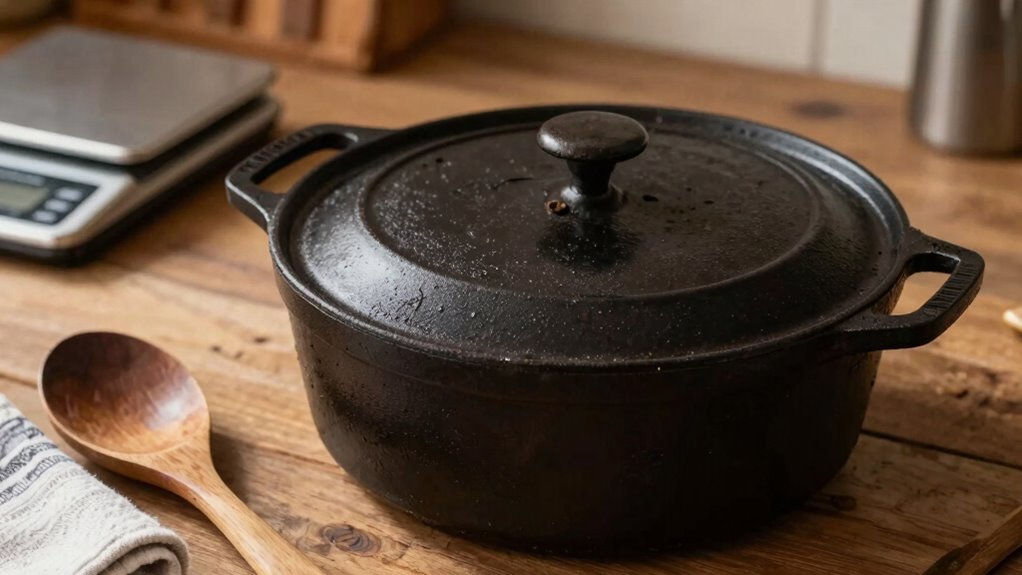
A Dutch oven’s weight can considerably impact your kitchen experience, especially when it comes to handling and safety. When you’re working with a heavy pot, you need to contemplate how comfortably you can lift, move, and pour without risking spills or injury. If you often cook for family or guests, these moments of lifting the oven onto the stove or transferring it from the oven to the countertop can become more challenging with a heavier piece. On the other hand, a lighter Dutch oven might be easier to manage but could compromise on material durability, which directly influences its longevity and performance over time. The material composition of the Dutch oven significantly influences its weight, durability, and heat retention capabilities. Material durability plays a vital role in determining the weight of your Dutch oven. Cast iron, for example, is renowned for its toughness and excellent heat retention, but it’s also quite heavy. This heft comes from the dense material, which ensures the pot withstands high temperatures and frequent use without warping or cracking. When you opt for a heavier cast iron Dutch oven, you’re investing in a piece that’s built to last, capable of withstanding the rigors of various cooking techniques like braising, roasting, or frying. Conversely, lighter materials such as enameled aluminum or coated ceramics might lessen the weight but can sacrifice some material durability, often showing signs of wear or damage sooner if not handled carefully. The weight of your Dutch oven also affects how you cook with it. Heavier pots are excellent for slow, even heat distribution—perfect for stews or bread baking—because the dense material retains heat longer and distributes it more evenly. This quality can elevate your cooking techniques, allowing you to develop richer flavors and achieve better textures. However, managing a heavier Dutch oven requires some effort and strength, especially when you’re stirring thick sauces or lifting it out of the oven. Proper ergonomic design can help minimize strain and improve safety during use. If your kitchen involves frequent adjustments or delicate handling, a lighter model might be more practical, even if it doesn’t offer the same level of durability or heat retention. Ultimately, the weight of a Dutch oven influences how you approach your cooking routine. It’s a balance between the benefits of material durability and the practicalities of handling. Knowing how much you’re willing to lift and maneuver—and what kind of cooking techniques you prioritize—can help you choose the right piece for your kitchen. A heavier Dutch oven offers longevity and superior heat retention, but it demands strength and care. Lighter options might be easier to manage but could require more gentle handling to preserve their integrity over time. Additionally, understanding the weight distribution of your Dutch oven can help prevent fatigue and improve safety during use.
As an affiliate, we earn on qualifying purchases.
Frequently Asked Questions
How Does Dutch Oven Weight Affect Heat Retention?
A heavier Dutch oven improves heat retention because its material composition allows it to absorb and hold heat longer. The weight enhances heat distribution, ensuring even cooking without hot spots. When you choose a substantial Dutch oven, you benefit from consistent temperatures, making it ideal for slow cooking and braising. So, the weight directly influences how well your cookware maintains and distributes heat during your culinary tasks.
Is a Heavier Dutch Oven More Durable?
Like a fortress standing firm, a heavier Dutch oven often proves more durable because of its superior material quality. You’ll notice it withstands daily wear better, especially if crafted by a reputable brand known for craftsmanship. While weight isn’t everything, it’s a good sign that your Dutch oven is built to last, handling everything from searing to simmering with resilience. Trust in weight as a mark of lasting quality.
Does Weight Influence Cooking Time and Efficiency?
Yes, the weight of a Dutch oven influences cooking speed and efficiency. A heavier pot often provides better heat distribution, which helps cook food evenly and can speed up the overall cooking process. When you use a heavy Dutch oven, it retains heat longer, reducing the need for constant stove adjustments. As a result, your meals cook more efficiently, saving you time and energy in the kitchen.
Are Lighter Dutch Ovens Better for Beginners?
Lighter Dutch ovens can be better for beginners because they’re easier to handle and maneuver. When choosing a material, opt for lighter options like aluminum or lighter cast iron, which still provide good heat retention. Focus on brand reputation to guarantee quality and durability. While weight is a consideration, prioritizing a reputable brand and suitable material makes cooking more manageable for those just starting out in the kitchen.
How Does Weight Impact Ease of Handling and Storage?
They say, “Good things come in small packages,” but weight impacts handling and storage too. Heavier Dutch ovens, often made of cast iron, are sturdy yet challenging to lift or move, especially when full. Material diversity influences weight, and lighter options ease handling, while aesthetic appeal varies with design. Consider your storage space and comfort—lighter models are easier to manage daily, making cooking more enjoyable and less of a chore.
Conclusion
Choosing the right Dutch oven weight is like finding the perfect dance partner—you want one that’s steady and reliable without dragging you down. A heavy oven can be your sturdy anchor in the kitchen’s storm, while a lighter one dances easily from stovetop to oven. By selecting a weight that suits your style, you’ll turn cooking into a graceful performance, where every dish glides effortlessly from pot to plate, making your culinary journey smooth and satisfying.
Columbus Day / Indigenous Peoples' Day Picks
long weekend sales
As an affiliate, we earn on qualifying purchases.